November 29th, 2012 by Irene Miles
One issue that cuts across local, state, and federal levels in terms of importance is our need for water. Water issues have been in the news, especially with regards to old systems and infrastructure that need to be upgraded and repaired to meet growing future needs.
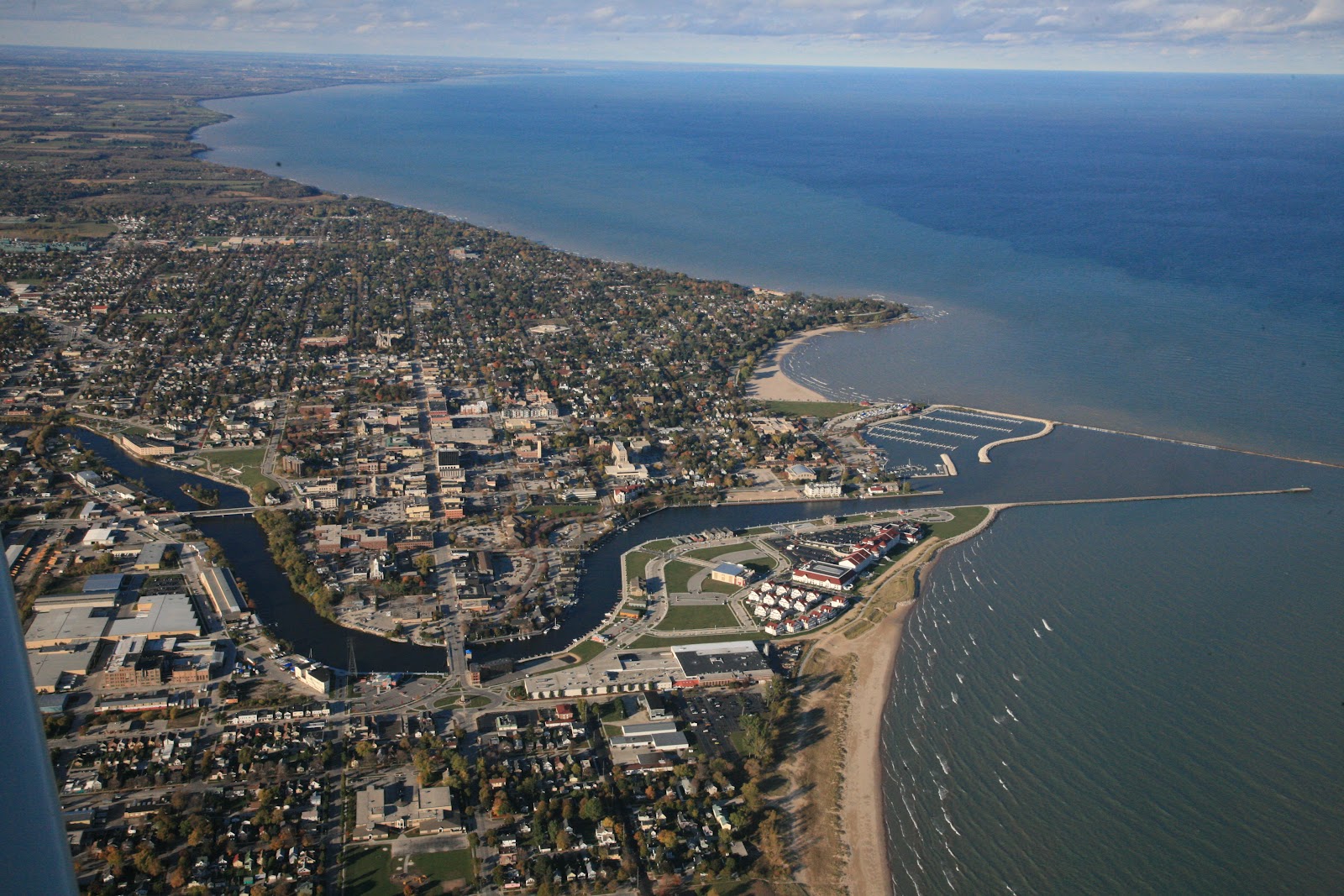
Situated along the shore of Lake Michigan, metropolitan Chicago has benefited for centuries from an abundance of fresh water. The infrastructure for delivering water is primarily underground: out of sight, out of mind. But awareness of the existing infrastructure’s condition and the challenges faced by community water suppliers has grown in recent years due to service and budget concerns.
“Given the post-election climate, the AWWA predicts that a proposed Water Infrastructure Finance and Innovation Authority (WIFIA) — patterned after the Transportation Infrastructure Finance and Innovation Act (TIFIA) — will be the most likely vehicle for federal investment in water infrastructure… While the WIFIA is an important strategy to make large-scale water infrastructure investment more affordable for local communities, the AWWA continues to believe that local rates and charges are the best funding sources.
Read the complete blog post at the link above.
CMAPs regional comprehensive plan, GO TO 2040, recommends that communities adopt full-cost pricing to help address the need for investment in water infrastructure at the local level. CMAP and Illinois-Indiana Sea Grant will release a full-cost water pricing guide for local leaders this winter.
September 25th, 2012 by Irene Miles
Runoff from a variety of land uses, including agriculture and industry, has been identified as one of the primary causes of harmful algal blooms (PDF) in the Great Lakes and surrounding waterways. The danger of these algal blooms comes in the form of botulism outbreaks, toxins, and harmful metabolites – all of which can have serious consequences for native plants, fish, and human health.
One potential solution that has been in use in Ohio is the planting of radishes, not only to help manage water and runoff, but also to improve soil quality for agricultural users.
“The radishes planted in northwest Ohio go in about this time of year and are left in the ground to die, explained our host, Allen Dean. Planting doomed radishes, it turns out, is an innovative technique he has used in recent years to improve soil nutrients and reduce runoff from his Williams County farm.
Here’s the basics on how it works: Farmers plant seeds for a plant called an oilseed radish. It doesn’t actually have to be that plant, but it needs to grow a foot or longer into the soil during the fall in a tubular shape, like a carrot or a parsnip. It also needs to grow a fair amount of foliage up on the ground. Radishes are usually more affordable.
It’s important that the plant drill down into the soil so that when it dies, usually during a mid-January freeze, it decays and leaves behind a v-shaped hole for snow and water to penetrate deeper. The decayed radishes Dean showed us looked like organic socks.
Oilseed radishes are particularly good at absorbing nutrients from the surface and sending them down into the soil as the tubular plant drills it way into the ground.”
Read the complete article above to find out more about how these plants are helping farmers and protecting the Great Lakes waters at the same time.
August 27th, 2012 by Irene Miles
Aging pipes and pollution runoff are big concerns in any city, and the cost to repair or replace old systems is very high. Often it means downtime for entire streets and systems, and a very big price tag to boot.
But cities worldwide are adopting green infrastructure elements to help manage numerous factors, from excessive burden on old systems to pollution management and more.
“Gray infrastructure is the system of pipes and ditches that channel storm water. Green infrastructure is the harnessing of the natural processes of trees and other vegetation — so-called ecosystem services — to carry out the functions of the built systems. Green infrastructure often intercepts the water before it can run into streets and become polluted and stores the water for gradual release through percolation or evapotranspiration. Trees also clean dirty water through natural filtering functions.
Advocates say green infrastructure isn’t just about being green — it makes financial sense, as well. Its cost-effectiveness depends on how benefits are assigned and valued, and over how long a time scale, but green has been shown to be cheaper than gray.”
The article (linked above) features much more information about green infrastructure examples, from Seattle to Sweden and many points in between.
August 7th, 2012 by Irene Miles
Seventh-grade teacher Kimiko Pettis participated in this year’s Windy City Earth Force project in partnership with Illinois-Indiana Sea Grant and the Calumet Environmental Education Program at The Field Museum, where she learned about the GLRI-funded Stewardship Project Contest (PDF). Ms. Pettis was selected as one of three award-winning teachers, and her students at Thomas Hoyne Elementary in Chicago helped educate their local community about the importance of properly using and disposing of pharmaceuticals and personal care products (PPCP).
The class’ first step was to research the subject of PPCPs, how to dispose of them, and what effects they can have if they’re allowed into the water. The class invited IISG staffers and representatives from the Peggy Notebaert Nature Museum to provide hands-on activities teaching them about water quality.
Then they put what they had learned into action by making posters and flyers that they posted in local churches, businesses, and shops. They also conducted a school-wide survey about water quality to find out what their fellow students knew about the issues, and wrote letters to legislators and environmental agencies detailing what they had learned about threats to water safety.
At the end, the students produced a great video skit to share with their fellow students at the school, and they participated in the Ford Environmental Leadership Summit at the Field Museum on May 8, 2012, where they were able to display the posters and flyers they had made and engage with the attendees to talk about proper disposal of PPCPs.
Ms. Pettis and two teachers in Pennsylvania will each receive a $100 gift certificate to use for education resources as an award for their excellence in fostering student engagement and stewardship.
The contest, sponsored by Sea Grant Programs in Pennsylvania, Illinois-Indiana, and New York will continue throughout the 2012-13 school year, and complete details are included in the PDF linked above.
July 27th, 2012 by Irene Miles
Illinois-Indiana Sea Grant researchers and specialists have been able to extend internship opportunities to four students this summer. Working directly with our staff and researchers, the students will get hands-on experience in their field while helping us pursue ongoing projects. Read more about this year’s group of interns and the issues they’ll be helping us address and investigate below.
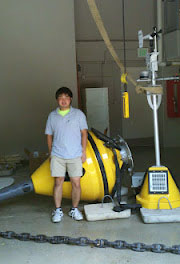
Naoki Wada is a fourth-year Mechanical Engineering student studying at Purdue University, and is interested in how ocean waves can be harnessed as a sustainable energy resource.
As a native of Japan, Naoki was particularly struck by the results of the 2011 earthquake and tsunami: “My home country, Japan, where the supply of natural resources is very scarce, experienced one of the largest earthquake and tsunami last year, putting most of their nuclear power plants out of operation due to the safety concerns and…forcing the nation to rethink their future energy security. As an island nation surrounded by the ocean, utilizing oceanic energy by means of wave/tidal/current/power generation can be a remedy.” Naoki feels that the United States can also benefit from technology related to ocean-generated power; in addition to providing sustainable energy, it doesn’t require as much land as solar or wind farms and may be more palatable to planners and developers. After his graduation at the end of this year, Naoki intends to pursue graduate work in this field.
During his 2012 summer internship, Naoki is working with IISG-funded researcher Cary Troy of Purdue University and IISG staffers Carolyn Foley and Angela Archer to deploy a real-time monitoring buoy off of Michigan City, IN. The buoy will beam information about wave height, water temperature, wind direction, and other variables to the web every 10 minutes. Naoki is responsible for getting the buoy up and running so that IISG and Purdue University can continue to deploy it every year in the same location.
Sahana will be a senior at the University of Pennsylvania next year, and is majoring in Environmental Science with minors in Psychology and Economics. Sahana grew up in the Chicago area and considers Chicago her home, making this internship a terrific opportunity to work on issues close to her heart.
Sahana is working at the Chicago Metropolitan Agency for Planning (CMAP) this summer with IISG/CMAP Water Resource Economist Margaret Schneemann to create an outdoor water use manual for the 80 member-communities of the Northwest Water Planning Alliance (NWPA) in Illinois. The NWPA Outdoor Water Use manual is meant to educate homeowners about the consequences of outdoor water use and provide information on various approaches that homeowners or their communities can take to conserve water by reducing their outdoor use. The manual also contains information on a lawn-watering ordinance that the NWPA is recommending its member communities to adopt.
Meredith Brackett
Meredith is a recent graduate of the University of Illinois Urbana-Champaign, with a bachelor’s degree in Earth Systems Environment and Society. While planning to attend graduate school in the future, her internship with IISG will allow her to gain hands-on experience in the field as well as helping her find areas and issues for future study.
Meredith explains more: “I am working with Dr. Paris Collingsworth this summer and we are conducting a study to compare zooplankton community data collected by the Great Lakes National Program Office (GLNPO) with data collected by the Interagency Lower Trophic Level Monitoring Program of the Lake Erie Committee Forage Task Group (LEC-FTG). We are using statistical models to calculate zooplankton community similarity metrics at specific sample sites through time and space. This study will determine whether the LEC-FTG survey is capturing zooplankton community characteristics that are unique to those captured by the GLNPO data set.”
Lainey Pasternak
Lainey will be entering her junior year at the University of Illinois this fall, majoring in Natural Resources and Environmental Sciences, with a concentration in Resource Conservation and Restoration Ecology.
As an intern with IISG, Lainey will be working to help increase recreational water user knowledge of and education about steps to prevent aquatic invasive species from spreading in the Southern Lake Michigan area. She will also be designing and conducting a survey to evaluate Illinois-Indiana Sea Grant’s current outreach efforts, and use those results to formulate a formal research report and academic poster presentation by the end of the summer. Lainey will then be presenting the findings and the entire scope of her internship work at the 2012 Illinois Water Conference at the University of Illinois.
“Becoming an intern with IISG’s Aquatic Invasive Species Outreach team has allowed me to acquire a stronger knowledge base about the general AIS issues and management in the Great Lakes area, the role of recreational water users in their spread, and the importance of evaluating outreach campaigns,” Lainey says. “By surveying and speaking directly with the public, I will gain further insight into how to communicate current complex environmental issues with and to others. Overall, I am very excited to be a part of the Illinois-Indiana Aquatic Invasive Species Outreach Team this summer and expect to make a difference in this area for our future clean waters.”
We look forward to the results of the hard work from our interns, and sharing their efforts in another post later this year. Check back to see how these projects are progressing.
June 26th, 2012 by Irene Miles
We’ve likely all heard about water conservation at various times – whether from our parents (don’t leave the water running), our neighborhoods (in the case of lawn watering rules and schedules), or from kids in line at the water fountain (“Save some for the fish!”).

Conserving water has always been important for a number of reasons, but recent studies are showing that it’s a serious issue. As the need for water grows worldwide, the way that we use water requires some significant consideration, study, and action.
Innovative new systems that reuse water for various needs and purposes are taking this issue and applying a potential solution. Rather than just turning off the faucet or washing the car less frequently, these systems or processes recycles large amounts of non-potable water for agricultural, landscape, and industrial applications.
From the website Environmental Protection Online:
“Water is reused in two main ways: non-potable reuse, in which treated wastewater is used for agriculture and landscape irrigation, industrial applications (such as cooling processes), toilet flushing and fire protection; and indirect reuse of wastewater to recharge ground water supplies, allowing treated wastewater to percolate down to aquifers and replenish water sources. Overall, non-potable and indirect reuse of water in the U.S. is growing rapidly, with more than 2 billion gallons reused per day, and volume increases at an estimated 15 percent annually.”
Find out more about some of the systems being developed and how reuse can have an impact in helping us meet these growing water needs by reading the
full article.