
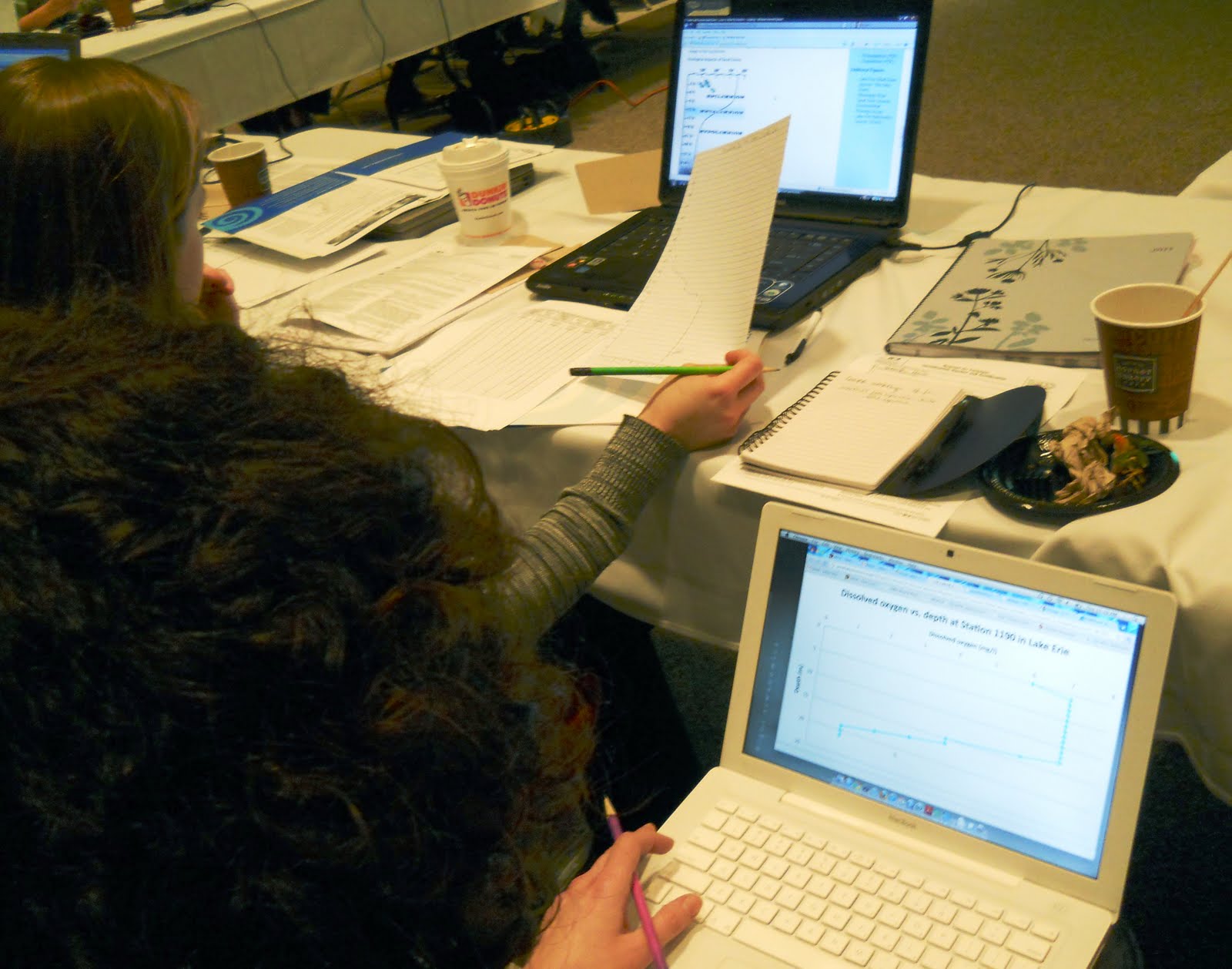
Twenty educators from Illinois, Indiana, Wisconsin, and Michigan were actively engaged in many activities shared at the March 24th COSEE Great Lakes workshop, “Catch the Wave!” at the Field Museum in Chicago. At the morning workshop, Steve Stewart, Michigan Sea Grant, demonstrated the many ways teachers could incorporate real-time and historical data to teach about fish habitat, climate, and dead zones. Steve’s presentation was based on the Great Lake Lessons website.
The afternoon session, led by IISG’s Robin Goettel and Terri Hallesy, was filled with hands-on activities that teachers can use in their classrooms and nonformal education centers, along with a tour of the Nab the Aquatic Invader! website. The workshop began with a presentation by Notre Dame University biologist Matt Barnes (pictured here) who provided the latest information on common Great Lakes invasive species Including pathways of introduction. The educators wrapped up the day by developing preliminary action plans to implement community stewardship projects that help prevent the spread of aquatic invasive species.

IISG Instagram

Science Sips is a series hosted by Illinois-Indiana Sea Grant, Sketchbook Brewing Company, and Northwestern University’s Center for Water that brings together researchers, scientists, and curious minds over good conversation and cold drinks. Each event features experts sharing their work in an accessible, informal setting. No lab coat required.At this gathering, Chicago author Dick Lanyon will take us back in time with a look at the history behind the construction of the Calumet and Chicago waterways and how these feats of engineering shape the region we live in today. Austin Happel from Shedd Aquarium will also share the latest research on fish communities in the Chicago River, including what the science is telling us right now about the health of this urban waterway.Stick around to test your Great Lakes knowledge with a round of trivia!Details at the link in bio.
A flooded street isn't just a local problem. When roads flood, the ripple effects reshape how an entire city moves, and IISG grad student scholar, Tianle Duan, is building the tools to track it in real time.Using remote sensing, aerial imagery, and AI, this Purdue PhD student maps flood impacts on road networks so first responders and city officials can act faster and smarter.🔗 Learn more about Tianle’s research at the link in bio.
Teaching plastic pollution? There’s more to it than the 3 Rs. @NAAEE’s Plastics eeResearch collection pulls together six studies on how to meaningfully educate students, from preschool through middle school, about plastic pollution.Research-backed, classroom-ready, and free to access.🔗 Link in bio📷 Photo credit: NOAA#TeachingTuesday #PlasticPollution #EnvironmentalEducation
