It’s been two years since our first edition of UpClose, and we decided to celebrate the occasion by taking a behind-the-scenes look at the study that launched an era of scientific and public interest in pharmaceuticals and other emerging contaminants. 
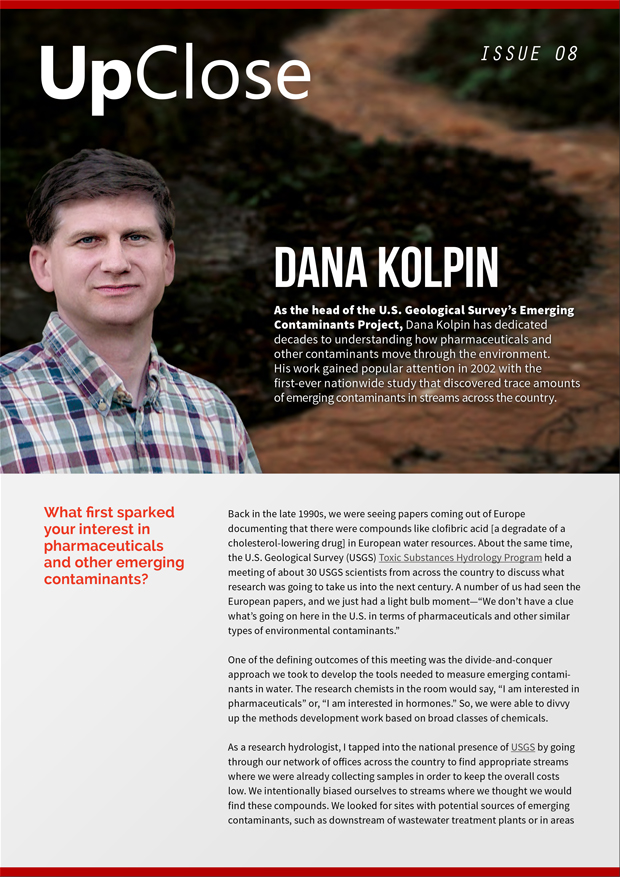


And to top it off, we’ve given the award-winning interview series a fresh new look. 

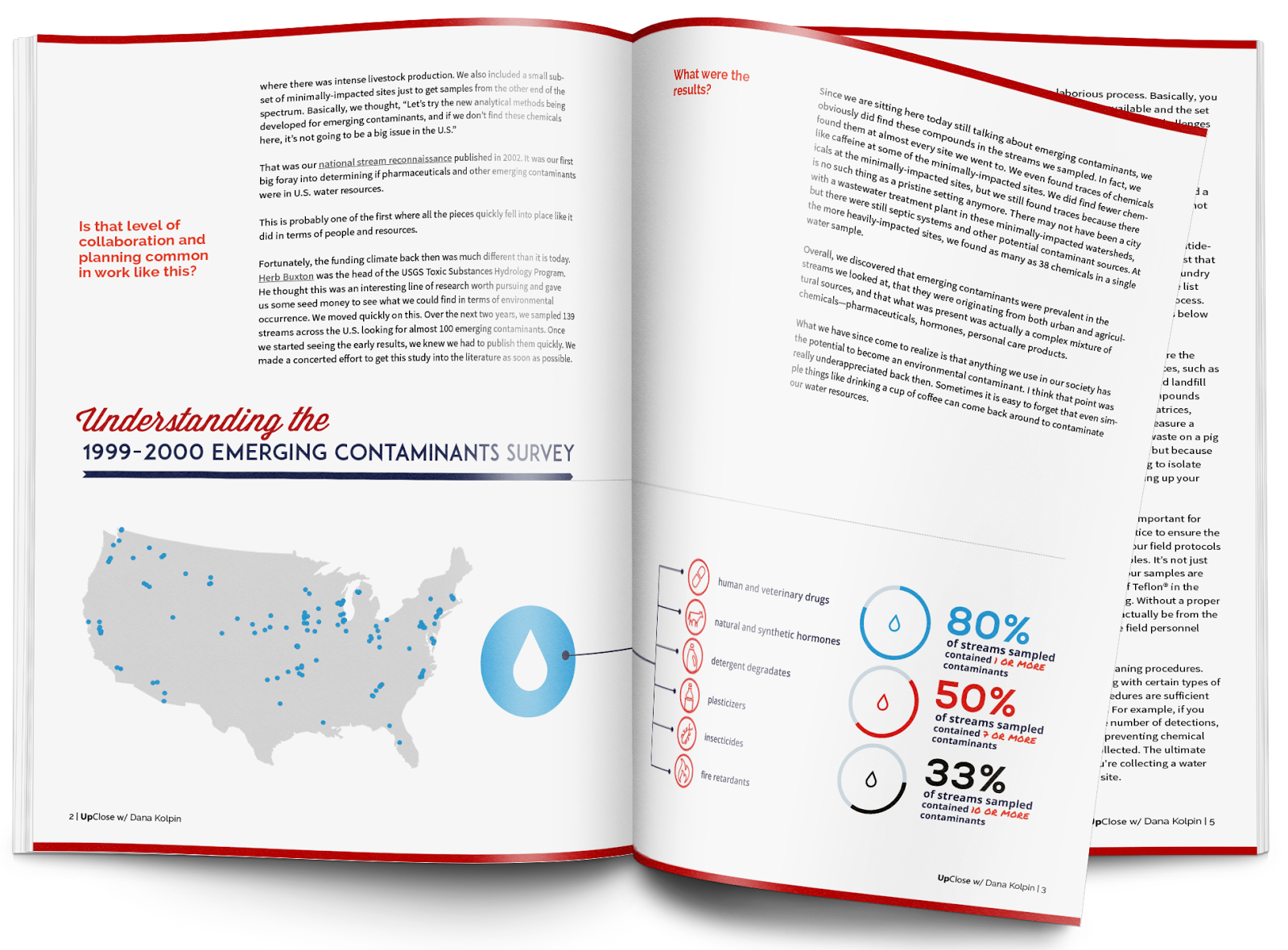
Dana Kolpin, a research hydrologist and head of the U.S. Geological Survey Emerging Contaminants Project, played a key role in the first-ever nationwide survey of emerging contaminants. The study found pharmaceuticals, detergents, hormones, and other chemicals in streams across the country. When the results were published in the journal Environmental Science & Technology in 2002, they sparked a of flurry of media and research attention. To this day, in fact, it is still the most cited study in the journal’s history. 

In the eighth issue of UpClose, Kolpin looks back on the challenges of designing and conducting a national study—particularly one in search of everyday chemicals like caffeine—and the cutting-edge methods scientists created to analyze the results. He also talks about the gaps in understanding that remain after more than a decade of investigating these contaminants and gives a sneak-peak at USGS’s latest projects. 
Find previous issues of UpClose and additional resources at unwantedmeds.org

IISG Instagram

Got a research idea worth a bigger room? The 2026 State of Lake Michigan Meeting is accepting proposals for symposia and workshops, and we want to hear yours!📅 Nov. 4–6 | Michigan City, IN⏰ Proposals due June 1 at 1 PM ETHelp shape what the Great Lakes research community discusses this year.🔗 Submit at the link in bio.
To every educator who has brought the Great Lakes into their classroom, thank you. 🍎Your curiosity is contagious. Your lessons last. And the students who learn to love these waters? They’ll protect them.Happy Teacher Appreciation Week from all of us at IISG.
Located in Washington, D.C., the Sea Grant Knauss Fellowship provides a unique educational and professional experience to graduate students who have an interest in ocean, coastal and Great Lakes resources, and in the national policy decisions affecting those resources. This is a one-year fellowship open to any student, regardless of citizenship, who is enrolled toward a degree in a graduate or professional program on the day of the deadline.Students enrolled at an Illinois or Indiana university or college should submit their applications through Illinois-Indiana Sea Grant by emailing Angela Archer at amcbride@purdue.edu. Students in surrounding states without a Sea Grant program should contact the National Sea Grant College Program at oar.sg.fellows@noaa.gov for a referral. Application deadline: June 3, 2026.To learn more about the fellowship, visit the link in bio.