Results

Page 1 of 37
Found 217 Results
Sort By: Alphabetical | Newest | Oldest
A Deep Dive into Online Seafood Buzz Thumbnail
File Type: pdf
File Size: 1.54 MB
Year: 2026

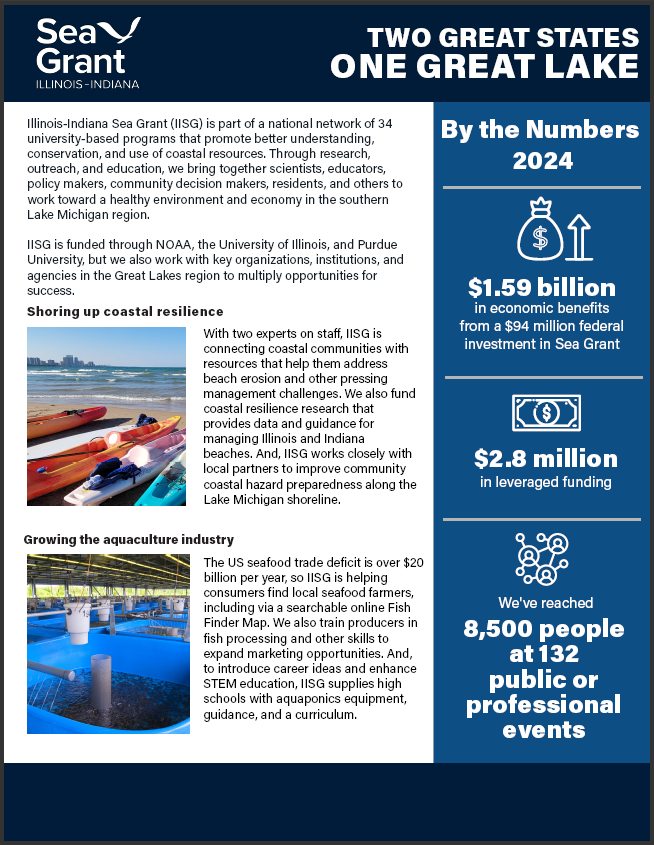
A recent research project led by Illinois-Indiana Sea Grant analyzed seafood-related online posts to better understand public attitudes toward seafood, including both fish and shellfish. The analysis revealed a wide range of sentiments toward seafood in the United States across most regions and fish categories. During the COVID-19 pandemic, researchers noted an upward trend in positive sentiment, suggesting increased public appreciation for seafood during that time.
Download File

Hooked On Data: Unraveling Social Media Conversations on Midwest Fishes Thumbnail
File Type: pdf
File Size: 1.85 MB
Year: 2026

A study funded by the USDA North Central Regional Aquaculture Center analyzed public sentiment regarding five fishes to offer valuable insights for industry stakeholders, policymakers, and conservation organizations with vested interests in the management and preservation of these fishes. From July 2020 to June 2024, over 732,200 social media mentions referenced bluegill, largemouth bass, rainbow trout, walleye and yellow perch.

Download File

Ripple Effects: The Impact of Aquatic Invasive Species in the Great Lakes Thumbnail
File Type: pdf
File Size: 23.50 MB
Year: 2025

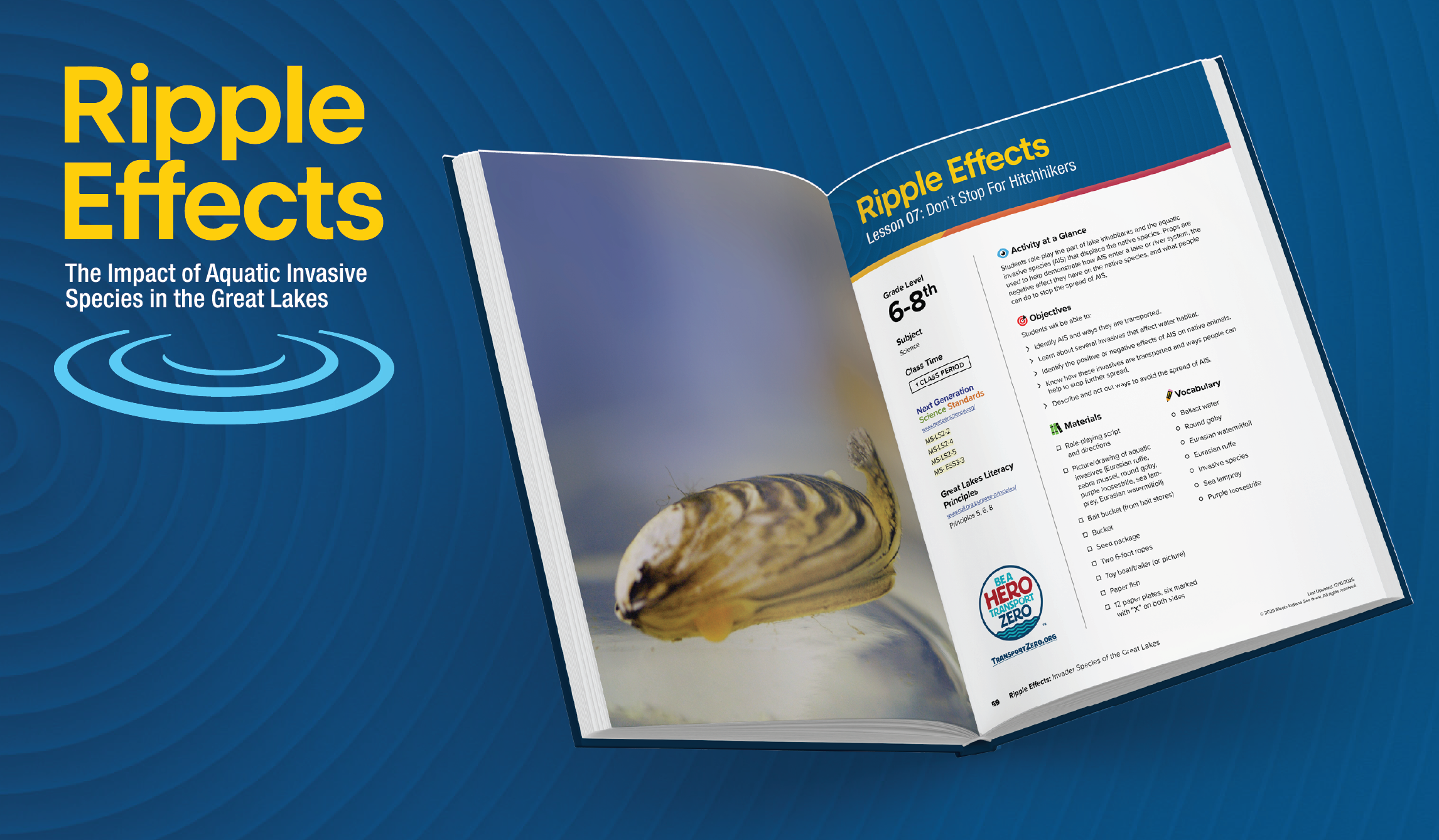
Ripple Effects is a collection of 6-12 grade activities that introduce students to aquatic invasive species in the Great Lakes. Through this curriculum, students can engage in research, reporting, and role-playing games and activities to learn why these non-native species threaten native ones, how they came to the region, and their impact on Great Lakes ecosystem dynamics. These eight activities align to both the Next Generation Science Standards and the Great Lakes Literacy Principles.

Download File

Fish Muscle Hydrolysate Thumbnail
File Type: pdf
File Size: 1,023.96 KB
Year: 2025

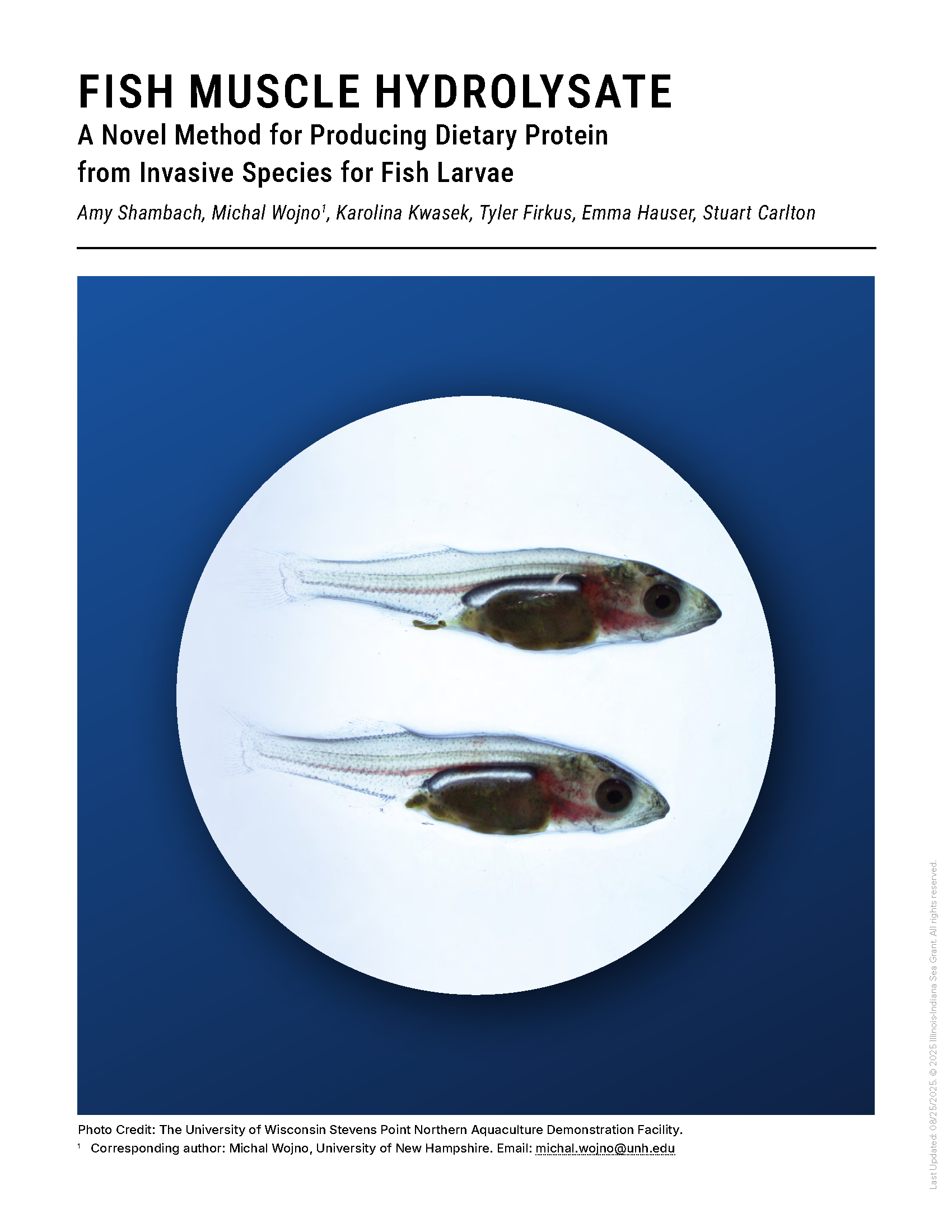
This overview introduces a novel method for producing high-quality protein for larval fish diets, targeting feed and ingredient manufacturers. It outlines the challenges of indoor fish rearing using recirculating aquaculture systems (RAS), particularly the difficulty larvae have digesting traditional dry feeds. The proposed solution uses protein hydrolysates—pre-digested proteins made more accessible through hydrolysis with species-specific digestive enzymes. This approach improves nutrient absorption and growth performance. Notably, the method uses invasive fish species as a sustainable protein source and applies enzymes from the target species for precise, efficient hydrolysis.

Download File

Page 1 of 37

Note: Some older Illinois-Indiana Sea Grant publications have not yet been restructured into ADA compliant formats. We are actively working on this. If you are having difficulty accessing a particular item in one of our databases, please contact iisg@purdue.edu with the name of the item and its URL for further assistance.

Search All IISG Publications and Products