
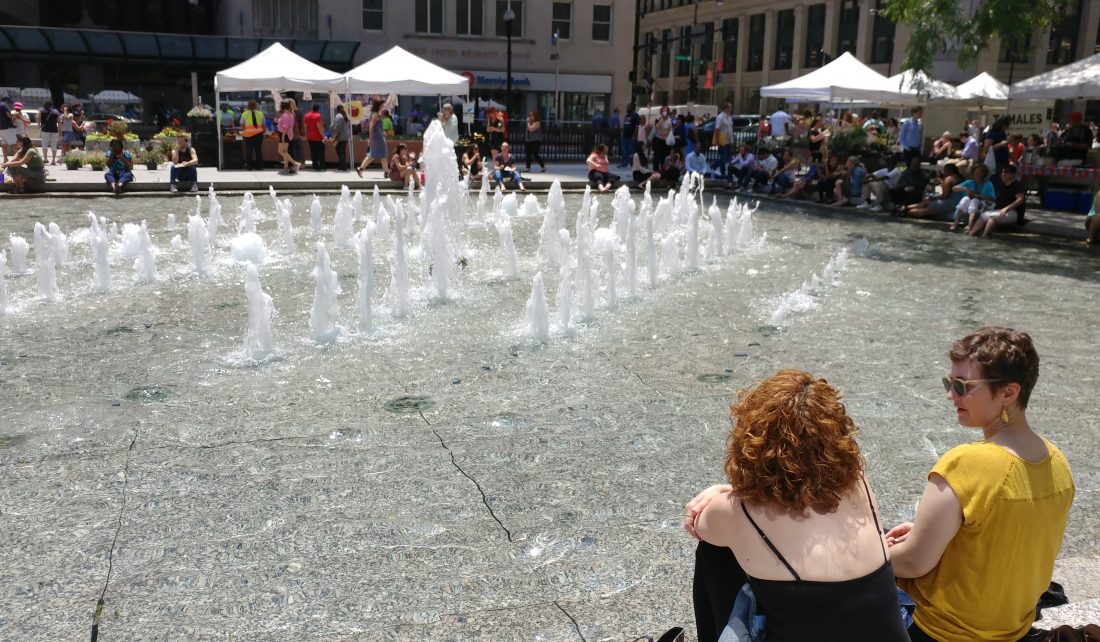
water fountain

Population growth and industrial development, particularly in Chicago’s collar counties, has led to increasing groundwater withdrawals in the region. In some areas, groundwater is being withdrawn at a rate that exceeds the recharge rate, resulting in decreasing yields, increasing pumping demands, increasing salinity and the search for alternative water sources, all of which increase the cost of providing water to people.

“During the development of the region’s comprehensive plan, ON TO 2050, it became clear that critical water information that communities need to make informed land use, transportation, and infrastructure investment decisions was missing,” said Margaret Schneemann, Illinois-Indiana Sea Grant (IISG) water resource economist.

It was missing until now—IISG and the Chicago Metropolitan Agency for Planning have developed critical water demand and rate data for northeastern Illinois. The two products, available on the CMAP Data Hub, include past water use and demand forecasts and water and sewer rate data for each community utility.

Learn more about these datasets and how communities can use them on the CMAP website.


Illinois-Indiana Sea Grant is a part of University of Illinois Extension and Purdue Extension.


Writer: Irene Miles, 217.333.8055, miles@illinois.edu

Source: CMAP update Immerse Yourself in New Water Data

IISG Instagram

There’s still time to register! Educators are invited to join the Great Lakes Region Place-Based Education Institute starting this February and dive into hands-on strategies that connect students with their communities and local environments. Don’t miss this powerful professional learning opportunity!Learn more & register at the link in bio.
🎉 Congratulations to our IISG Knauss Fellowship finalists! We’re proud to announce Anupama Chandroth (@iubloomington) and Laura Gray (@illinois1867) as Illinois-Indiana Sea Grant’s finalists for the 2026 Sea Grant Knauss Fellowship.They’ll join a national cohort of 48 finalists placed in executive and legislative branch offices in Washington, D.C., contributing scientific expertise to federal decision-making on marine, coastal, and Great Lakes issues.Full story at the link in bio.
Ripple Effects is a collection of 8 activities for grades 6–12 that introduces students to aquatic invasive species in the Great Lakes.Through research, reporting, and role-playing games, students will:✅ Explore how non-native species arrived✅ Understand why they threaten native ecosystems✅ Investigate their impact on the Great LakesAligned with Next Generation Science Standards and Great Lakes Literacy Principles, this curriculum is perfect for engaging students in real-world science and stewardship.🔗 visit the link in bio to learn more