
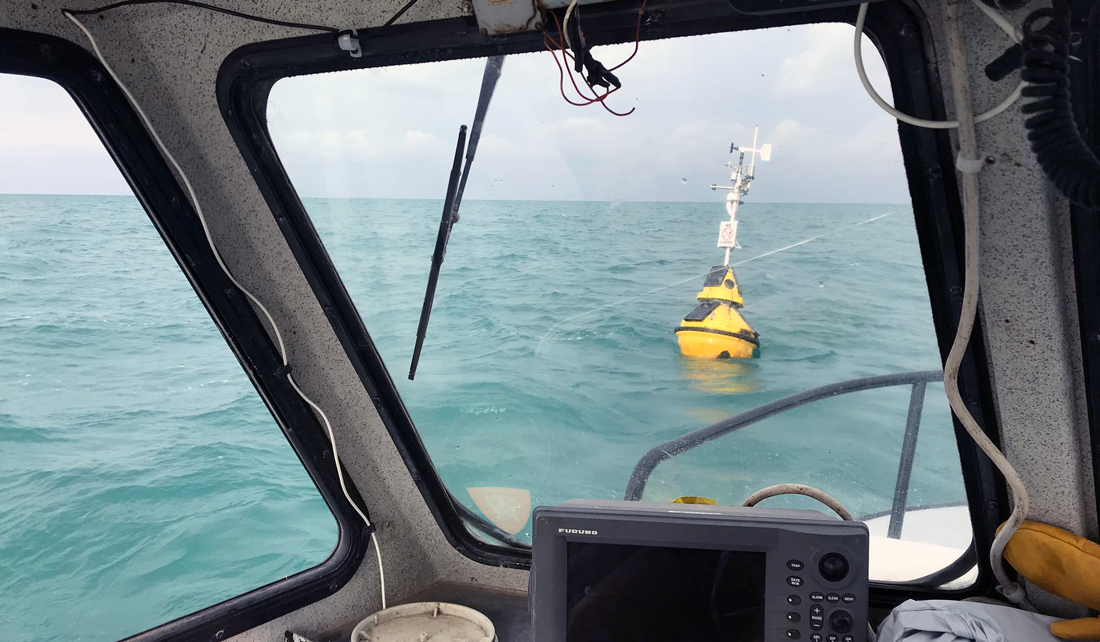
floating yellow buoy can be seen in water through a boat window
We all know buoys are critical for water safety on the Great Lakes, but did you know data is collected from an entire network of technology for scientists to analyze regional trends, natural resource managers to improve their work and policy makers to make informed decisions?

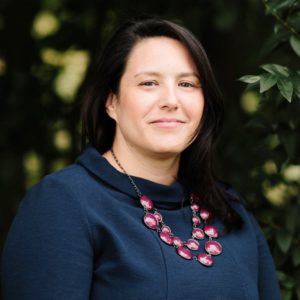
headshot of dark-haired woman with trees in the background

In Episode 10 of Teach Me About the Great Lakes, titled “A Lot of Different Kinds of Data,” Illinois-Indiana Sea Grant’s Stuart Carlton and Hope Charters talk with Kelli Paige, chief executive officer of the Great Lakes Observing System (GLOS), about how GLOS works with Illinois-Indiana Sea Grant and other partners across the Great Lakes to collect and visualize important and useful data. We also discuss how data use has changed as technology has changed and about GLOS’ Smart Great Lakes Initiative.

Teach Me About the Great Lakes is a monthly podcast in which Carlton—a social scientist who grew up in the South near the Gulf of Mexico—asks people to explain the biology, ecology and natural history of the Great Lakes. A new episode will be released on the first Monday of each month. The latest episode is embedded below.

If this isn’t enough buoy content for you, check out our How Buoys Help page and Two Yellow Buoys on Twitter. 

Love this episode and want to hear more in the future? Subscribe on Apple Podcasts or Spotify, or use the RSS feed in your favorite podcast player.

If you have questions you want answered about the Great Lakes, reach out to Stuart Carlton.


Illinois-Indiana Sea Grant is a part of University of Illinois Extension and Purdue Extension.

IISG Instagram

Located in Washington, D.C., the Sea Grant Knauss Fellowship provides a unique educational and professional experience to graduate students who have an interest in ocean, coastal and Great Lakes resources, and in the national policy decisions affecting those resources. This is a one-year fellowship open to any student, regardless of citizenship, who is enrolled toward a degree in a graduate or professional program on the day of the deadline.Students enrolled at an Illinois or Indiana university or college should submit their applications through Illinois-Indiana Sea Grant by emailing Angela Archer at amcbride@purdue.edu. Students in surrounding states without a Sea Grant program should contact the National Sea Grant College Program at oar.sg.fellows@noaa.gov for a referral. Application deadline: June 3, 2026.To learn more about the fellowship, visit the link in bio.
PD hours + Great Lakes science + hands-on learning? Yes please.Illinois-Indiana Sea Grant has five educator workshops lined up for spring and summer 2026, covering birds, watersheds, coastal science, earth systems, and engineering design.🐦 May 3 · 💧 June 10 · 🌊 July 16 · 🌍 July 31–Aug 1 · 🏗️ Aug 18Real-world connections. Field experiences. Takeaways your students will actually feel.🔗 Register at the link in bio.
Invasive crayfish are reshaping freshwater ecosystems, and there's a lot of new ground to cover. 🦞The Invasive Crayfish Collaborative is hosting two virtual lightning talk sessions packed with the latest on impacts, distribution, management, and policy.💻 Session 1: Mon, April 27 | 3 pm ET / 2 pm CT💻 Session 2: Tue, April 28 | 12 pm ET / 11 am CT🔗 Registration links in bio.
