
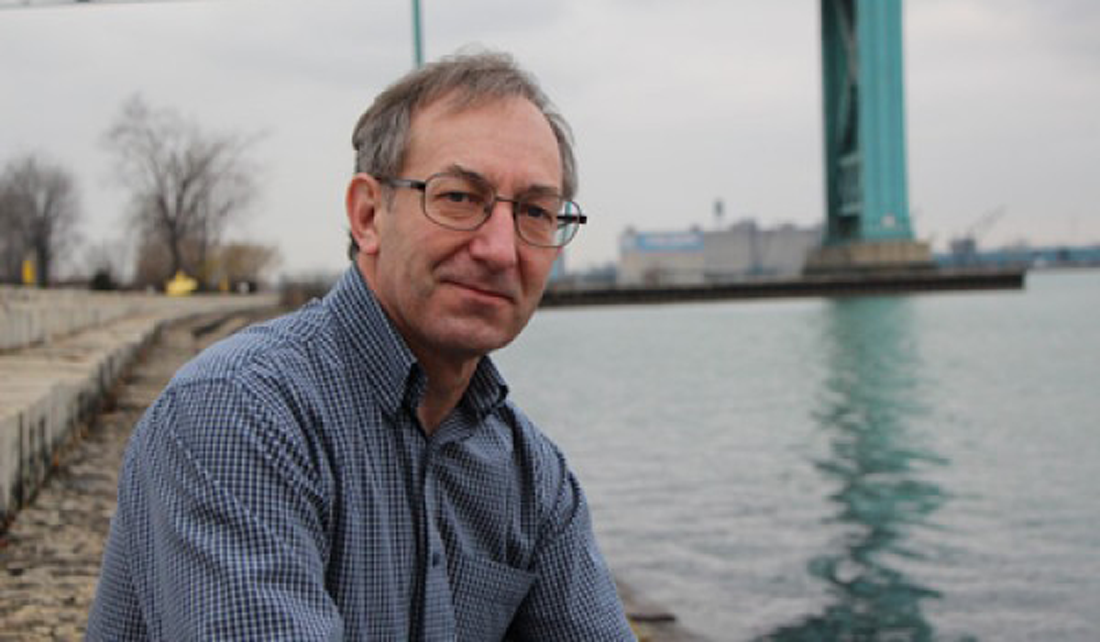
Jan Ciborowski
Jan Ciborowski (University of Windsor photo)

When the International Association for Great Lakes Research (IAGLR) held its 2020 conference entirely online last week, Teach Me About the Great Lakes was there to stream a live interview—a first for the podcast. In Episode 12, titled “You Never Lose Track of Your Old Friends,” Illinois-Indiana Sea Grant’s Stuart Carlton and Carolyn Foley speak with Jan Ciborowski, the 2020 IAGLR Lifetime Achievement Award winner. Ciborowski is an entomologist-turned-food-web-ecologist who has studied invertebrates and water quality in streams, wetlands, lakes and more during his over 40 year career. 

Carlton, Foley and Ciborowski discuss how terrifying mayfly sampling can be, the pros to an open-door policy in research labs, and why the key to solving complex problems is “a big enough room and the right kind of beverages.” This episode also features heartfelt testimonies from some of Ciborowski’s over 250 former graduate students, highlighting how appreciative they are for his work and mentorship.

Teach Me About the Great Lakes is a monthly podcast in which Carlton—a social scientist who grew up in the South near the Gulf of Mexico—asks people to explain the biology, ecology and natural history of the Great Lakes. A new episode will be released on the first Monday of each month. The latest episode is embedded below.

Love this episode and want to hear more in the future? Subscribe on Apple Podcasts or Spotify, or use the RSS feed in your favorite podcast player.

If you have questions you want answered about the Great Lakes, reach out to Stuart Carlton at jsc@purdue.edu.


Illinois-Indiana Sea Grant is a part of University of Illinois Extension and Purdue Extension.
IISG Instagram

Looking for a fun way to teach about marine debris? Check out Me and Debry, which is a whimsical, 30‑minute, audience‑participation play created for @UWiscSeaGrant. It helps students explore what marine debris is, why it matters, and how we can make a difference in the Great Lakes.The full script (English) and participation scripts (English, Spanish, and Hmong) are free to use, along with marketing materials for performances.Bring learning to life and start a conversation about litter in our waters!Check it out at the link in bio.#TeachingTuesday
Do you work or live along the Great Lakes coasts? Watch our newly released video series collection, containing several short videos that overview the range of coastal protection options in the Great Lakes, including:- Natural processes in the Great Lakes- Hard coastal protection structures and how they interact with/alter natural processes- Nature-based coastal solutions in the Great Lakes, ranging from green to gray approachesFind our two new video series at the link in bio.
Located in Washington, D.C., the Sea Grant Knauss Fellowship provides a unique educational and professional experience to graduate students who have an interest in ocean, coastal and Great Lakes resources, and in the national policy decisions affecting those resources. This is a one-year fellowship open to any student, regardless of citizenship, who is enrolled toward a degree in a graduate or professional program on the day of the deadline.Students enrolled at an Illinois or Indiana university or college should submit their applications through Illinois-Indiana Sea Grant by emailing Angela Archer at amcbride@purdue.edu. Students in surrounding states without a Sea Grant program should contact the National Sea Grant College Program at oar.sg.fellows@noaa.gov for a referral. Application deadline: June 3, 2026.To learn more about the fellowship, visit the link in bio.
