Posted September 29th, 2015 in Education, Great Lakes Data
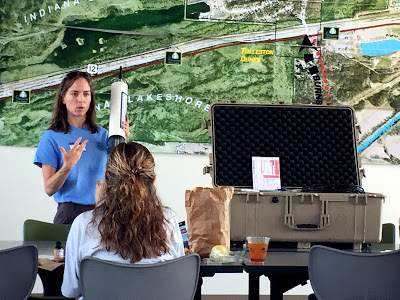
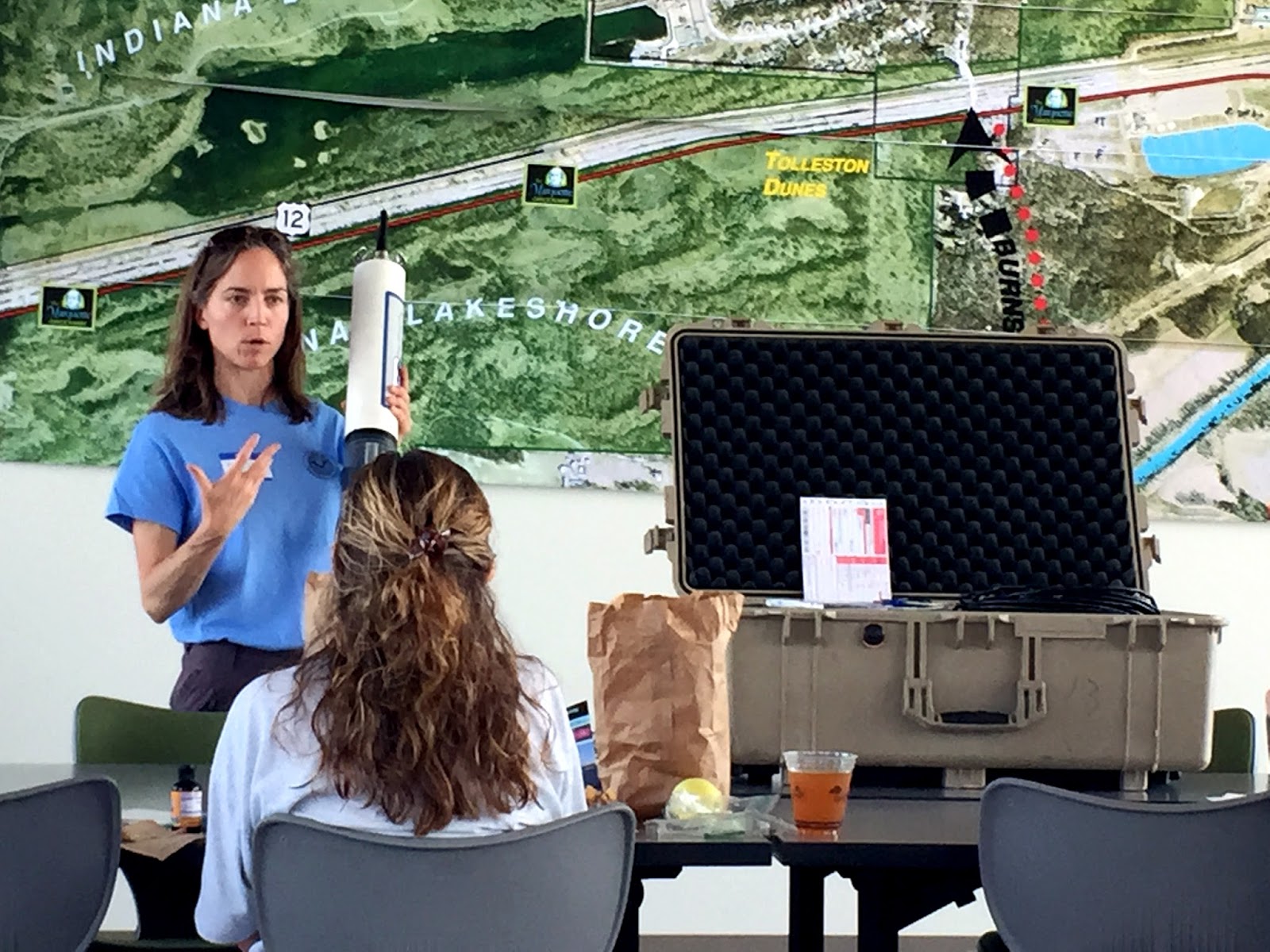 Environmental educators gathered at Portage Lakefront in Indiana last Friday to attend a Hydrolab training workshop led by IISG community outreach specialist Kristin TePas.
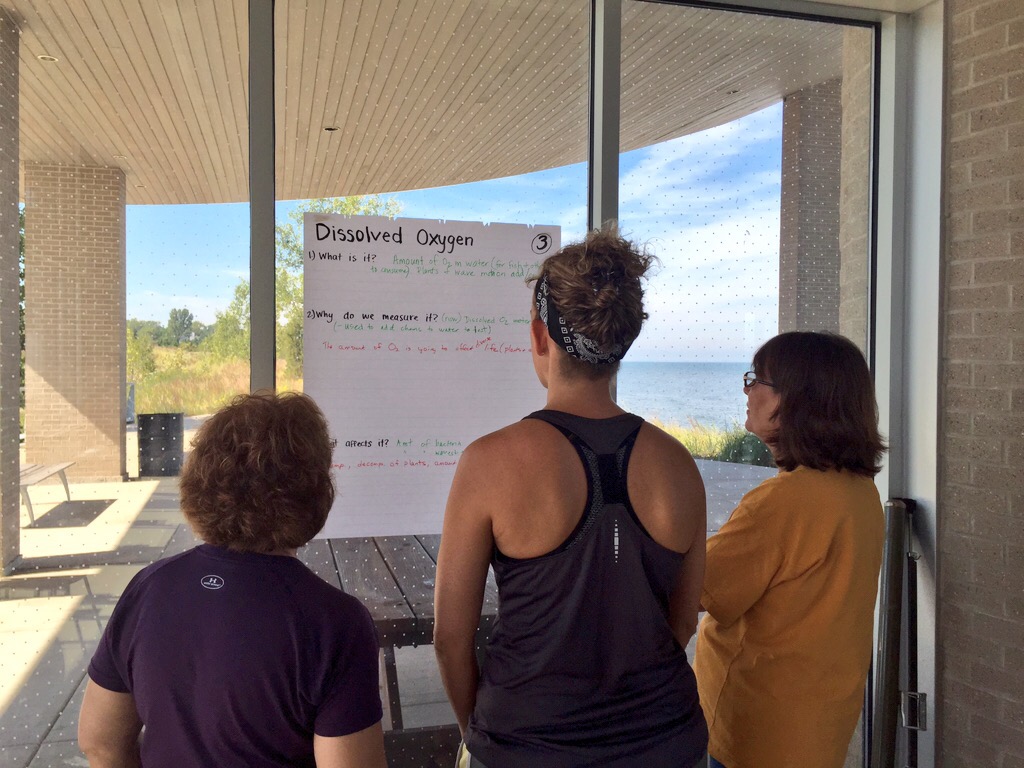
The day kicked off with an activity to get an idea of the group’s knowledge of water quality parameters the Hydrolab, a sophisticated data-gathering instrument, is capable of measuring.
TePas asked the educators to write down what each parameter is, why it’s measured, and what affects it.
One of the parameters, “turbidity,” struck one Indiana educator, as a cool name for a band. After a good laugh, he and the larger group were able to come up with descriptions of what kind of information the Hydrolab is gathering when it’s submerged, like calculating dissolved oxygen, pH, temperature, conductivity, and chlorophyll a.
The remainder of the afternoon was spent familiarizing educators with the equipment, how to borrow the Hydrolab through the Limno Loan program, and a variety of lessons and activities that would work well in their own educational settings.
With hands-on training under their belts and implementation plans drawn up, the Hydrolab is likely going to make some extra visits to Indiana in the coming months.