September 16th, 2014 by iisg_superadmin
Our education team is at it again! Allison Neubauer wrote in with this exciting announcement:
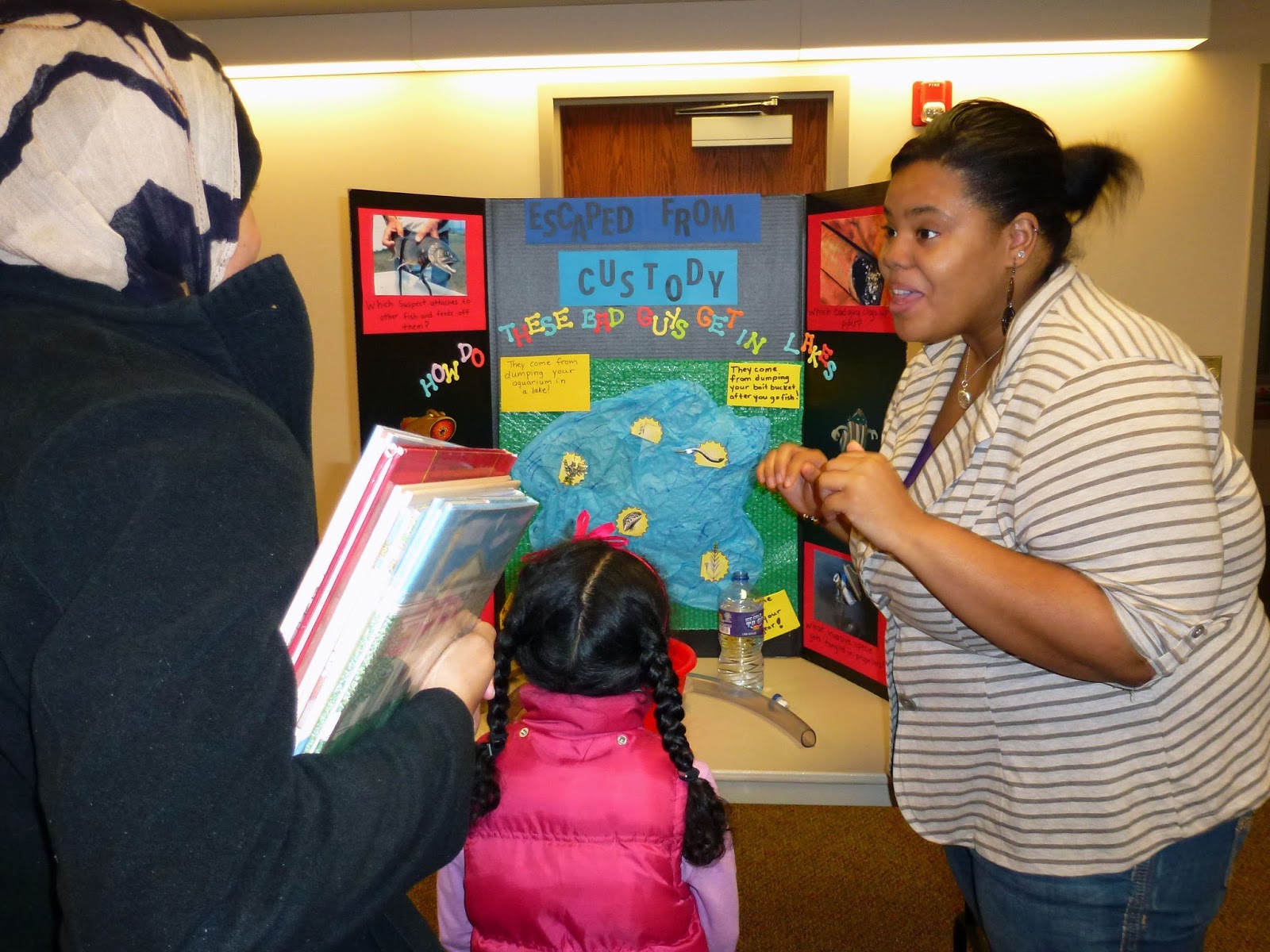
 Teachers across the Great Lakes region—have we got a treat for you! You can now explore creative projects from all-star educators to spark new ideas and read important tips for getting your students involved in the effort to “nab” local aquatic invaders.
The IISG education team has been working hard to compile model projects that successfully tie together AIS education and community stewardship. Our revamped Nab the Aquatic Invader! website will help you up your game—and the new-and-improved Top Desk Administrator is your one-stop-shop for project ideas.
Community stewardship projects like the ones highlighted here are an exceptional tool for pushing students beyond rote memorization and providing them with an opportunity to apply their knowledge in ways that have positive impacts on their communities.
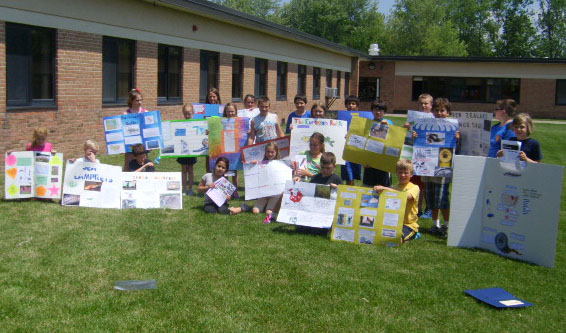
Preview outstanding examples of student work, ranging from fun informational activity books to catchy musical compilations. When you’re done perusing, read the summary reports written by the teachers responsible for these successful activities for information on how to plan and implement similar projects in your own classroom.
The Nab the Aquatic Invader! website is the place for the latest and greatest invasive species project models, information, and activities.
September 15th, 2014 by iisg_superadmin
When researchers and the media talk about Asian carp reaching the Great Lakes, they are typically referring to bighead and silver carp, the two voracious phytoplankton eaters that are wreaking havoc in places like the Mississippi and Illinois rivers. But the species most likely to establish in Lake Erie may actually be a third member of the Asian carp family: grass carp.
From The Voice:
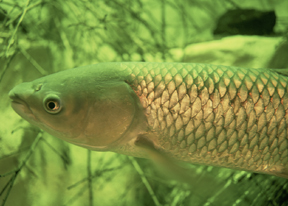
“Grass carp are a different kind of fish and pose different kinds of risk than bighead and silver carp,” said Jeff Tyson, administrator of the Lake Erie Fisheries Program Administrator for the Ohio Department of Natural Resources. Tyson addressed a meeting of environmental writers at Ohio State University’s Stone Lab in Lake Erie on Aug. 18. “We know we have some grass carp in the system. Grass carp impact the system through their impacts on structure and vegetation. They consume huge amounts of vegetation.”
Grass carp could put Lake Erie at risk “by damaging habitats and damaging fish in communities given the documented reproduction of grass carp in large rivers,” according to the Ohio Asian Carp Tactical Plan, 2014-2020. “Grass carp can also decimate submersed aquatic vegetation that is critical to migrating waterfowl and other water birds.” Read more.
**Photo courtesy of Eric Engbretson, US Fish and Wildlife Service, Bugwood.org.
September 12th, 2014 by iisg_superadmin
Our summer internship program has wrapped up for another year. This year, seven students and recent graduates worked with our specialists on a broad range of issues, including AIS prevention, sediment remediation, and water supply planning. Catherine Kemp and Jennifer Egert spent their summer working with Margaret Schneemann, IISG’s water resource economist.

Catherine’s work this summer focused on outdoor water conservation and natural lawn care outreach. As part of this, the University of Illinois student teamed up with Kane County and the Northwest Water Planning Alliance to create library displays highlighting a few easy steps homeowners can take to conserve water and reduce landscaping pollution.
“I also organized a composting workshop for gardeners and worked on a white paper exploring the connection between sustainable look food systems and water. My projects covered such a diverse range of topics that my internship was really engaging and enjoyable. It was so great to work on issues that I am passionate about.
There are so many organizations that inform and implement environmental policies in the Chicagoland area. I have learned a lot about the work they do and the importance of the large amounts of collaboration that occur here. My internship really opened my eyes to the opportunities available to me in the future.”
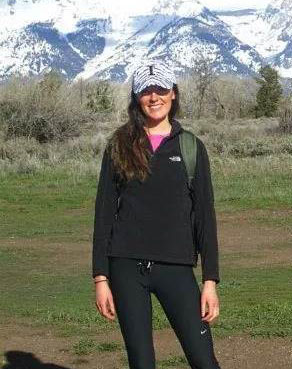 Jennifer, a senior at the University of Illinois at Urbana-Champaign, dedicated her internship to creating a new, condensed version of the Full-Cost Water Pricing Guidebook using updated data.
“I worked with Margaret to collect water rate data from 284 municipalities in northeastern Illinois and used GIS software to design effective visuals and maps summarizing municipal water rate changes over the past five years. I also included supplemental policy recommendations based on the visuals created along with best management practices for incorporating full-cost water pricing across the region.
What I enjoyed most about this internship was having the chance to use skills gained from my environmental science education and apply them to a project that has real implications for citizens in the area. I got to go home every day feeling like I had accomplished something worth-while that will benefit our environment and precious natural resources.”
Both Jennifer and Catherine say they will continue working on environmental issues after they graduate. Catherine plans to join the Peace Corps’s environmental program, while Jennifer hopes to work in environmental law and policy.
September 11th, 2014 by iisg_superadmin
Laura Kammin, our pollution prevention specialist, has some exciting news. Let’s let her tell you about it:
If you only had a minute, what would you say?
Just one minute to explain what pharmaceutical waste is and how people can help reduce it. That was the challenge posed by our new pollution prevention team members Erin Knowles and Adrienne Gulley.
Challenge accepted! Here it is, the first installment of the Illinois-Indiana Sea Grant Pollution Prevention Minute.
We know it’s a long name. But don’t worry, the content isn’t. They’re one—ok, maybe sometimes closer to two—minute videos that give easy-to-understand answers to some of the more complicated questions surrounding the use, storage, and disposal of pharmaceuticals and personal care products.
Why videos? We are always getting asked questions like “what happens to the medicine that gets collected?” and “what are microbeads?” We think these new videos are a fun way to share the answers.
And be sure to subscribe to our YouTube channel and watch for the next episode of IISG’s Pollution Prevention Minute.
September 9th, 2014 by iisg_superadmin
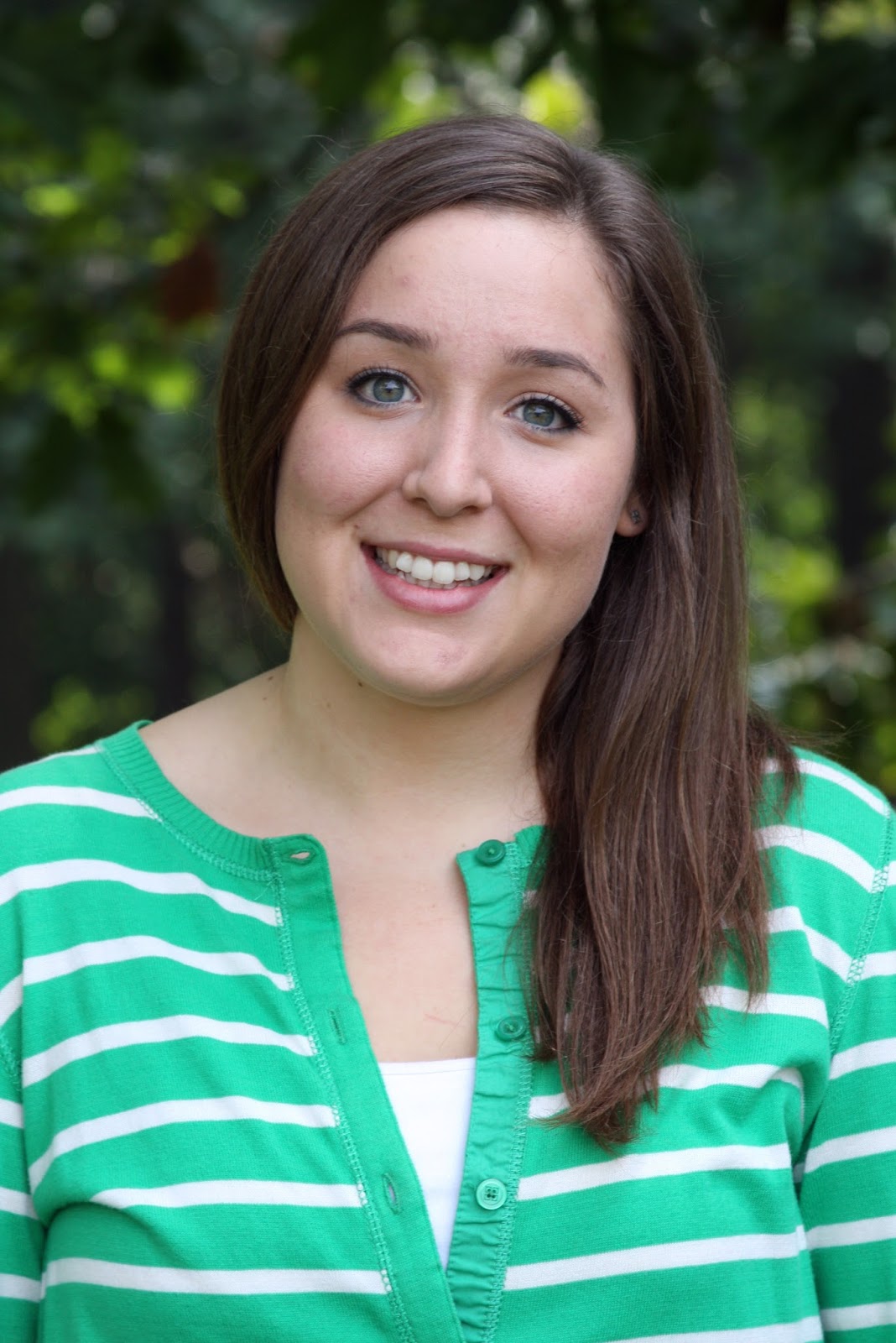 When we first introduced you to Allison Neubauer she was a summer intern working with IISG’s Kristin TePas to develop a website and other outreach materials for the U.S. EPA research vessel Lake Guardian. That was last summer. Today we are happy to announce that Allison is still working hard to improve Great Lakes literacy. Only now she is doing it as a member of our education team.
As a Sea Grant educator, Allison Neubauer works with Terri Hallesy to plan and facilitate educator workshops and develop classroom resources. She also plays a key role in IISG’s undergraduate service-learning courses at the University of Illinois by leading classroom activities and serving as a resource for students as they implement community projects.
Allison joined the education team as an assistant straight out of her internship. During that time, she helped plan and implement the Great Lakes B-WET project, which received an Outstanding Great Lakes Outreach Programming Award.
She holds two Bachelor’s degrees from the University of Illinois at Urbana-Champaign, one in geography and geographic information sciences and a second in earth, society, and the environment.
September 8th, 2014 by iisg_superadmin
The Drug Enforcement Administration (DEA) has just announced new regulations for the disposal of controlled substances that make it possible for retail pharmacies to collect pharmaceuticals, including controlled substances. The long-awaited policy change, which goes into effect Oct. 9, means there could soon be many more locations—and more convenient ones at that—for you to dispose of your unwanted medicines.
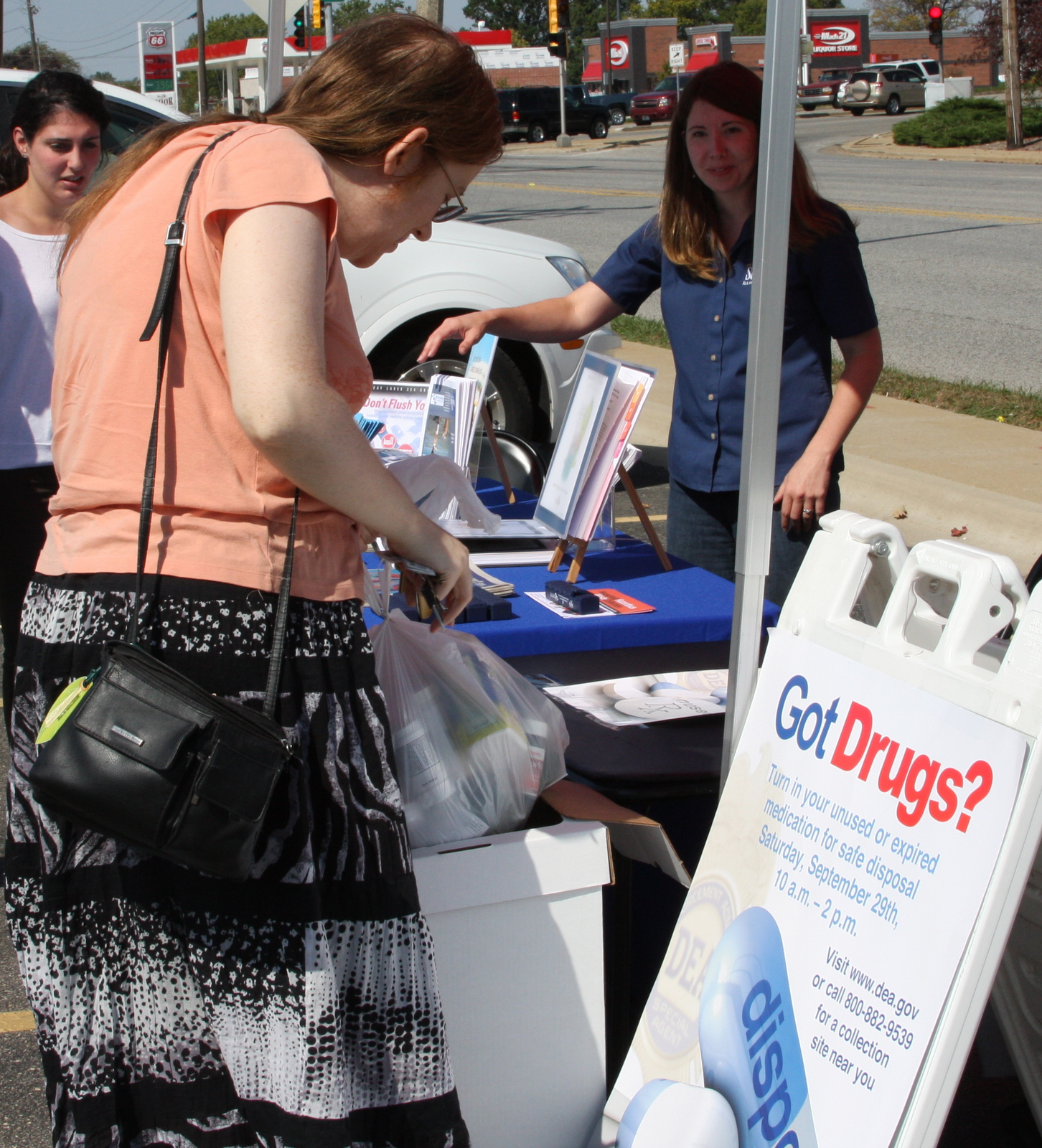 Permanent and single-day collection programs have been a reality in many communities across the country for years. But these programs were led by city, county, and state police departments, the only groups allowed to accept controlled substances from those looking to properly dispose of the unused medicines. This limited the number of available programs and often made it difficult for the public to properly dispose of their pharmaceuticals conveniently.
Law enforcement agencies will continue to manage take-back programs under the new regulations. But they can now be joined by manufacturers, distributors, reverse distributors, and retail pharmacies.
The new law does not create new collection programs, and it doesn’t require others to either. The amendment to the Controlled Substances Act simply makes room for groups outside law enforcement to voluntarily establish mail-back programs or maintain collection boxes. Retail pharmacies also have the option of administering collection programs at long-term care facilities.
We are very happy that the regulations are finally out. But the work around here will continue much as it has for the last seven years. Our pollution prevention team will continue to educate the public on the proper use, storage, and disposal of PPCPs. And they are still working closely with communities to set up legal, sustainable take-back programs.
September 4th, 2014 by iisg_superadmin
Our summer internship program has wrapped up for another year. This summer, seven students and recent graduates worked with our specialists on a broad range of issues, including AIS prevention, sediment remediation, and water supply planning. Jacob Wood spent his internship working with several members of our Purdue staff. He had this to say about his summer experiences:
“I applied for the IISG internship because I wanted to get more experience with GIS work related to the environment. And that is exactly what I got.
I spent most of the summer creating GIS maps that represent fish catch data for Lake Michigan so that local fisherman can get a better idea of fishing trends and hotspots. The overall goal is to make a web app to helps users determine the historically-best spots to catch fish like Chinook salmon and Lake Trout during a specific time of year. Towards the end of the summer, I also started working on maps representing climate change predictions for Lake Michigan. These maps will go towards aiding fisheries managers in understanding future biotic and abiotic conditions. Lastly, I worked on incorporating updated stream and land coverage data into the tipping points webtool, which shows individuals and planning groups how close a watershed is to known tipping points or ecosystem thresholds.
One of the things I liked the most about my internship is that I was encouraged to explore the software I was working with and any information related to the projects. Rather than just focusing on completing a job or making a deadline, I was able to set aside some time each week to discover different aspects of software and just try learning new things. Because of this, I developed numerous GIS skills this summer. Specifically, I have a stronger grasp now of how to use model building features to make work faster, easier, and replicable, as well as how to make maps that represent data clearly for everyone.”
Jacob is now a senior at Purdue University studying environmental and natural resources engineering. After graduation, he hopes to work as an environmental engineer with an agency like the Natural Resources Conservation Service or the Indiana Department of Natural Resources.
September 2nd, 2014 by iisg_superadmin
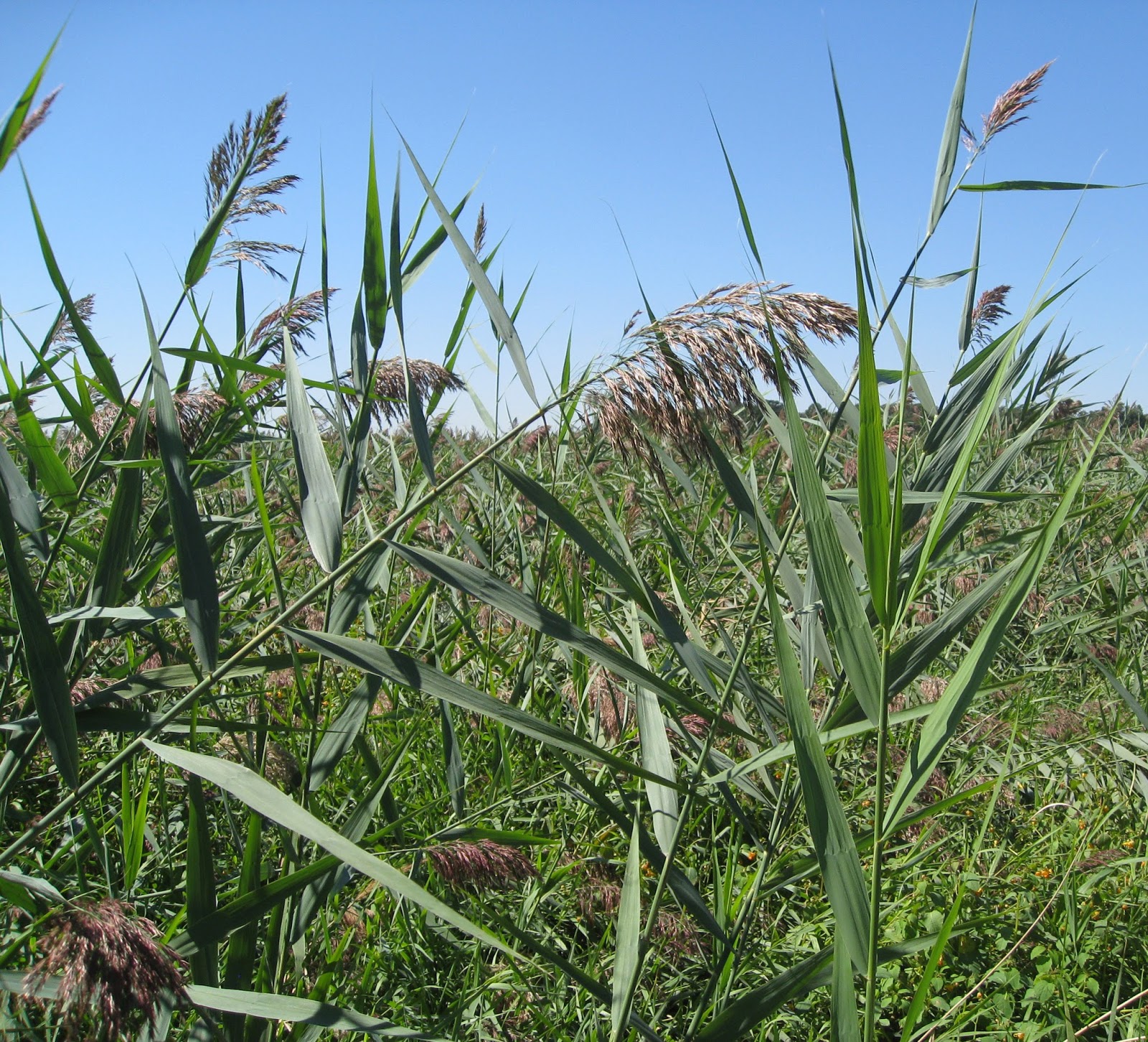 Researchers at the Chicago Botanic Garden are asking wetland managers across the country to join PhragNet, a collaborative network that brings scientists and managers together to improve Phragmites control strategies. From the latest issue of IISG’s The Helm:
The idea behind PhragNet is simple. Managers provide soil and plant samples and share information about their management strategies and goals. In return, researchers use that data to better understand Phragmites invasions and help managers hone in on the most effective control and restoration strategies.
The IISG-funded network is still in its early stages, but PhragNet co-founders Dan Larkin, Jeremie Fant, Vicky Hunt, and others have already collected data from roughly 50 participants in 15 states and Ontario.
“There is so much we can learn by ‘crowd-sourcing’ information about how to effectively manage Phragmites-impacted wetlands,” said Larkin. “The value will increase over time as we see how sites respond to management.”
For more information on how to join, visit the Great Lakes Phragmites Collaborative’s PhragNet page.
August 29th, 2014 by iisg_superadmin
 Our summer internship program has wrapped up for another year. This summer, seven students and recent graduates worked with our specialists on broad range of issues, including AIS prevention, sediment remediation, and water supply planning. Brittany Sievers spent her internship working with Kara Salazar, IISG’s sustainable communities specialist. She had this to say about her summer experiences:
“Since my internship covered many programs, I worked on different projects every day, which kept me busy and engaged. Some of my favorite projects were those that gave me an opportunity to develop my professional writing skills and become a published author. I wrote several curriculum pieces for the Enhancing Public Spaces program and pieces that will appear on the program’s website once it is complete. I expanded the Green Meetings and Events Planning Guide that a previous intern created by adding ‘cheat sheets’ for large events and professional meetings that summarized the information provided within the publication. Finally, I wrote scripts for two rainscaping training videos—plant selection and rain garden design.

I was also able to get out of the office and work directly with the public and other key stakeholders on several occasions. I was at the Wabash Riverfest with a trivia game geared towards children that I developed. I also assisted Kara during pilot testing of the Tipping Points and Indicators tool in Hobart, IN and with a presentation of the program during the 2014 Institute for Sustainable Development in Nashville, IN.
Since I plan to work in an outreach position in the future, this internship was perfect for me. I had not had work experience in outreach before, but I have enjoyed being active in several outreach clubs at Purdue to facilitate positive change on the Purdue University campus and the surrounding community. I know my experiences this summer will help my chances of landing a job and excelling in that position in the future.”
With her undergraduate work in natural resources and environmental sciences complete, Brittany is turning her sights to graduate school. In fact, she began work on a Master’s in marine conservation and policy earlier this week at Stony Brook University in New York.