August 27th, 2014 by iisg_superadmin
Summer is coming to an end, but there is still plenty of fun to be had this weekend. If you’re like us, you’re anxious to hit the road to your favorite beach, boat launch, or fishing spot. But before you do, we have a message that will help keep these places healthy for many Labor Days to come. And you may just see it on the car in front of you.
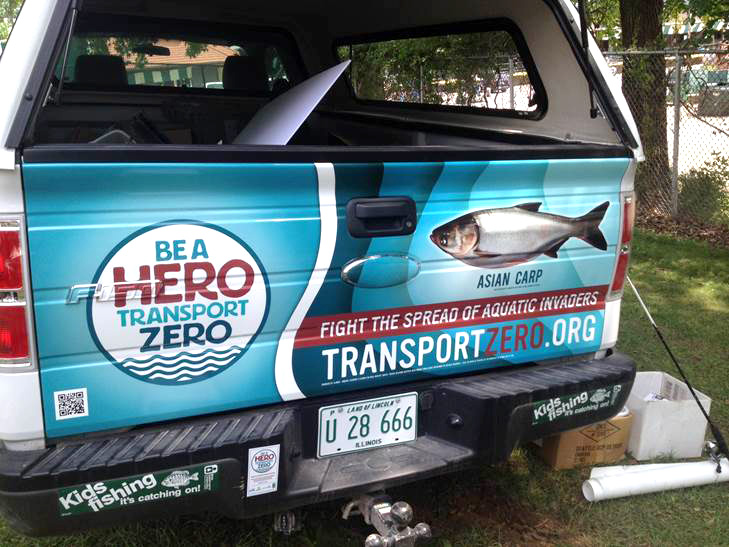
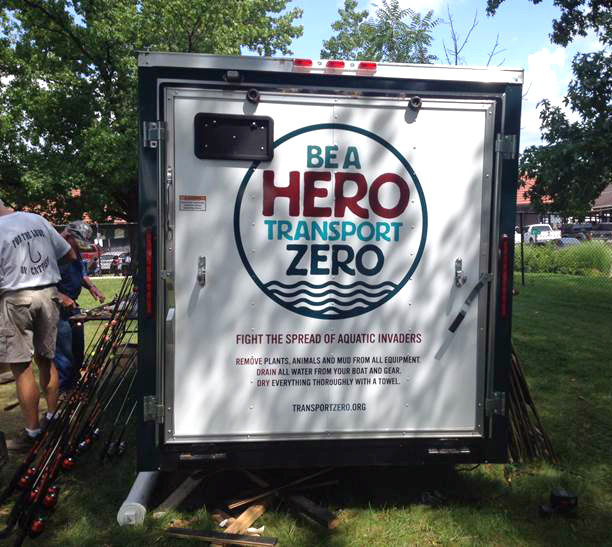
The Illinois Department of Natural Resources has emblazoned nine vehicles with a reminder to Be a Hero—Transport Zero. It’s all part of a statewide program that is raising awareness about how the public can help prevent the spread of invasive species on land and in waterways. These plants and animals can wreak havoc on food webs, water quality, and recreation. The three featured in IDNR’s tailgate designs—Asian carp, zebra mussel, and hydrilla—are some of the worst offenders, but there are many more, and they aren’t always easy to recognize.
So what can you do? Just follow three easy steps before you leave the water this weekend:
– Remove any plants, animals, and mud from boats, trailers, and equipment
– Drain everything—bait buckets, live wells, etc.
– Dry everything with a towel
From boaters and kayakers to waterfowl hunters, scuba divers, swimmers, and more, we can all help prevent invasive species from taking over our favorite waterways.
See you on the water!
August 26th, 2014 by iisg_superadmin
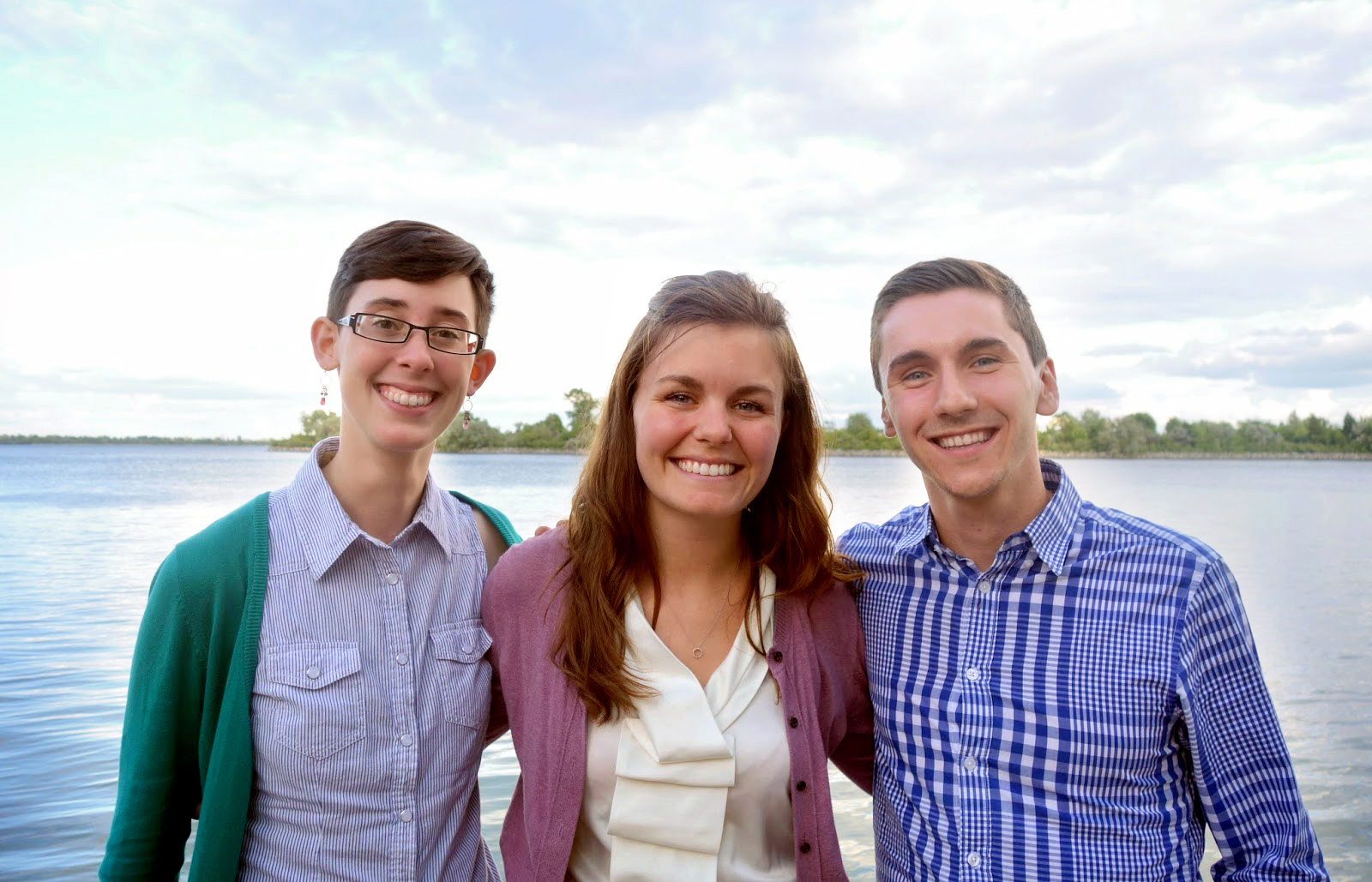
.jpg) We recently got some exciting news from former intern Ada Morgan, who in 2011 worked with Caitie McCoy on a study of community perceptions of sediment remediation in the Sheboygan River Area of Concern. We’ll let her tell you what she has been up to since.
We recently got some exciting news from former intern Ada Morgan, who in 2011 worked with Caitie McCoy on a study of community perceptions of sediment remediation in the Sheboygan River Area of Concern. We’ll let her tell you what she has been up to since.“The Sheboygan study finished up just before I graduated from the University of Illinois at Urbana-Champaign. I studied economics and environmental geology there, and I knew I wanted to continue my studies in the environmental field. I was encouraged by Caitie and a few others I looked up to to look into graduate school. That fall, I began a master of urban planning and policy program at the University of Illinois Chicago, where I continued to learn about how humans interact with our environment and how to think holistically about the decisions we make.
My specialization was in environmental planning. I took some great courses, like an economic and environmental planning course and a course on residential sustainability policy. My final project centered on greywater reuse in a south suburb of Chicago.
I graduated this past May and am now the environmental and sustainability coordinator for a bread manufacturing company. I started just a few weeks ago. I am responsible for both environmental compliance (permits, etc.) and sustainability projects and initiatives. My main task so far has been re-developing an environmental management system for the entire company, which has four different facilities.
My experiences working with Caitie at IISG was the best preparation I could have had for both graduate school and my current job. I was able to participate in almost all aspects of the Sheboygan study. I helped with interviewing stakeholders, performed data analysis, and co-authored the final report with Caitie. You don’t often get this kind of hands-on experience with qualitative analysis and reporting in school.
I also learned a lot about environmental regulations since the project I worked on was under EPA’s Great Lakes Legacy Act. Understanding the regulatory structure helped tremendously while I was in the urban planning program (reading codes) and continues to help me navigate compliance issues at my company. Overall, the time I spent at IISG was one of my most valuable internships, and I am extremely thankful to have had the opportunity to work at such a fantastic organization.”
August 20th, 2014 by iisg_superadmin
You have probably heard that pharmaceuticals have been found in rivers and streams, groundwater, and drinking water throughout the country, in part because medications are sometimes flushed down the toilet or thrown in the trash. While the contamination levels are not yet proven to pose health threats to people, studies have shown that these chemicals are have been linked to impaired development, behavior, and reproduction in aquatic wildlife.
In 2013, Illinois-Indiana Sea Grant, which has been a leader in addressing the need for safe medicine disposal, provided assistance to 39 permanent collection programs in both states. IISG also supported single-day collection events in 14 communities by assisting with the collections, writing press releases, and providing educational materials.
As a result, 12,040 pounds of medicine were properly disposed of through permanent collection programs and single-day events supported by IISG. The medicine was destroyed using high-heat incineration, thus reducing the potential for diversion or accidental poisonings and keeping the chemicals out of local water.
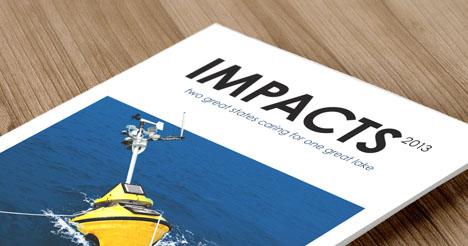
To learn more about how IISG is empowering communities and individuals to secure a healthy environment, check out our 2013 program impacts.
August 19th, 2014 by iisg_superadmin
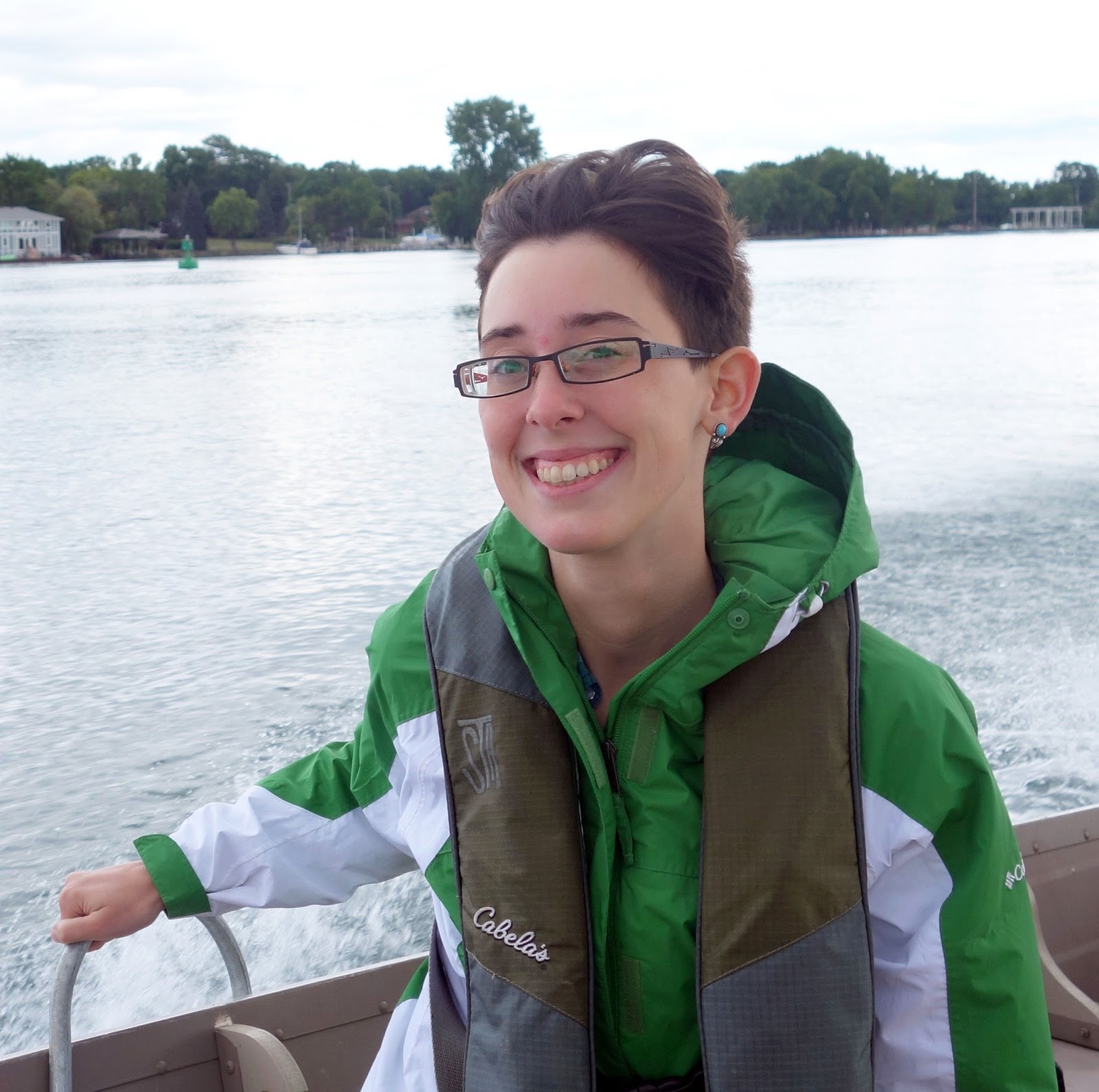
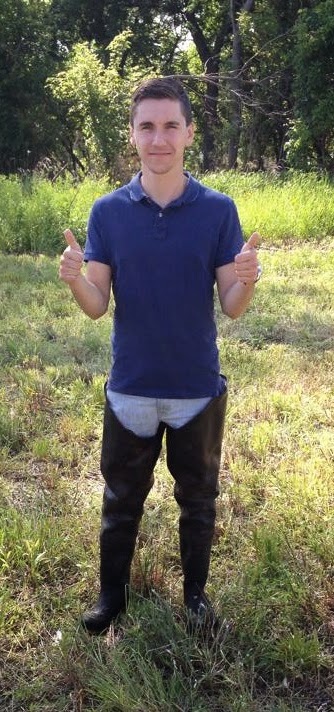
Our summer internship program has wrapped up for another year. This year, seven students and recent graduates worked with our specialists on a broad range of issues, including AIS prevention, sediment remediation, and water supply planning. Erika Lower and Mark Krupa spent their internship working with Caitie McCoy, IISG’s social scientist.
“We did a little bit of everything this summer—from compiling reports on public perceptions of river cleanups in Detroit and Milwaukee to conducting interviews with community members to covering a day of outreach at Indiana’s Roxana Marsh” said Erika, a graduate from Virginia Tech who also interned last year with Virginia Sea Grant. “Working on so many diverse projects mean there was rarely a slow day at the office.”
Their favorite experiences came while onsite at Great Lakes Legacy Act sediment remediation projects. One such trip took them to the Upper Trenton Channel near Detroit to conduct a needs assessment that will help the project team tailor outreach products and messaging to those who use and visit the river.
“Our Detroit trip was definitely my favorite part,” said Mark, a University of Illinois alum. “We talked to over 30 different community members. It was great to see the site we had researched and really get to know the community, their concerns, and how they value the waterway.”
“How often do you get a chance to tour the site of a former oil refinery or conduct an interview from a powerboat in the middle of the Detroit River while watching the sun rise?” Erika added.
 These experiences further boosted their interest in the social science and highlighted its importance in environmental conservation.
“I’ve always been interested in the human dimensions of environmental science, but actually getting out into the field and talking with community members about their hopes and concerns illustrated just how complex finding the best solution to environmental issues can be,” said Erika.
“Before this internship, I didn’t realize how important it is to address local perceptions and concerns surrounding environmental cleanup projects,” said Mark. “Also, I hadn’t realized how much thought goes into designing outreach materials in order to ensure they attract an audience and effectively communicate the message.”
With their internship complete, Erika and Mark are turning their attention to graduate school. Mark will begin a Master’s in public health at Saint Louis University later this month. And Erika plans to complete graduate work in science communication or environmental social science.
August 15th, 2014 by iisg_superadmin
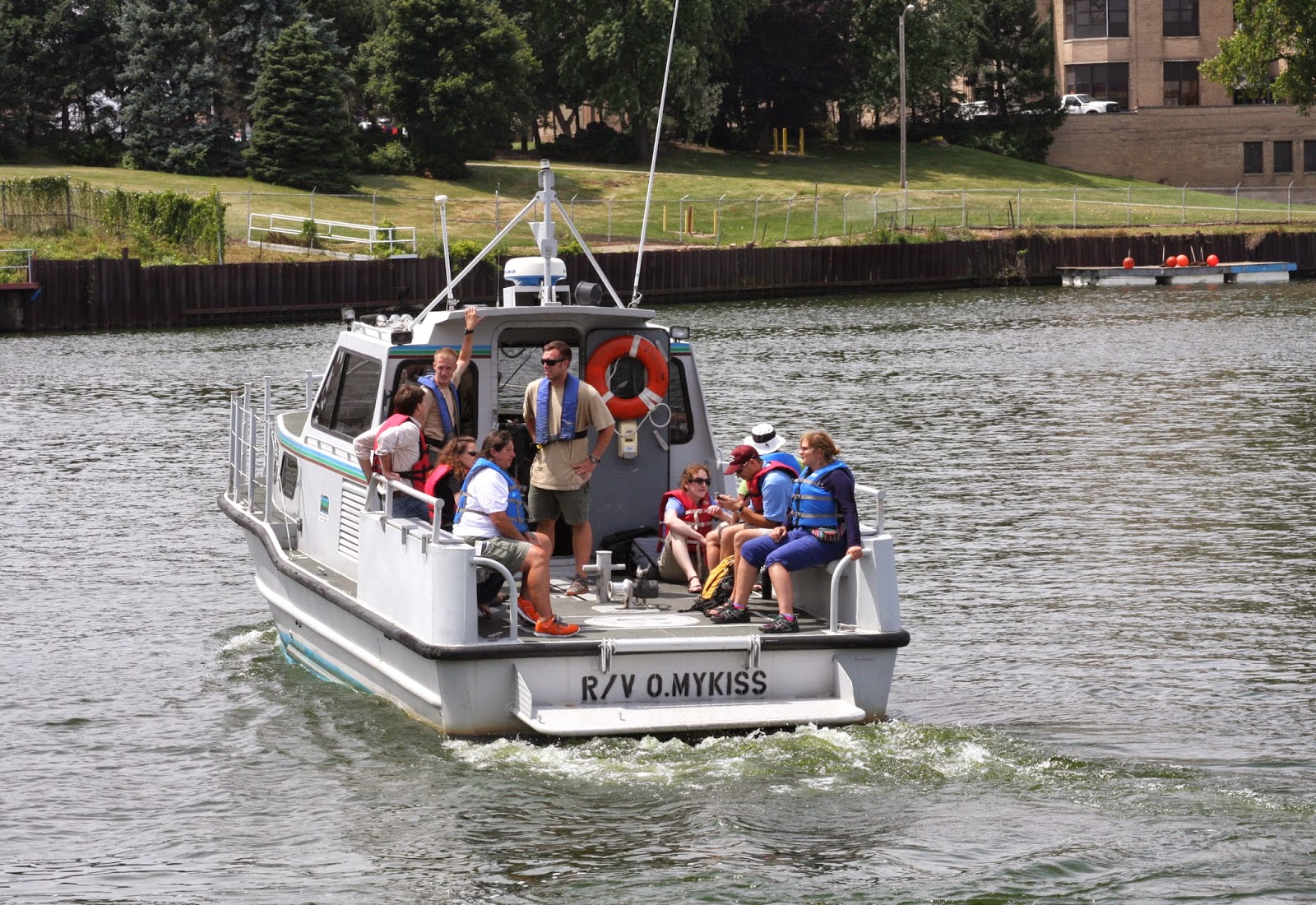 Fourteen teachers from Illinois and Indiana are hard at work developing new science lessons that incorporate real-time data from the Michigan City buoy after a training workshop held last week at Purdue North Central.
During the day-long workshop, IISG’s education and research teams, along with Purdue University’s Cary Troy
, introduced teachers to the environmental monitoring buoy, the data it collects, and how researchers are using the data to better understand the nearshore waters of Lake Michigan.
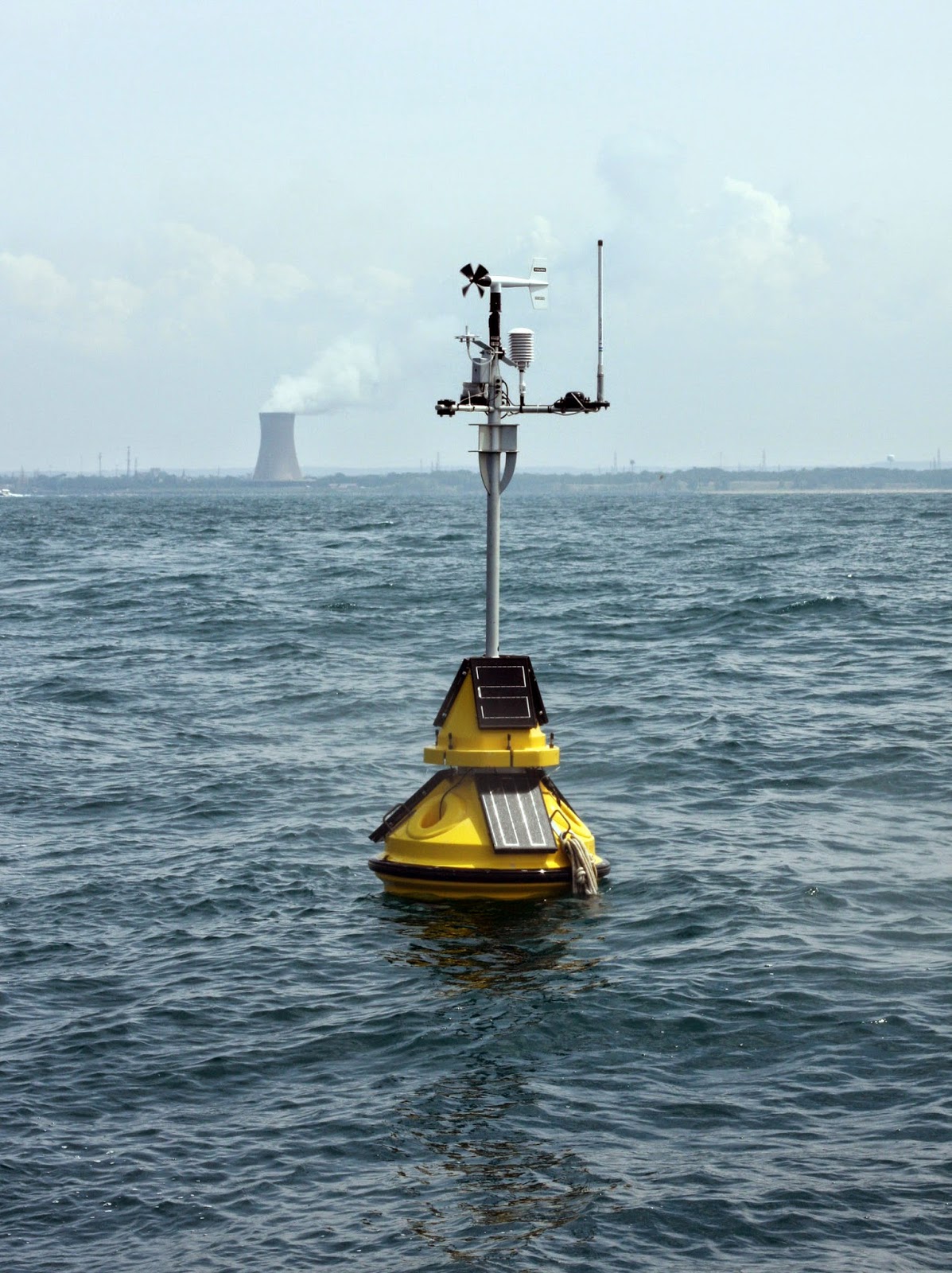 The highlight of the workshop for many was the boat ride four miles into Lake Michigan to see the buoy first-hand—in smaller groups due to the size of the boat. The trips also gave teachers the opportunity to talk more with researchers and staff from the Indiana Department of Natural Resources(DNR) about the buoy and other data collection methods used to monitor fisheries, understand lake dynamics, and improve water safety.
The teachers will work together to develop at least six curriculum activities that improve STEM education—science, technology, engineering, and math—and boost understanding of Great Lakes issues. These won’t be complete till early next year, but the teachers already have big ideas for how to integrate the buoy data into their classrooms.
Several hope to use information on wind speed and water currents to improve their weather units. Others plan to use data collected by the buoy’s thermistor chain, which measures temperatures at different depths, to pinpoint the likely habitats of specific fish species and determine whether invaders like Asian carp could make a home in Lake Michigan. Some even expressed interest in having students compare buoy data with environmental characteristics collected on land to better understand solar radiation and seasonal changes.
The final lesson plans will be available on the IISG website.
Funding for the workshop was provided in part by the Indiana DNR Lake Michigan Coastal Program. Special thanks to the DNR staff at the Michigan City field office for taking the participants out on the lake.
August 14th, 2014 by iisg_superadmin
In a world of streets, parking lots, and sidewalks, rain gardens can be a place for stormwater to go besides flowing into sewers and ultimately, nearby lakes and rivers. As it flows towards waterbodies, rainwater picks up pollutants like pesticides and fertilizers along the way. Precipitation that is absorbed into rain gardens recharges groundwater 30 percent more than even that of a typical lawn.
Besides that, rain gardens are pretty.
The Southern Lake Michigan Rain Garden Manual is a how-to for homeowners, landscape architects, city planners, and anyone interested in creating a garden to “absorb the storm.” This booklet is chock full of information–from choosing a location to designing and installing a rain garden to care and maintenance. You can find a plant list, including those suited for shade and clay soils, and sample garden plans.
This publication is adapted from the Vermont Rain Garden Manual for the southern Lake Michigan region. The manual was developed through Lawn to Lake, which is a collaborative program to protect water resources in the Great Lakes region by promoting healthy lawn and landscape practices.
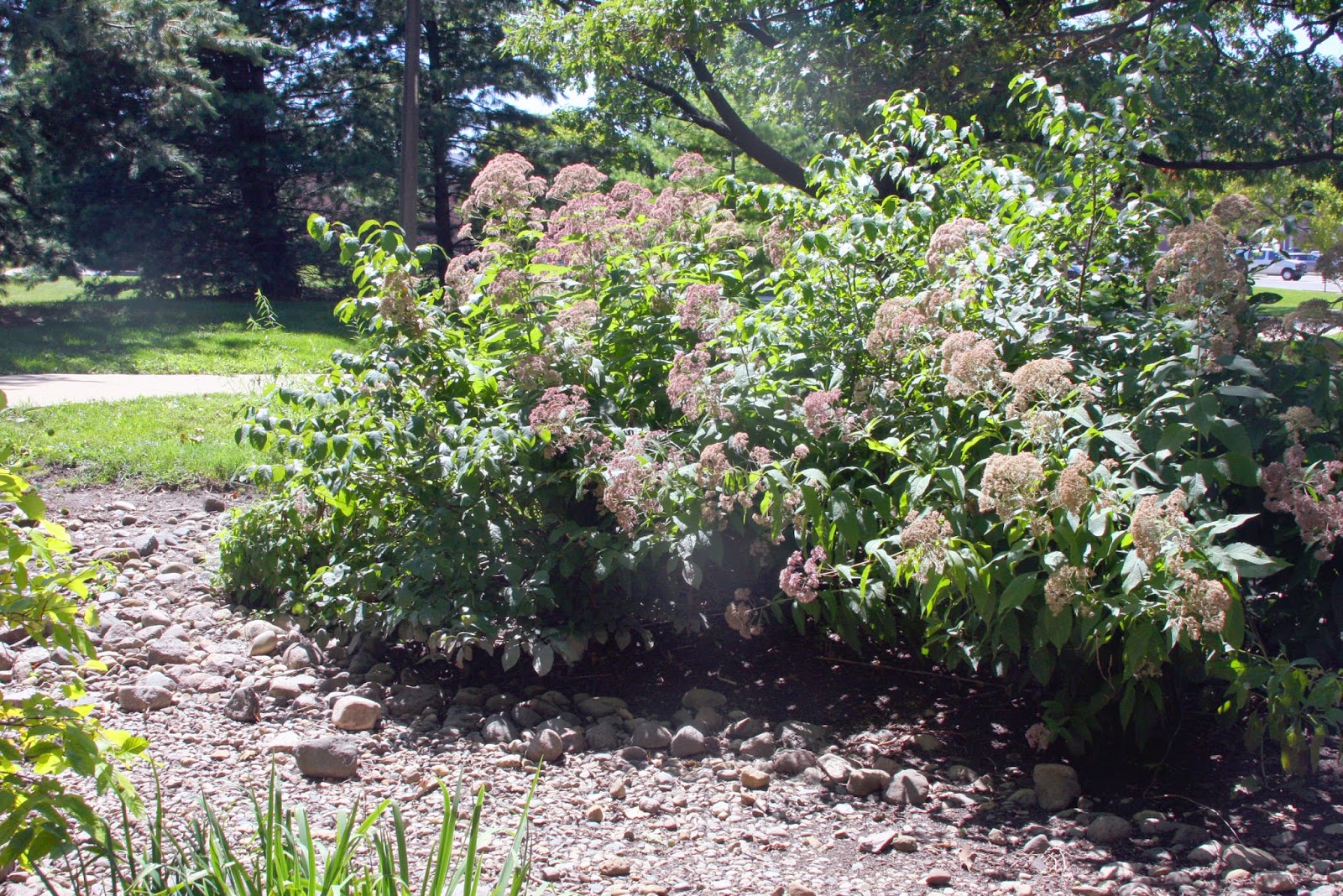
**The Red Oak Rain Garden at University of Illinois Urbana-Champaign
August 13th, 2014 by iisg_superadmin
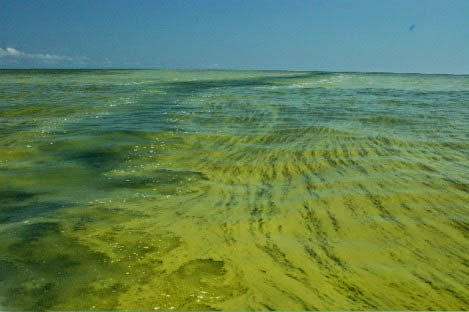
The recent contamination of drinking water in Toledo, Ohio brought the risks of algal blooms center stage and raised serious concerns for the future. Questions on everybody’s mind are what are toxic algal blooms, what causes them, and what can we do? Michael Brennan, IISG’s water quality outreach specialist, has some answers:
Regional scientists have been concerned about algal blooms like the one we saw a few weeks ago for some time. Its unique conditions make western Lake Erie particularly susceptible to algae blooms, both toxic and non-toxic. Warm temperatures, shallow, slow-moving water, and excessive nitrogen and phosphorus concentrations create optimal conditions for algae to thrive during summer months.
Let’s step back a bit. Algal blooms are essentially overgrowths of algae triggered by excess concentrations of nitrogen and phosphorus carried in stormwater runoff from lawns, leaky septic systems, golf courses, and agricultural fields to nearby waterbodies. The severity of a seasonal algal bloom is directly related to annual rainfall accumulation and the number of severe rainfall events
Non-toxic blooms occur all over the Great Lakes. Occasionally, the algae associated with blooms—a cyanobacteria—releases a toxin known as microcystin. This is the toxin responsible for contaminating the drinking water of over 500,000 people in the Toledo area.
But even non-toxic algal blooms are harmful. When rapid algal growth dies off, decomposition sucks oxygen out of the water, depriving freshwater organisms of the oxygen needed to survive. Decomposition also slowly releases nitrogen and phosphorus back to the water column, setting the stage for the cycle to start again next season.
There are no quick fixes in Lake Erie or any of the other lakes. But there are things we can do. Better stormwater management through green infrastructure is key. Unlike impervious surfaces, the plants and trees used in green infrastructure can absorb water and filter out pollutants before it reaches a waterbody.
Individuals can help prevent algal blooms as well. Homeowners and gardeners can adopt natural lawn and landscaping practices that conserve water and reduce stormwater runoff. Most of these practices are simple and cost-effective, like applying nitrogen fertilizer only in fall, removing weeds by pulling and hoeing, and limiting watering to the mornings and evenings.
**Photo courtesy of Ohio Department of Natural Resources
August 12th, 2014 by iisg_superadmin
Illinois teacher Carol Schnaiter has big plans for her classes at Amboy Central School. Carol was one of 14 teachers to participate in IISG’s B-WET workshop last year. And this summer, she spent two weeks in the Gulf of Mexico aboard the NOAA research vessel Oregon II. Carol wrote in to tell us about her experiences at both, how they have already shaped her curriculum, and what she has planned for her students this year.
“I am constantly looking for workshops, classes, and events that I can attend and bring what I learned back to my class. Each adventure adds to our classroom and allows the students to learn something new.
 I was very excited when I was selected for the B-WET workshop in June of 2013. After the workshop, I added an entire unit on invasive species in the Great Lakes area for the 4th graders and another unit on restoration for the 3rd graders, plus I expanded the watershed unit I was teaching to the third graders. At the end of the units, I invited a guest speaker from the Amboy Marsh, Greg Hunter, to speak to all my classes about the Amboy Marsh and invasive species in our area. We then went to the Amboy Marsh, where the students pulled the invasive Garlic Mustard plant and cleaned away brush. The staff also arranged for guest speakers to talk about turtles, birds, and plants and gave a walking tour of the marsh. My colleagues and I are hoping to continue working with Amboy Marsh when we do our invasive species unit and our restoration unit each year.
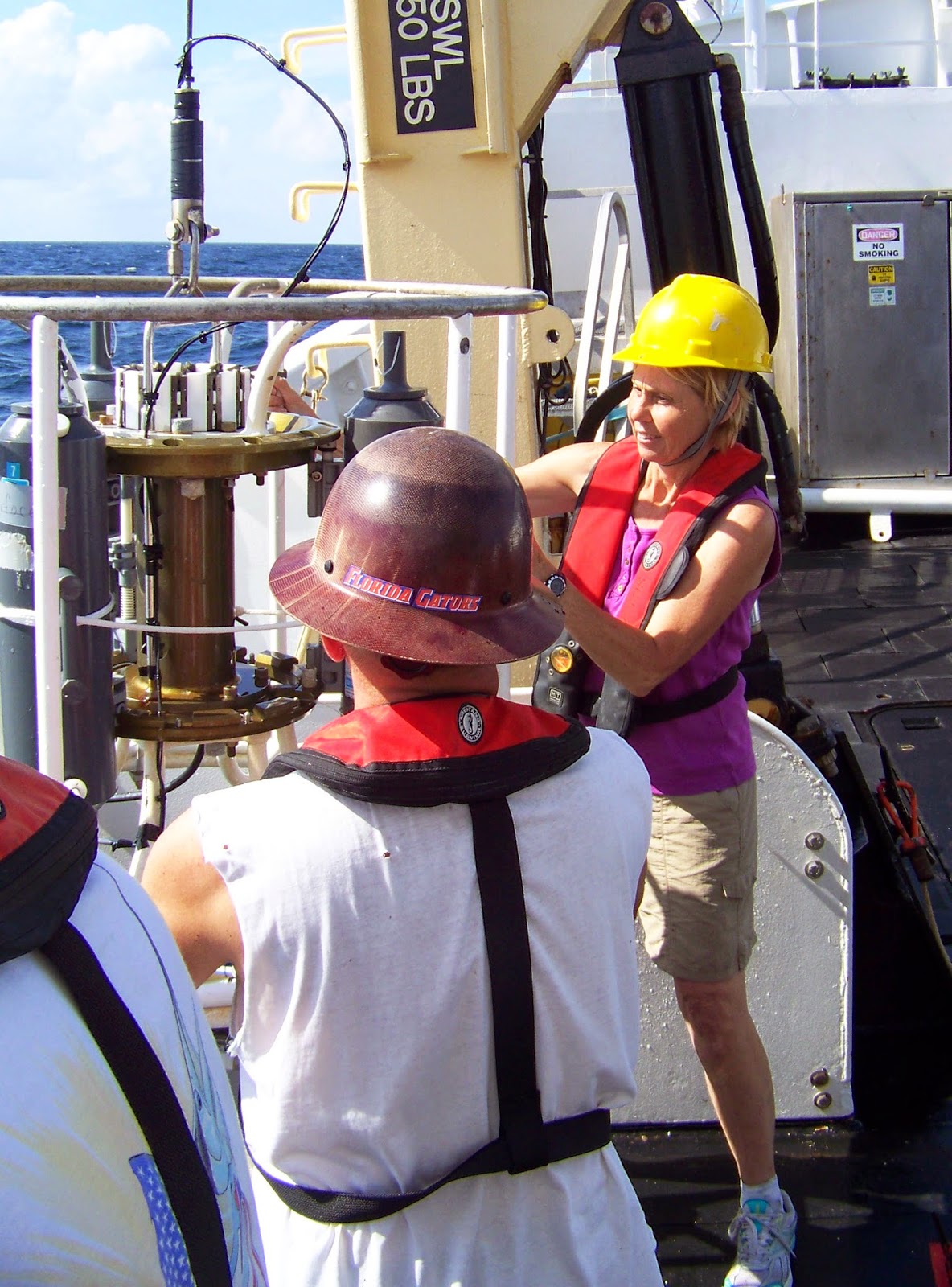 The students loved learning about the invasive species! We used the cards from the Sea Grant curricula and played games, such as Beat the Barriers. The students also did research on the various species and used the watch cards. When Mr. Hunter came in to speak, the students had background information on invasive species and were able to connect with what he was discussing.
This summer, I took part in the NOAA Teacher at Sea Program in the Gulf of Mexico. While on the ship, I worked with NOAA scientists and the crew to learn about the Gulf ecosystems first-hand and watch real science in action. I was on the midnight-to-noon shift for 16 days. We traveled to “stations” across the Gulf where we dropped the trawling net, the bongo nets, and the CTD (conductivity, temperature, and depth) sensors as part of the Groundfish Survey. Once the nets were brought up, we would count, measure, weigh, and record the sex of all the species. Our main objective was to collect information and send it to federal agencies that used it to set the shrimp season and catch limits.
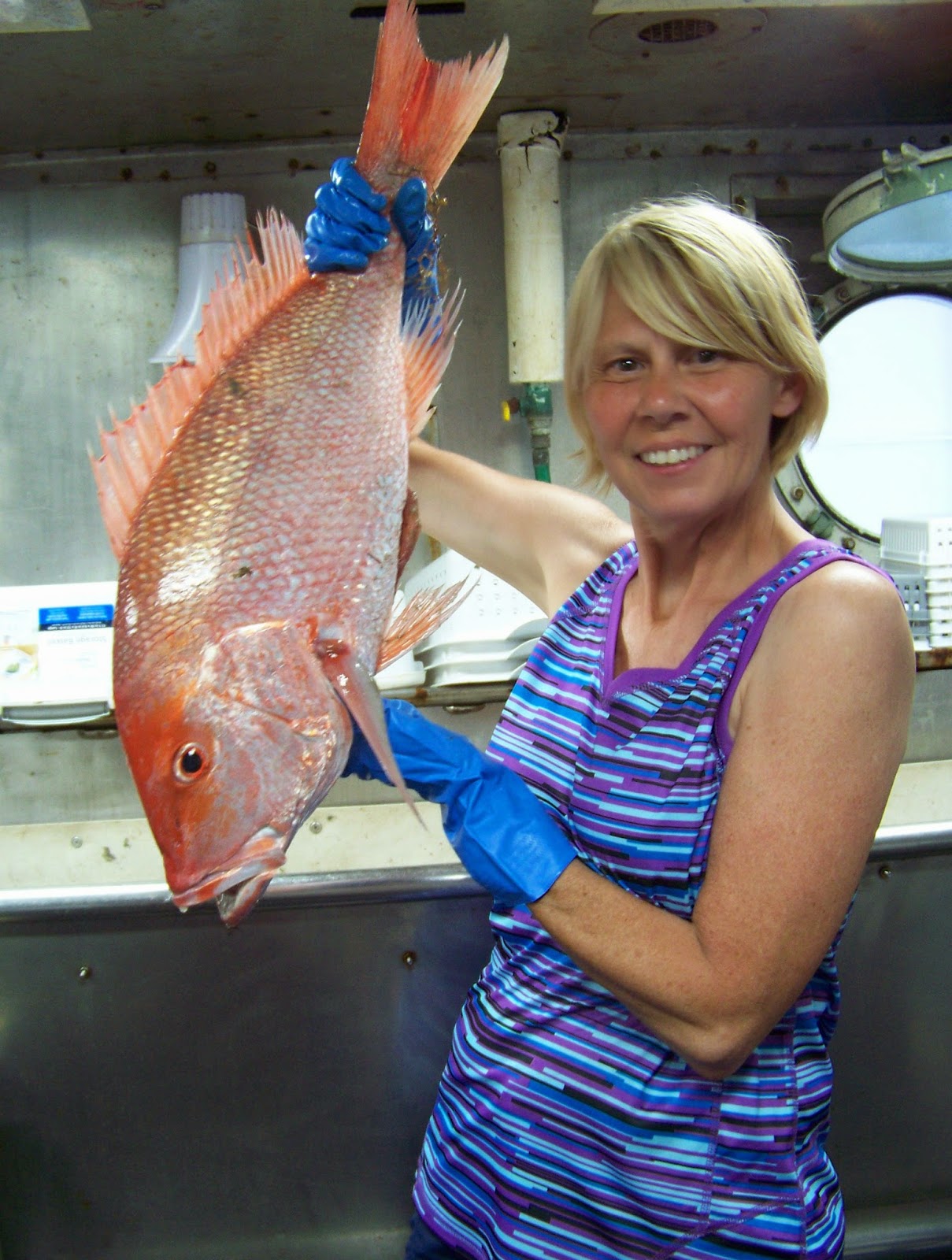 As a result of this experience, I am working on adding more information to our invasive species unit and creating another unit that will have the students trace the water from the Great Lakes watershed to the Gulf of Mexico. We will be following the NOAA Ship Oregon II as they go out for the fall Groundfish Survey and adding that information to the data collected while I was aboard this summer. We will be watching the water’s oxygen levels as the ship travels across the Gulf and will try to figure out what might be the cause of any changes.
Tying both the B-WET workshop and my experience on a working research ship together will allow the students to see how everyday science is touching our lives.”
August 6th, 2014 by iisg_superadmin
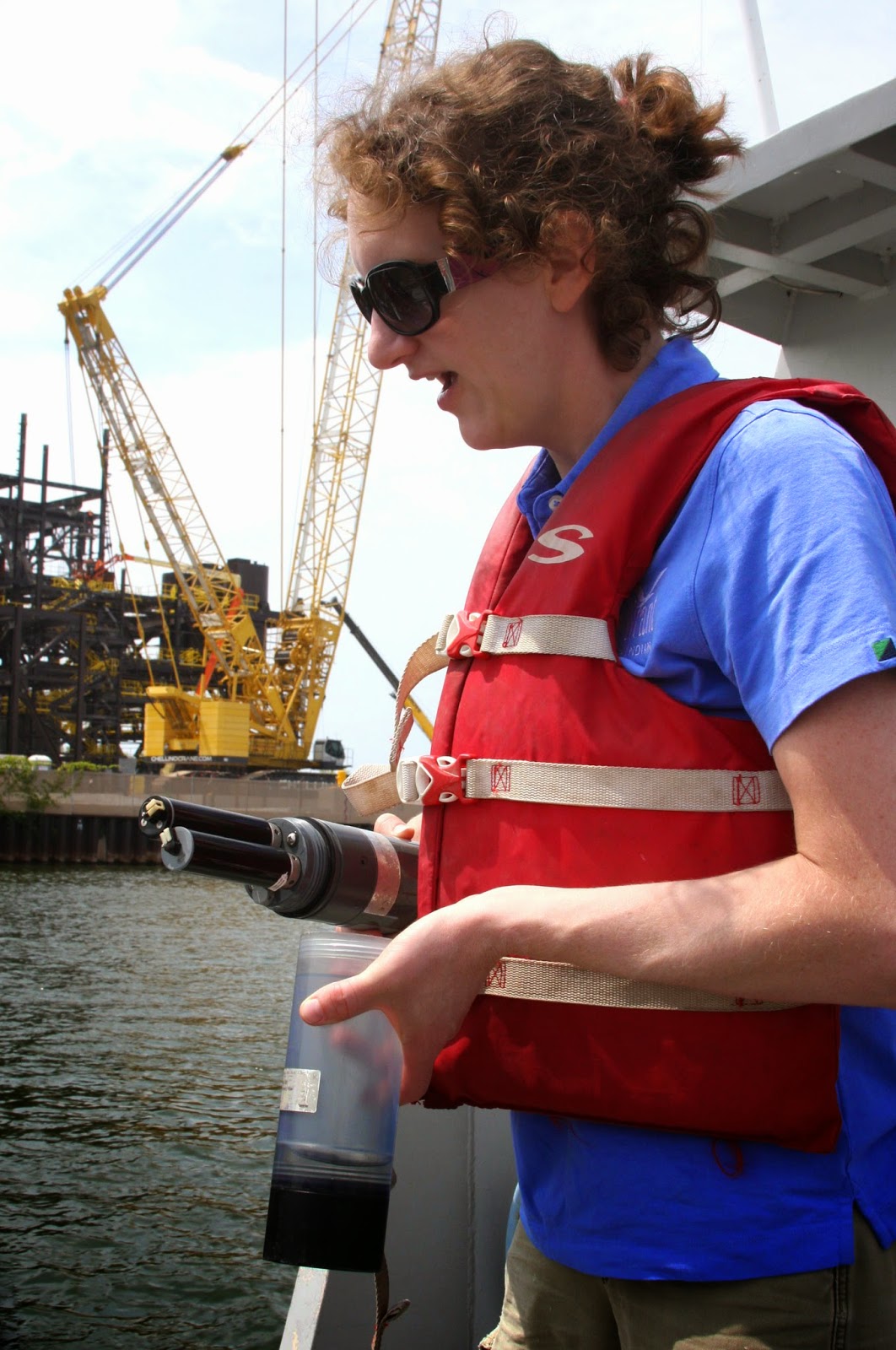
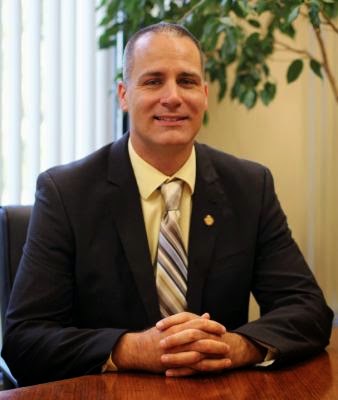
Steve Mauro’s research into the impacts of pharmaceutical and personal care products (PPCPs) on bacterial communities may have started as a small side project, but it has become so much more. The Gannon University dean gained national attention in 2011 when he and his research team discovered that small concentrations of fluoxetine are killing E. coli in the nearshore waters of Lake Erie. Today, Mauro continues to investigate exactly where and how fluoxetine and other pharmaceutical chemicals, both individually and combined, are changing the microbes that keep aquatic ecosystems healthy. And it is this work that brought IISG to his office bright and early on a June morning.
In this issue of UpClose, Mauro goes beyond his work on PPCPs to talk about the importance public outreach and about new efforts that are making it easier for forecasters and beach managers to predict when E. coli levels may make a trip to the beach more trouble than its worth.

.JPG)