July 2nd, 2014 by iisg_superadmin
Protecting fish populations worldwide while still meeting the steadily increasing demand for fresh seafood is a critical challenge facing several countries, but aquaculture (fish farming) is making significant advances in efficiency and sustainability that can meet those needs.
“Globally, we’ve hungered for 3.2 percent more seafood every year for the last five decades, double the rate of our population. Yet more than four fifths of the world’s wild fisheries are overexploited or fully exploited (yielding the most fish possible with no expected room for growth). Only 3 percent of stocks are considered ‘underexploited’—meaning they have any significant room for expansion. If we continue to fish at the current pace, some scientists predict we’ll be facing oceans devoid of edible marine creatures by 2050.
Aquaculture could come to the rescue. The Food and Agriculture Organization of the UN predicts that farmed fish will soon surpass wild-caught; by 2030, aquaculture may produce more than 60 percent of fish we consume as food.
One of the most pressing concerns about aquaculture, though, is that many farmed fish are raised on a diet of 15 million tons a year of smaller bait fish—species like anchovies and menhaden. These bait—also known as forage fish—are ground up and converted into a substance called fishmeal. It takes roughly five pounds of them to produce one pound of farmed salmon. Bait fish are also used for non-food products like pet food, makeup, farm animal feed, and fish oil supplements.
It may appear as though the ocean enjoys endless schools of these tiny fish, but they too have been mismanaged, and their populations are prone to collapse. They’re a ‘finite resource that’s been fully utilized,’ says Mike Rust of NOAA’s Fisheries arm. Which is disturbing, considering that researchers like those at Oceana argue that forage fish may play an outsize role in maintaining the ocean’s ecological balance, including by contributing to the abundance of bigger predatory fish.
And that’s where Belov’s trout come in: Though he swears no one can taste the difference, his fish are vegetarians. That means those five pounds of forage fish can rest easy at sea. It also means that the trout don’t consume some of the other rendered animal proteins in normal fishmeal pellets: like bone meal, feather meal, blood meal, and chicken bi-products.”
Read the complete article at the link above for more about recent developments in aquaculture, and visit our aquaculture page for further information.
July 1st, 2014 by iisg_superadmin
It’s been two years since we launched our summer internship program, and we couldn’t be happier with the results. Our interns did great things at IISG—educated boaters on AIS prevention, investigated community perceptions of sediment remediation projects, installed a real-time buoy in Lake Michigan, and more. But their impressive work didn’t end with the summer. Several are now in graduate programs, including law school. Some moved on to internships focused on Great Lakes monitoring and renewable engineering. And a few have even stayed at IISG.
 To celebrate the program’s two-year anniversary, we go back to where it all began with a four-part series showcasing our first round of interns—what they did and where they are now. Our second interview is with Sahana Rao.
What did you work on while interning with IISG?
I worked with Margaret Schneemann on water issues in Chicago and northeastern Illinois. I mainly worked on research and text for an outdoor water conservation guidebook aimed at stakeholders in northern Illinois. The guidebook explains the need for outdoor water conservation and outlines ecological, economic, and legislative strategies to promote conservation. I also helped a little bit with the Lawn to Lake program, which encourages the use of natural and organic fertilizers and gardening practices that reduce nutrient runoff into Lake Michigan.
What did you like most about your internship?
The work I did during my internship with IISG was very interdisciplinary, so I never got bored—if I had had enough of turf science for the day, I could always switch to reading about lawn watering ordinances. I also got to explore the benefits of and connections between different aspects of water conservation that I might never have considered otherwise.
What are you doing now? If you are in school, what are you studying? If you are working, who with and doing what?
I am working towards my J.D. at New York University School of Law. I’ll be a second year in the fall and plan to pursue a career in environmental law once I graduate. I’m back in Chicago for the summer, doing a legal internship at the Environmental Law & Policy Center. My work here ranges from researching questions that might be raised in a permit appeal to writing memos on broad legal issues to helping attorneys prepare for oral arguments. Through this internship, I have learned more about the environmental implications of zoning and nuisance law, the regulatory framework created by the Clean Water Act, and new approaches to reducing pollution, such as water quality credit trading. And I’m looking forward to learning much more as the summer continues!
How did your time with IISG help prepare you for law school?
Working with Sea Grant was a unique experience because I got to explore environmental issues –particularly water issues—from several different angles. I think the main takeaway I got from this internship is that environmental issues tend to exist on the intersection of science, economics, behavioral psychology, and law. The projects I worked on with Margaret inspired me to do a senior thesis on urban water management in developing countries, in which my goal was to examine the relative success of the strategies used by six water utilities to meet their constituents’ needs. These strategies incorporated both law and economics, and they varied in response to different water resource conditions, so the skills I learned while working with IISG came in handy.
In general, I’ve tried to apply this mindset to my education as much as possible. I learned that being an effective advocate for the environment requires a certain level of versatility. During college, I supplemented my environmental science degree with minors in psychology and economics. In law school, I plan on taking classes like Corporations, Tax, and International Law in addition to environmental law courses so that I can better understand how the pieces of the global-environmental-puzzle fit together.
What advice would you have for future IISG interns or those considering applying?
Do it! IISG internships are a great opportunity to not only expand your knowledge of environmental issues in the Midwest but also to develop essential skills like researching and writing for a variety of audiences. You get to work with and learn from highly qualified folks in really cool settings—whether you’re in downtown Chicago or on a boat on one of the Great Lakes.
—
June 27th, 2014 by iisg_superadmin
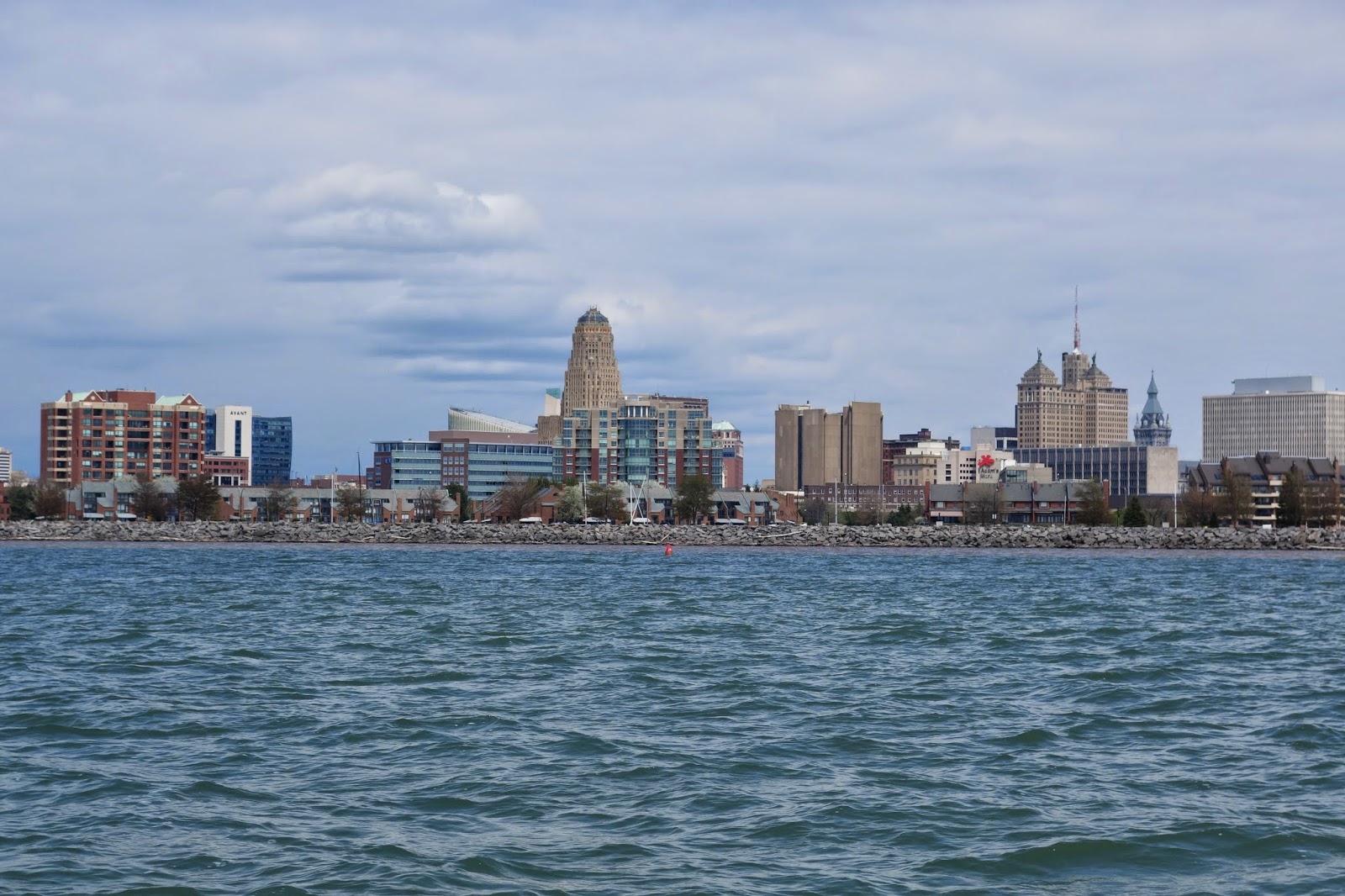
Last month, IISG’s Caitie McCoy held a workshop for teachers in the Buffalo River area of New York to debut a new curriculum, “Helping Hands: Restoration for Healthy Habitats.” This latest edition is specific to the Buffalo River area of concern, and offers a direct link to important environmental projects that are taking place in the students’ community.
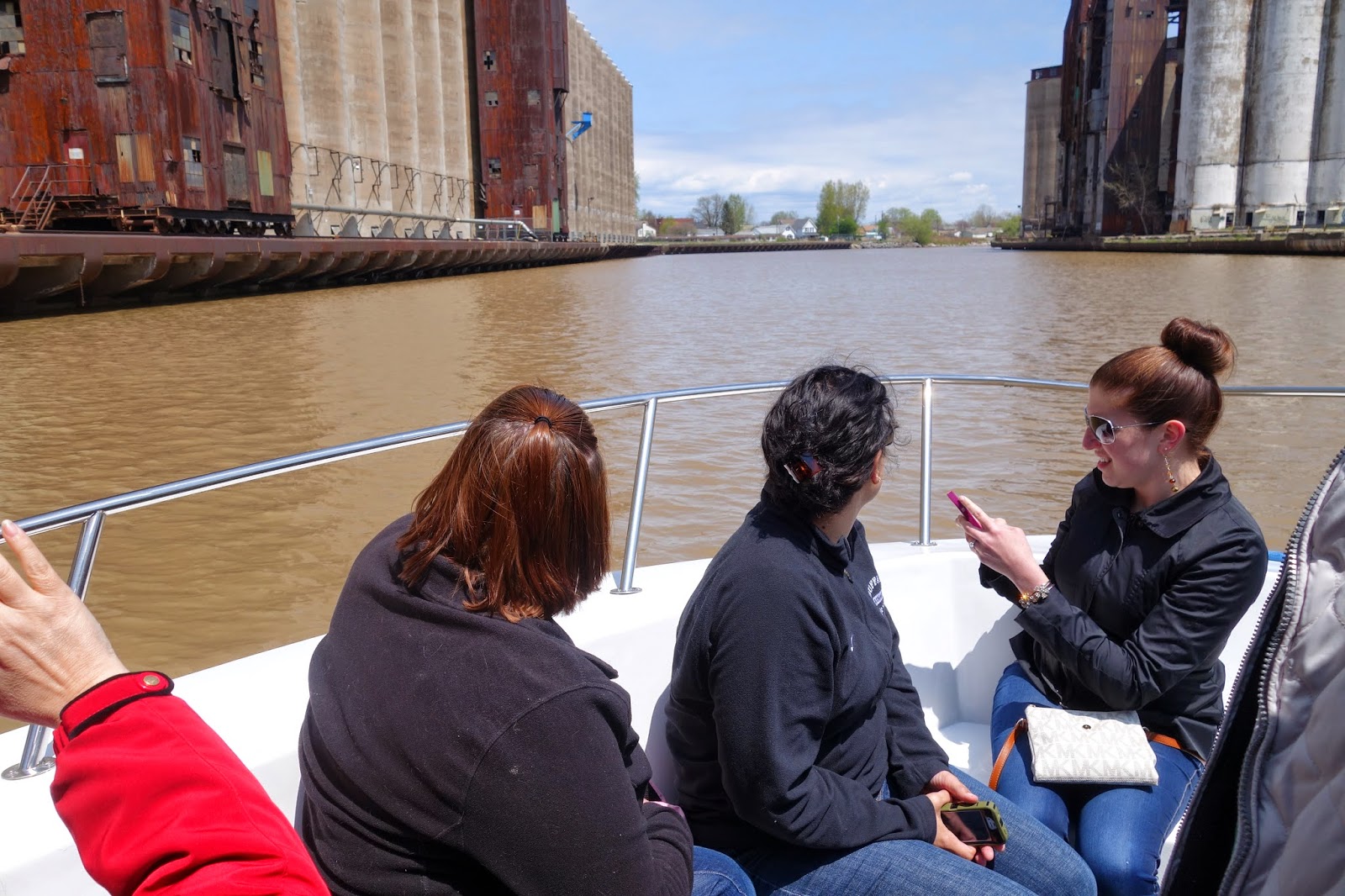 The Great Lakes Legacy Act remediation project on the Buffalo River resumed June 16, and will remove 500,000 cubic yards of contaminated sediment from the river, then replace native aquatic plants to help restore the local ecosystem.
18 teachers from grades 4-11 attended the workshop to learn more about the restoration project and the curriculum, and were treated to hands-on activities and a tour of the river area to help bring the project and its impacts into their classes.
 “It’s great to see so many educators come out to this kind of workshop,” Caitie said. “Many teachers want to incorporate place-based learning in their science curriculum, but may lack resources to do so. Now instead of using distant examples like rainforests to teach science, they can use their neighborhood rivers and lakes. These are places that students can visit and experience the science in person. They develop a love for these places and want to protect them.”
June 25th, 2014 by iisg_superadmin
It’s been two years since we launched our summer internship program, and we couldn’t be happier with the results. Our interns did great things at IISG—educated boaters on AIS prevention, investigated community perceptions of sediment remediation projects, installed a real-time buoy in Lake Michigan, and more. But their impressive work didn’t end with the summer. Several are now in graduate programs, including law school. Some moved on to internships focused on Great Lakes monitoring and renewable engineering. And a few have even stayed at IISG.
To celebrate the program’s two-year anniversary, we go back to where it all began with a four-part series showcasing our first round of interns—what they did and where they are now. First up, Lainey Pasternak.
What did you work on while interning with IISG?
I worked with the aquatic invasive species (AIS) team at the Chicago Botanic Gardens. I designed and conducted a survey to help investigate the prevalence of AIS preventative behaviors among boaters and anglers, a key demographic in the effort to prevent the spread of AIS. By the end of the summer, I formulated a formal research report and academic poster presentation based on the final results of my survey. All efforts in the research and poster presentation were done in collaboration with my internship supervisor and co-author, Sarah Zack. In September 2012, I presented my research at the Illinois Water Conference at the University of Illinois and received a student scholarship and honorable mention award. Among the 30 registered students in the poster competition, I was one of two to receive a conference award and the only undergraduate to receive any mention.
What did you like most about your internship?
My summer internship marked the beginning of my environmental science and research career. There are many different aspects of the internship that really made it a memorable and influential experience. Working one-on-one with the AIS team, I took part in their mission and service to communities in Illinois and Indiana. Throughout the summer, I was able to contribute to the rebranding of their outreach program, IISG staff meetings and webinars, and educational presentations at the Environmental Protection Agency, Brookfield Zoo, Cook County Forest Preserves, and Chicago Botanic Gardens. I was also able to formulate and conduct my own research design, survey collection, data analysis, and scientific presentation. I really enjoyed having central ownership on my project and learned so much about independent scientific research. Lastly, the experience allowed me to give back to the community. Over the summer, I met and talked to over 650 people about AIS and the actions they could take to stop their spread into the Great Lakes. I gained valuable experience on communicating complex environmental issues to local communities.
What are you doing now?
This June, I started graduate school at the University of Notre Dame, where I am working towards an M.S. in biology. Through a fully funded research assistantship, I am working in Dr. Jessica Hellmann’s Global Change Ecology Lab. My thesis project is on the endangered Karner Blue Butterfly’s response to climate change and natural resource management at the Indiana Dunes National Lakeshore.
How did your time with IISG help prepare you for your graduate work?
Through the IISG summer internship program, I was able to gain firsthand experience with research and environmental problem solving. Not only did my project prepare me for internships and research throughout the rest of my undergraduate career, it will also give me perspective on my next independent research opportunity in graduate school at Notre Dame. Working with the incredibly hard-working people at IISG, I learned a lot about working as a team towards a common goal or set of objectives. This skillset will help immensely in my work with other graduate students, lab technicians, and undergraduates in my new research position with Dr. Hellmann.
What advice would you have for future IISG interns or those considering applying?
I believe working with IISG can open doors to your future professional careers in research, natural resources, or environmental science. I was immersed in an atmosphere of beneficial networking and active learning that has greatly prepared me for proceeding job opportunities and graduate school. For those admitted into the internship program, I encourage you to invest your summer in the project, environmental issue, and co-workers around you. Don’t be afraid to ask for help and try to become an expert. Also, throughout the internship, begin to think and ask yourself if this work or field of study is something you would want to make into a career for yourself. By doing these things, you will surely find professional, scholarly, and personal success through the IISG internship program.
—
June 20th, 2014 by iisg_superadmin
Two years ago, a group of middle school students planted native seedlings along the banks of Roxana Marsh to celebrate the successful cleanup of the waterway. On Monday, those same students returned for another day of learning and service to find the marsh in bloom – thanks in large part to their efforts.
“It’s good to know that we did something phenomenal to help our environment,” said Sandra Olivarria, one of the East Chicago Lighthouse Charter School students participating in the event.
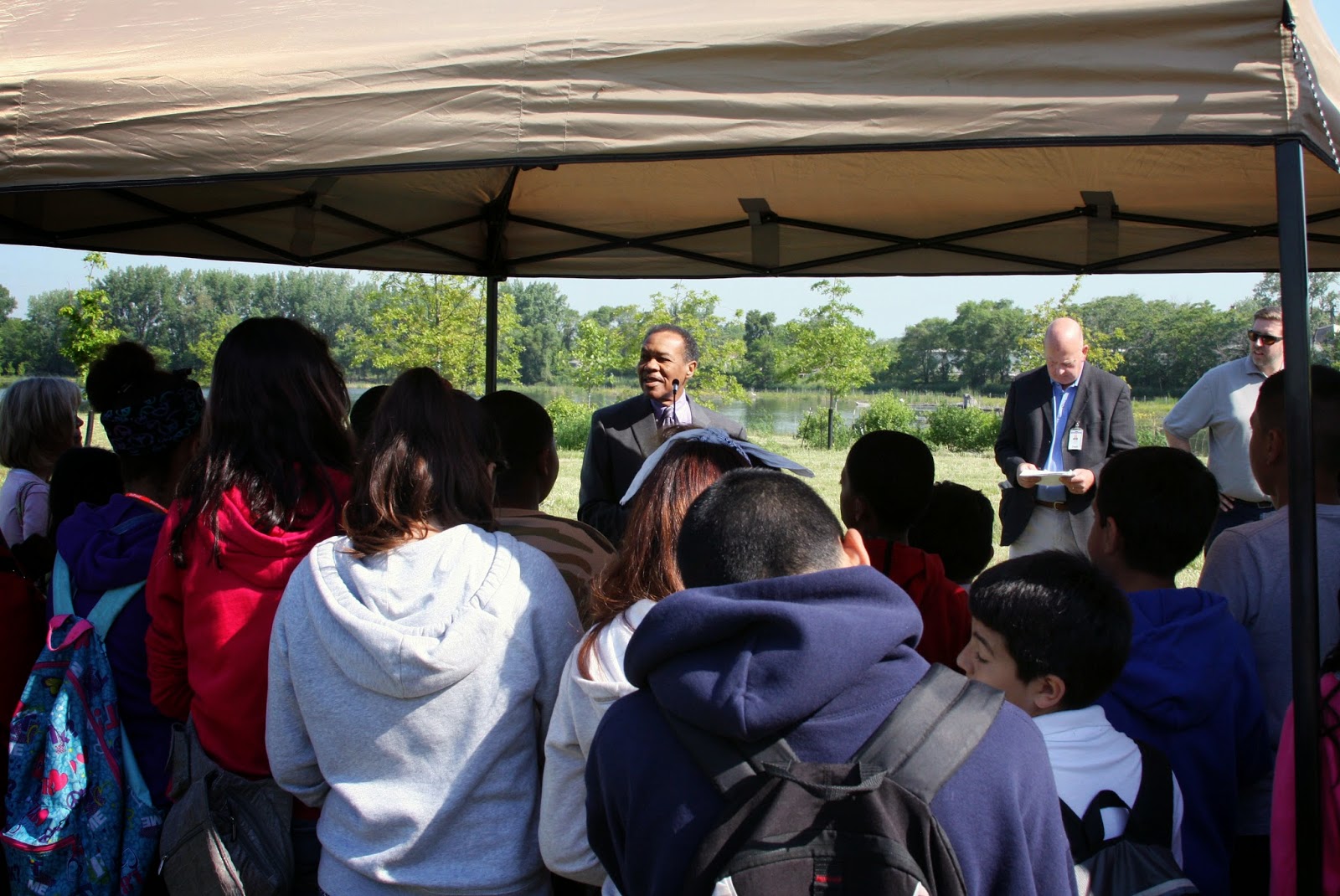
Monday morning’s stewardship began with speeches from state and local officials, including Indiana Representative Earl Harris, Senator Lonnie Randolph, and Mayor Anthony Copeland of East Chicago.
“We need to start to get everyone involved in this kind of project at an early age so that when you grow up, you become part of something that keeps you involved for the long term,” Representative Harris said.
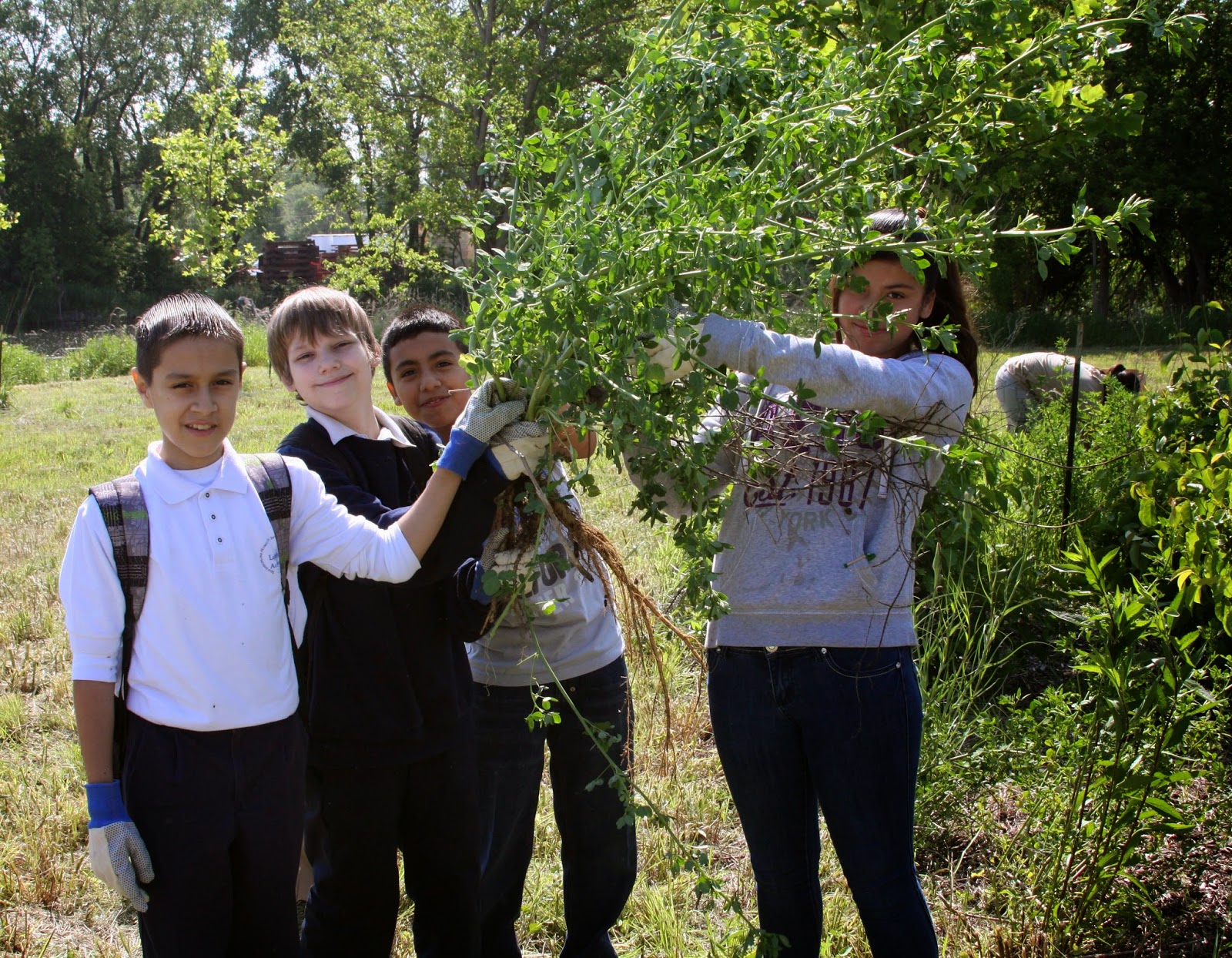
 The rest of the day was devoted to hands-on activities that encouraged students to get familiar with the plants and animals inhabiting the area. The class looked at native and non-native plant species growing around the marsh, then checked on the flowers they had originally sprouted in their classroom. The kids worked together to pull up the invasive clover that had grown around their plantings – a little tricky at times, they said, but “pretty fun, too.”
“It feels so good to come back and see what we did two years ago, and see it all grown and restored!” one student exclaimed.
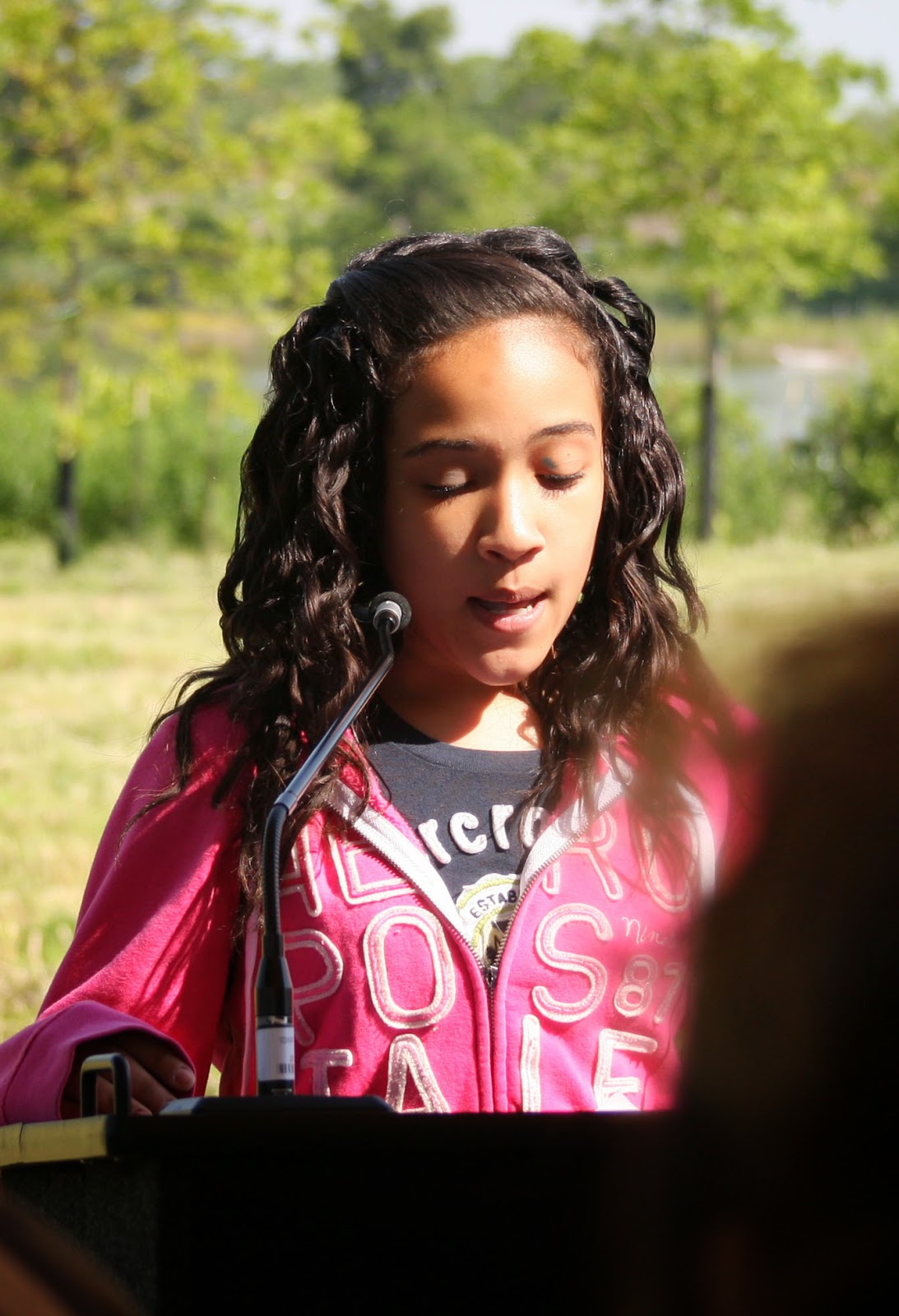 Down by the water, volunteer scientists helped students take samples of mud from the marsh to collect bottom-feeding aquatic animals that lived there. The students identified various species of worms, snails, larvae, and tadpoles, and were delighted at the chance to handle these small creatures.
The class also cleaned up trash from the marsh and along Roxana Drive, helping to beautify the area.
“I’m really proud of all the work the students performed today,” said IISG environmental social scientist Caitie McCoy. “It was thrilling to have them come back and take care of a beautiful environment that they helped create. Today, nature was our classroom, and I think the students learned a lot.”
Roxana Marsh is now home to blue herons, wild irises, and all sorts of aquatic life. But it wasn’t always that way. Located on the Grand Calumet River, the marsh was heavily polluted for more than a century with byproducts of heavy industry around East Chicago. Federal and state agencies worked to dredge the river, removing contaminated sediment and restoring the surrounding habitat as part of the U.S. EPA’s Great Lakes Legacy Act.
 Monday’s restoration activities and press event brought together partners from the US EPA Great Lakes National Program Office, US Fish and Wildlife, Indiana Department of Environmental Management, Indiana Department of Natural Resources, Illinois-Indiana Sea Grant, The Nature Conservancy, and Shirley Heinz Land Trust. The Roxana Marsh cleanup and Caitie’s work to improve community engagement here and at other Areas of Concern is possible because of the Great Lakes Restoration Initiative and the Great Lakes Legacy Act.
Teachers interested in integrating AOC issues into their classroom can find activities and other resources in our Helping Hands curriculum.
June 19th, 2014 by iisg_superadmin
 The APEX awards are given each year by Communication Concepts to recognize outstanding publication work in a variety of fields, and Illinois-Indiana Sea Grant projects were selected this year for awards in two categories.
Laura Kammin and Anjanette Riley of our Unwanted Meds program received an award in the category of Green Writing for their edition of UpClose with researcher Rebecca Klaper. The UpClose series interviews professionals working in the pollution and water quality fields to learn about the latest discoveries and projects related to pharmaceuticals and personal care products.
 Additionally, Sarah Zack, Pat Charlebois, and Jason Brown were awarded in the Green Campaigns, Programs & Plans category for their work on our “Be A Hero – Transport Zero” campaign and messaging, and for the www.TransportZero.org website. The campaign is designed to show boaters, fishermen, and other recreational water users how simple it can be to help prevent the spread of aquatic invasive species between water bodies.
These projects are just two of the many that IISG continues working on to help the public learn about, protect, and preserve Lake Michigan and waterways throughout the two states. To learn more, visit our website.
June 18th, 2014 by iisg_superadmin
IISG’s Pat Charlebois and Sarah Zack were members of a committee on recreational water use, and Pat co-chaired a committee on water garden guidelines, both aimed at preventing the spread of aquatic invasive species (AIS) through these two pathways. The committees recently completed their report, Voluntary Guidelines to Prevent the Introduction and Spread of Aquatic Invasive Species; Recreational Activities and Water Gardening, which provides guidelines for recreational water users and water gardeners to follow.
The steps listed include cleaning, draining, and drying all recreational equipment (boats, vests, trailers, etc.) following a day on the water (for recreational water users), and purchasing/planting native plants or properly disposing of unwanted specimens (for water gardeners).
There are more simple steps outlined in the two documents that can help prevent the spread of invasive species through these two pathways, as well as information about the importance of protecting waterways and native ecosystems. Visit the links above to read the complete reports, and visit our “Be A Hero – Transport Zero” and “Stop Aquatic Hitchhikers” webpages for additional information.
*Note: This post originally listed Pat Charlebois as a co-chair of the recreational water users committee and omitted Sarah Zack’s participation. The text has been corrected.
June 17th, 2014 by iisg_superadmin
The efforts of an Illinois teacher to bring Great Lakes science into the classroom were brought center stage in the latest edition of Teacher Features, a monthly online series that showcases outstanding educators in the Great Lakes region.
Eileen DeJong, a teacher at Suak Village’s Rickover Junior High, is one of 14 teachers from Illinois and Indiana who learned about local aquatic ecosystems and ideas for hands-on stewardship activities at last summer’s B-WET workshop. In this edition, she talks about the importance of raising awareness of Great Lakes issues, past classroom projects, and her plans for the future.
From Teacher Features:
1. Why do you think it’s important to infuse Great Lakes topics in education?
I think it’s important that I incorporate information about our Great Lakes into my teaching because our school is impacted in many ways by one of the Great Lakes (Lake Michigan). Students respond to information that makes sense to them and that affects their life, and because Lake Michigan is so close to us (within 45 minutes); it’s a great way to get students involved in current environmental issues. We can study about aquatic invasive species affecting Lake Michigan and then GO TO Indiana Dunes, for example, and conduct experiments there. Or … even closer to home, we can study about invasive species harming our local forests, and then GO TO nearby forest preserves and volunteer. It’s all about making connections. Studying the Great Lakes topics make science REAL for my students and helps foster natural curiosity about their surroundings. It is also important because the problem of invasive species is a current environmental issue, and it’s happening in our own backyard. It encourages my students to become knowledgeable about factors affecting their living environment and to become activists for change.
Continue reading at the link above.
Teacher Features is part of the Center for Great Lakes Literacy’s (CGLL) ongoing efforts to boost awareness of issues facing the Great Lakes watershed and inspire greater community stewardship. The group is led by Sea Grant educators throughout the region and conducts numerous teacher trainings each year, including the annual Shipboard Science workshop.
June 16th, 2014 by iisg_superadmin
It’s beach season once again in southern Lake Michigan, and the rip current warnings have already begun.
The National Weather Service (NWS) has issued at least one advisory since Illinois and Indiana beaches opened last month asking beach-goers to think twice before taking a dip in the lake. And for good reason. Rip currents and other dangerous currents are the biggest threat to Great Lakes swimmers. Roughly 140 people have drowned in the lakes over the last 12 years due at least in part to dangerous currents. And most of those incidents happened in Lake Michigan.
Illinois-Indiana Sea Grant hopes to bring these numbers down with a new outreach effort that will raise awareness about dangerous currents in the Great Lakes. The “Implementing Dangerous Currents Best Practices” project was recently awarded funding from the NOAA Coastal Storms Program.
A collaborative effort Sea Grant programs in Michigan and Wisconsin, the project will include print and online resources—including educational videos—that introduce the science behind rip currents, provide tips for avoiding them, and explain what to do if you or others are caught in one. Many of these resources will be available in both English and Spanish.
Watch for further information on these outreach efforts and rip currents in the coming months. In the meantime, you can find tips for staying safe at the beach this summer at dangerouscurrents.org.
“Implementing Dangerous Currents Best Practices” continues years of efforts by Great Lakes Sea Grant programs, NOAA, and NWS to reduce dangerous currents drownings across the region. To learn more about these efforts, visit Rip Current Safety.