October 1st, 2015 by iisg_superadmin
IISG pollution prevention outreach specialist Adrienne Gulley shared the
Lawn to Lake program with dozens of Chicago residents gathered at the New Covenant Missionary Baptist Church last Saturday.
The attendees mostly, from the Chatham community on the south side of Chicago, were at the church as part of RainReady, an organization started in response to urban flooding.
Gulley used the Lawn to Lake program to help those in attendance learn the importance of maintaining a healthy lawn through natural techniques that don’t rely on applying phosphorous. To help control excess water from heavy rains, she talked about using rain gardens, cisterns, rain barrels, and permeable pavers.
“I was impressed by how many residents were interested in creating lawns using native plants and natural lawn care methods,” Gulley said. “They were really receptive to all the options out there.”
September 29th, 2015 by iisg_superadmin

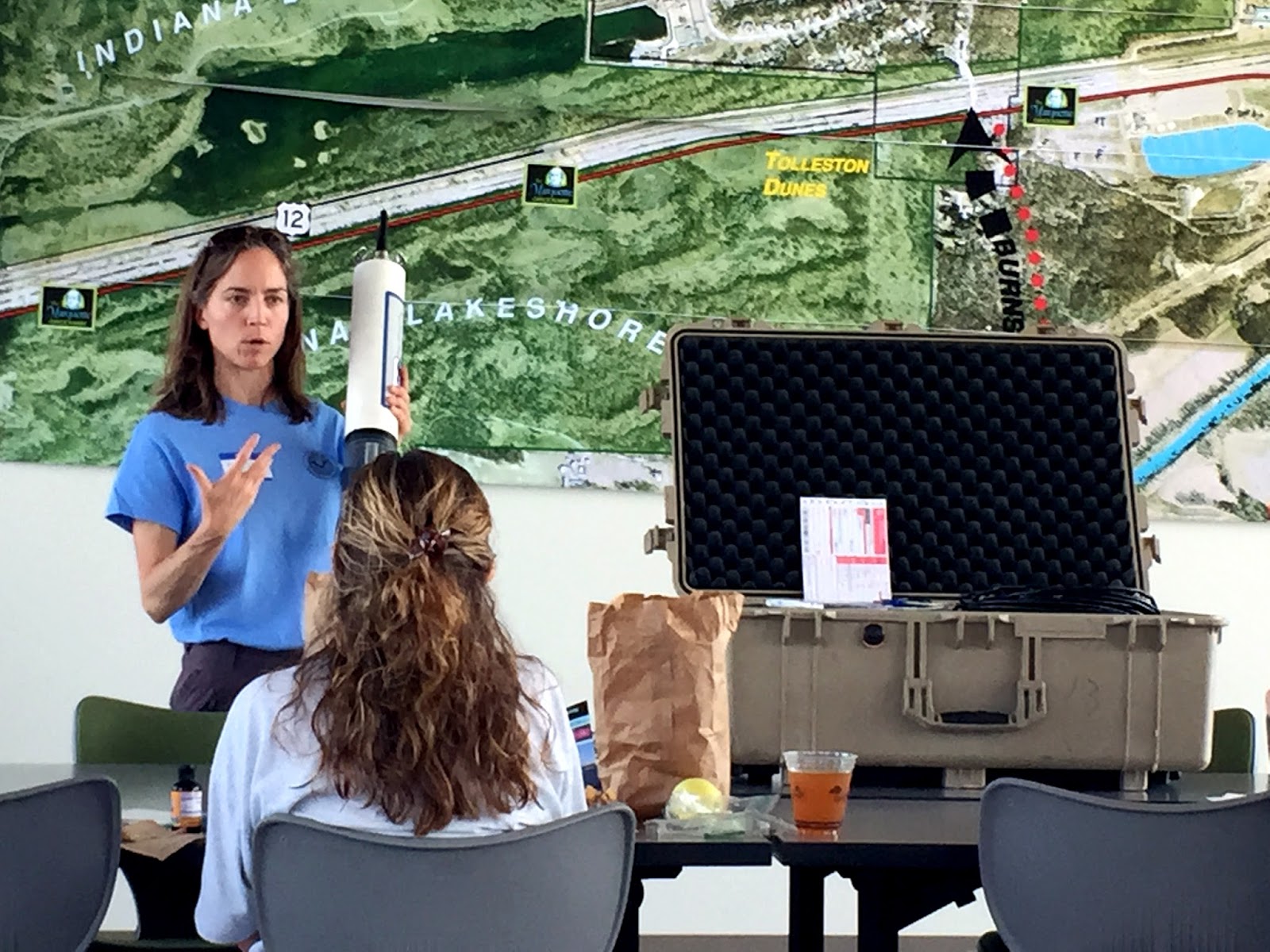
Environmental educators gathered at Portage Lakefront in Indiana last Friday to attend a Hydrolab training workshop led by IISG community outreach specialist Kristin TePas.
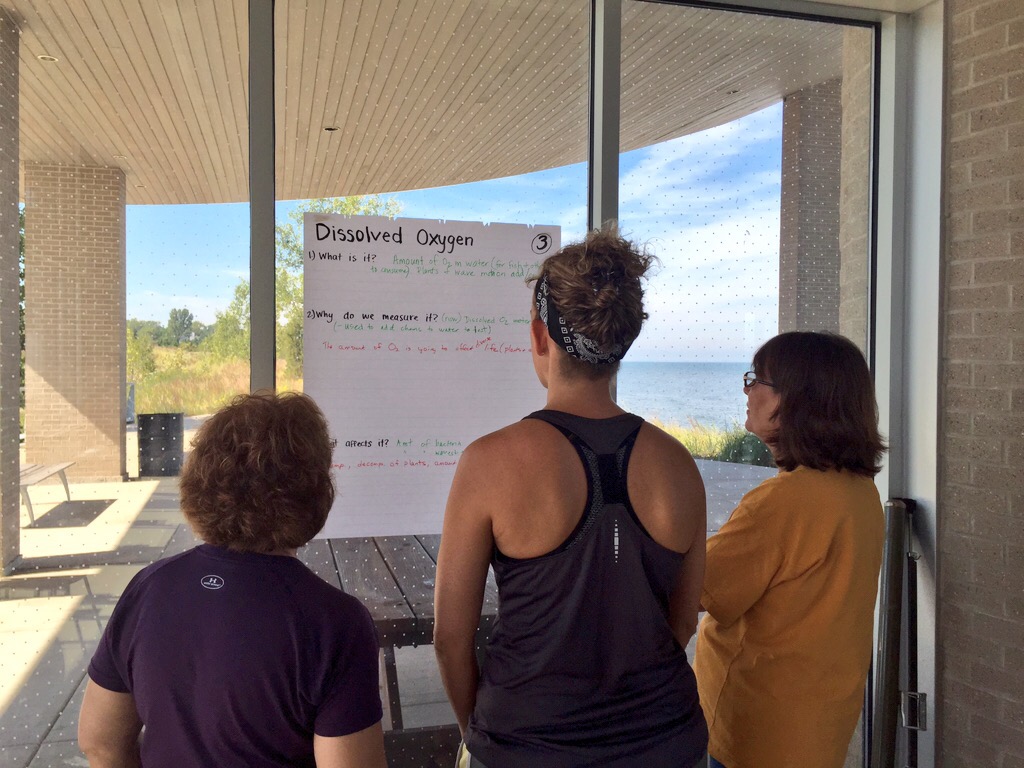
The day kicked off with an activity to get an idea of the group’s knowledge of water quality parameters the Hydrolab, a sophisticated data-gathering instrument, is capable of measuring.
TePas asked the educators to write down what each parameter is, why it’s measured, and what affects it.
One of the parameters, “turbidity,” struck one Indiana educator, as a cool name for a band. After a good laugh, he and the larger group were able to come up with descriptions of what kind of information the Hydrolab is gathering when it’s submerged, like calculating dissolved oxygen, pH, temperature, conductivity, and chlorophyll a.
The remainder of the afternoon was spent familiarizing educators with the equipment, how to borrow the Hydrolab through the Limno Loan program, and a variety of lessons and activities that would work well in their own educational settings.
With hands-on training under their belts and implementation plans drawn up, the Hydrolab is likely going to make some extra visits to Indiana in the coming months.
September 24th, 2015 by iisg_superadmin
I am working as a fellow in Congressman Alan Lowenthal’s (D-Calif. 47th District) office. When someone asks what a typical day looks like on Capitol Hill, it’s really difficult to answer.
Every day is unique, and there are often surprises. When Congress is in session, the best-laid plans can be upended by the President deciding to drop in on Capitol Hill to meet with members, or a carefully orchestrated vote running off the tracks.
I manage the activities of the Safe Climate Caucus, a group of more than 47 members who have made a point of talking about climate change in Congress. I write speeches, op-eds, memos, and keep the members’ staffers up-to-date on the latest news and research around climate change.

I staff Rep. Lowenthal on some of his work on the House Committee on Natural Resources issues. I brief him on the topic of upcoming hearings, write talking points and questions, and develop amendments for markup. I attend a lot of briefings to hear what Executive agencies are working on and how other offices are thinking about natural resource issues.
Other Congressional staffer activities I’m involved in are drafting legislation, writing letters to send to administration officials, circulating Dear Colleagues, organizing briefings, and meeting with constituents. I also have to find time to research legislation and prepare vote recommendations.
One question I often get is: “Do you have time off when Congress is not in session?”
The answer is “no.”
Recess, as it is called, is the time when things go at a normal pace and I can actually get research and writing done.
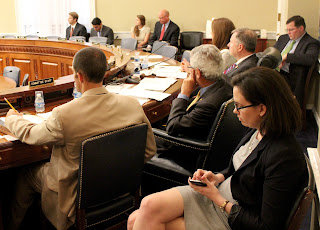
Congressman Lowenthal’s district includes the beautiful city of Long Beach and the picturesque Santa Catalina Island. I had the opportunity to visit in August and met so many wonderful people. NOAA, USC-Sea Grant, and the Aquarium of the Pacific hosted us on a boat tour of the harbor, where we discussed the impacts of sea level rise on the district.
I visited Catalina Island and learned about water infrastructure, the drought, and conservation efforts on the island. We gathered a group of people together to talk about how local researchers, government agencies, and businesses are working to understand the impacts of climate change and how to adapt. I also headed north for a few days to visit the Channel Islands Marine Sanctuary and discuss oil spills and whale-ship collisions in the Santa Barbara channel.
I am loving my year in Congressman Lowenthal’s office and hope to continue to work on Capitol Hill when my fellowship ends.
September 21st, 2015 by iisg_superadmin
Honors and AP high school students from Howard County, Ind. got their feet really wet Thursday at the 2015 Wildcat Experience at
Wildcat Creek near Kokomo.
The program was started by Howard County Stormwater Technician Sarah Brichford with important goals for these high achievers.
Wildcat Creek is 84 miles long and a major tributary of the Wabash River. In 2003, a study showed that most of its pollutants are from urban and rural run-off and wastewater discharge. Since then, state and local governments have taken steps to stem the flow of contaminants.
Plus, they decided to bring youth into the picture.
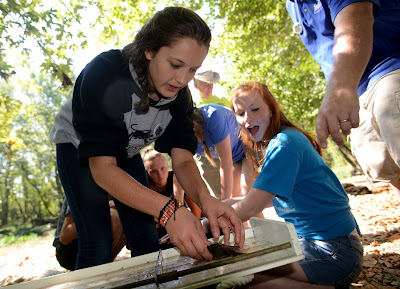
“We wanted to get high school students who are taking biology and environmental sciences out into the community so they could see some local natural resources, and more importantly, some of the services and infrastructure that depend on the natural environment like wastewater, drinking water, and stormwater treatment,” Brichford said.
“That’s why we created this, so they could experience it live and in person.”
Six years and hundreds of students later, Wildcat Experience is thriving and educating students with the help of volunteers and IISG specialists.
Jay Beugly, an IISG aquatic ecologist, shared his expertise on the region’s fish and aquatic insects. He was also hoping to change a few minds about the pollution stigma the Wildcat carries to this day.
“Typically students that come to this don’t get in the water initially because they think it’s so polluted,” Beugly said. “But I hope they go home and tell family that it has a lot of good fish and insects that don’t occur in terrible streams. I hope that they’ll decide that Wildcat Creek is a lot better than they initially thought.”
So after fish, water, macroinvertebrate, and soil testing some of the students felt differently about the creek right in their backyard.
“There’s a lot more diversity than you would think there would be in Indiana,” senior Sarah Schwarzkopf said.
“I always thought the Wildcat was really dirty, but after all the tests we did it’s really not that bad.”
September 16th, 2015 by iisg_superadmin
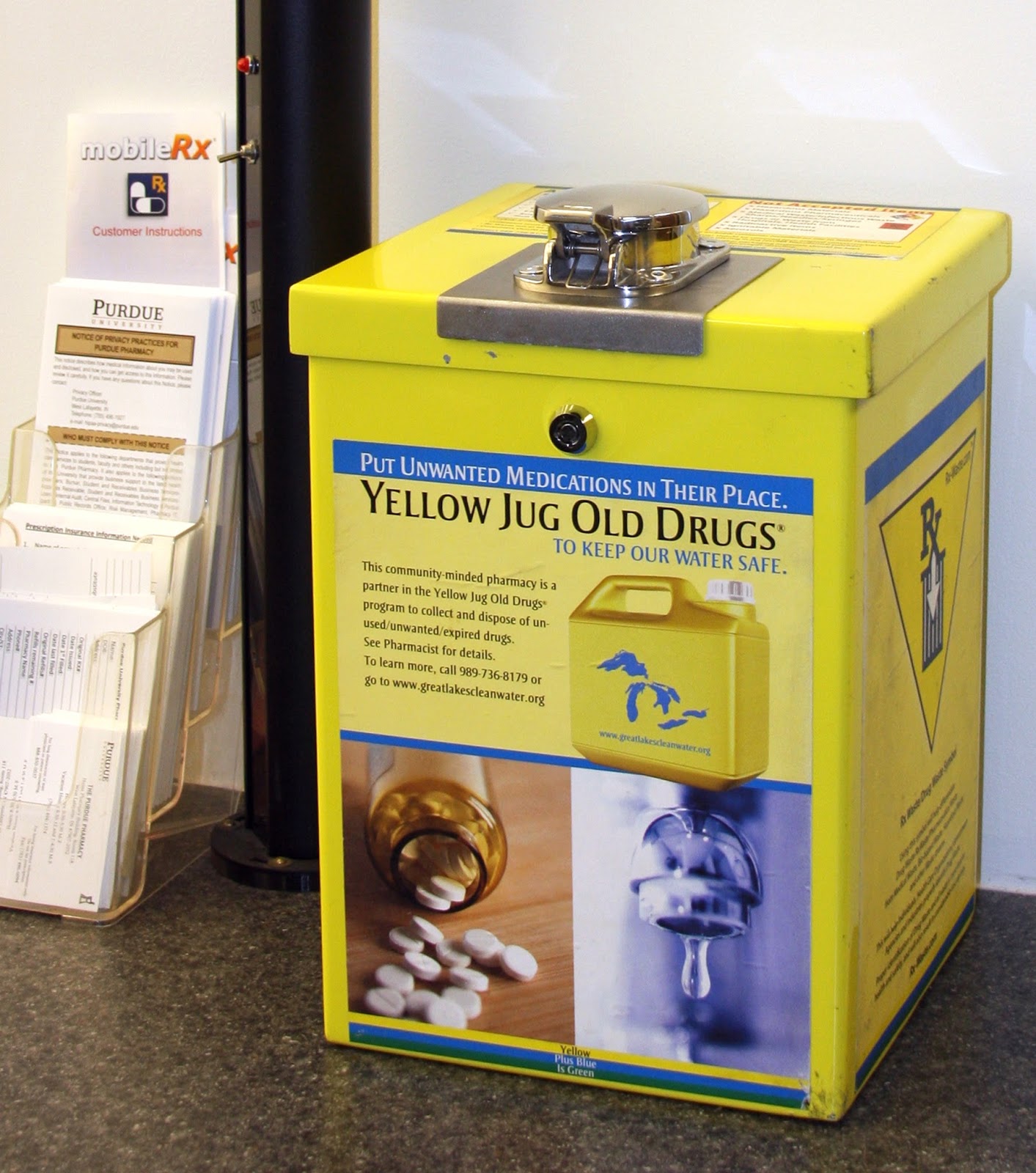
Last week, the Purdue University Retail Pharmacy became the latest participant in IISG’s multi-state effort to help communities properly dispose of their expired, unused, and unwanted pharmaceuticals.
This is the first pharmacy-based collection program that IISG has helped to start. Collaborators also include the Yellow Jug Old Drugs medicine take-back program, and Purdue College of Pharmacy.
Laura Kammin, IISG pollution prevention program specialist, worked closely with Patricia Darbishire, a Purdue clinical associate professor of pharmacy practice, to get the ball rolling.
“The reason I wanted to work with Patricia is that I know we will get really good feedback on how the program works from the pharmacy’s perspective,” Kammin said. “And because they will be conducting surveys, we’ll have solid data that can help improve collection programs in other communities in Illinois and Indiana.”
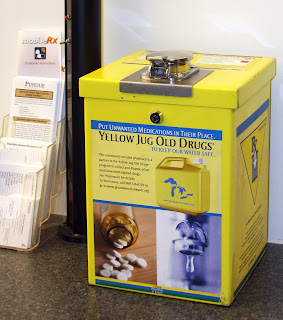 The Yellow Jug Old Drugs program was started in 2008 by the Great Lakes Clean Water Organization working with pharmacies to collect and properly dispose of non-controlled substances to help reduce their impact on the Great Lakes.
In September of 2014, the Drug Enforcement Administration (DEA) changed the rules to allow pharmacies to take controlled substances. Individuals with unwanted medications can visit a participating pharmacy and dispose of both types of drugs in the yellow container that contains a substance that renders the pharmaceuticals non-retrievable.
To date, The Yellow Jug Old Drug Program has properly disposed of more than 52 tons of prescription waste—which means a reduction of pharmaceuticals getting into waterways.
Indiana Attorney General Greg Zoeller, who is the co-chair and founder of the state’s Prescription Drug Abuse Task Force, was also in attendance.
“Nearly 80 percent of heroin users say they started out abusing prescription drugs, and prescription drugs are causing half of the drug overdose deaths in our state,” Zoeller said. “Purdue’s participation in Yellow Jug Old Drugs will not only provide more disposal options to the community, it will instill in young people the risks of prescription drug abuse and hopefully save lives.”
Kammin was excited about the enthusiasm among the partners. “We all agree that we want to get drugs out of the community safely and to reduce the environmental impacts of improper disposal,” Kammin said.
For more information about how to start a medicine take-back program in your community, check out more resources available at www.unwantedmeds.org.
Purdue University Retail Pharmacy accepts both prescription and over-the-counter medications, including pills, ointments, liquids, and creams, Monday though Friday from 8:30 a.m. to 5:30 p.m.
The pharmacy is located at the Robert Heine Pharmacy Building, 575 Stadium Mall Drive, West Lafayette, Ind.
September 9th, 2015 by iisg_superadmin
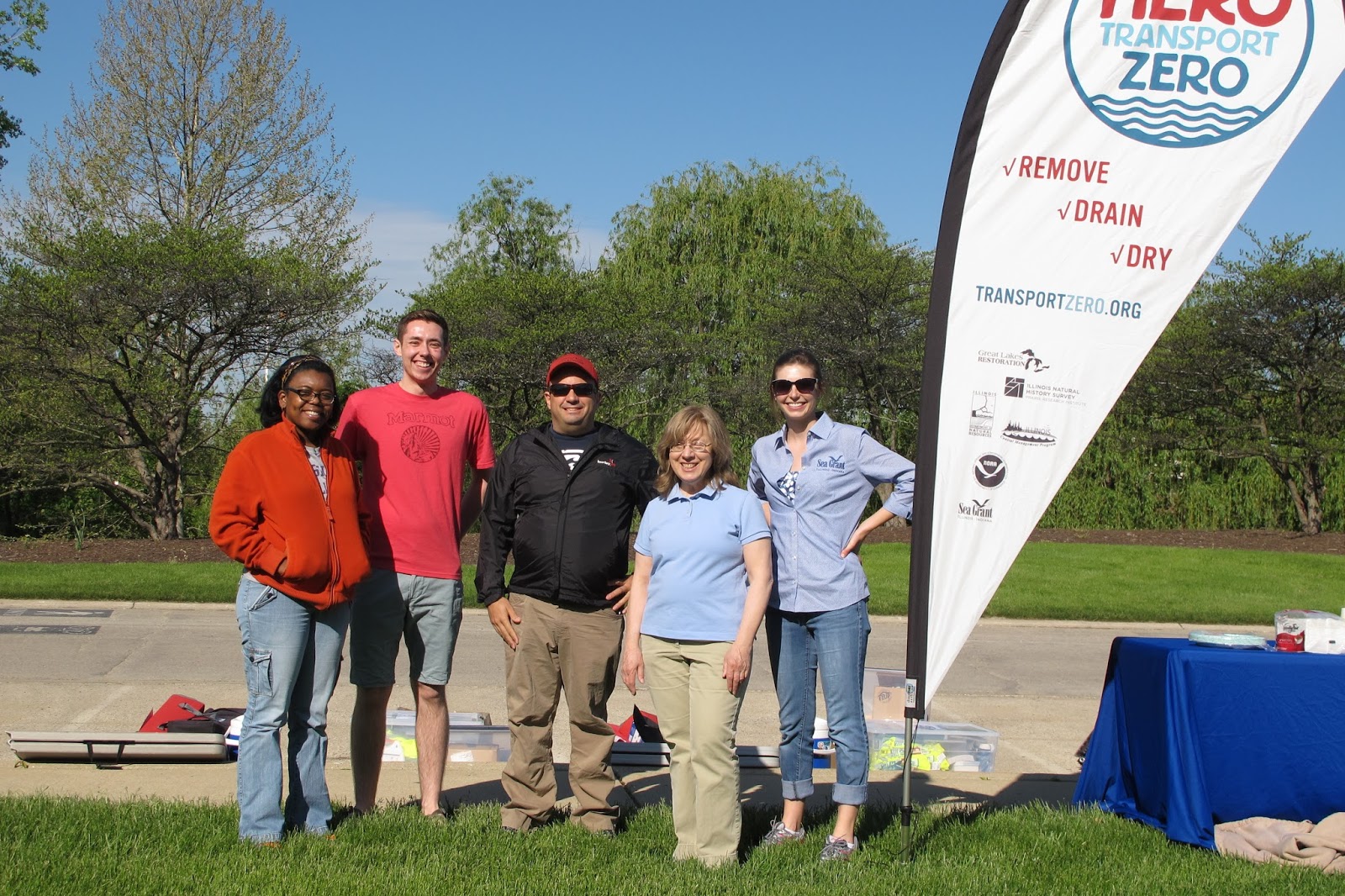
With the boating season winding down for the year, Clean Boat Crew (CBC) volunteers and site leaders can take a deep breath knowing they engaged a record number of boaters, anglers, and other water recreationists this year to stop the spread of aquatic invasive species (AIS).
The CBC reached 4,431 water-lovers — 25 percent more than last year’s all-time high of 3,519 — at boat ramps and docks in 10 locations in Illinois and Indiana. The crews were out from Memorial Day weekend to August 9.
The program in its fifth year continued to educate about ways to prevent the transfer of AIS from one waterbody to another through simple cleaning techniques outlined in the
Be a Hero – TransportZero™ campaign:
- Remove plants, animals, and mud from all equipment
- Drain all water from your boat and gear
- Dry everything thoroughly with a towel
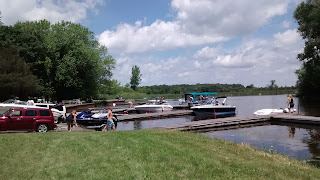 The crews distributed 8,000 pieces of outreach materials not only at busy marinas, but at several summer events: Gary’s Clean Water Days Festival, the Big Bass Bash, Hammond Marina’s Venetian Night, the Geoffrey Morris Memorial Fishing Tournament at North Point Marina, and Harbor Days at North Point Marina.
“The program continues to be well-received by the public, and more and more people recognize the message. But there’s still a lot of curiosity about it, which leads me to conclude that there’s still work to be done,” said Sarah Zack, an IISG organizer of the program.
September 1st, 2015 by iisg_superadmin
My name is Josh Hewitt and I am a web developer intern for the IISG Tipping Points and Indicators project at Purdue University. I graduated from Purdue in the fall of 2014 with a degree in computer graphics technology (CGT) with a focus on web development.
I started in the summer and was really excited about working on the Tipping Points project. Tipping Points and Indicators is a collaborative program that gives watershed planning groups across the Great Lakes the information they need to protect natural resources and enhance local economies. The process evaluates the users’ community characteristics, displays maps full of data about the watershed, and ends by creating action plans to achieve the desired goals of the user. The platform they use to do this is the web.
That’s where I come in!
My job is to fix bugs on the website and to add features to give the user a better experience. Recently, we have talked about redesigning the layout of the website because the current design is a bit outdated.
The past few weeks I have been talking with my team to figure out a layout that would enhance the users’ experience. I create mock-ups of layouts in Photoshop and then code it in Dreamweaver. We’re really excited to get this redesign done and show it to our users. We think they’ll be blown away with the improvement.
My internship has been great so far and I have learned A LOT. I would definitely recommend it to anyone looking to get some experience in web development. Not only is the web experience great but my team is really friendly and helpful. They’re always willing to give me advice when I’m stuck.
Great experience. Great people. Great internship.
-Josh Hewitt
August 31st, 2015 by iisg_superadmin
Optimism was high at the International Conference Asian Carp in Peoria a week ago Friday. The goal of this event, sponsored by the Greater Peoria Economic Development Council, was to bolster the economy of the region by networking and sharing ideas and information on marketing Asian carp. And many of the attendees were very interested in exploiting this fishery.
Natural resource managers and entrepreneurs have a similar goal at this point, which is to remove Asian carp from the Illinois River. This bodes well for the river’s future.
IISG was in the room to share outreach information about Asian carp to participants from as far away as China and South America. The audience also represented a variety of professions, including researchers, food service professionals, processors, investors, and more.
In recent years, several Midwest businesses have jumped into the carp market. Schafer Fisheries, for example, has developed new products, such as dog treats and liquid fertilizer, but also processes fillets. Asian carp species have a mild flavor, and the conference crowd was treated to a variety of inventive carp dishes, from spring rolls to chili, which were all delicious.
The “if you can’t beat ‘em, eat ‘em” mantra has reaped some rewards. Matt O’Hara, with Illinois Department of Natural Resources, reported that the three-year catch at Marsielles Pool along the Illinois River has steadily declined. The leading edge of Asian carp moving towards the Great Lakes has stayed miles away from this critical freshwater resource.
If the enthusiasm at the conference translates to successful businesses, at some point they will need to be prepared to diversify when carp species have been reduced to manageable levels. At that point, they may be able to shift to native fish, which, in fact, are more lucrative.
Peoria was also the host for the annual Asian carp bowfishing tournament on Saturday, and IISG was there to talk with participants about how to prevent the spread of Asian carp and other invasive species. Both events were rescheduled from July due to high waters earlier in the summer. As it turns out, flood waters are very good for spawning. It’s likely that we’ll see Asian carp numbers increase in the future because they had a good spawn this year.
August 26th, 2015 by iisg_superadmin
Municipalities throughout Illinois have been making determined efforts to conserve water though policy changes, education, outreach, and water-loss reduction strategies. The Illinois section of the American Water Works Association (ISAWWA) Water Efficiency Committee and IISG assembled seven case studies from the ISAWWA Water Saver award applications to highlight water efficiency achievements.
Highland Park is the second story in our series.
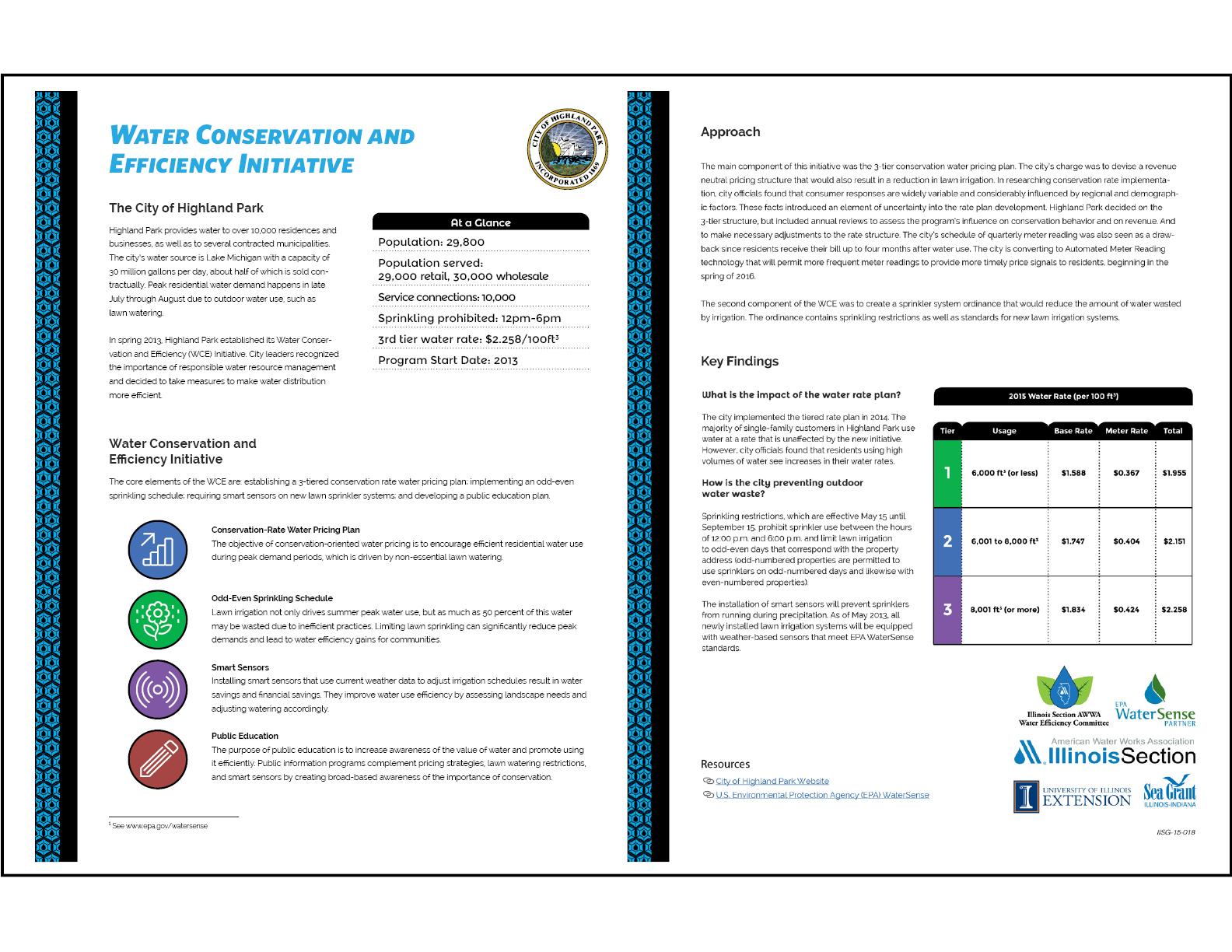
Highland Park is located on Lake Michigan about 25 miles north of Chicago. The city of about 29,000 provides water to over 10,000 residences and businesses, as well as to several municipalities. It draws 30 million gallons per day from the lake, about half of which is sold contractually.
City leaders recognized the importance of responsible water resource management and took measures to make water distribution more efficient. In spring 2013, Highland Park established its Water Conservation and Efficiency (WCE) Initiative.
“Highland Park is a very progressive community, very conscious of all things green,” Donald Jensen, superintendent of Highland Park Water Plant said. “Sustainability is a big agenda item here for all of our elected officials, and it filters down through all the professional staff as well. That’s just the way business is done in Highland Park.”
The main component of this initiative was the 3-tier conservation water pricing plan, including annual reviews to assess the program’s influence on conservation behavior and on revenue. The city would then make necessary adjustments to the rate structure.
The city implemented the tiered rate plan in 2014. The majority of single-family customers in Highland Park used water at a rate that was unaffected by the new initiative. However, city officials found that residents using high volumes of water saw increases in their water rates.
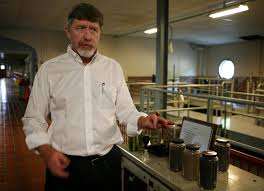
Highland Park’s schedule of quarterly meter reading was also seen as a drawback since residents receive their bill up to four months after water use. Beginning in the spring of 2016, the city is converting to Automated Meter Reading technology that will permit more frequent meter readings to provide timelier price signals to residents.
“The more frequently the meters are read, and the bills are sent out the more likely it is the tier-grade system is to have an impact,” Jensen said. “And of course our goal isn’t to generate income, it’s to conserve water.”
The second component of the WCE was to create a sprinkler system ordinance that would reduce the amount of water wasted by irrigation during the heaviest months. The ordinance contains sprinkling restrictions as well as standards for new lawn irrigation systems.
Sprinkling restrictions, which are effective from May 15 until September 15, prohibit sprinkler use between the hours of 12 p.m. and 6 p.m. and limit lawn irrigation to odd-even days that correspond with the property address (odd-numbered properties are permitted to use sprinklers on odd-numbered days and likewise with even-numbered properties).
The installation of smart sensors will prevent sprinklers from running during precipitation. As of May 2013, all newly installed lawn irrigation systems will be equipped with weather-based sensors that meet EPA WaterSense standards.
“I think we’re headed in the right direction, (but) I think there’s a lot of work yet to do,” Jensen said.