
The 3rd Annual Great Lakes Place-based Education Conference, November 7-9 in Grand Rapids, Michigan, brought together over 200 teachers, community representatives, non-profit organization educators, and more. The conference gives teachers an opportunity to incorporate the latest place-based research and education concepts about the Great Lakes into their lessons, encouraging student stewardship, continuing science education, and community development.
 IISG’s Robin Goettel attended the conference and organized a poster session, “Center for Great Lakes Literacy: Connecting Educators, Scientists and Citizens.” The Center for Great Lakes Literacy (CGLL) “engages educators, students, scientists, and lifelong learners in stewardship and citizen science activities to help protect and restore Great Lakes watersheds.”
 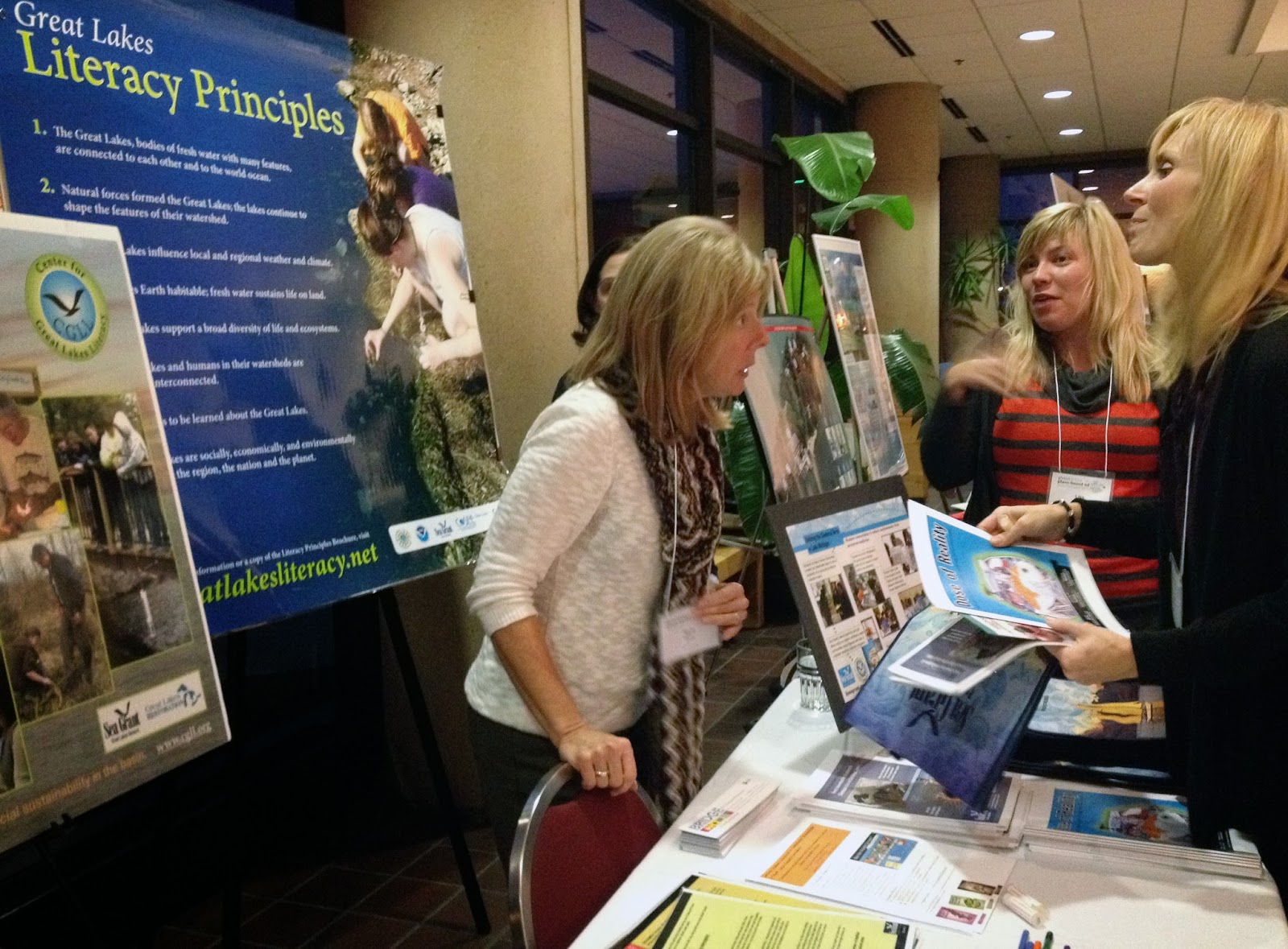 Representatives of the CGLL program from seven Great Lakes Sea Grant programs were on hand to talk with attendees about the wide array of resources available, many specifically tailored to the environmental needs and issues of their region. Classroom resources were also available, including Fresh and Salt and Greatest of the Great Lakes curricula, as well as the Dose of Reality newspaper activity guide that covers the disposal of unwanted medicines and personal care products.



