
Posted August 21st, 2013 in Aquatic Invasive Species, Program
 Purdue Day at the Indiana State Fair turned out to be a great place for Illinois-Indiana Sea Grant specialists to show off the Asian carp bag toss game. Fair goers of all ages tried their hand at making the shot, and they got to learn more about invasive Asian carp at the same time.
With each throw, Purdue graduate students Zoe Almeida and Allison Hyrcik and IISG specialists Kara Salazar and Angie Archer quizzed the visitors on facts related to Asian carp. Many were eager to learn more and to find out about actions they could take to control the spread of Asian carp.
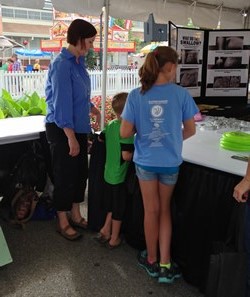
Attracting close to a million visitors each year, the Indiana State Fair offered specialists the opportunity to talk with Hoosiers from all areas of the state, from the southern border near the Ohio River to the northern part of the state around Lake Michigan. With so many waterways throughout Indiana, visitors to the booth were interested to learn more about invasive species and steps that could be taken to protect the state’s natural resources.
Find out more about invasive species at our website.