For community leaders and homeowners looking for ways to reduce the threat of flooding, especially in the face of bigger storms due to climate change, rain gardens can be part of the solution. Good news for these folks and others in Illinois—the Purdue Extension Rainscaping Education program has expanded its reach and is now a University of Illinois Extension program too.
Rainscaping incorporates sustainability into landscape design. The focus is installing and maintaining rain gardens and other green infrastructure to manage stormwater, which can run off pavement and other hard surfaces, picking up contaminants and flowing into nearby waterways. The plants and soil in a rain garden absorb stormwater where it falls.
The Rainscaping Education program provides training and resources for practices that can be installed in residential settings or small-scale public spaces. Workshops throughout Indiana have been attended by representatives from organizations and agencies, including stormwater utilities, soil and water conservation districts, and relevant non-profits, plus Master Gardeners and landscape contractors.
“This program is a very accessible way to train large groups of people on how to appropriately site, size, install and maintain rain gardens,” said Kara Salazar, Illinois-Indiana Sea Grant and Purdue Extension assistant program leader, extension specialist for sustainable communities and Purdue Rainscaping Education program coordinator.
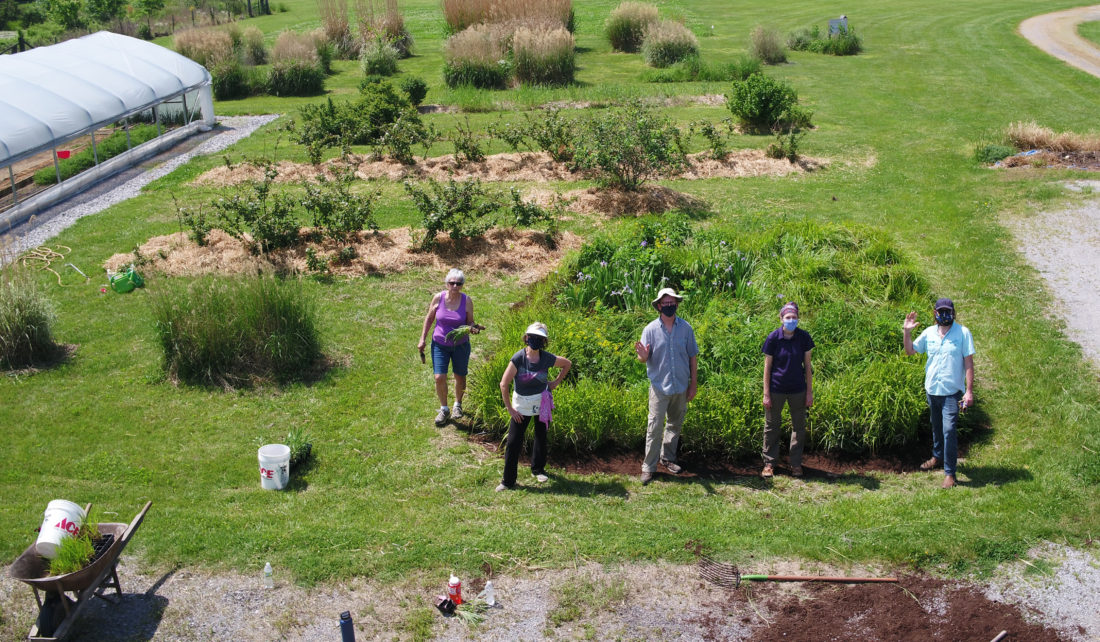
At the end of the 15-hour workshop, participants get their hands in the dirt to plant a demonstration rain garden in a public location.
As with most educational opportunities, the workshops became totally virtual in 2020 and the planting of demonstration gardens as a group was suspended. More recently, the workshops have been presented with much of the training online that culminates in planting the rain gardens in person again.
“Through planting these gardens, participants gain real-world experience,” said Salazar. “They can go back to their communities and be rain garden ambassadors—bringing knowledge of the benefits of rain gardens as well as how to create them. Through this process, we are developing community networks.”
The 10 demonstration rain gardens planted in Indiana have reduced stormwater runoff by nearly 410,000 gallons each year. Rain gardens installed by participants or their partners back in their communities reduce runoff even more. In addition to reducing the risk of flooding, these gardens can improve water quality.
Illinois-Indiana Sea Grant led the process to bring the rainscaping program to Illinois. The first Illinois Extension training sessions in the state kicked off this year in May in Jackson County, with two more workshops coming up in September in Effingham and Champaign counties.
“It’s exciting that in a few years, like Purdue, we’re going to have demonstration gardens all over the state,” said Eliana Brown, IISG stormwater specialist and Illinois Rainscaping Education program coordinator. “As knowledge grows with every installation in both states, we can all help each other have successful rain gardens.”
“Many Master Gardeners, consultants and agency folks now have rainscaping expertise and are teaching others or using this knowledge for their own green infrastructure projects,” said Salazar. “One community, in particular, has their own rainscaping group, so they’re going out talking to people about rain gardens.”
Brown thinks of rain gardens as having the capacity of being beautiful and functional, but also inspirational.
“A rain garden is something that, on a homeowner scale, is achievable—it’s an action that a person can do to be responsible for the water that’s shedding from their roof and other impermeable surfaces. Then, if your neighbors are inspired to install rain gardens, we have them working at the neighborhood scale. Then you’re really making a difference.”
For more information about the Rainscaping Education program, visit the program website.
Illinois-Indiana Sea Grant is a part of University of Illinois Extension and Purdue Extension.
Writer: Irene Miles
Contacts: Illinois – Eliana Brown, Indiana – Kara Salazar