
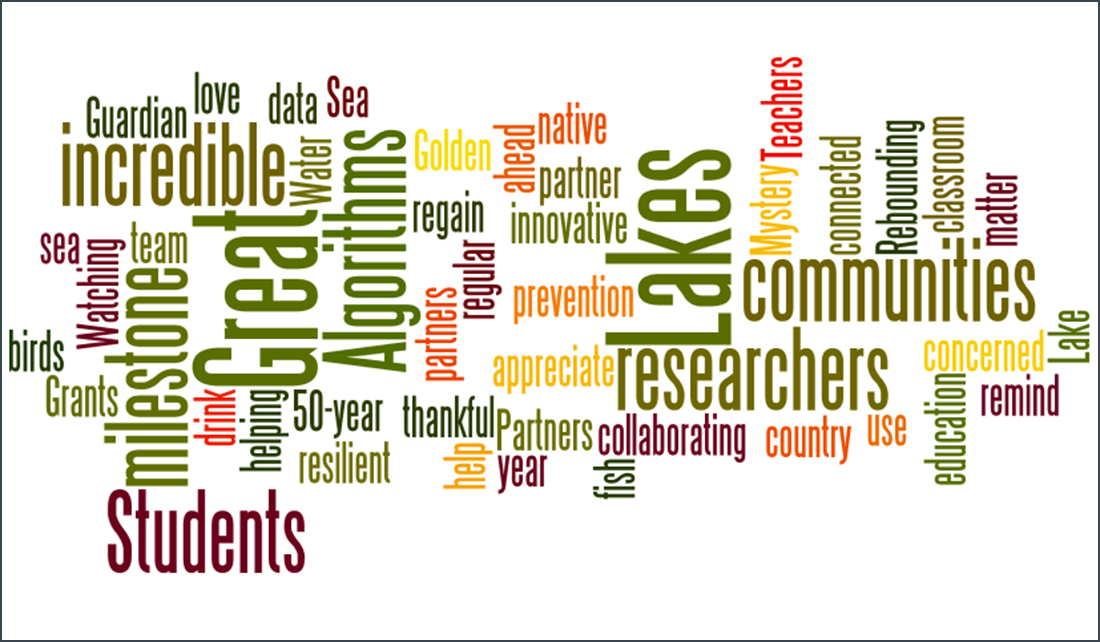
It’s easy to become focused on all the work that lies ahead, so we’re pausing, here at IISG, to appreciate some of the things we have to be thankful for:
Partners:
We couldn’t accomplish all that we have without all the incredible partners that help contribute to our program’s success.
Cleaner surroundings:
We love being able to help resilient communities regain the use of their land and waterways.
Rebounding wildlife:
We get giddy when we hear from communities telling us of sightings of birds or native fish in a once contaminated area.
Golden milestone:
Getting to celebrate a 50-year milestone of research, education, and outreach with 32 other incredible Sea Grants throughout the country.
Mystery:
The Great Lakes are full of secrets we have yet to decode which is why being a part of a team of innovative researchers makes the quest so thrilling.
Pollution prevention:
With the assistance of dozens of partners, agencies, and regular concerned individuals, we’re helping to reduce pharmaceuticals in our waterways.
Teachers:
We love collaborating with teachers in the classroom and touring with them on Lake Guardian every year.
Algorithms:
They do the hard work that otherwise would take months and would include more human errors. Algorithms help process all the data (and more data!) we recover from the Great Lakes and keep the researchers sane.
Water:
“With every drop of water you drink, every breath you take, you’re connected to the sea. No matter where on earth you live.”
— Sylvia Earle is an American marine biologist, explorer, author, and lecturer and has been a National Geographic explorer-in-residence since 1998. Earle was the first female chief scientist of the U.S. National Oceanic and Atmospheric Administration and was named by Time Magazine as its first Hero for the Planet in 1998.
Illinois-Indiana Sea Grant is a part of University of Illinois Extension and Purdue Extension.




