“Take a dip in lakes Erie, Huron, or Superior and you will be swimming in more than just water. According to a recently published study, these lakes contain an unexpectedly large amount of floating plastic debris. Even more surprising, much of what the researchers found were microplastic fragments and pellets like the kind used in toothpastes and facial and body scrubs. At less than one millimeter, these tiny pieces of plastic are too small to be filtered out at wastewater treatment facilities before the water is released into the lakes.
Researchers from 5 Gyres Institute and State University of New York (SUNY) Fredonia made the discovery in 2012 after collecting a total of 21 samples from the lakes. They found plastics in all but one sample. Of the three lakes, Lake Erie had the highest concentrations of plastics, roughly 90 percent of the total amount measured. The authors speculate that the high concentrations may be the result of currents carrying the plastics from the cities of Detroit, Cleveland, and Erie. Back in the lab, further inspection revealed that along with the microplastics, eight of the samples contained coal ash and coal fly ash (produced by coal-burning power plants).”
 Sea Grant Illinois-Indiana
Category:
In the news: Great Lakes microplastic pollution research recently published
November 4th, 2013 by Irene MilesScience teachers get new curricula, activities, and more at ISTA conference
November 1st, 2013 by Irene MilesThe Illinois Science Education Conference, recently held in Tinley Park, featured more than 150 presentations, symposiums, and exhibits aimed at providing resources and professional development opportunities for science teachers throughout the state. Illinois-Indiana Sea Grant’s education team was among the many exhibitors participating, and offered materials and presentations to help introduce Great Lakes literacy principles to the teachers present.
 IISG’s Robin Goettel and Terri Hallesy led two presentations to give teachers information and guidance on getting their students interested in Great Lakes science and stewardship. Several educational resources were also made available for the teachers to utilize in their classes.
 Anjanette and Corrie staffed two tables in the exhibit hall. One focused on AIS and featured “Nab the Aquatic Invader” information, invasive species watch cards, games, and suggested alternatives to releasing classroom pets into the wild (the HabitattitudeTM project). The second table focused on several different curricula and stewardship programs offered by IISG. CDs of Fresh and Salt and Greatest of the Great Lakes were available, as well as flash drives with The Medicine Chest and Sensible Disposal of Unwanted Meds. Teachers were very excited to receive these because they were so compact and comprehensive, with several asking if they could give a second one to their colleagues.
Two Great Lakes Restoration Initiative projects were highlighted in our displays – Great Lakes Organisms in Trade Initiative-Research, Outreach and Education and Undo the Great Lakes Chemical Brew.
Purdue turns the spotlight on one of IISG’s own
October 30th, 2013 by Irene Miles“Höök’s research focuses on fish and fisheries ecology in the Great Lakes. Fish communities and populations—species numbers and their traits—change a great deal from year to year, he explains. Höök studies past, current and projected future conditions to examine the factors that lead to these changes over time and across habitats. He uses a variety of research methods, including lab experiments on how fish respond to different situations, field studies and computer modeling.”

In the news: Viewing the Great Lakes from a new perspective
October 23rd, 2013 by Irene Miles“Last Sunday, Oct. 13, American astronaut Karen Nyberg tweeted this excellent photograph of the Great Lakes taken on Aug. 23 from her vantage point orbiting the Earth aboard the International Space Station.She posted the image on Twitter about 4:40 p.m., generating a cascade of re-tweets. As spectacular photos are wont to do, the image has spent the meantime making rounds on Facebook and other social media platforms.The image shows four of the five Great Lakes. The sun’s glint brightens lakes Erie and Ontario to the east, while lakes Michigan and Huron are seen in shades of deeper blue. Lake Superior and most of Michigan’s Upper Peninsula are not in the frame.”
Intern Allison spends some of her summer internship on-board a research vessel
October 22nd, 2013 by Irene Miles
“As an indecisive, undeclared sophomore I enrolled in a course titled Environmental Sustainability. Though I registered with low expectations, I found myself completely captivated by the readings and discussions we had in class. By the end of the semester I knew environmental sustainability was a passion I wanted to pursue, and I declared a major in Earth, Society, and the Environment. I also added a Geography and GIS Major and Business Minor along the way. Studying and working in these fields has afforded me the opportunity to engage in a wide range of academic and extracurricular experiences that have truly shaped my outlook on the world and secured my commitment to responsibly addressing environmental issues.
My internship with the Illinois-Indiana Sea Grant this summer has been the most rewarding experience of my collegiate career thus far. As the Great Lakes Education Intern I worked under the leadership of my mentor Kristin TePas to develop a website for the U.S. EPA research vessel Lake Guardian that effectively communicates the ship’s research and educational activities to the general public. The Lake Guardian is a unique and extremely valuable resource that has facilitated Great Lakes research for over 25 years, which in turn promotes better understanding and awareness of environmental issues affecting the lakes.
Kristin and I, through the creation of a user friendly Lake Guardian website, hope to expose teachers, students, and the general public to current Great Lakes research projects and inspire communication between scientists and their communities. By interviewing our target audience we determined what people wanted to see on the website and then developed some of the items they requested, including a ship specifications chart, science equipment videos, an ‘Ask a Scientist’ form, FAQ page, Science and Marine Career videos, as well as a YouTube channel and Flickr gallery to give a sense of life and work on the ship. The overarching goal is for the Lake Guardian site to be a fun and engaging way to compel people to be invested in the health and vitality of the Great Lakes.
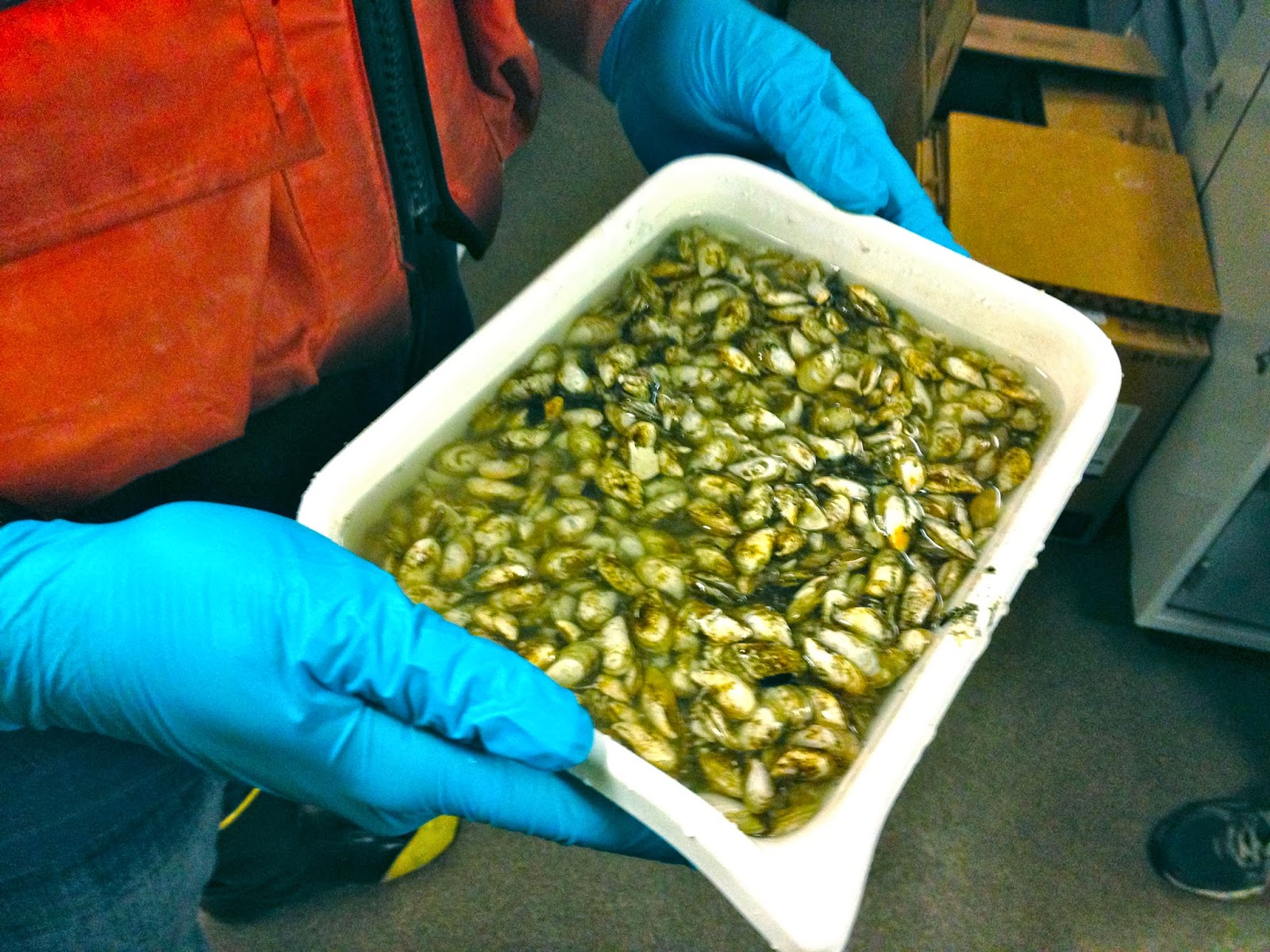
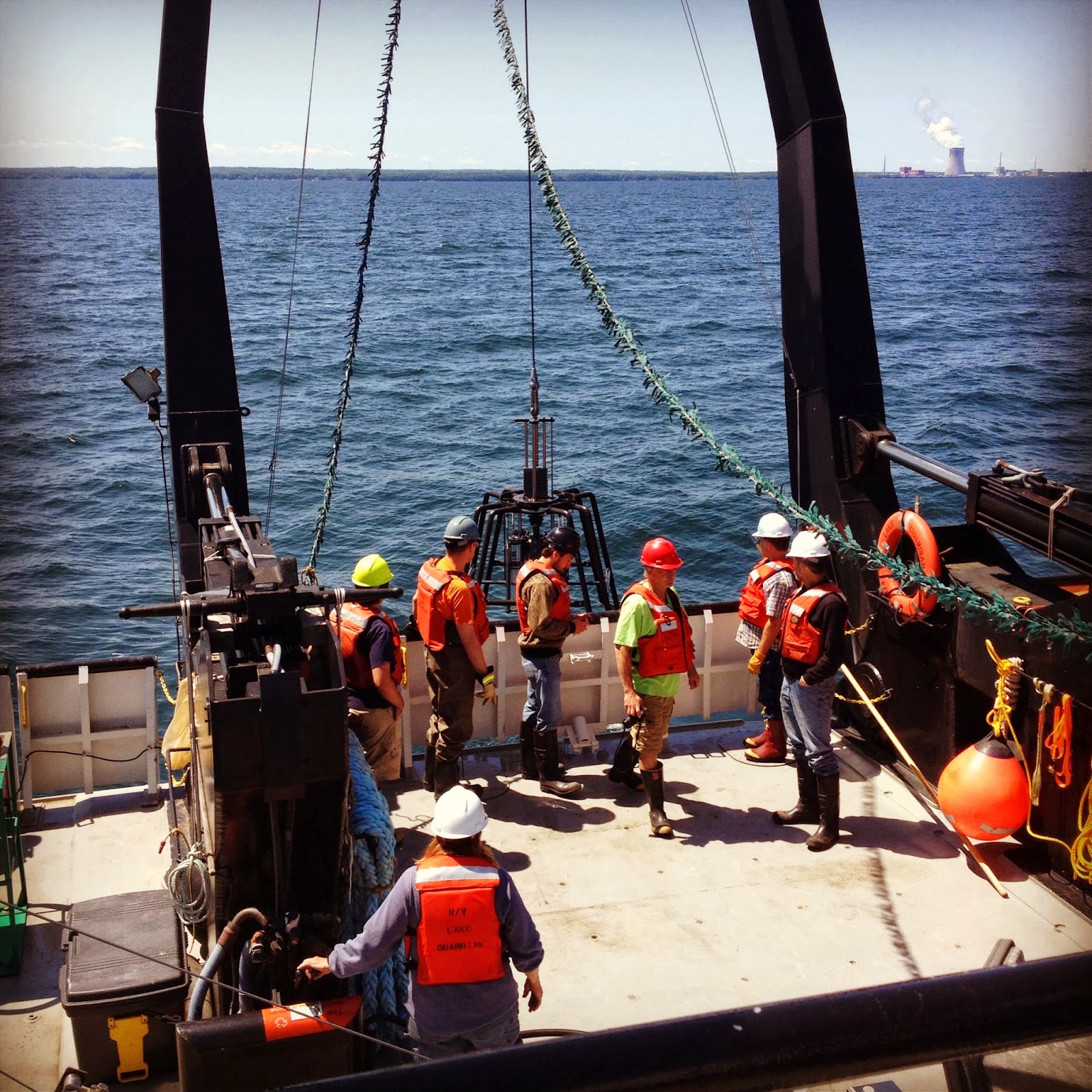
My experiences this summer have opened my eyes to the importance of protecting the Great Lakes, which had not previously been in the forefront of my environmental concerns. Even growing up in Chicago I took Lake Michigan for granted because I did not understand how fragile the Great Lakes ecosystem truly is, or how critical the Lakes are to people’s livelihoods. Increasing awareness is vital to conserving the Great Lakes, and my position with Illinois-Indiana Sea Grant this summer gave me great exposure to environmental outreach. I have thoroughly enjoyed my work, especially all the valuable input I received from an assortment of teachers, scientists, Lake Guardian crew, and Sea Grant staff. This internship has been an excellent growing experience for me. I have vastly improved my communication, planning, and organizing skills as well as enhanced my understanding of the Great Lakes.”
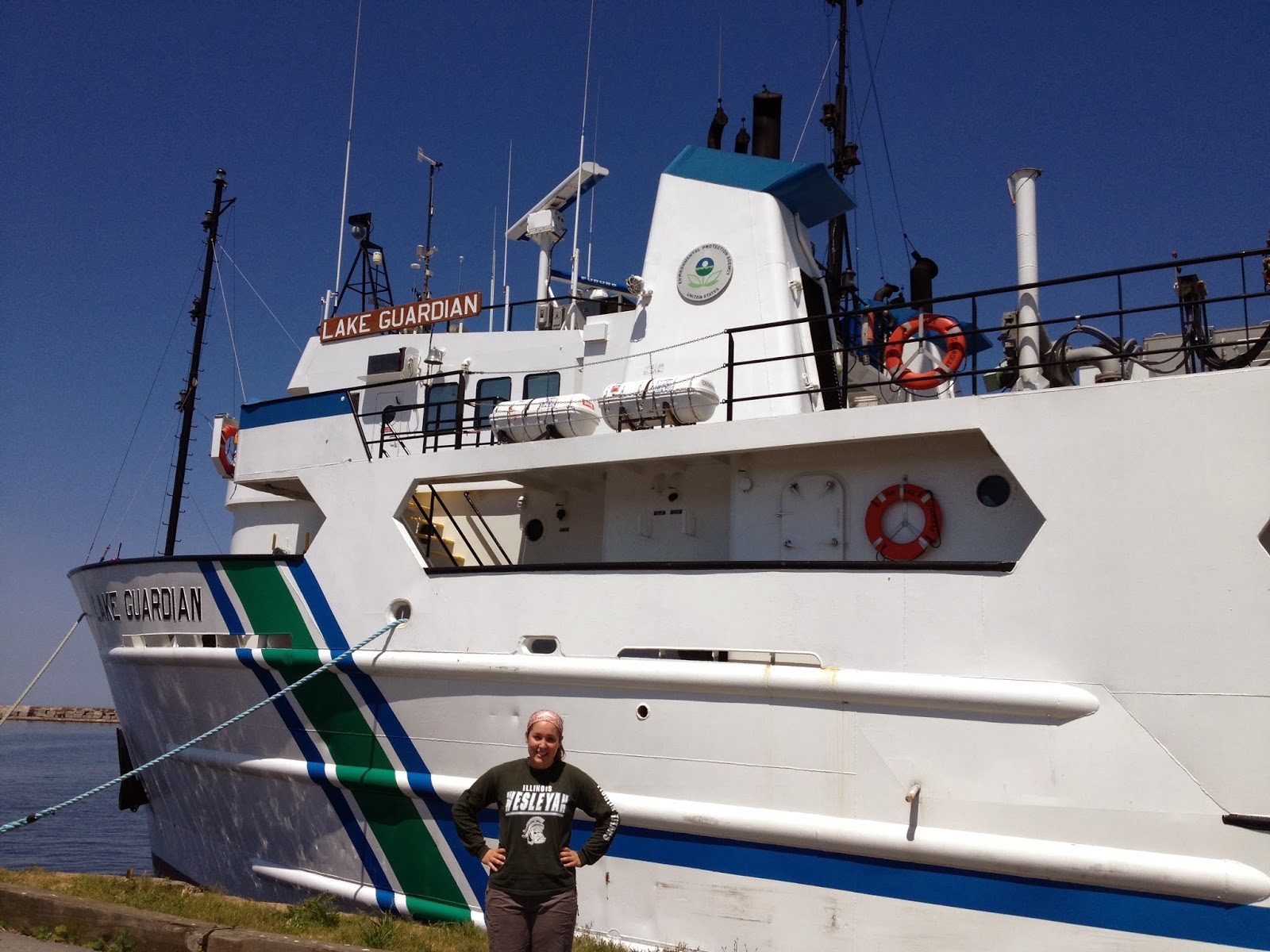
Allison is one of four interns who worked with IISG this summer.
In the news: Be aware of the Great Lakes’ dangers as well as their beauty
October 21st, 2013 by Irene Miles“According to the National Weather Service, there were seven fatalities and 14 rescues on the Great Lakes caused at least partially by currents in the water. Lake Michigan had the most incidents as is typically the case. There are a few reasons why Lake Michigan is the most dangerous year after year. First is the combination of highest population and one of the warmer waters. Second is the shape of the lake which makes it conducive to rip currents.This year did not have as many fatalities and rescues as compared to past years. The main reason for this was the colder summer keeping the number of swimmers down.While currents caused by rip tides are dangerous, the most often cited reason for a rescue is structural. Piers and other structures make dangerous currents and create locations for injuries.While the swimming season may be over, another very dangerous time on the Great Lakes is here. Fall is a season I’ve found to be most dangerous, especially on Saginaw Bay. Some duck hunters and fishers take unwise risks just to shoot a duck or catch a fish.”
Great Lakes Awareness Day at Shedd Aquarium demonstrates the importance of the Lakes
October 16th, 2013 by Irene Miles
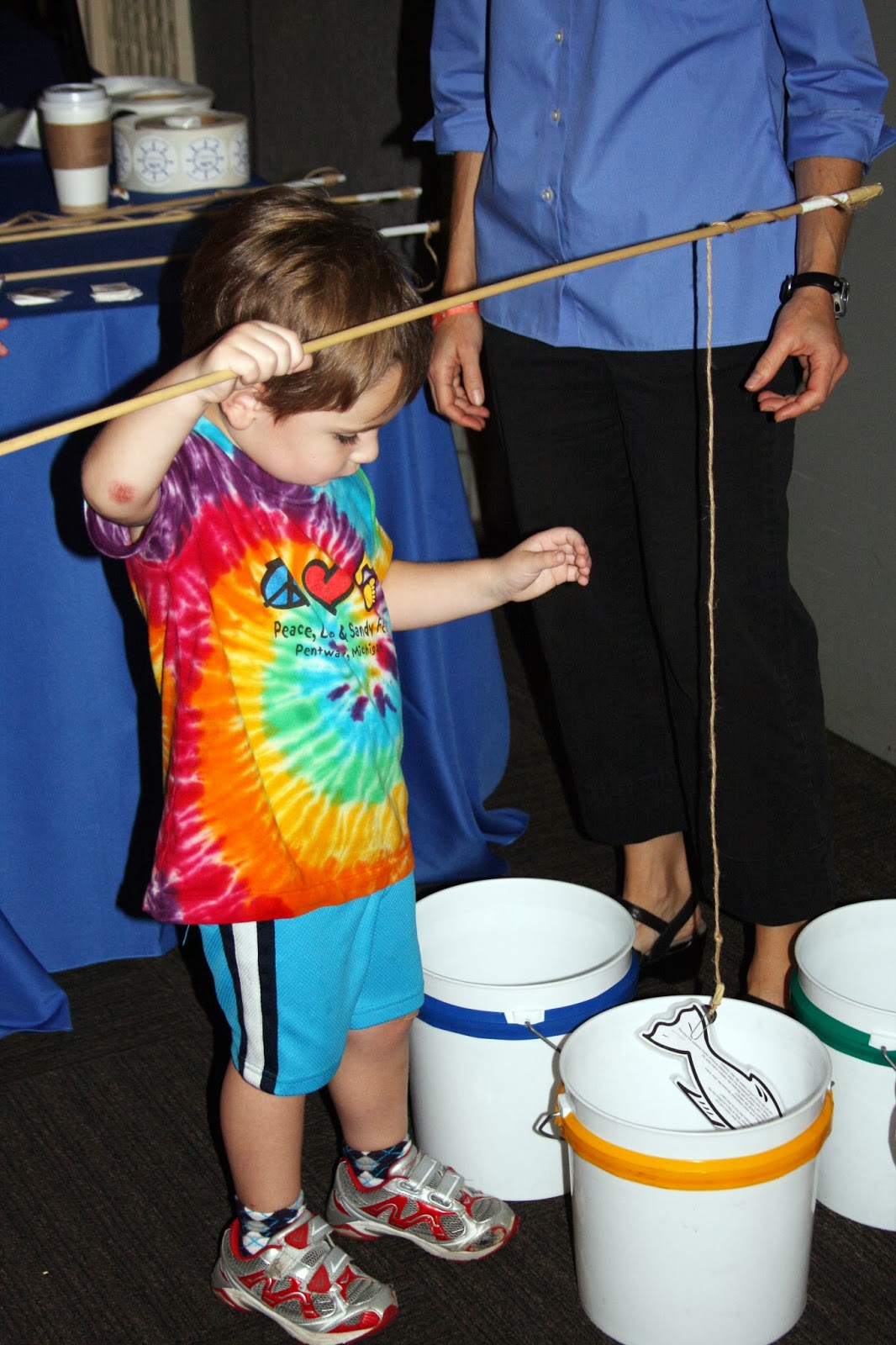
“To put it bluntly, Great Lakes Awareness Day was a huge success. There was maybe only a moment or two during the 3-hour event that exhibits weren’t crowded with people ready to learn more about aquatic invasive species, habitat restoration, and pollution from unwanted medications and unnecessary lawn care products. In the back-lit glow of the aquarium’s Water of the World galleries, children and adults became detectives on the hunt for aquatic invaders, saw how pollutants from streets and lawns flow into waterways with the help of a three-dimensional model, tested their knowledge of pharmaceutical pollution, and drew pictures of plants and animals important to Great Lakes health. Perhaps the biggest hit of the day was Spin-Fish-Win, an aquatic invasive species (AIS) trivia game.

No matter what part of the event they joined in on, though, these Shedd visitors were clearly interested in talking about important Great Lakes issues–sharing what they know and asking questions about what they didn’t. People I talked with were particularly interested in learning more about Asian carp, asking questions like “what makes them so bad,” “what can we do to stop their spread,” and even “can’t we just eat them?” Visitors were also surprised to learn about the impact pharmaceuticals have on fish and other aquatic organisms and wanted to know how they could safely rid their cabinets of unwanted medicines. And a father and his son took advantage of an AIS art contest to clear up rumors they had heard about some invaders and get up to date on the newest species knocking on the Great Lakes’ door.
Joining IISG staffers at the event were teachers and students from area schools who came to share what they are doing in their communities to protect water quality and aquatic wildlife. LaToyia Gilbert and her students talked about bringing medicine disposal ‘dos and don’ts’ to citizens and pharmacy technicians in Gary, IN.
Latoyia was inspired to create this project based on what she learned at the recent Great Lakes B-WET workshop. Jim Doyiakos and students from Amundsen High School introduced visitors to the risks of invasive species. And Ronald Hall’s 41st Street Beach Eco Warriors from Evergreen Academy Middle School shared their experiences picking up trash and monitoring water quality at Chicago’s 41st Street Beach.Thanks to a Shedd Aquarium teacher workshop going on that same day, some of the people who stopped by the exhibits were also teachers looking for ways to bring Great Lakes science into their classrooms. Many of these teachers took pictures of the displays or copies of the handouts so they could replicate the activities later. Others sought advice from teachers manning exhibits about potential stewardship projects they could do with their students. One teacher who helped with the event even asked if it could be repeated in the spring so her students could present their own projects.”

Urbana fourth grade class engages in some fish talk
October 11th, 2013 by Irene Miles

Mr. Valencic got the idea to bring Great Lakes issues to his class at Wiley Elementary School in Urbana, IL after spending a week aboard the U.S. EPA R/V Lake Guardian this summer for the annual Shipboard and Shoreline Workshop. During the week, he and 14 other formal and non-formal educators worked alongside scientists as they collected data on Lake Ontario. This year, participants collected samples from different locations to monitor water quality, studied species at the bottom of the food web, and learned more about organisms living on the lakebed. Sea Grant officials on board paired hand-on research with curriculum activities to help teachers better incorporate Great Lakes science into their classrooms.
6th Grade teacher uses workshop experience to train student scientists
October 9th, 2013 by Irene Miles
“The B-WET workshop presented teachers with so much information it would be impossible to not get inspired!” said Ms. Spentzos-Inghram. “They had a lineup of AMAZING presenters from a variety of organizations to promote their efforts, which made it a one-stop shop for information about bringing Great Lakes science into the classroom.”
Recent News
- Illinois-Indiana Sea Grant announces 2026 Graduate Student Scholars
- IISG and Purdue FNR Remember Carolyn Foley, Names Great Lakes Research Award
- 2026 IISG interns explore the field of environmental science
- Educators become students at Great Lakes Project WET workshop
- Registration now open for the 2026 State of Lake Michigan Meeting
IISG Instagram

What does a career in natural resources look like?
This month, a group of 4-H youth joined us at Martell Forest to find out! From tree climbing and birding to creating scent traps and dissecting owl pellets, participants spent three days exploring the many ways people work with and protect our natural resources.
Thanks to everyone who joined us! We can’t wait to see where your adventures take you next!


What does it mean to be Great Lakes literate?
It’s understanding how the Great Lakes shape your life and how your choices impact the lakes.
To be Great Lakes literate is to understand, communicate, and care for these special freshwater resources. 💙
Learn more about Great Lakes Literacy by visiting the Center for Great Lakes Literacy’s website at the link in bio.
#TeachingTuesday

Happy Juneteenth from all of us at Illinois-Indiana Sea Grant!

Got a research idea for southern Lake Michigan?
IISG’s 2026 Seed Grant Research Competition is open. Up to $150,000 total funding for pilot studies that could become your next big project.
💵 $10,000 to $50,000 per project
⏰ Applications due August 17, 2026
Two info webinars coming up: July 2 and July 21.
🔗 Full details at the link in bio.

Categories
- Aquaculture
- Aquatic Invasive Species
- Buoys
- Climate Ready Communities
- Coastal Resilience
- Director's Blog
- Education
- Featured
- Fellowships
- Fisheries
- Funded Research
- Funding
- Great Lakes Cleanup
- Great Lakes Data
- Healthy Waters
- Internships
- Jobs
- K-12 Education
- News
- Photos
- Program
- Recreation & Tourism
- Resources
- Sea Grant Scholars
- Stormwater & Green Infrastructure
- Sustainable Community Planning
- The Helm
- Uncategorized
- Video
- Water Resource Economics