July 12th, 2013 by Irene Miles
Greg Hitzroth, IISG’s organisms in trade outreach specialist, recently attended both the Northern Midwest Zen Nippon Airinkai Koi Club Show and the Indiana Koi and Water Garden Club Show to speak directly with water gardeners about making the right choices to prevent selecting and spreading invasive species.
The overall message he shared with the attendees was that even common plants associated with water gardens can quickly become “aquatic invaders” under the right conditions. Aquatic invaders are plants and animals that cause ecologic and economic harm once established in public waterways, and removing them can be very expensive and often impossible. One way that aquatic invaders are introduced or spread into public waters is through the intentional or unintentional release of species from water gardens and koi ponds.
Prevention is the best and most cost-effective way to keep aquatic invaders from spreading, and the gardeners and landscapers heard about a number of methods at the shows.
The first way to keep these species from spreading is to avoid buying and using them at all. Instead, Greg recommended purchasing native species and avoiding known invasives like those on identified by Reuben Keller of Loyola University Chicago and Christa Gants and David Lodge of University or Notre Dame in their article (PDF). The Chicago Botanic Garden’s website has a list of invasive species and alternatives that are not invasive or environmentally threatening to help guide gardeners’ purchase.
Additionally, simple steps like finding appropriate alternatives to releasing these species (including trading, returning them to retailers, or properly disposing of them) can have a profound effect in keeping aquatic invaders from establishing in other areas.
Greg will be presenting this information at other upcoming shows and events, including this weekend’s Midwest Koi and Pond Show, and looks forward to providing information about preventing aquatic invaders to gardeners and hobbyists throughout the season. Illinois-Indiana Sea Grant is creating a number of educational materials about preventing these species from spreading, and more information about those will be posted soon.
July 10th, 2013 by Irene Miles
From Robin Goettel, IISG associate director for education:
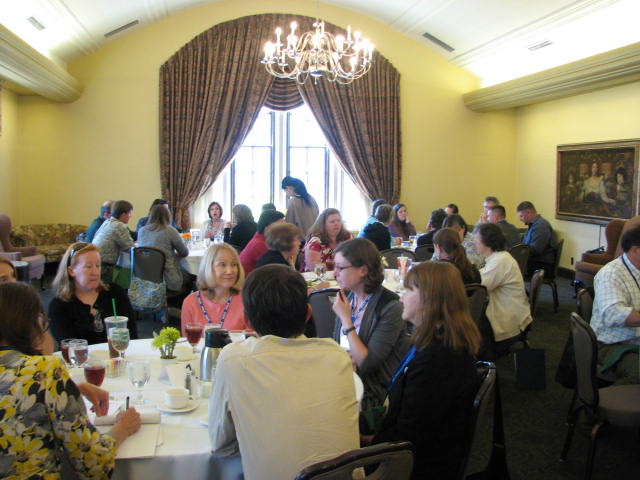
Scientists and teachers had a unique opportunity to interact, network, and connect research with education during The Center for Great Lakes Literacy’s Educator Day at last month’s IAGLR 2013 conference in West Lafayette, Indiana. Among the many goals of the IISG-coordinated session, providing opportunities for teachers to share their science education needs with researchers and identifying ways to incorporate the latest Great Lakes research into their lesson plans were high priorities.
The exchange of ideas was not only productive, but was a welcome and highly valued experience for all of the participants. The feedback received from both researchers and educators was outstanding, and offered a number of suggestions to guide another session like this in the future.
Said one teacher of the event, “I was impressed! My experience with IAGLR exceeded my expectations. I was hoping to simply gather more information to ‘grow’ my Great Lakes curriculum. However, I was able to network with other teachers and scientists which I found so much more valuable than walking away with a stack of Great Lakes lesson plans.”
Another educator was grateful for the opportunity to meet and talk to working researchers. “I am very thankful for the chance to interact with professionals in the field. Not only does attending scientific conferences refresh learned concepts, but allows for new learning, insight, and expansion of awareness. It also provided fresh ideas for project-based learning and the opportunity to network with potential collaborators.”
The participating scientists were also glad to brainstorm ways that their work could be incorporated into classroom lessons.
 “I always enjoy talking with teachers who are ‘in the trenches’ with younger students. They are faced with a different set of challenges (and opportunities) than we have at the college level. It was nice to hear that there are current efforts to better integrate math and science. It was also interesting to hear what teachers introduce in their classrooms to motivate and engage students in STEM areas.”
July 8th, 2013 by Irene Miles
Fifteen educators took to the water yesterday for the annual Shipboard and Shoreline Science Workshop. Scheduled for this week (July 7-13), the workshop offers teachers an opportunity to sail aboard the Lake Guardian on Lake Ontario, conducting a variety of experiments and research processes. This hands-on experience, combined with collaborative meetings with their fellow teachers, will allow each participant to take new information and approaches back to their classrooms.
Among the fifteen participants on the cruise are teachers from Illinois, and two of them wrote in to tell us about what they hope to gain from this week’s experience on Lake Ontario.
Alex Valencic, a fourth-grade teacher at Wiley Elementary school in Urbana, Illinois, looks to bring more information about the interactions between plants, animals, weather, and people to his students and his curricula.
“I’ve taught professionally for five years, first as a substitute teacher and then in my current position for the past two years. My teaching experience involves all of the core subjects, including mathematics, science, literacy, and social studies.
I first learned about the Lake Guardian workshop through a friend who works with the Illinois-Indiana Sea Grant. Some of the major topics of study for fourth graders in Illinois include learning about ecosystems, particularly how plants and animals interact with their environments, weather and global climate, and inquiry-based research. It is my hope that I’ll gain some ‘real-world’ experience studying these issues on Lake Ontario. I would like to integrate the topics into my science curriculum and challenge students to use the information about Lake Ontario to guide their study of Lake Michigan (the Great Lake that borders Illinois). While my students will not be able to go to the Great Lakes to experience the hands-on learning themselves, they will be able to use the resources gained during this workshop in their inquiry projects.”
Jen Slivka, working in the Shedd Aquarium’s learning department, is looking forward to incorporating even more science-based information and research into the exhibits at the aquarium.
“As a learning specialist, I have had the opportunity to coach teachers on inquiry-based science, create professional development sessions, and work closely with teachers on creating stewardship and citizen science programs. I feel very lucky to work with students and teachers of varying backgrounds and pass along my passion for science and education!
Prior to joining the Shedd team, I taught first grade for five years in Plano, IL. My passion for science was ignited when I attended Aurora University to earn my Masters in Teacher Leadership and Elementary Math and Science. My experiences in my graduate work led me to apply for a program through Shedd, called Teacher Field Experience: Biology in the Bahamas. Through this program, I was able to dive deep into marine environments and scientific research, first in Shedd’s classroom, and then firsthand in the Bahamas aboard Shedd’s research vessel, the R/V Coral Reef II. Through hands-on experience, I gained a greater understanding of data collection and analysis, how it applies to current scientific research and how to integrate it into my classroom curriculum. I quickly realized that teachers and educators can benefit greatly from unique professional development experiences and field work. My experiences on the Shedd’s research vessel created a desire in me to continue doing real, hands-on science, and inspire other educators to improve the science they do in their classroom. Last year I was fortunate enough to accept a learning specialist position at Shedd, which allows me the opportunity to connect with teachers all over the city of Chicago.
The Lake Guardian Sea Grant opportunity came at a perfect time. Shedd Aquarium recently unveiled a renovation of our Local Waters exhibit, titled At Home on the Great Lakes. Since Shedd is committed to education and conservation of the Great Lakes, I am thrilled with the opportunity to be able to board a research vessel and explore ecology, geology, geography, weather, and human impacts on Lake Ontario. Even though I was born and raised in Illinois, I feel that I have a lot to learn about the crucial role that the Great Lakes play in our world. I am looking forward to building my knowledge base on the Great Lakes by receiving firsthand experiences on a working research vessel. I am most looking forward to gaining new resources and discovering stewardship opportunities for students and teachers. Once I return, the knowledge and experiences I gain will be shared with the learning department, and will help to shape future programming at Shedd.”
July 3rd, 2013 by Irene Miles
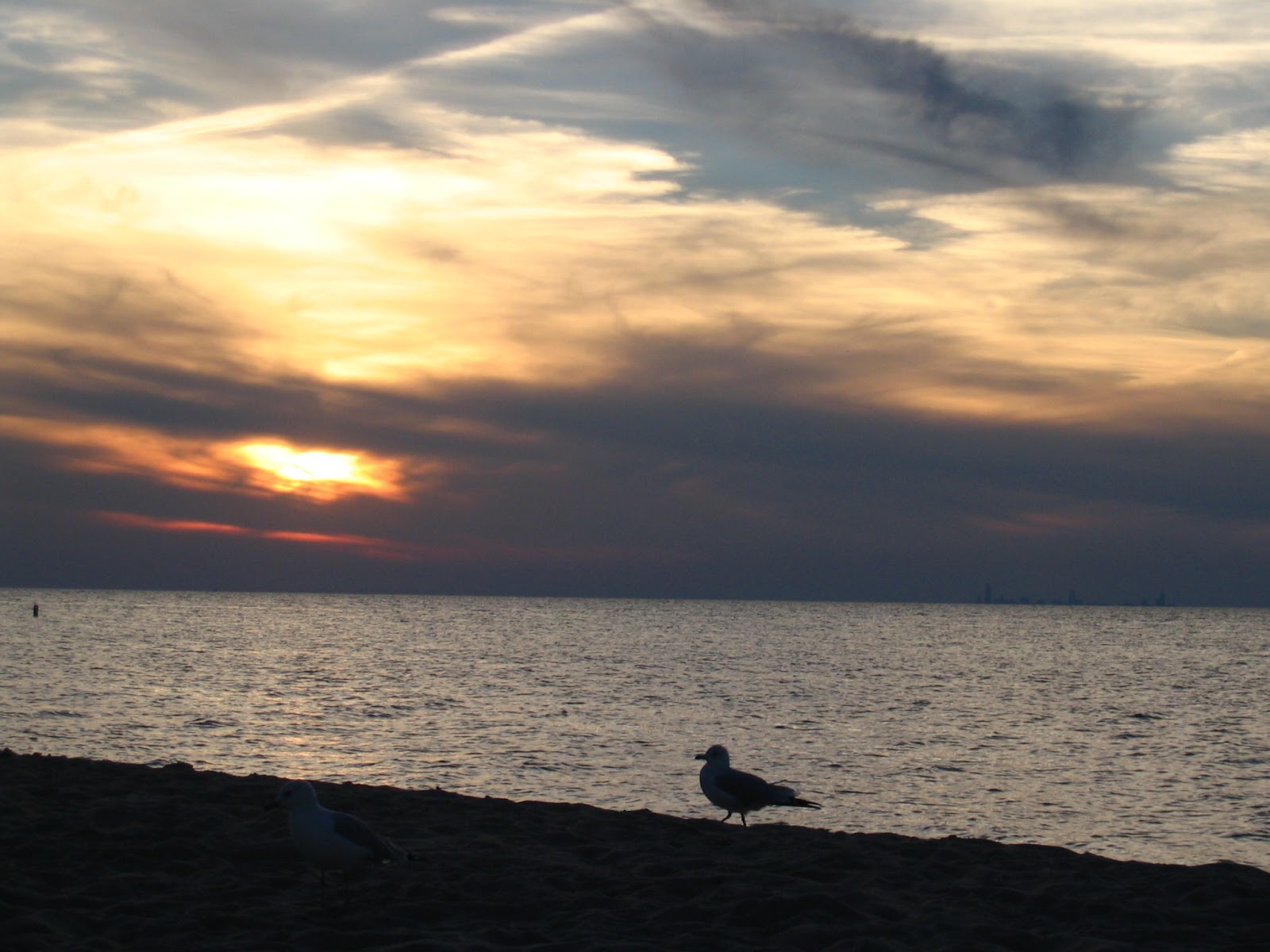
If you’re headed out to enjoy the weather and the outdoors this holiday weekend, you may want to balance swim time with some time on the beach as water temperatures look to be below average in some areas of Lake Michigan.
“In contrast to air temperatures forecast in the 80s, Lake Michigan water won’t warm up in time for the Thursday holiday, according to the National Weather Service office in Grand Rapids.
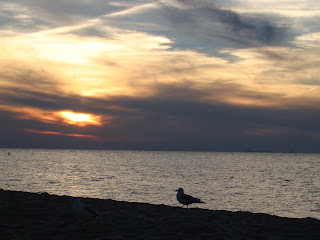 Water temperatures in Lake Michigan are 10 to 15 degrees colder than they were this time in 2012 and 5 to 10 degrees colder than they were in 2011, according to meteorologist Evan Webb. He said it’s a product of the cool spring this year.”
Water temperatures may be warmer or cooler at other points on the lake, and there are a number of sites to keep up to date on the conditions. If you’re planning to spend your time near the waters around Michigan City, Indiana, for instance, you can get current and recent nearshore conditions from the buoy operated by Purdue University and Illinois-Indiana Sea Grant.
However you spend time this holiday weekend, enjoy the sights and scenery safely.
July 2nd, 2013 by Irene Miles
The Great Lakes Ecological and Economic Protection Act was introduced by Senators Carl Levin (D-MI) and Mark Kirk (R-IL), co-chairs of the Senate Great Lakes Task Force, along with Senators Debbie Stabenow (D-MI), Amy Klobuchar (D-MN), Sherrod Brown (D-OH), Richard Durbin (D-IL), Al Franken (D-MN), Charles Schumer (D-NY) and Tammy Baldwin (D-WI).
 In addition to reauthorizing the Great Lakes Legacy Act, which provides support for communities to clean up waterways that are designated Areas of Concern (AOC) the United States and Canada, the new legislation would continue funding the Great Lakes Restoration Initiative and the EPA Great Lakes National Program Office.
The 10-minute video, produced by Illinois-Indiana Sea Grant and Wisconsin Sea Grant, explores Great Lakes waterways blighted by decades of industrial discharges like heavy metals, oil, and chemicals such as PCBs and PAHs. The 2002 Great Lakes Legacy Act created an initiative to clean up contamination in these AOCs. There are currently 29 AOCs in the United States. The habitat, water, and sediment quality have become severely degraded at these sites.
The video informs anglers, boaters, residents, and local businesses of the benefits that can come from a remediated AOC through the Legacy Act. The procedures and successes are the result of strong partnerships among states, municipalities, non-governmental organizations and businesses. Under this voluntary, collaborative program, the EPA and its non-federal partners have allocated almost $400 million toward sediment remediation.
As of September 2012, the program has removed or capped 2.1 million cubic yards of degraded sediment. But more waterways need to be cleaned up, and community involvement is essential.
Learn more about the Great Lakes Legacy Act at the EPA’s GLLA webpage.
June 25th, 2013 by Irene Miles
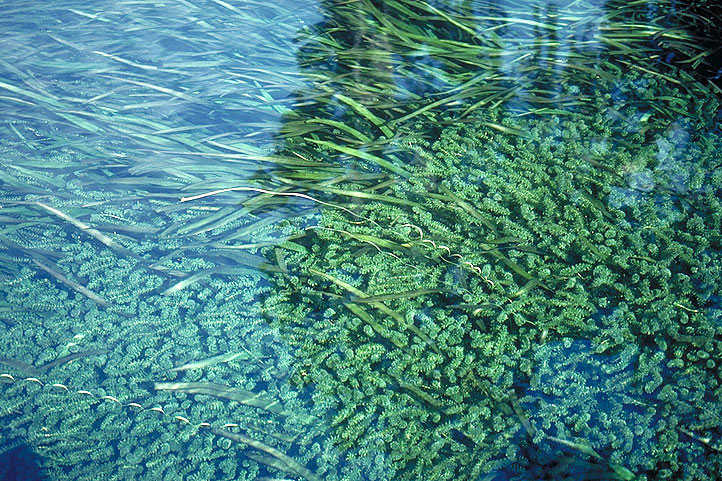
Aquatic invaders come in a number of shapes, sizes, and varieties, and aren’t limited to mussels or fish. In addition to our “Be A Hero – Transport Zero” campaign asking boaters and water users to be on the lookout for invasive species, IISG has helped fund “Hydrilla Hunt!,” a program to keep this invasive plant from overtaking Illinois’ waters.
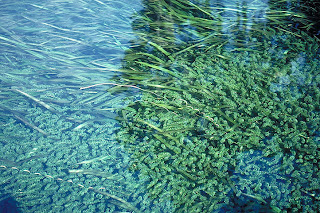 Hydrilla verticillata, commonly known as “hydrilla,” is an aquatic invasive “superweed” – a non-native plant that can grow quickly in waterways and cause serious environmental and economic damages. But before this species takes over, Illinois partners are asking water lovers for their help in preventing hydrilla’s spread.
“Recognized as one of the world’s worst weeds, hydrilla can grow an inch per day and form dense mats of vegetation at the water surface. Within the past few years, hydrilla has been discovered in Wisconsin and Indiana and it is expected to arrive in Illinois very soon. Our desirable native aquatic plants, sport fishing, native wildlife, waterfront property values, and recreational uses might all be seriously impacted.
‘Early detection of hydrilla could save Illinois millions of dollars in control costs,’ noted Cathy McGlynn, coordinator for the Northeast Illinois Invasive Plant Partnership (NIIPP). ‘Experience from other states shows that once a waterway becomes infested with hydrilla, it’s nearly impossible to control. Our hope in Illinois is to identify the plant at a very early stage when populations are still small enough to eradicate and manage,’ added McGlynn.”
Because this species can spread so quickly, the “Hydrilla Hunt!” program is asking boaters, fishermen, swimmers, sailors, and more to help locate it and notify them via e-mail with photos if possible.
June 14th, 2013 by Irene Miles
Illinois-Indiana Sea Grant and the Illinois Department of Natural Resources are collaborating on a new campaign to get boaters, fishers, divers, and everyone who loves spending time on the water involved in protecting the environment.
“Be a Hero – Transport Zero” is a multi-season message that strikes at one of the big problems facing our waterways – aquatic invasive species. With three simple steps, though, everyone can help stop the spread of these aquatic invaders. Each time you leave a body of water, just take a minute to go through these easy procedures:
– Remove any plants, animals, and mud from boats, trailers and equipment
– Drain everything (bait buckets, live wells, etc.)
– Dry everything with a towel
 From boaters and kayakers to waterfowl hunters, scuba divers, sea plane operators, and more, everyone can help prevent invasive species from taking over their favorite waterways with these three actions.
June 10th, 2013 by Irene Miles
Three of IISG’s interns were among the hundreds of scientists, researchers, educators, and more in attendance at last week’s IAGLR 2013 conference. Each of them wrote in to tell us more about their experiences at the conference, and some interesting things they took away from the sessions.
Emily Anderson, interning with IISG’s environmental social scientist Caitie McCoy, learned more about the major issues facing the Great Lakes:
“During the week I spent at the IAGLR conference I gained a greater understanding of how researchers, policy makers, and citizens alike have to be included in the conversation for the Great Lakes to be restored, conserved, and used sustainably. Through the talks I attended I learned a lot about how harmful algal blooms, personal medications, and impermeable surfaces can affect the health of the Great Lakes, but what I found most interesting was witnessing the cooperative efforts between the United States and Canada. I found it so encouraging to watch as representatives from the two countries shared data and other resources to face the challenges affecting the health of the Great Lakes region jointly. The IAGLR conference was a magical experience for me; I saw with my own two eyes the genesis of future policy and research. Most importantly for my position as an IISG intern, I now understand where Sea Grant fits into the equation of Great Lakes protection with research, education, and outreach.”
Allison Neubauer, a Great Lakes education intern working with IISG’s Kristin TePas, was aware of a number of environmental issues, but was still surprised to learn about the wide range of current and potential problems facing the Great Lakes:
“The greatest take-away from my week at IAGLR would have to be the myriad issues affecting the Great Lakes, and the critical importance of continued research and education to addressing them. In spite of my general understanding of environmental science and the Great Lakes, I was woefully under-informed about the more-than-50 different issues that had entire sessions devoted to them.
For this reason, my favorite part was sitting in on the educator-scientist roundtable discussion. The goal was to bring real issues into the classroom with place-based learning. Teachers and researchers alike proposed many exciting ideas for incorporating Great Lakes research into science lessons. It was awesome to see how enthusiastic educators were about collaborating with scientists and going the extra mile to make science more relevant and fun for students. In my mind this was the most important facet of the IAGLR conference because students need to be exposed to real, current issues surrounding them and affecting the vital resources of the Great Lakes. I think this collaborative effort could spark career-building education for future scientists and very possibly inspire them to be Great Lakes researchers giving their own talks at an IAGLR conference years from now.”
Cait Lackey, who will be working with Greg Hitzroth and the IISG aquatic invasive species team, was excited to learn more about the many areas where Sea Grant works to help protect and preserve the Great Lakes:
“Prior to the IAGLR conference my knowledge about the Great Lakes was limited. At the conference I learned that there are a multitude of issues facing the Great Lakes, many of which I wasn’t familiar with. Some of my favorites included the effects that the Great Lakes have on tourism, marketing strategies for invasive species in the Great Lakes, and the use of landscape architecture for restoration ecology.
At IAGLR I also learned about the various roles Sea Grant plays in protecting the health of the Great Lakes. Just from meeting other Sea Grant employees and interns and hearing some of their presentations, I learned that the Sea Grant staff works to educate many people and audiences including teachers, students, fisherman, local residents, and retailers. I also learned that Sea Grant staff works to research and present solutions to problems the Great Lakes currently face. I had the opportunity to see presentations given by Sea Grant Staff that involved a great deal of research and development, and attending the IAGLR conference showed me that the work Sea Grant participates in is detailed, diverse, and at times very challenging.”
Find out more about IAGLR and the annual conference at the link above, and follow IAGLR on Twitter as well.
June 7th, 2013 by Irene Miles
With such a rainy and flood-producing spring, one’s thoughts may just turn to something practical–rain barrels. Let’s look back on last fall’s rain barrel project in Blue Island.
Illinois-Indiana Sea Grant was one of five lead partners in the “Blue Island, Blue Water” community-based program designed to reduce stormwater overflows and flooding issues in the Chicago suburb. Over the course of the project, more than 140 volunteers installed rain barrels at 33 different residential locations and three institutional buildings. Additionally, more than 1000 plants and nearly 100 trees were planted to help improve water management and beautify neighborhoods at the same time.
From the Chicagoland H2O blog:
 “Keeping water out of sewers also reduces run-off, which in turn reduces pollution in the Cal-Sag Channel. The Cal-Sag is an increasingly popular destination for Chicagoland kayakers and nature lovers, but the channel requires a strong commitment to water quality, since it runs through densely built residential and industrial areas that are potential sources of pollution. Thus, stormwater management in Blue Island represents a key effort in which ‘local, state and county governments work together to really make an impact in our neighborhoods,’ according to (zoning administrator and director of special projects Jason) Berry.”
The “Blue Island, Blue Water” project was also chosen as a 2012 Millenium Reserve Model Project. The project’s inclusion also makes it part of the President’s “America’s Great Outdoors Initiative,” which helps align federal efforts and funds with conservation and recreation projects on the local level where they can make real and immediate impacts. You can learn more about the project at the links above and at this ABC 7 news report from earlier this year. And read more about the Millennium Reserve’s place within the initiative here.