Results
File Type: pdf
File Size: 1.31 MB
Year: 2026
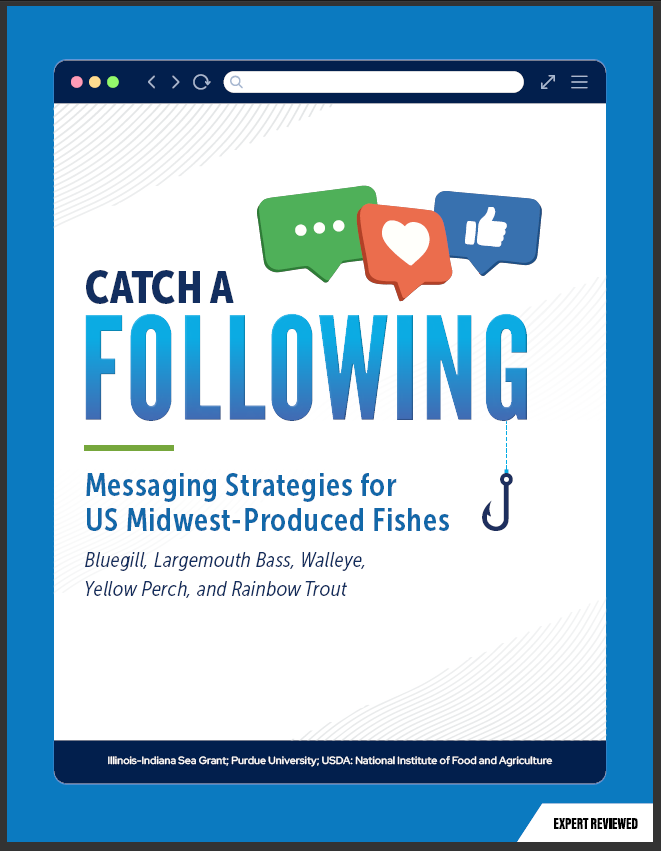
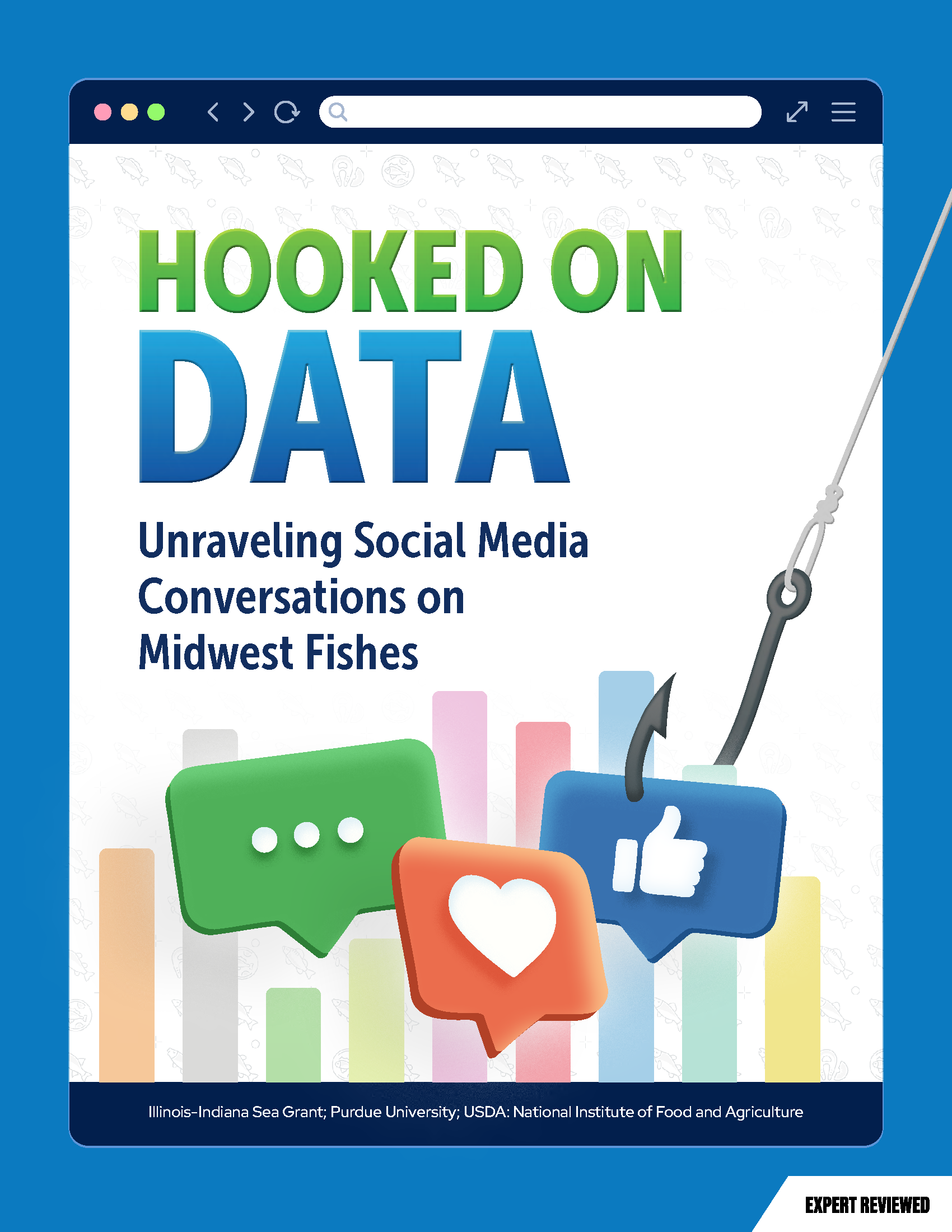
This report translates recent social media sentiment research into actionable messaging strategies for aquaculture producers, marketers, and industry partners in the Midwest and Great Lakes region working with Bluegill, Largemouth Bass, Walleye, Yellow Perch, and Rainbow Trout.
This project was funded in part USDA-NIFA through the North Central Regional Aquaculture Center (NCRAC) Award 2022-38500-38103.
Download File
File Type: pdf
File Size: 1.27 MB
Year: 2026
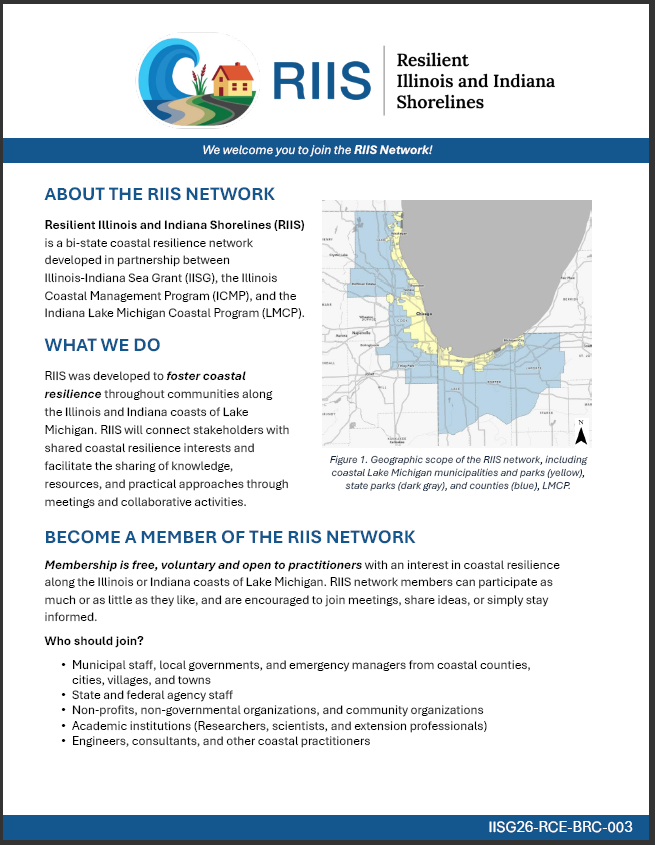
2-page flyer describing the RIIS network and showcasing QR codes linking to the network planning survey and the IISG initiative page for the RIIS network.
Download File
File Type: pdf
File Size: 397.57 KB
Year: 2026
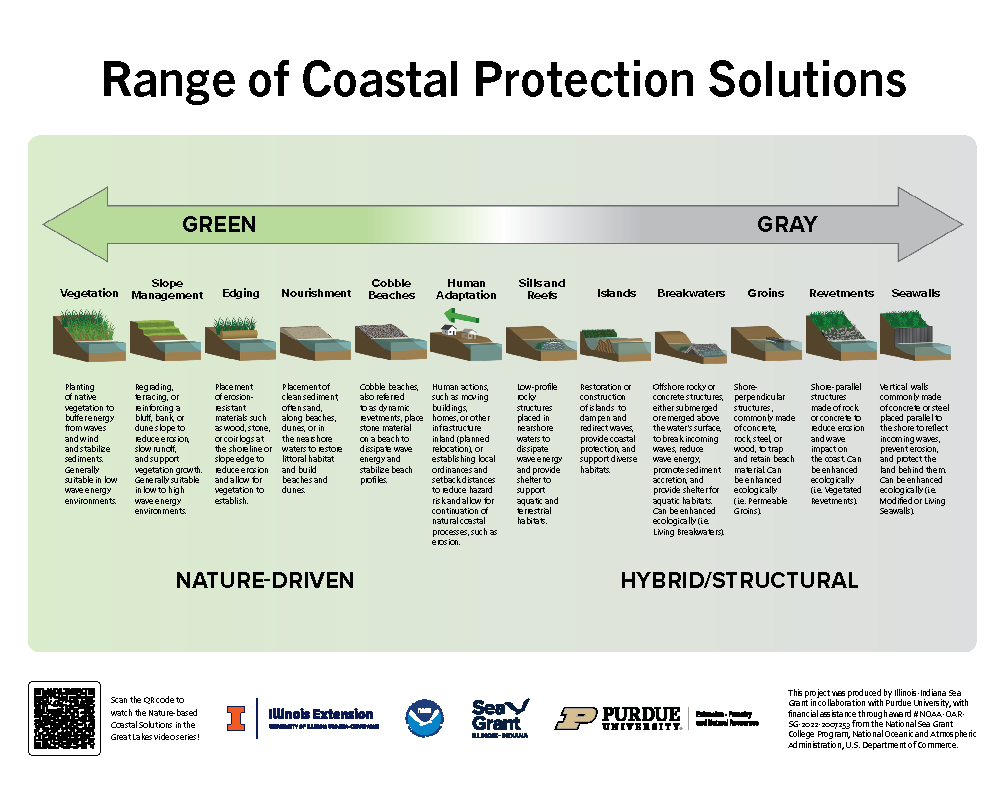
Coastal protection solutions in Great Lakes exist on a spectrum, ranging from softer “green” nature-based solutions, like native vegetation, to harder “gray”, engineered solutions, such as seawalls. This poster highlights the range of coastal protection solutions in the Great Lakes, including both (1) Nature-driven and (2) Hybrid approaches.
Alternative Versions
A screen-reader friendly version is available.
Download File
File Type: pdf
File Size: 1.54 MB
Year: 2026
A recent research project led by Illinois-Indiana Sea Grant analyzed seafood-related online posts to better understand public attitudes toward seafood, including both fish and shellfish. The analysis revealed a wide range of sentiments toward seafood in the United States across most regions and fish categories. During the COVID-19 pandemic, researchers noted an upward trend in positive sentiment, suggesting increased public appreciation for seafood during that time.
Download File
File Type: pdf
File Size: 6.82 MB
Year: 2026
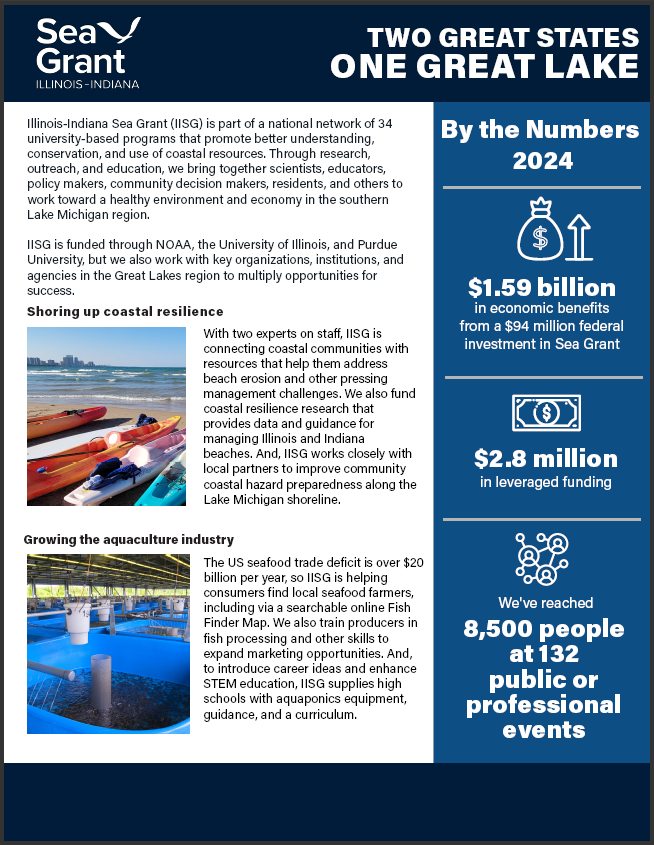
This quick fact sheet provides highlights of IISG’s work through 2024 with a bi-state perspective.
Download File
File Type: pdf
File Size: 1.85 MB
Year: 2026
A study funded by the USDA North Central Regional Aquaculture Center analyzed public sentiment regarding five fishes to offer valuable insights for industry stakeholders, policymakers, and conservation organizations with vested interests in the management and preservation of these fishes. From July 2020 to June 2024, over 732,200 social media mentions referenced bluegill, largemouth bass, rainbow trout, walleye and yellow perch.
Download File
Page 1 of 37
Note: Some older Illinois-Indiana Sea Grant publications have not yet been restructured into ADA compliant formats. We are actively working on this. If you are having difficulty accessing a particular item in one of our databases, please contact iisg@purdue.edu with the name of the item and its URL for further assistance.