
Illinois-Indiana Sea Grant’s education team led a workshop for teachers and administrators in the Blue Island, Illinois school district recently, offering lessons, materials, and training on bringing Great Lakes science to their classrooms.
 
Susan Ask, who works with IISG’s Lawn to Lake program, sent along some details about the workshop and the enthusiastic reception from the teachers: 


“We had a fun and energetic workshop with teachers and principals in the Blue Island School District. The workshop focused on water quality and drew on three major initiatives within Sea Grant: Lawn to Lake, the Great Lakes Field Experiences for Watershed Educators (B-WET), and Increasing Citizen Involvement and Great Lakes Literacy (Center for Great Lakes Literacy).
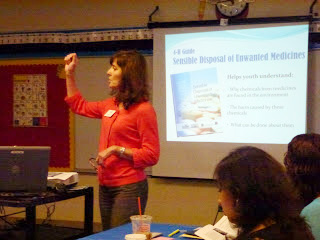
We began with the basic definition and ecology of watersheds, then moved to an exploration of watershed and water quality issues brought on by urbanization, landscaping practices, and waste disposal. Teachers learned basic ecology that they can teach in their classrooms. We identified point- and non-point sources of pollution and talked about available solutions for individuals and communities to adopt. 

 
After a presentation and discussion, we toured the recently installed rain gardens in the courtyard at Blue Island Elementary School so we could see theory put in to practice. The courtyard contains a rich variety of native plants that creates a beautiful garden throughout the year while also managing and controlling rainwater. Runoff from the roofs will be collected in rain barrels all around the building, and can then be used  on the landscape as needed.
 

The watershed model was a big hit. We used a three-dimensional model of a watershed, with rivers and lakes, houses, farms, factories, water treatment facilities and other developments, to see how water and pollutants move through the community. Teachers will be able to borrow this model for use in their classes, helping students understand the connection between people, land use, and water. But we didn’t just look at problems. The model also let us see how natural lawn care, rain gardens, rain barrels, permeable pavement, and other practices can help prevent pollution and reduce runoff.
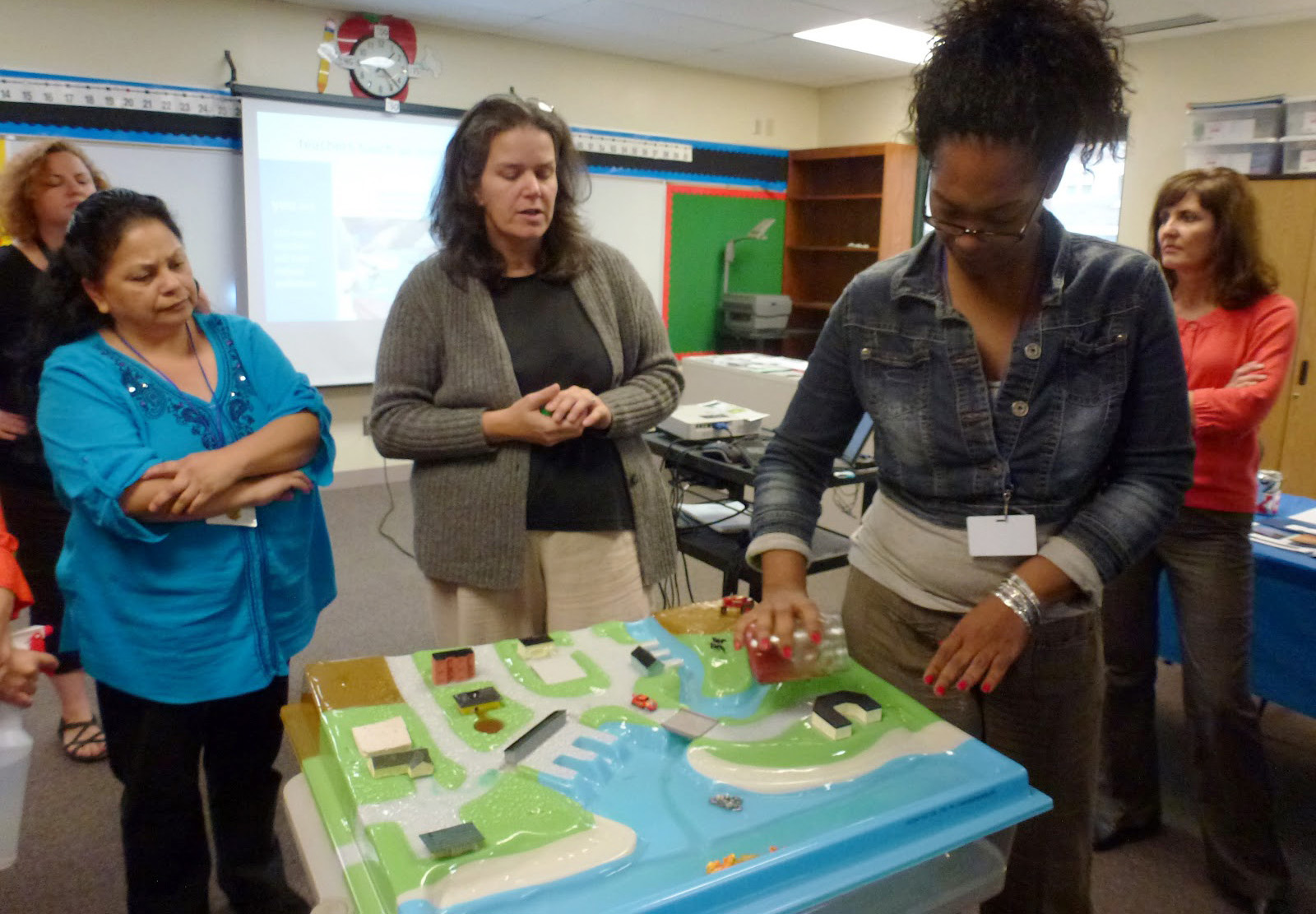
 

We showcased many of the program’s Great Lakes curricula – Fresh and Salt, Greatest of the Great Lakes, and Sensible Disposal of Unwanted Medicines. Teachers broke into groups to experience some of these classroom activities and share how they might incorporate them in their lessons. They also learned how the Great Lakes Literacy Principles will be a great way to introduce current Great Lakes issues to their students.


Most of the teachers told us that they haven’t yet integrated Great Lakes information in their educational activities, but that they plan to do so now after learning more about water quality and educational resources at the workshop. 

 
We’re very excited to see these dedicated teachers assist and guide their students to learn more about the Great Lakes, water quality, and practical stewardship of water and land.”
 

In addition to Susan, the workshop was also led by IISG’s Robin Goettel and Terri Hallesy. If you are interested in educational materials and opportunities for yourself or teachers in your school/district, contact Robin or Terri at the links above or visit us online to learn more.

IISG Instagram

The gales of November may come early, but, as usual, the nominations for the Lakies are right on time along with our official call for nominations! Brought to you by the Teach Me About the Great Lakes podcast, The Lakies (aka "quite possibly not the least prestigious Great Lakes-focused awards ceremony there is”) are back. Our goal isn't to be the Official Arbiters of Quality, but to host a fun celebration of amazing Great Lakes-related research, outreach, and communication in the inimitable Teach Me style.Nomination categories are:-Great Lakes Science Communication of the Year-Great Lakes Outreach Program of the Year-Great Lakes News Event of the Year-Great Lakes Research Finding of the Year-Coolest Thing You Learned Listening to TMATGL in 2025-Science Podcast of the Year (Non-TMATGL edition)-Great Lakes Animal of the Year-Great Lakes Non-Animal of the Year-Great Lakes Sandwich of the Year-Great Lakes Donut of the YearThe Details: -Deadline: Nominations close on December 4th.Process: It's easy (just enter the name/title and a link).-Self-Nominations: Highly encouraged. Don't be shy.We’d love to get a broad swath of work across both the serious and less-serious categories to celebrate. Feel free to pass the link on to interested people: https://bit.ly/Lakies25
Making Sense of Social Media: Presented by Illinois-Indiana Sea Grant & Purdue Extension‌When: December 6, 2025, from 1 - 4:00 PM ESTWhere: RDM Shrimp, RDM Shrimp, 101 N 850 E, Fowler, IN 47944Registration Link in bio.‌Social media can be a great way to market your small business and products, but sometimes it might feel like you are casting a net again and again to find that your net is empty. After all, the point of using social media marketing is to connect with customers. By attending this workshop, you will:-Hear Research Findings-Participate in an Interactive Workshop Session-Learn Real World Application-Tour a Shrimp Farm-Network at the “After Hour Social”‌This program is supported by the North Central Regional Aquaculture Center and put on in partnership with the Indiana Aquaculture Association Inc, RDM Shrimp, and Ohio Sea Grant, The Ohio State University.‌For questions contact Amy Shambach by email (ashambac@purdue.edu) or phone (317-238-0511)
Skip to content