Do you have expired or unused medicine sitting around your house? How you choose to get rid of those drugs could hurt our waterways.
“Research has shown that there can be negative effects to animal health and reproduction from pharmaceuticals that haven’t been removed from wastewater,” said Sarah Zack, the pollution prevention extension specialist for Illinois-Indiana Sea Grant. “Wastewater treatment plants weren’t designed to remove many of the compounds getting into them.”
So, how should you get rid of your drugs? Instead of putting medicines in the trash or flushing them in the toilet, bring them to National Prescription Drug Take-Back Day 10 a.m.-2 p.m. April 30. There are 310 sites in Illinois and 135 sites in Indiana. The day is being hosted by the U.S. Drug Enforcement Administration, and people can find the nearest drop off location on the DEA’s website.
There is a large and growing body of research available about the environmental impacts of pharmaceuticals in waterways, but any potential long-term human health impacts are not yet clear. So in the meantime, making sure we properly dispose of unwanted medications is a good bet.
“There are other reasons besides just water quality for making sure that your medicines are disposed of properly,” Zack said, adding that pets and children can get into unused medicines around the house.
Besides taking medicine to take back programs, Zack said people should make sure they’re communicating with their physicians about getting the appropriate quantities of medicine.
“Don’t take a 90-day supply of a medicine if a 30-day supply is sufficient,” Zack said.
Being cognizant of what’s in your medicine cabinet and being willing to say “no,” to samples of medication you don’t need are other ways to decrease the amount of prescription drugs you own.
More than 5.5 million pounds of pills have been collected since the event was created in 2010, according to the DEA’s website. Pills and patches may be dropped off, but the program cannot accept liquids or needles or sharps. The day is free and anonymous.
“It’s really important that we have these events to give the public an opportunity to ensure that they are being responsible with medicines,” Zack said.
If you are interested in setting up a permanent medicine disposal site in your local police station, contact Sarah Zack. You can also reach here on Twitter:@SarahAZack.
Ali Braboy is a senior studying journalism at the University of Illinois at Urbana-Champaign.
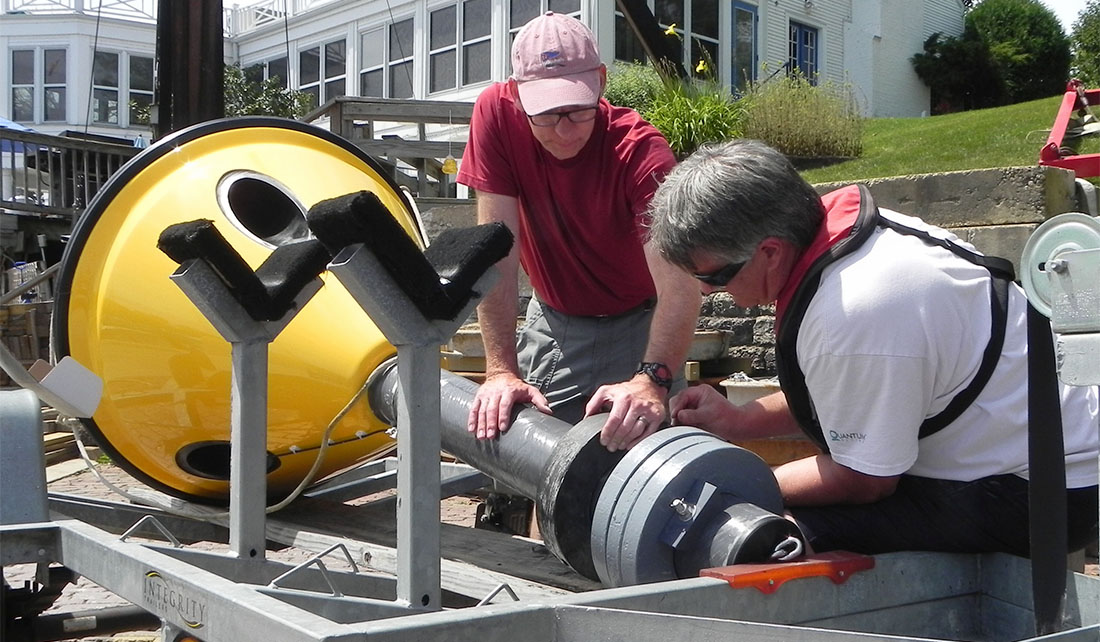
Do you have questions about Lake Michigan monitoring? Or do you just want to see a buoy up close? Come visit the Wilmette Buoy Open House on April 26 from 5-7 p.m. at Lloyd Park in Winnetka, Illinois!
Jay Beugly, IISG aquatic ecology specialist and Ed Verhamme, project engineer from LimnoTech will be on hand to talk about all the nearshore environmental-sensing this bright yellow, 610-pound buoy is capable of.
“We’re happy to answer questions about anything people are interested in,” said Beugly. “This is the first full season that this buoy will be deployed, and we want people to know that it’s out there. We’re also excited to be able to stand next to the buoy while it’s out of the water and talk to folks and see how we might improve their experience.”
The buoy—once launched later in the week—will be moored roughly four miles off the coast of Wilmette, Illinois. From May to October, it relays information on wind speed, air and water temperature, wave height and direction, and other environmental characteristics each year.
Current lake conditions are updated every 10 minutes and are available at the IISG Wilmette Buoy page. Photos (taken once per hour during daylight) and video footage is available at the LimnoTech Webcam gallery. The mobile-friendly sites highlight conditions of particular interest to recreational users, such as wave height, wind speed, and surface water temperature.
Information collected from the buoys is also fed into the National Data Buoy Center operated by the National Oceanic and Atmospheric Administration and Great Lakes Buoy offers more localized information.
Forecasters, researchers, and others can download raw historical data for Michigan City buoy ID 45170 or Wilmette buoy ID 45174 from any of these websites.
This event is free and the public are encouraged to attend!
The Pharmaceuticals and Personal Care Products (PPCPs) in the Environment conference at the I Hotel in Champaign, Illinois on Monday welcomed dozens of researchers, officials, academics, and high school students. The 10 students from Pontiac High School in Illinois understood very well the hazards PPCPs pose to the health of people and the environment.
That’s not at all surprising because they are part of the P2D2 (Pontiac Prescription Drug Disposal) program created by their teacher 45-year-old Paul Ritter who’s been teaching for 22 years. Ritter developed the program nine years ago after failing to come up with an answer to his wife’s question about what to do with some unwanted medication they had in their home.
The purpose of P2D2 is to provide communities with a proper method of pharmaceutical disposal that effectively reduces the misuse and abuse of pharmaceuticals as well as improves water quality.
Since 2007 Ritter can boast the program’s success not just in the United States, but in six additional countries. Millions of pounds have of medicine have been properly disposed of and laws have been enacted to prevent medications from getting into the environment and into the wrong hands through the use of P2D2.
“My students help perpetuate the national model—they established the national model,” Ritter declared at the conference.
Senior Jacob Jiles who took the class with Ritter just to get another science credit knows he got much more out of the experience than he was expecting.
“Cumulatively with the program we’ve eradicated 3 million pounds of pharmaceuticals, so that means 3 million pounds that have been taken out of the streets and or the water system,” Jiles said.
University of Illinois PhD students Pongsakorn “Tum” Suppakittpaisarn, pictured above on the right, and Fatemeh Saeidi-Rizi, pictured above on the left, study rain gardens—but not in the way you’d expect. Instead of measuring infiltration rates and pollution reduction capacity, Tum and Fatemeh want to know what happens in our brains and bodies when we see this green infrastructure practice.
A growing number of studies draw connections between access to green spaces and our physical and mental health. But, Tum said, most of that work has revolved around larger, more ubiquitous landscapes like public parks and tree-lined streets.
“We know green spaces generally are good for mental health,” he said. “But the ‘how’ and ‘why’ is still unclear, especially with rarer landscape types like rain gardens.”
So Tum and Fatemeh, along with collaborators at the University of Illinois’ Sustainability and Human Health Lab and the Health People-Health Landscape Lab at National Taiwan University, are working together to measure physical responses and changes in brain activity triggered by images of rain gardens.
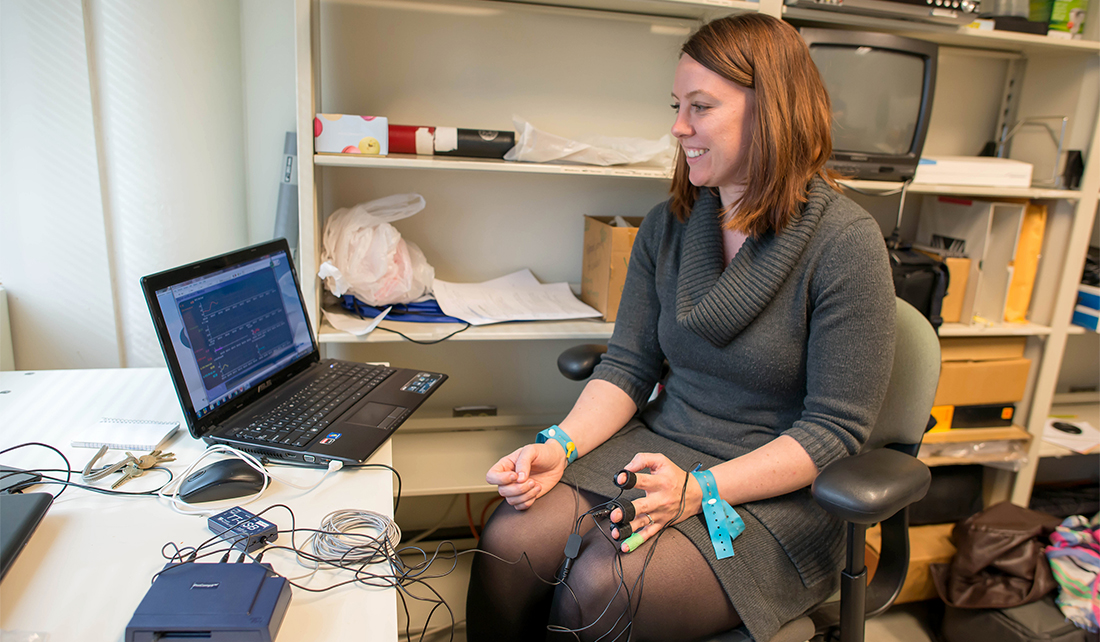
The team has compiled 216 rain garden photos taken across the U.S. into nine different videos. In Illinois, Tum will use biofeedback sensors to measure what happens to participant heart rates, body temperatures, and more when they see these videos.
At the same time, Dr. Chun-Yen Chang’s team in Taiwan will use functional magnetic resonance imaging—better known as fMRI—to monitor and map changes in brain blood flow when participants are shown rain garden photos after being put through a series of tests designed to cause mental fatigue.
The researchers only began testing participants this spring, but they have a few predictions about the final results.
“It’s possible that seeing rain gardens in an urban space will help people recover from mental fatigue faster,” said Tum. “On the other hand, rain gardens with a lot of messy plants may make people feel uncomfortable, which may lead to them feeling more stress or mentally fatigue.”
Dig it and forget it—that’s one of the biggest appeals of woodchip bioreactors, one of many nitrogen-reducing practices recommended in the Illinois Nutrient Loss Reduction Strategy.
The bacteria living in these long, narrow trenches remove nitrogen carried through farm tile lines through a process known as denitrificaiton. The result is an average annual nitrogen reduction of 25 percent for roughly 10 years—and with minimal maintenance for the farmer.
But don’t just take our word for it. Hear what University of Illinois researchers Mark David and Laura Christianson had to say about this conservation agriculture practice this video.
What happens when a canary in the coal mine can no longer be trusted to sound the alarm? Environmental chemist Michael Lydy answers this question in the latest edition of UpClose.
Lydy and his team at Southern Illinois University Carbondale are in the early stages of a three-year study examining the prevalence of pyrethroid insecticide resistance in a crustacean used by the U.S. Environmental Protection Agency to gauge the health of waterways. Widespread resistance in Hyalella azteca—something Lydy and others have already found in California and the Midwest—would raise doubts about the accuracy of a spectrum of state and federal biomonitoring programs.
Funded by a grant from the U.S. Geological Survey and the Illinois Water Resources Center, the study will also investigate whether a testing method known as Tenax can help scientists and natural resources managers more accurately predict the threat pyrethroids pose to aquatic life.
UpClose with is the eleventh issue of the award-winning Q&A series that gives readers an insider’s view of research on emerging contaminants. Each interview highlights a unique component of emerging contaminant research. Readers also learn about the complex, and sometimes tricky, process of conducting field studies and the potential implications of research on industries and regulations.
Sarah Zack is joining the IISG pollution prevention team as its new extension specialist.
She will be integrating program leadership, and public engagement and developing extension and outreach activities for the pollution prevention programs, especially related to management of pharmaceuticals and personal care products in the environment, microplastics pollution in the Great Lakes, and other emerging contaminants of concern.
For the past five years, Zack has worked in IISG’s aquatic invasive species (AIS) program and was instrumental in developing the Be A Hero-Transport Zero™ campaign. She also researched AIS best management practices for fishing tournament anglers and organizers.
“I’m very excited to begin my new role with IISG, and to work with some of you in new ways,” Zack said. “This is a great group to work with, and I’m thrilled to be able to take on a new challenge while still staying a part of IISG.”
Zack has a Master’s degree in biology with an emphasis on aquatic ecology from Loyola University Chicago.
What do you get when you cross a marsupial and a crustacean? The answer, as you may have guessed from the title, is none other than the opossum shrimp. Otherwise known as the order Mysidia, these creatures’ colloquial classification comes from the brood pouch present in the species’ females. This sets the order apart from other crustaceans, whose larvae are free-swimming.
The inter-species similarities don’t stop there, however, as the tails of opossum shrimp branch off into two distinct parts, resembling those of lobsters. But taken as a whole, this animal most closely resembles crayfish, having one pair of stalked eyes, two pairs of antennae, and eight limbs – the foremost two (known as maxillipeds), function like arms and hands, and are used for filtering plankton and other organic material from the water, while the following six (known as pereopods), are used for swimming. All these features are wrapped up in a relatively small package, with the majority of species ranging from a tenth of an inch to an inch.
Opossum shrimp can and do live in marine, brackish, and freshwater ecosystems, and are found the world over — Great Lakes included. They are benthic (water bottom) and pelagic (open water) organisms that migrate daily, moving downwards towards areas with less sunlight during the day, then returning to higher depths at night.
This curious crustacean is perhaps most well-known for its utility. A short reproductive cycle and a high adaptability to water conditions make opossum shrimp ideal organisms to culture in laboratories. Able to create and sustain large populations with relative ease, they are used as feed for other cultured organisms, like lake trout.
Like the lake sturgeon, opossum shrimp are sensitive to their surroundings. As such, they are often implemented as a way to monitor water quality, with researchers observing physical or behavioral differences in response to pollution.
Brandon Steppan is an intern from the English department at the University of Illinois.
Update: This article has been corrected. The original version described the opossum shrimp as moving upwards towards areas with more sunlight during the day, then returning to lower depths at night, sometimes forming clusters as they swim. We also updated it to remove the reference to lake trout as a marine organism.
What does a career in natural resources look like?
This month, a group of 4-H youth joined us at Martell Forest to find out! From tree climbing and birding to creating scent traps and dissecting owl pellets, participants spent three days exploring the many ways people work with and protect our natural resources.
Thanks to everyone who joined us! We can’t wait to see where your adventures take you next!