Adrienne Gulley, IISG pollution prevention outreach specialist, meets with five enthusiastic high school students from Peoria, Illinois. Gulley brought along the “EnviroScape,” a plastic model she uses to demonstrate how pollution affects water quality. The students belong to the selective 4-H Spark Tank, a program developed by University of Illinois Extension. Their goal is to “change the face of the South Side of Peoria through a beautification project” by building a hoop house—similar to a greenhouse. The students plan to raise native Illinois plants and vegetables to distribute to the community. Construction kicks off this spring.
 Sea Grant Illinois-Indiana
Category:
Peoria students bringing the bright side to the South Side
March 4th, 2016 by IISGCase Study: Algonquin, Ill. saves money while it conserves water
March 3rd, 2016 by IISGMunicipalities throughout Illinois have been making determined efforts to conserve water though policy changes, education, outreach, and water-loss reduction strategies. The Illinois Section of the American Water Works Association (ISAWWA) Water Efficiency Committee and IISG assembled seven case studies from the ISAWWA Water Saver award applications to highlight water efficiency achievements.
Algonquin is the third story in our series.
Rapid population growth is forcing Algonquin, Illinois, a city of about 30,000 located 40 miles northwest of Chicago, to reevaluate its water use strategy.
The village developed its initial water conservation program in 2003 at a time when the system was significantly strained. It included outside watering restrictions, public outreach, operations improvements, and a seasonal water rate structure. The program was a success, resulting in a water use reduction of roughly 30 gallons per person/day.
Because ongoing population growth in the village is expected to put upward pressure on water demand, Algonquin’s next step was to update the Comprehensive Water System Master Plan to evaluate the potential of further water conservation efforts to meet long-term water demands. The goals were to evaluate overall water system performance, evaluate current patterns of water use, predict future patterns of water use, and determine the infrastructure necessary to use less water resources.
While stewardship and sustainability are the main drivers of water conservation in Algonquin, village leaders also wanted to understand how an effective water conservation program can result in a reduction in capital expenditures through the timing of capital investments.
The Village of Algonquin Comprehensive Water System Master Plan was completed in 2012 by Engineering Enterprises, Inc. As the plan moves forward, the savings will be significant.
When comparing current water use trends and potential less resource intensive scenarios, the planners found a nearly $6,360,000 capital cost difference and showed that water conservation policy can have a huge impact.
“The Master Plan has been a great resource to refer back to,” said Andy Warmus, Algonquin utilities superintendent.
“I use the document in some fashion every day. Can’t imagine not having the information at our fingertips.”
Knauss fellowship leads to D.C. career opportunity
March 2nd, 2016 by IISGJust one short year ago, I was starting my Knauss Fellowship with the U.S. Fish and Wildlife Service Division of Congressional and Legislative Affairs. While I had experience working with Congress in past positions and studied wildlife policy in graduate school at Indiana University, it was still a significant transition into this fellowship and working with the federal government.
Luckily, my office had a fellow the previous year and both of my supervisors are Knauss alums, so they understood and appreciated the role of the fellowship in career development. From the moment I began my fellowship with the service, I was treated like a full member of the team and given a robust portfolio of programs to cover, including the Endangered Species Act and the Wildlife and Sport Fish Restoration Program. I worked closely with service leadership and developed relationships both inside the agency and with Congressional staff (including the many legislative fellows).
With the completion of the fellowship in January, I am very excited about my latest transition into a full-time position with the forest service. I am continuing my work with the Division of Congressional and Legislative Affairs and even sitting at the same desk. I knew that my experiences over the past year would be important in my future career, though the direct connection was more than I had dared to hope for last February.
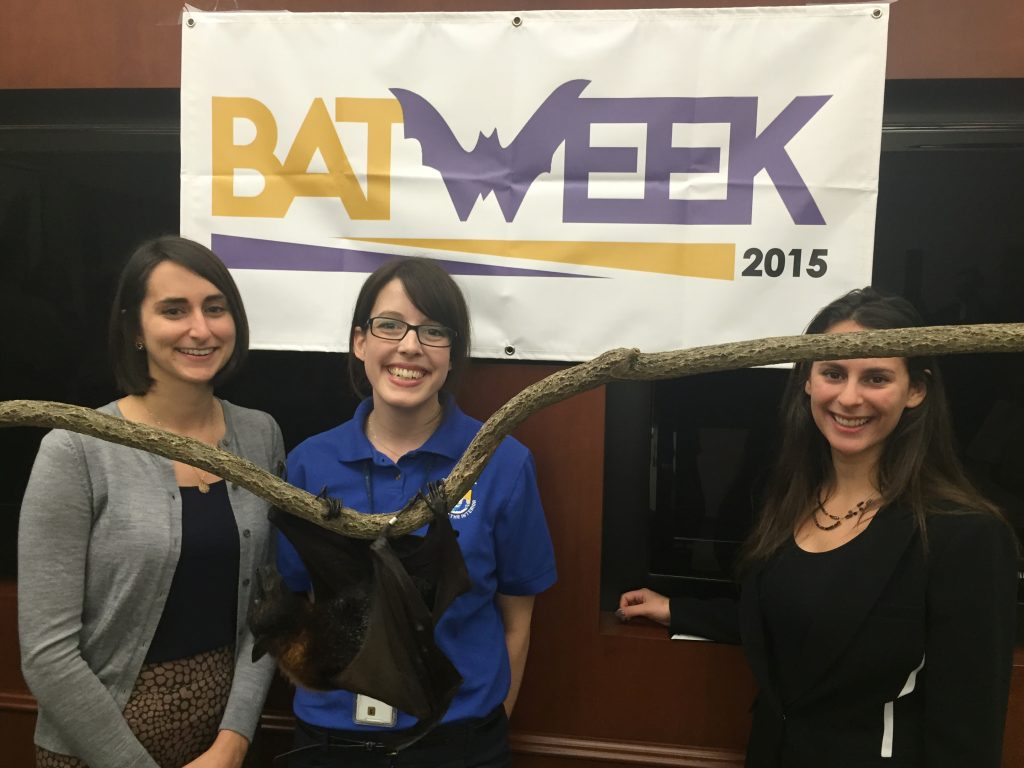
Alyssa, left, celebrating bat week with colleagues and a Madagascan flying fox.
The Knauss Fellowship has afforded so many opportunities for career development, learning about marine policy, and meeting new people. With fellow-run committees focused on career development and social activities, and even a thesis-writing club, we were inundated with opportunities to engage with each other and other professionals in our field. My class was open to new experiences and friendships, and I look forward to continuing these relationships with my class as we move forward in our careers.
I recently met the newest class of Knauss Fellows, and admit that I had a few pangs of jealously that they are just beginning this great experience. I wish them all the best of luck with their next year and future pursuits.
Alyssa Hausman was one of our Knauss Fellow for 2015.
Restoring Great Lakes reefs brings back spawning grounds
February 29th, 2016 by IISGThere are reefs in the Great Lakes?
That was my first thought when I sat down to interview for a field technician position in the fall of 2014. I had been working at a tech job at Purdue University, but I felt that it was time for a change–to something that was a bit more interesting to me. When I had the chance to interview to be a field tech on a fish ecology project, I knew that the time for change had arrived. But working on reefs? Coral, colorful, vibrant reefs teeming with a spectacular array of exotic fish species? I asked the post-doctoral fellow conducting my interview, Dr. Mitchell Zischke, if those were the kind of reefs he was talking about.
“Not quite,” said Mitch. “Reefs in the Great Lakes are rocky, made of cobble, gravel, and other stony fragments.” Ah. That’s very different than the vision most people get when they think of underwater reefs. A lot of publicity is directed towards oceanic coral reefs and their current plight worldwide, and rightly so. But I think sometimes that comes at the expense of exposure to unique and threatened environments much closer to home. The reef systems of the Great Lakes are a prime example.
I say this based on my own experiences as a native of the Great Lakes region. I grew up in a small town in western Michigan, right on the shores of Lake Michigan. My family often traveled around the state, spending time at all of the Great Lakes. Yet I never heard mention of any rocky reefs. I’d wager that outside of die-hard fishermen, most citizens of the region haven’t been exposed to our local reefs, either. Going forward, I’m hopeful that a lot of exciting research on the Great Lakes is about to change that fact.
That’s how my current project fits into all of this. It turns out that I liked being a fisheries ecology technician enough that it led directly into graduate school at Purdue University. I am now a Master’s student under the guidance of Dr. Tomas Höök, associate professor at Purdue and associate director of research for Illinois-Indiana Sea Grant. Along with many other organizational partners (including Michigan Sea Grant, Michigan Department of Natural Resources, Michigan Department of Environmental Quality, U.S. Fish and Wildlife Service, and the United States Geological Survey, to name a few) we are in the beginning stages of potential rocky reef restoration in Saginaw Bay in Lake Huron.
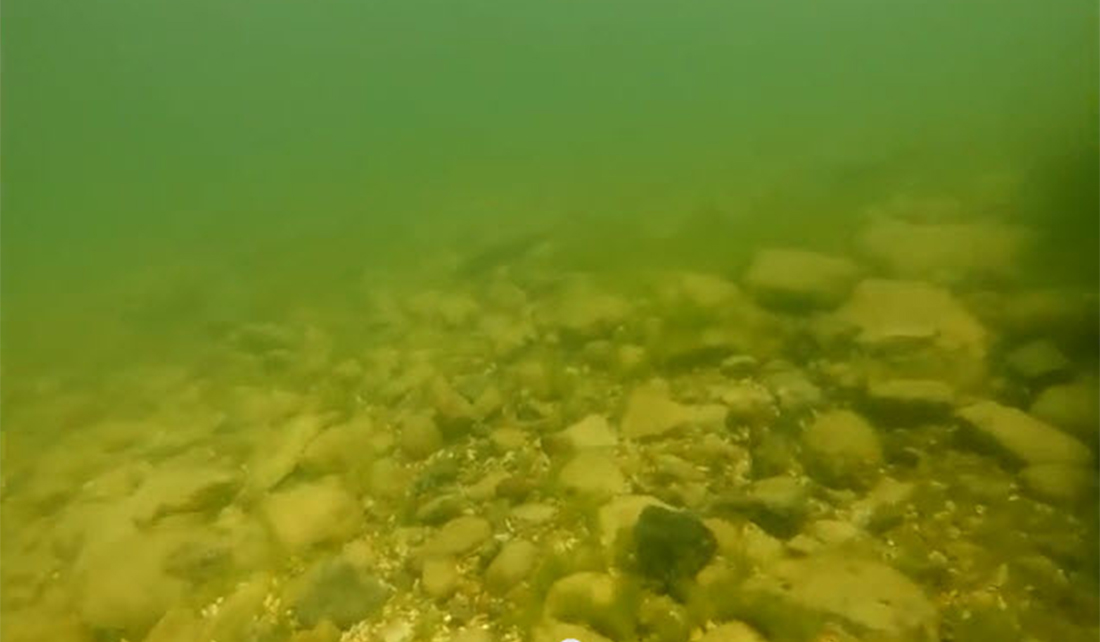
To understand why reef restoration in Saginaw Bay is a good idea, a little historical background is important. Years ago, Saginaw Bay was the second largest walleye fishery in all the Great Lakes, and had a healthy population of fish spawning on rocky reefs in the bay. These reefs provided many benefits to incubating eggs, including excellent protection from predators. Long-term sedimentation and poor land use led to most of those reefs being lost. This had profound negative impacts on walleye, as well as on other recreationally- and commercially-important fish species. Today, the walleye population has recovered, but the fish spawns almost completely in tributary rivers that feed into Saginaw Bay, rather than the bay itself. Reef restoration would allow walleye to have prime spawning habitat in the bay once more, and hopefully encourage these fish to resume using some of their historic spawning grounds. Beyond the obvious benefits to an increased amount of spawning area, this would also pave the way for a more geographically- and genetically-diverse walleye population. Such diversity could prove very important during times of stress. Of course, many other fish species, such as lake whitefish, would also be able to use restored reefs.
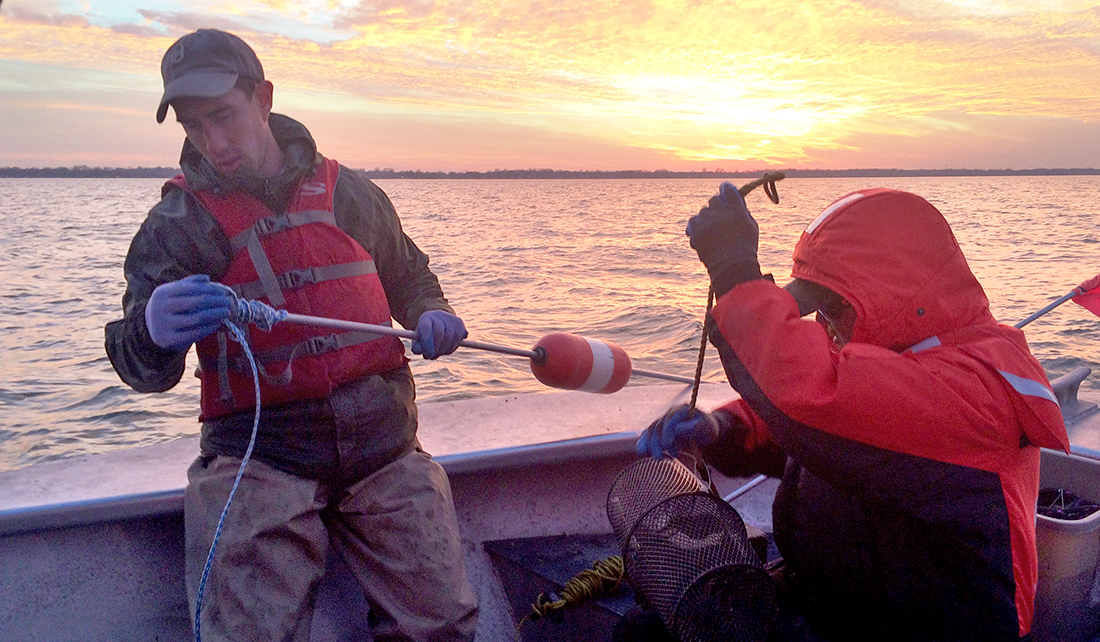
However, before rocky reef habitat could be restored in Saginaw Bay, we needed to make sure that restoration would have a good chance of being successful. Restoration projects are never cheap, and we wanted to be sure that funding was being wisely spent. That’s where my specific project comes in. A small field crew, comprising members of Purdue University (including me, Dr. Zischke, and Jay Beugly, who also serves as an aquatic ecology specialist for Illinois-Indiana Sea Grant) and the USGS, was tasked with assessing current spawning patterns within Saginaw Bay. Essentially, we wanted to see what currently degraded reef sites looked like, whether key species like walleye and lake whitefish were spawning near those degraded sites, whether they were depositing eggs, and whether predators were around to eat those eggs. If we could say that water quality was decent, target species were spawning in the area and depositing eggs, and that egg predators weren’t too abundant, we might have a reasonable shot at successful reef restoration.
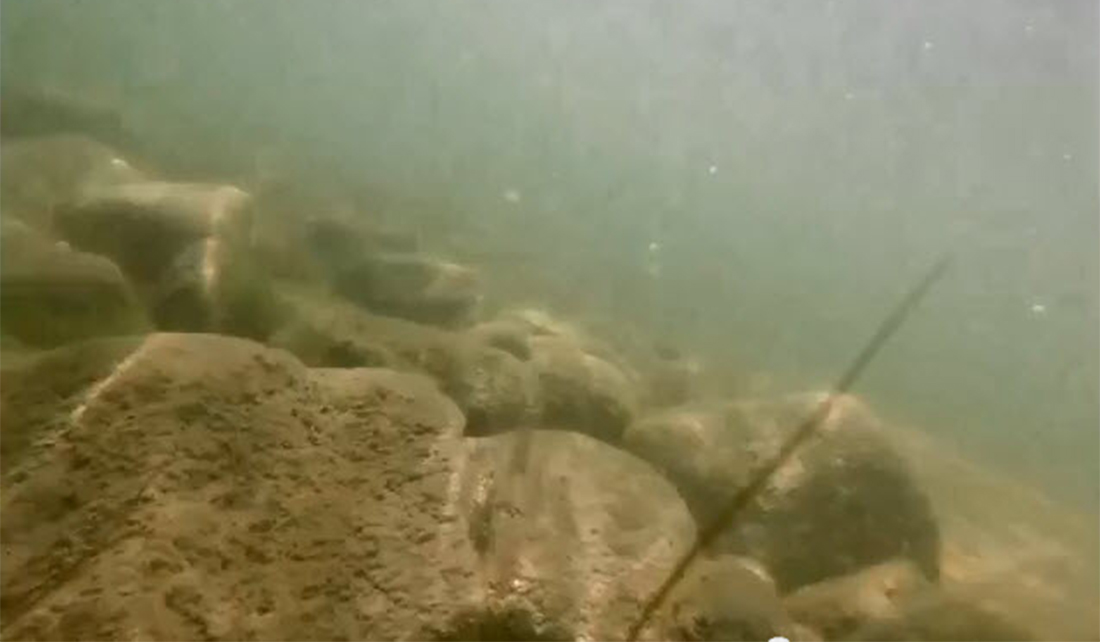
We’ve been at it since late 2014, and though results are still preliminary, there are some positive signs. Water quality is good, and some sites look receptive to adding additional reef structure. Spawning walleye and lake whitefish are being found across the bay, and they’re depositing eggs, too. Numbers of fish and eggs are low, but the fact that fish exist to take advantage of potentially restored reefs is hugely important. We’ve also found that egg predators are present, but that the biggest predation risk is probably from large-bodied fish like common carp and catfish. Given these findings, we are optimistic that rocky reef restoration can be successful in Saginaw Bay. Hopefully, restored reefs will attract higher numbers of fish to spawn, while simultaneously providing cracks and crevices to help eggs avoid large egg predators.
If everything goes right, reef restoration in Saginaw Bay could be going on long after I’ve left Purdue. Really, I think that’s one of the coolest things about this project: It has so much potential. With many groups involved, like Sea Grant, and tons of habitat to restore, reef restoration could be the definition of a long-term undertaking. Who knows, maybe I’ll find myself back on the familiar shores of Saginaw Bay one day, working once more on a project that helped launch what I hope will be a long career in fisheries science. For now, I’m just focused on the upcoming field season. It’s the last chunk of field work in our spawning assessment. If we keep finding some of the same patterns, I’m very excited for the future of reef restoration in Saginaw Bay and across the Great Lakes.
Hey! Careful with that buoy!
February 26th, 2016 by IISGNot to worry. The Michigan City buoy is receiving first-class care and attention while it spends the off-season in a warehouse at Purdue. PhD candidate, David Cannon, pictured, is cleaning, charging, and repairing the buoy, readying it for its spring launch.
Walgreens is joining the medicine take back movement
February 18th, 2016 by IISGMedicine take-back programs just signed on a big-time player: Walgreens.
The retail giant is installing 500 medicine disposal kiosks in Washington, D.C.and 39 states—including Indiana and Illinois. This is the first major initiative by a large pharmacy chain to provide access to medicine take-back programs within the pharmacies on a national scale.
The IISG pollution prevention team has been working for the past nine years with communities and law enforcement to get unused, expired, and unwanted medication out of homes and the environment safely and responsibly by helping to develop collection programs.
So now that Walgreens is pitching in, IISG is all done, right? Not quite.
IISG pollution prevention team educates communities about the issues involved with pharmaceuticals in the environment and provides assistance on how to set up medicine take-back programs. The locations—more than 50 in 4 states—are listed at Unwantedmeds.org. But even with the addition of the Walgreens kiosks, there are still many areas that don’t have access to disposal sites.
“Each community is different,” said Adrienne Gulley, IISG pollution prevention outreach specialist. “Having medicine take-back boxes available in pharmacies is convenient for customers, but the law enforcement-based programs are still critical where Walgreens is unavailable. The goal is to make it as easy as possible for the consumer to properly dispose of their expired or unwanted medication.”
For the past few years, the pollution prevention team has been working with pharmacists and the veterinary community to help them educate their customers and clients on proper disposal methods. Moving forward, IISG will be working with doctors and nurses to help make them more aware of the impacts of improper medicine disposal on human, animal, and environmental health.
The disposal kiosks at Walgreens will all be available by the end of this year primarily at 24-hour stores.
Hey teachers: Be the scientist! The classroom is your lab!
February 18th, 2016 by IISGWith over 200 sessions spanning three days and an Exhibit Hall featuring leaders in the STEM industry, the Hoosier Association of Science Teachers, Inc. Conference is the premier professional development and networking opportunity for science teachers in Indiana. This year, science teacher Jed Freels shared lessons learned over his 34-year teaching career.
Jed was one of 15 teachers who worked alongside scientists on the U.S. EPA R/V Lake Guardian on the Lake Michigan Shipboard Science cruise this past summer. His enthusiasm and captivating style clearly represent his teaching goal: You should feel good about yourself and the job you’re doing.
“You are the scientist and the classroom is your lab,” he stated. “What do your students see when they walk in your class? Is there something new, different, and engaging that wasn’t there before? Does your room convey a sense of passion and enthusiasm about science?
“It’s essential to keep students on their toes. The challenge for teachers is to constantly keep them guessing about what to anticipate next. Your role is to encourage kids to become scientists—to do science, not just talk about it.”
Jed came with great examples of going the extra mile—volunteering at organizations to make connections and obtain educational resources; or finding a research project that you can be a part of as a volunteer. Once you’ve established a partnership, he explained, reach out and ask if the organization or researcher would be willing to provide your students with materials or a field-based experience.
He prompted teachers to be the gateway to our park systems. “Take an active photo of yourself at a local park and share the picture with your students to provide an opportunity for them to see you as a scientist.
“Think locally about your field-based experiences. Sometimes it is the smallest thing that will spark your student’s interest in you as a scientist.”
While on the Lake Guardian this past summer, Jed took the opportunity to record a video series, Science Quest, for the classroom and beyond.
–By Terri Hallesy, IISG education coordinator, pictured above with Jed Freels (and a skeleton).
Illinois Nutrient Loss Reduction Strategy team wins award for excellence
February 10th, 2016 by IISGThe Illinois Water Resources Center (IWRC) and Illinois-Indiana Sea Grant (IISG) are pleased to be among the group of researchers and outreach professional to receive the 2016 Team Award for Excellence from the University of Illinois College of Agricultural, Consumer and Environmental Science. The award recognizes the team’s ongoing collaboration on the Illinois Nutrient Loss Reduction Strategy.
“We are proud to have facilitated the development of the most comprehensive and collaborative approach to nutrient loss reduction in the state’s history,” said Brian Miller, IWRC and IISG director and one of six staff members named in the award. “We look forward to working with the University of Illinois team, state agencies and other stakeholders to ensure strategy goals are met in the coming years.
Award winners also include University of Illinois Extension Director George Czapar as well as researchers from the departments of Natural Resources and Environmental Sciences and Agricultural and Consumer Economics who led a scientific assessment of current nutrient loads and cost-effective reduction strategies.
Released in 2015, Illinois’ strategy is a blueprint for improving water quality at home and in the Gulf of Mexico by reducing nitrogen and phosphorus losses from farm fields, city streets, and wastewater treatment plants. It’s suite of voluntary and mandatory practices are expected to ultimately cut nutrient loading to rivers and streams by 45 percent.
The plan was developed by a working group facilitated by IWRC and IISG for the Illinois Environmental Protection Agency (EPA) and Illinois Department of Agriculture. Group members included representatives from state agencies, agriculture, non-profit organizations and sanitation districts.
2016 Knauss Fellow Lauren Fields gets started with NOAA
February 8th, 2016 by IISGI have always been interested in fish biology, growing up and scuba diving in Massachusetts, but I became interested in fisheries policy through my graduate work at the University of Illinois at Urbana-Champaign.
My doctoral research focused on Antarctic fish physiology, specifically the blood antifreeze proteins that these fishes have in order to survive in the extreme cold temperatures of the Southern Ocean.
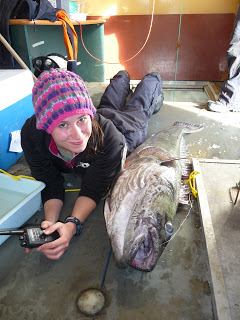
My dissertation research showed a link between environmental temperature and antifreeze protein activity and concentration in different, commonly caught fish species in the Antarctic. One of the largest Antarctic fish species which possesses antifreeze proteins is the Antarctic toothfish (also known as the Chilean seabass).
We caught just seven of these fish during my first field season, and I learned about the toothfish fishing industry and the international politics regarding Antarctic resource management which falls under the jurisdiction of the Commission for the Conservation of Antarctic Marine Living Resources (CCAMLR)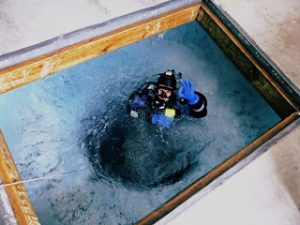 . I wrote grants to study this little-understood fish while at the University of Illinois and tried to learn as much as I could about CCAMLR and the research that goes into making policy decisions.
I am very excited to be a 2016 Knauss Fellow in the National Marine Fisheries Service Office of International Affairs and Seafood Inspection. I was placed within this office after a grueling but rewarding week of presentations and interviews in Washington, DC. I traveled to DC with 53 other incredible finalists for placement with hosts in the federal government. We heard presentations from the 56 possible host offices on projects ranging from fisheries, satellites, climate change, habitat, and many more. Over the next two and a half days I interviewed with 15 different offices, the majority of which were within NOAA, and by Friday I selected placement in the Office of International Affairs and Seafood Inspection.
 Though I do not know specifically what I will be working on, some of the projects could include the US-Mexico and US-Canada bilateral trade agreements, work with the International Convention for the Conservation of Atlantic Tuna, work with CCAMLR, and fishery bycatch policy. I will have a year of intensive international fisheries policy training where I am sure to learn a lot.
Lauren Fields, University of Illinois’ 2016 Knauss Marine Policy Fellow, received her PhD from the Department of Animal Biology at the University of Illinois in May. She started on February 1, 2016 with NOAA in Maryland.
For more information about the Knauss fellowships and other opportunities, please visit the Fellowship and Scholarship page.
Recent News
- Illinois-Indiana Sea Grant announces 2026 Graduate Student Scholars
- IISG and Purdue FNR Remember Carolyn Foley, Names Great Lakes Research Award
- 2026 IISG interns explore the field of environmental science
- Educators become students at Great Lakes Project WET workshop
- Registration now open for the 2026 State of Lake Michigan Meeting
IISG Instagram
What does a career in natural resources look like?
This month, a group of 4-H youth joined us at Martell Forest to find out! From tree climbing and birding to creating scent traps and dissecting owl pellets, participants spent three days exploring the many ways people work with and protect our natural resources.
Thanks to everyone who joined us! We can’t wait to see where your adventures take you next!


What does it mean to be Great Lakes literate?
It’s understanding how the Great Lakes shape your life and how your choices impact the lakes.
To be Great Lakes literate is to understand, communicate, and care for these special freshwater resources. 💙
Learn more about Great Lakes Literacy by visiting the Center for Great Lakes Literacy’s website at the link in bio.
#TeachingTuesday

Happy Juneteenth from all of us at Illinois-Indiana Sea Grant!

Got a research idea for southern Lake Michigan?
IISG’s 2026 Seed Grant Research Competition is open. Up to $150,000 total funding for pilot studies that could become your next big project.
💵 $10,000 to $50,000 per project
⏰ Applications due August 17, 2026
Two info webinars coming up: July 2 and July 21.
🔗 Full details at the link in bio.

This error message is only visible to WordPress admins
There has been a problem with your Instagram Feed.
Categories
- Aquaculture
- Aquatic Invasive Species
- Buoys
- Climate Ready Communities
- Coastal Resilience
- Director's Blog
- Education
- Featured
- Fellowships
- Fisheries
- Funded Research
- Funding
- Great Lakes Cleanup
- Great Lakes Data
- Healthy Waters
- Internships
- Jobs
- K-12 Education
- News
- Photos
- Program
- Recreation & Tourism
- Resources
- Sea Grant Scholars
- Stormwater & Green Infrastructure
- Sustainable Community Planning
- The Helm
- Uncategorized
- Video
- Water Resource Economics