December 5th, 2013 by Irene Miles
Researchers are reporting that they have found DNA evidence of an invasive fish, Eurasian ruffe, in the southern Lake Michigan waters.
“The Nature Conservancy said a team of researchers from the University of Notre Dame, Central Michigan University and its own organization found evidence of DNA of Eurasian ruffe in Calumet Harbor, south of Chicago.
Two positive samples from the harbor were collected on July 8. The harbor is at the mouth of the Chicago-area waterway system. Environmental DNA is a surveillance tool that can be used to monitor the genetic presence of aquatic species.
The waterway system is part of an engineered canal that provides an artificial link between Lake Michigan and the Mississippi River basin and has been infiltrated with invasive Asian carp from the Mississippi for years.
That same system has the potential to introduce Eurasian ruffe in the Mississippi, according to the Nature Conservancy. The group said the genetic findings underscore the need for a permanent barrier to block species from moving between the Great Lakes and Mississippi systems.”
Read the complete article at the link above to learn more about this invasive species and the test results.
December 3rd, 2013 by Irene Miles
Non-profit organization The Nature Conservancy recently acquired a small island in Lake Michigan that is used by migrating birds as a stopping point on their journey.
“St. Martin Island is part of a chain that runs between Wisconsin’s Door Peninsula and Michigan’s Garden Peninsula…
The Luber family sold it to the nonprofit conservancy for $1.5 million dollars. The Nature Conservancy says the price was well below market value.
Eventually the island will be included in the Green Bay National Wildlife Refuge.
Dave Ewert is a senior scientist with the Nature Conservancy in Michigan. He says the chain of islands is really important for migrating land birds in the spring and fall.
‘If they’re caught out away from mainland then they’re going to look for islands to come down, land, feed, rest, seek refuge from predators. So these islands really are a godsend to these migratory birds,’ Ewert said.
He says more than 100 species have been documented in the chain of islands. St. Martin is one of the larger islands at more than 1,200 acres. The U.S. Coast Guard has a light tower on the island.”
Read more about the island at the link above.
December 2nd, 2013 by Irene Miles
The invasive snail first moved into the Great Lakes decades ago and took up residency in Lake Michigan about 5 years ago. Inland lakes and rivers in the Midwest, though, had remained snail-free. That is until last month, when the Wisconsin Department of Natural Resources reported finding the snails in Black Earth Creek, about 25 miles north of the Illinois state line.
To keep this rapidly-reproducing snail from taking over local waterways and forcing out native species, officials in Illinois and Wisconsin are asking recreational water users and other outdoor enthusiasts to take three simple steps after a day near the water:
· Remove all plants, animals, and mud from boats, trailers, and equipment
· Drain everything, including bait buckets and live wells
· Dry everything with a towel
The small size of this invasive species—no more than 5 mm in length—makes them nearly impossible to spot. But diligently following these simple procedures can ensure that the New Zealand mud snail isn’t accidently carried unseen to from one body of water to another.
To learn more about what you can do to help prevent the spread of the New Zealand mud snail and other invasive species, visit www.TransportZero.org.
*Photo courtesy of Mohammed El Damir, Pest Management, Bugwood.org
November 20th, 2013 by Irene Miles
Working with Illinois and Indiana DNR, Illinois-Indiana Sea Grant led the development of a risk assessment tool to evaluate species based on their potential to be or become invasive. That tool and the resulting list of species led to the creation of a rule prohibiting the sale of 28 invasive aquatic plants in the state of Illinois.
“Plant species were chosen based on the results of a risk assessment tool developed in Indiana by the Aquatic Plant Working Group. The tool evaluates species based on factors like ability to thrive in the Great Lakes and difficulty to control. At the request of Indiana Department of Natural Resources, Illinois-Indiana Sea Grant organized and facilitated the group, which included representatives from the aquatic plant industry, aquarium and water garden hobbyists, state agencies, academia, and non-governmental organizations. Their efforts led to a rule approved last year that bans the sale of 28 invasive aquatic plants in Indiana.
‘It is important to have consistent regulations across the Great Lakes Basin. We want our policies to be consistent with our neighbors since invasive species don’t respect political boundaries,’ said Kevin Irons, aquaculture and aquatic nuisance species program manager for Illinois DNR. ‘Prevention is the first and cheapest way to protect Illinois from aquatic invasive plants, and risk assessment tools like the one built in Indiana allow us to identify and control high risk species without unduly regulating the industry.'”
Read the complete article at the link above, and read about the similar Indiana ban in the Winter 2012 edition of The Helm.
November 15th, 2013 by Irene Miles
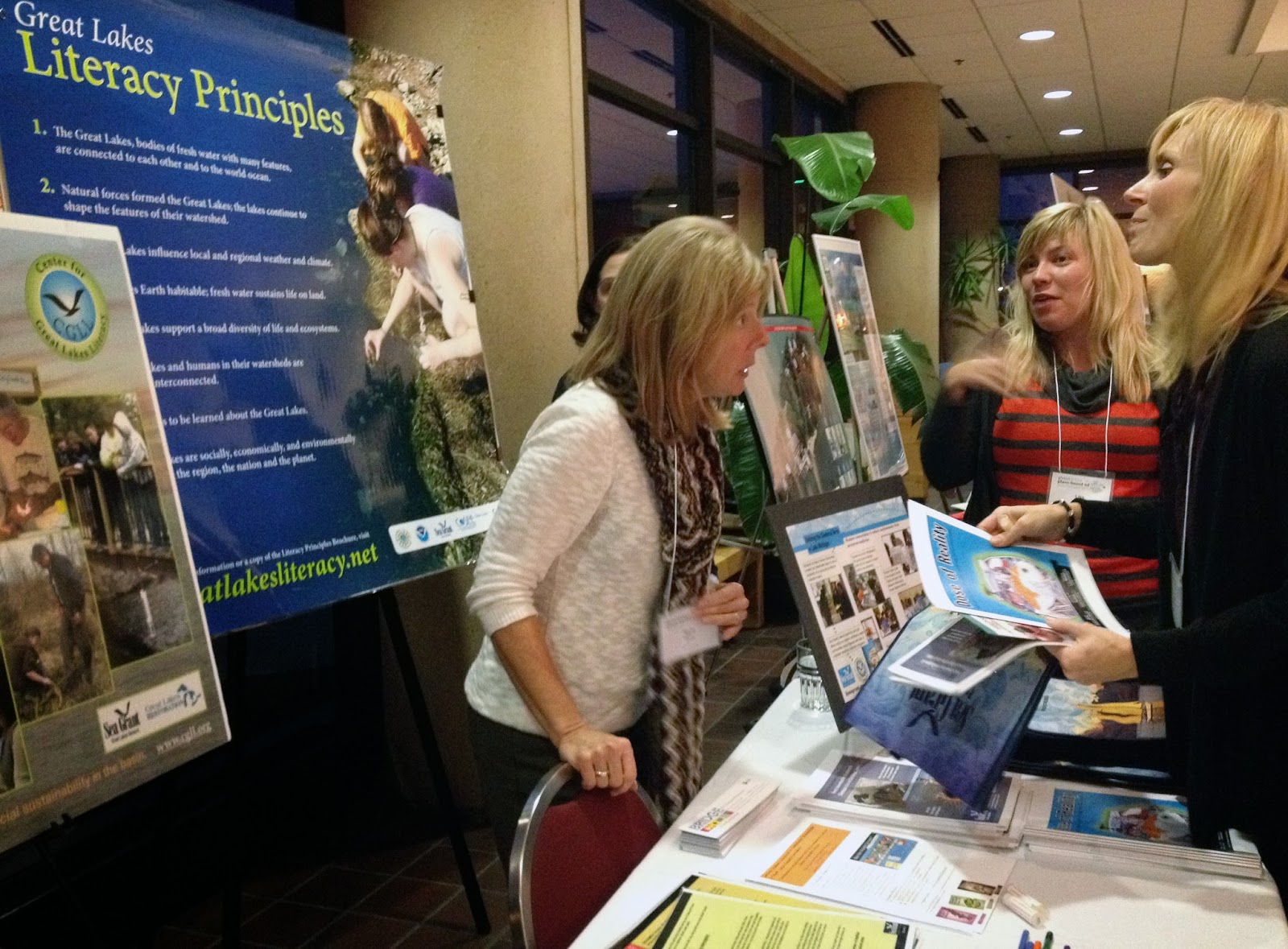
The 3rd Annual Great Lakes Place-based Education Conference, November 7-9 in Grand Rapids, Michigan, brought together over 200 teachers, community representatives, non-profit organization educators, and more. The conference gives teachers an opportunity to incorporate the latest place-based research and education concepts about the Great Lakes into their lessons, encouraging student stewardship, continuing science education, and community development.
 IISG’s Robin Goettel attended the conference and organized a poster session, “Center for Great Lakes Literacy: Connecting Educators, Scientists and Citizens.” The Center for Great Lakes Literacy (CGLL) “engages educators, students, scientists, and lifelong learners in stewardship and citizen science activities to help protect and restore Great Lakes watersheds.”
According to Robin, “A major focus of this exhibit was creating awareness of Great Lakes Literacy Principles – a great foundation from which to create an environmental stewardship ethic. CGLL specialists shared exciting educator opportunities including ship-based and shoreline workshops focusing on the latest Great Lakes issues. Visitors learned about water quality monitoring equipment they can use with their students made available courtesy of the USEPA GLNPO Limno Loan program. Participants also found out about Great Lakes Awareness Days that will be offered throughout the region.”
 Representatives of the CGLL program from seven Great Lakes Sea Grant programs were on hand to talk with attendees about the wide array of resources available, many specifically tailored to the environmental needs and issues of their region. Classroom resources were also available, including Fresh and Salt and Greatest of the Great Lakes curricula, as well as the Dose of Reality newspaper activity guide that covers the disposal of unwanted medicines and personal care products.
November 14th, 2013 by Irene Miles
Scientists in Wisconsin began collecting and analyzing water samples from Sturgeon Bay a couple of days ago, searching for evidence of Asian carp in the water.
“Under mostly sunny skies and temperatures hovering near 30 degrees, a three-man crew from the U.S. Fish and Wildlife Service and the DNR motored across the bay in a flat-bottomed boat looking for promising sites to sample.
A scientist at the University of Notre Dame pioneered the technique of using DNA to search for populations of Asian carp. But the first step is far from rocket science:
One member of the crew stretched in a nearly prone position over the side of the boat and dipped a 2-liter plastic bottle into the 40-degree water. The driver read out GPS coordinates, the water temperature and the depth. The third man from the crew scribbled down the information.
The samples are processed in Green Bay and then packed with dry ice and sent to a Fish and Wildlife Service laboratory in La Crosse, where the DNA sequencing is done and water is matched with known DNA specimens of the two carp species. The samples will be queued up with hundreds of other potential carp samples from Illinois and elsewhere.”
Read the complete article at the link above.
November 12th, 2013 by Irene Miles
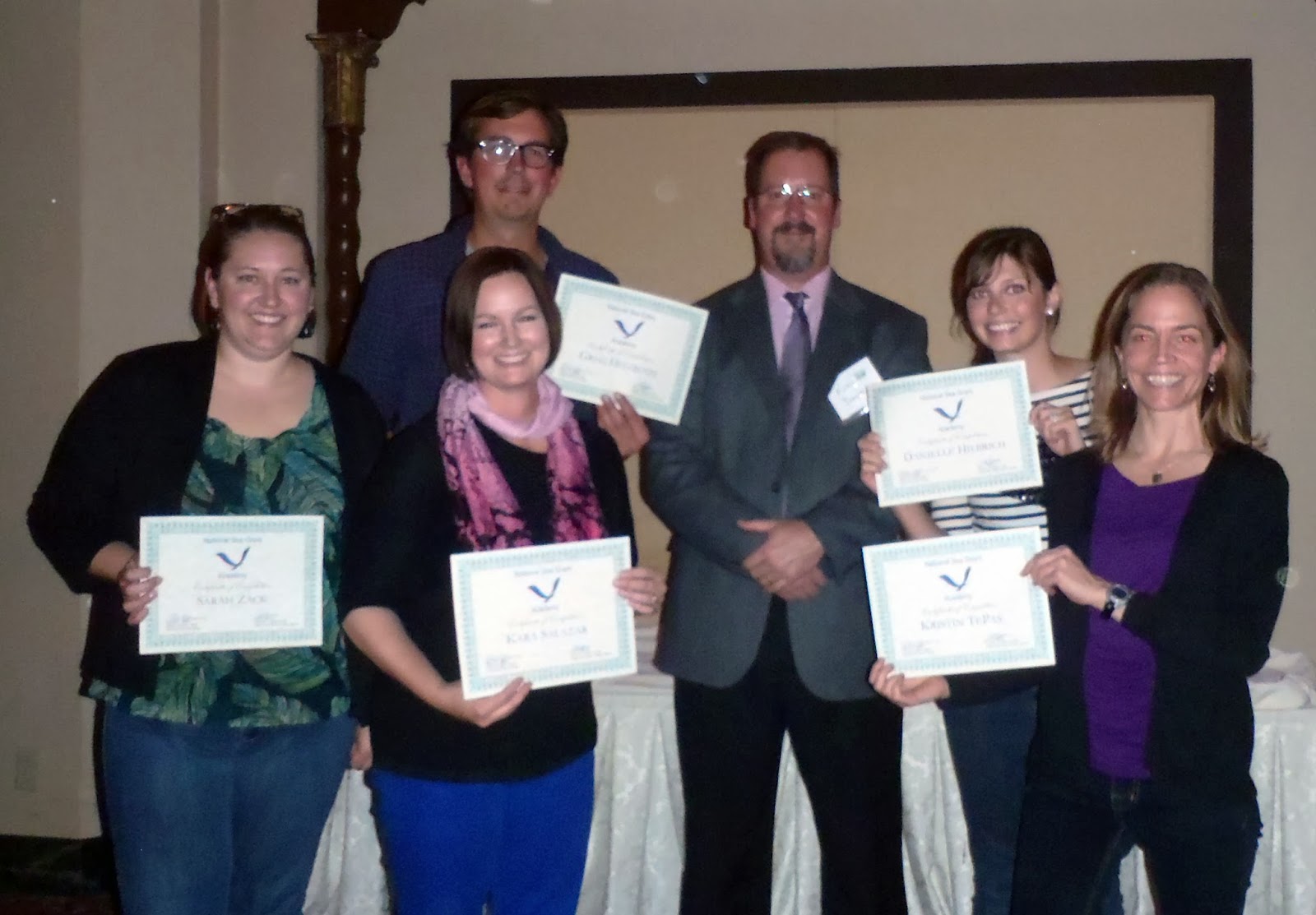
 Staff members from 20 different Sea Grant programs across the U.S. attended two Sea Grant Academy sessions this year (one week in April, and one in October). The academy was developed to give Sea Grant employees valuable training and professional development information in a variety of fields, benefiting their work and the work of all Sea Grant programs at large.
Five staff members from Illinois-Indiana Sea Grant were able to attend, and participated in sessions ranging from the history of Sea Grant to project design and evaluation, social science training, time management, communicating the importance of ocean science to various audiences, and much more.
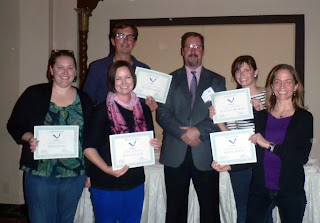 IISG’s Danielle Hilbrich, Greg Hitzroth, Kristin TePas, Kara Salazar, and Sarah Zack were among the more than 40 Sea Grant professionals who completed both weeks of training and graduated from Sea Grant Academy with new information and skills to bring to their work protecting the Great Lakes.
“Sea Grant Academy was a really unique opportunity to meet people from around the country that are working on the same issues we are,” said Sarah. “I thought that it was a great way to foster both partnerships between programs and friendships between specialists. I really enjoyed meeting all the attendees and hearing all about the great work they’re doing.”
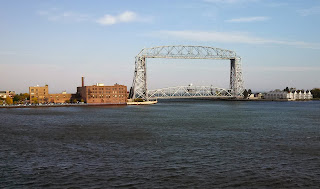 And Kristin TePas wrote, “It was a great opportunity to connect with other Sea Grant specialists from around the country. Also, hosting the meeting in Duluth provided a great opportunity to showcase our freshwater coast and the issues surrounding the Great Lakes.”
To learn more about the National Sea Grant program and the work being done to protect America’s coastal resources, visit the NOAA Sea Grant webpage.
November 11th, 2013 by Irene Miles
Recent research on Great Lakes contaminants has shown that microplastics – small beads of plastic used in many exfoliants, toothpastes, and other products – are contributing to pollution levels. As a result, mayors near the Great Lakes are calling on manufacturers to remove the plastics from their products.
From TheObserver.ca:
“The Great Lakes and St. Lawrence Cities Initiative, representing more than 100 Canadian and U.S. cities, is urging industry and governments to have microplastics removed from personal care products.
Its call came as a study on microplastic pollution was published based on sampling last summer on Lake Huron, Erie and Superior led by Sherri Mason, a professor at the State University of New York at Fredonia.
‘It takes that kind of initiative to get things to change,’ she said of the mayor’s support for the issue.
‘It’s not so much about cleaning it up, as it is about stopping it at its source.’
Mason returned to the lakes for seven weeks this summer to collect more samples, including one from the St. Clair River at Sarnia that will be analyzed as the study continues.
Samples taken in 2012 included green, blue and purple coloured spheres, similar to polypropylene and polyethylene microbeads in consumer products, such as facial cleaners.”
Read the complete article at the link above.
November 7th, 2013 by Irene Miles
Following last year’s record low water levels in the Great Lakes, and in Lake Michigan and Lake Huron specifically, this year’s rains have helped push those levels back towards the historical average.
From MLive.com:
“Heavy October rain could help Lake Michigan and Lake Huron continue to rise toward the long term average water level. Lake Michigan – Huron is still 15 inches below the long term average, but is 11 inches higher than this time last year. Slowly the lake level is increasing. The lake levels will likely fall over the next four months. This is a normal cycle. If the lakes don’t fall as much as normal this winter, the lakes are set up to be higher next summer than this summer…
All of this rain can help Lake Michigan – Huron not fall as much as usual in November.”
Read the complete article at the link above.