
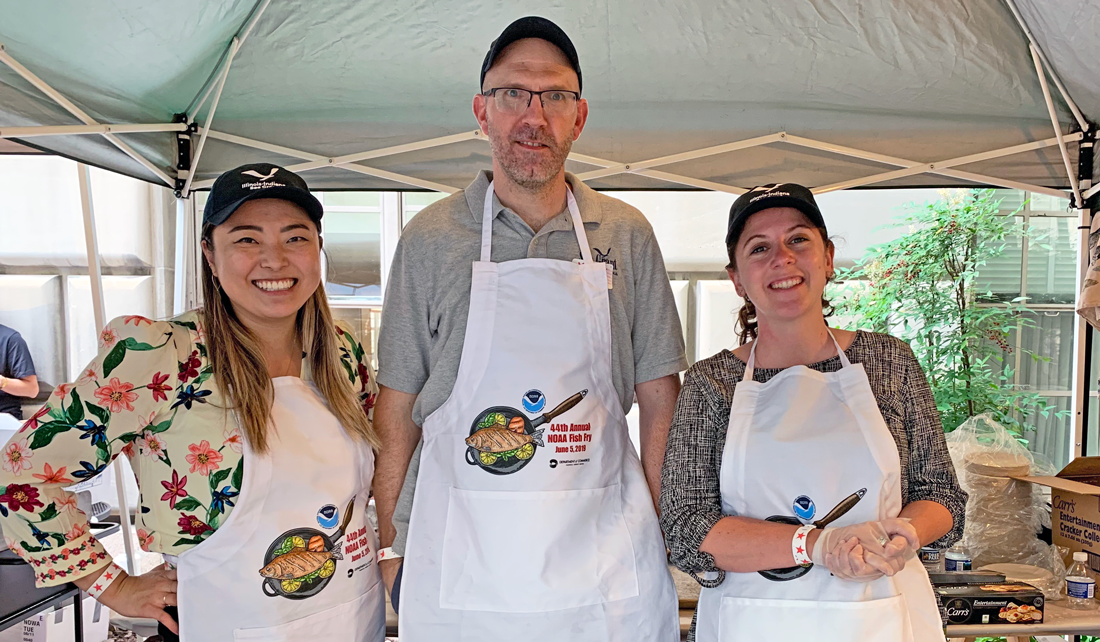
Lisa Kim (left), Tomas Höök and Hollis Jones prepared smoked silver carp spread on crackers for guests of the 44th Annual NOAA Fish Fry.
Fish from the Great Lakes region took center stage at the 44th annual National Oceanic and Atmospheric Administration (NOAA) Fish Fry on June 5 in Washington, D.C. Both wild-caught and aquaculture-raised fish and shellfish were served to attendees by 17 seafood chefs and vendors, including Illinois-Indiana Sea Grant (IISG), Michigan Sea Grant and Wisconsin Sea Grant.
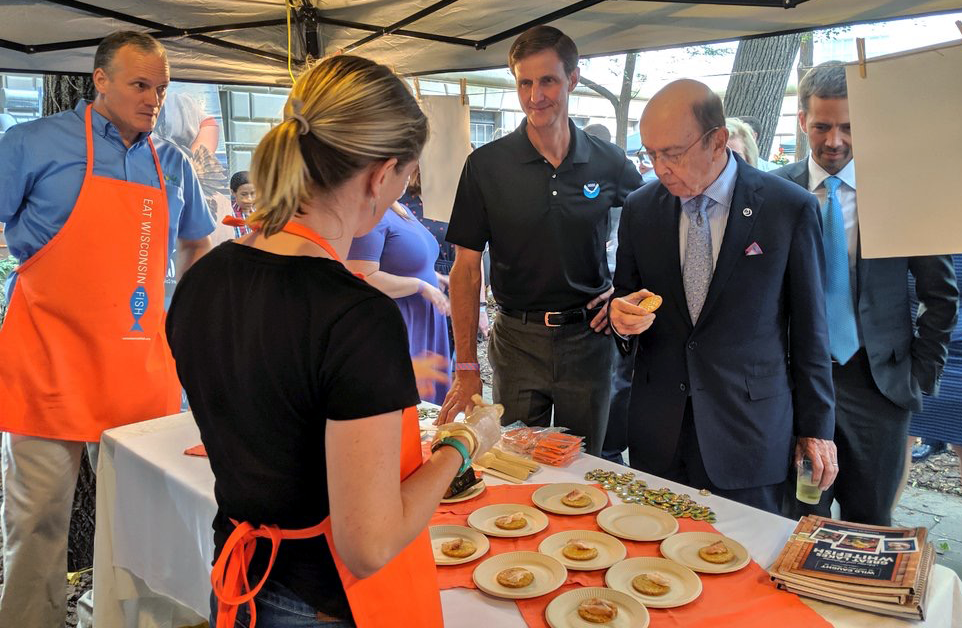
U.S. Secretary of State Wilbur Ross samples Wisconsin-raised Atlantic salmon at the Wisconsin Sea Grant table. (Wisconsin Sea Grant Photo/Titus Seilheimer)
The fish fry promotes awareness and understanding of aquaculture and commercial fisheries. Every year, up to 1,100 people purchase a ticket to sample seafood near NOAA headquarters on the National Mall. Guest chefs come from locations around the United States from as far away as Alaska and Puerto Rico to Chesapeake Bay.
Illinois-Indiana Sea Grant shined a spotlight on an invasive species by serving smoked, wild-caught Asian carp, flaked to perfection and presented on crackers with a cream cheese spread. The silver carp, also known as silverfin, were wild-caught in the Midwest—but not in Lake Michigan, as IISG staff members were sure to point out. While this invader continues to spread and has reached Lake Calumet, just south of Chicago and only a few miles from the Lake Michigan shoreline, barriers have kept it from entering the Great Lake.
For years, there has been a popular phrase in the aquatic invasive species crowd: “If you can’t beat ’em, eat ’em!” And that is exactly what IISG Director Tomas Höök told people at the fish fry as they sampled the silverfin spread. He was joined by Lisa Kim and Hollis Jones, Knauss Fellows working in Washington, D.C. Kim, sponsored by IISG, is an ocean policy analyst in the National Ocean Service headquarters, while Jones is sponsored by Louisiana Sea Grant and was placed as a research integration specialist with the National Sea Grant College Program.
Illinois-Indiana Sea Grant is a part of University of Illinois Extension and Purdue Extension.
Writer: Hope Charters




