
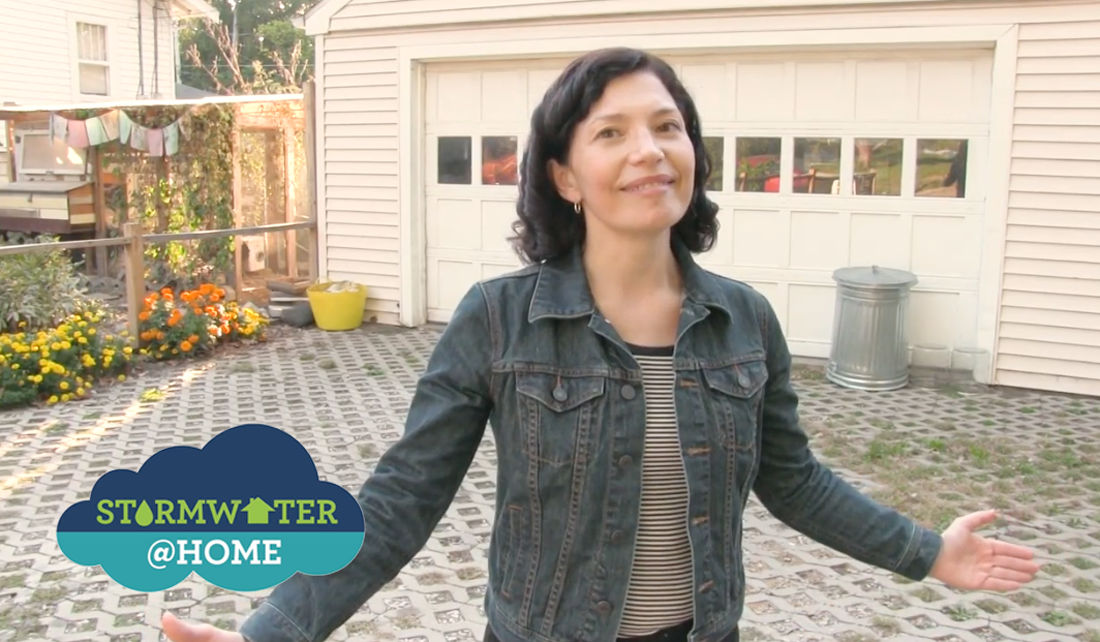
With increased rainfall in the Great Lakes region, many homeowners have been affected by flooding more than usual. Eliana Brown, a stormwater specialist with University of Illinois Extension and Illinois-Indiana Sea Grant (IISG), has created a video series called “Stormwater@Home” to teach homeowners simple steps they can take to better manage stormwater on their property. The series gives tips and tricks to help avoid pooling in yards, flooding in basements and excess runoff flowing into local waterways.
“Most people want to pitch in and do the right thing to help out their neighborhoods and waterways,” said Brown. “This video series showcases some examples of practices people can do at their own home at various levels of investment.” While some stormwater management techniques might take a large amount of time, effort and money to put into practice, many actions that homeowners can take do not require as many resources.
“Things have been really wet in the area since around the spring of 2018,” said Veronica Fall, a climate specialist with University of Illinois Extension and IISG. “This has contributed to a lot of flooding events not just because there has been excessive rainfall, but also because the soil has been so saturated that rainfall is not absorbed and therefore just runs off, eventually entering our waterways [and contributing to dangerously high water].”
“The conditions that we’re currently experiencing with frequent, heavy rainstorms and flooding events are expected to become much more typical in the future,” said Fall. “It is critical that homeowners take action now to better manage stormwater on their property before conditions worsen.”
Brown’s Stormwater@Home video series covers the following topics:
- Episode 1: Stormwater runoff
- Episode 2: Rain barrels
- Episode 3: Rain gardens
- Episode 4: Permeable pavement
- Episode 5: Green roofs
- Episode 6: Simple steps for water pollution prevention
“Managing rainwater is a way for us to take responsibility for what runs off our impervious surfaces,” said Brown. “It’s important to reduce the amount of runoff on our properties to mitigate flooding and impacts to waterways. We hope this video series also shows that these practices can be beautiful and enjoyable.”
IISG provides communities with additional information about stormwater and green infrastructure, as well as a southern Lake Michigan rain garden manual and a native planting guide for rain garden beds.
Writer: Hope Charters
Sources: Eliana Brown