File Type: pdf
File Size: 2.29 MB
File Size: 2.29 MB
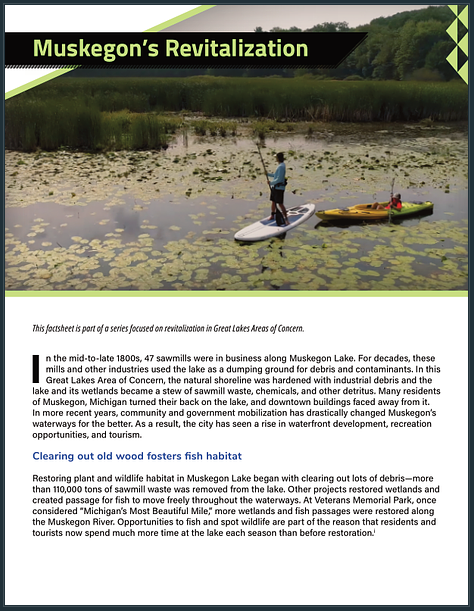
A Great Lakes Area of Concern, Muskegon Lake in Michigan has undergone a cleanup through the Great Lakes Legacy Act. As a result, the city of Muskegon has seen environmental, economic, and quality of life benefits.
Citations:
- Paul Isely Erik Nordman Kendra Robbins Julie Cowie. Muskegon Lake Area of Concern Habitat Restoration Project: Socio-Economic Assessment Revisited. July 2020.
- Ibid.
- Ibid.
Other Resources
- Great Lakes Commission: Assessing the Investment—The Economic Impact of the Great Lakes Restoration Initiative: A Case Study of Muskegon, Michigan
- International Association of Great Lakes Research: Great Lakes Revival: How Restoring Polluted Waters Leads to Rebirth of Great Lakes Communities (pp. 39-46)
- Livability: Transforming Waterfronts Along the Muskegon Lakeshore
- Western Michigan Regional Shoreline Commission: Muskegon River Habitat Restoration at Veteran’s Memorial Park
- NOAA Fisheries: Muskegon Lake Nears Recovery After Years of Restoration
- MiBiz: Arts playing ‘huge role’ in shaping downtown Muskegon through pandemic
- WZZM Channel 13: A successful Muskegon festival season by the numbers
- WOOD Channel 8: ‘Hidden gem’ discovered: Muskegon Lake ripe for development
- FOX Channel 17: Great Lakes cruises bring passengers, revenue to Muskegon
- MLIVE: Marquette to Muskegon: Cruise ships bring big tourism dollars to the Great Lakes
- Detroit Free Press: Cruise ships to visit Muskegon again after 2 years of COVID-19 cancelations
En Español
Revitalización de Muskegon en español está aquí.
ADA Compliance Information
Some linked publications may not fully meet current ADA accessibility standards and are provided for historical and archival purposes. If you need a plain-text screen or reader-friendly version of any document on our website, please contact us and we will do our best to provide one.