IISG’s Caitie McCoy has been heavily involved in the Sheboygan River AOC project, helping to provide information to the community and to all of the agencies and individuals involved in the project.
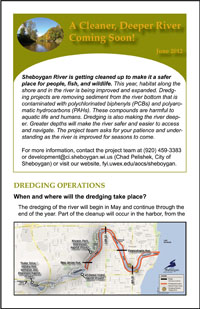
The cleanup and remediation of the area is well underway, and a new publication answers the most common and important questions that community members have had about the project.
Available now for download, the pamphlet “A Cleaner, Deeper River Coming Soon!” addresses questions ranging from specific areas that will be dredged, disposal of the polluted materials that are removed, and positive impacts for wildlife and the community once the project is complete.
You can learn more about the work in Sheboygan on the project website.
Illinois-Indiana Sea Grant’s new video celebrates the program’s recent opportunity to raise awareness about safe disposal of unused medicine in one of the biggest venues possible – Times Square!
An estimated 500,000 people go through Times Square every day, and one million people crowded the streets at midnight last New Year’s Eve.
The focus of the Times Square message was to not flush medicines. For years, the recommendation was to do just that – but now we know that these chemicals can end up in lakes, rivers, and often our drinking water. The best solution right now is to take your unwanted or expired medicines to a collection event in your area where they will be safely and properly disposed of.
To learn more about this issue and find helpful resources, visit our new website, www.unwantedmeds.org.