November 20th, 2024 by Angela Archer
Meet Our Grad Student Scholars is a series from Illinois-Indiana Sea Grant (IISG) celebrating the students and research funded by our scholars program. To learn more about our faculty and graduate student funding opportunities, visit Fellowships & Scholarships.
Izzy Paulsen is a master’s student in the Department of Forestry and Natural Resources at Purdue University. She works in Purdue’s Coastal and Great Lakes Social Science Lab to study introduction pathways of invasive species. Paulson is investigating how invasive crayfish may be introduced to our waterways through schools and the culinary market and aims to learn what outreach professionals need to know to prevent future introductions.
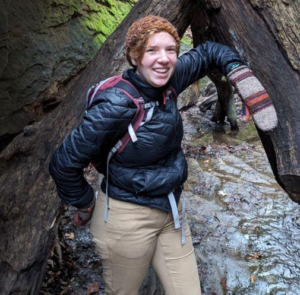 A trend I’ve observed from my time studying in school and working in the environmental field is that many people begin their journeys by wanting to work outside with nature. This may take many forms – measuring a tree, bird banding, conducting fish surveys, etc. While we expect some paperwork and computer time, some may be surprised by how common and necessary it is to communicate and collaborate with people outside this line of work. For me, this human connection is precisely why I chose this path: to work with others in caring for our natural resources.
I began my undergraduate studies in archaeology, focusing on past human history and culture through the materials left behind. Over time, I increasingly focused on learning and participating in research about past human-environmental interactions, particularly foodways. I absolutely loved these opportunities, but there was a little part of me that felt like I could personally have more of an impact if I shifted my energies to the present. And so, with the “save the world” energy of a 20-year-old, I did. I added an environmental studies major and then got a job for an environmental conservation nonprofit. I am now in the second year of my master’s program in the Department of Forestry and Natural Resources at Purdue University, studying social sciences.
Despite the department I am in, I don’t do much work directly with our natural resources. Instead, my focus is on humans. My research investigates two introduction pathways for invasive crayfish in the Great Lakes states.
Invasive species are non-native beings that do environmental or economic harm, or harm to human health. Invasive crayfish can outcompete and displace native species and alter freshwater habitats. Another key aspect of invasive species is that their geographic range expands because humans transport them somehow, whether intentional or accidental. I am looking at how invasive crayfish are introduced via two specific pathways: classrooms and culinary practices.
The first introduction pathway I am exploring is teachers who use live crayfish in schools. Science teachers use crayfish to teach their students about animal behavior, genetics, anatomy, and more. However, several species of crayfish commonly used in classrooms, like red swamp crayfish (Procambrus clarkii) and rusty crayfish (Faxonius rusticus), may be invasive in certain regions. Many teachers may lack training on invasive species and may unknowingly contribute to their spread. My research explores why teachers use crayfish, how they manage them, and what happens to the crayfish afterward.
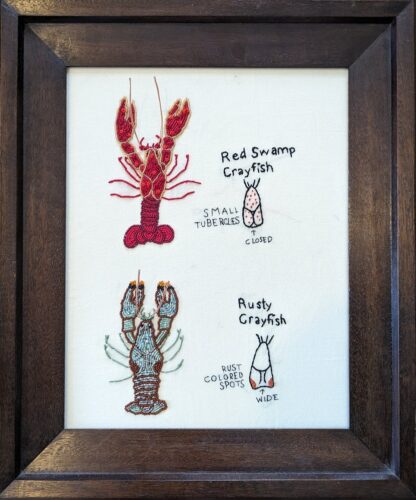
Izzy Paulsen’s art explores different ways to communicate about invasive species such as red swamp crayfish and rusty crayfish.
The second introduction pathway considers how live crayfish are used for food, like a crawfish boil. Red swamp crayfish, native to regions like Louisiana, are the most abundant species used for this dish and are a part of this cultural tradition.
A wonderful part of culture is that it can travel just as people do and with a more connected world, this is often easy. And so, when someone in a place like Indiana wants to have a crawfish boil, all they need to do is order a shipment off the internet or go to a grocery store or restaurant. This dish and cuisine have traveled and so have the crayfish that are now in new regions where they are considered invasive and can be harmful if they get into the waterways.
Through interviews and surveys, I aim to better understand these pathways.
This research will be shared with outreach professionals across the region and the country to guide the development of strategies, materials, and training programs that promote safe behaviors when handling live crayfish. By encouraging responsible practices, the hope is to prevent future introductions of invasive species.
Changing what people do is complex; simply providing information does not always work. I am trying to understand the whats and whys of people’s actions so that we can suggest alternatives that align with their goals and protect the resources that we value. It is said that an ounce of prevention is worth a pound of cure. The only way to prevent future invasive species is to collaborate with people and I believe it is well worth it because we might not see the results.
Working to prevent harm may involve more computer time than my days in archaeology. Addressing human behavior is infinitely complex. Yet, I’m driven by the belief that by connecting with people and fostering change, these efforts can make a meaningful difference.
_________________________________________________________
Illinois-Indiana Sea Grant is one of 34 Sea Grant programs supported by the National Oceanic and Atmospheric Administration in coastal and Great Lakes states that encourage the wise stewardship of our marine resources through research, education, outreach and technology transfer. In partnership with the University of Illinois Extension, and Purdue University Forestry and Natural Resources, Illinois-Indiana Sea Grant brings science together with communities for solutions that work.
November 12th, 2024 by Angela Archer
When searching for a job, recent graduates who have gained experience in their field through internships, fellowships or part-time work have an advantage over their peers. Illinois-Indiana Sea Grant (IISG) strives to provide these meaningful experiences so that young professionals, who will one day be responsible for working with communities on Great Lakes issues, will be more prepared, knowledgeable and confident in their abilities. IISG’s 2024 cohort of six interns has wrapped up their meaningful work and professional development training as part of the program. Read about some of these interns — their backgrounds and work projects — below.
If you are an undergraduate student interested in our Summer Internship Program check back in January or contact Angela Archer for more information.
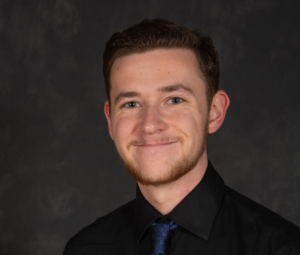 Connor Adamek, Community Sustainability
This past summer, Connor Adamek, worked as an intern with Kara Salazar, IISG sustainable communities specialist. Adamek is a senior at Purdue University majoring in natural resources and environmental science, with a concentration in watershed management. He is passionate about ecology and the interconnectedness of the environment as well as communicating and educating. Adamek is looking for ways to blend these interests to help others understand environmental complexity.
Adamek spent the summer working alongside Salazar in Purdue Extension on a variety of projects. These include researching and writing about renewable resources and septic system management, taking trips around Indiana to aid in community development projects, and helping design websites to better showcase educational resources. “The position has allowed me to learn a lot about how to work with communities, make connections in the field and meet new people. This opportunity has revealed Extension to be an interesting possible option to satisfy my communication and environmental interests as a career,” he said.
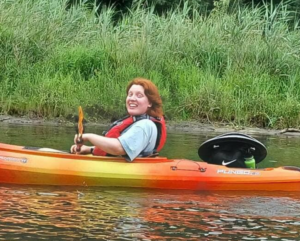 Julia Bell, Community Engagement (the National Park Service)
Julia Bell is a senior at Illinois State University enrolled in the Department of Geography with a concentration in nature and society and an environmental studies minor. Her focus on geography has provided valuable field experience and coursework, including a class called Our National Parks, where she learned the physiology and cultural history of each park.
Bell spent this past summer working with staff members at the Indiana Dunes National Park, especially with Erin Argyilan, the park’s education coordinator. Through Argyilan, she learned the park’s history and about research to assess park management needs, from which she made suggestions about applying these insights to park projects.
The other aspect of her work involves field research. Bell analyzed park visitor habits and current management strategies. One of the most pressing issues at the Indiana Dunes National Park is the degradation of the dunes due to social trails. Social trails are formed when visitors leave the official park trails to create a shorter path or to access an off-trail view. This can cause habitat fragmentation, which puts threatened and endangered species at risk as they travel between their fragmented habitat, and dune collapse when dune systems are eroded. And it can facilitate the spread of invasive species.
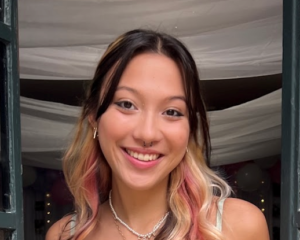 Anja Kranenburg, Community Engagement (Chicago Wilderness Alliance)
Anja Kranenburg is a senior at the University of Illinois at Urbana Champaign studying natural resources and environmental sciences with a concentration in human dimensions of the environment. She is very passionate about sustainability, especially the interactions between people and the environment. After college, she hopes to go into the field of sustainability outreach and engagement. She commented about her internship, “I am super excited for this position to help me contribute to fostering these interests and helping me grow in my professional life.”
This summer, she worked with Laura Reilly, managing director of the Chicago Wilderness Alliance. She helped with various projects, including planning the alliance’s annual congress.
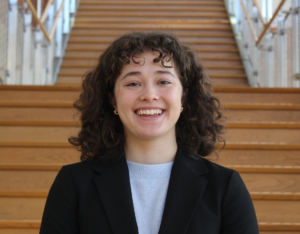 Eve Mehl, Water Resource Economics
Eve Mehl is a junior at the University of Illinois Urbana-Champaign studying agricultural and consumer economics with a concentration in public policy and law. She was a water policy intern under the guidance of Margaret Schneemann, a water resource economist working on water affordability metrics for the Chicagoland area. She contributed to Schneemann’s water rate data collection, a tool for municipalities in rate restructuring efforts. She also worked on conservation outreach materials for communities that are using highly stressed aquifers. Her research topics included groundwater conservation, sustainable water use, groundwater legislative actions and municipal water rate structure. Eve is passionate about sustainable development, water conservation and environmental law.
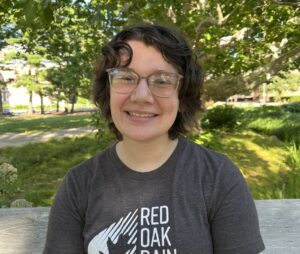 Erin Schimenti, Stormwater Infrastructure
Erin Schimenti is a senior at the University of Illinois Urbana-Champaign. She is pursuing a dual degree in sustainable design and communication, as well as a minor in game studies and design. She spent the summer working as a stormwater infrastructure intern under the supervision of Eliana Brown and Layne Knoche. This work is centered around the Red Oak Rain Garden on the U of I campus.
Schimenti created botanical drawings of the RORG’s plant species, trained under the garden’s communication coordinator, and gained hands-on experience at weekly volunteer workdays. Through these tasks, she learned not only about the functionality of rain gardens, but also the importance of engaging with people they are meant to benefit. In the future, she hopes to pursue a career where she can continue to connect communities with nature.
Other interns in 2024 included Anna Melody, who worked with Margaret Schneemann, and Grey North who assisted Megan Gunn, aquatic education associate.
Illinois-Indiana Sea Grant is a partnership between NOAA, University of Illinois Extension, and Purdue University Forestry and Natural Resources, bringing science together with communities for solutions that work. Sea Grant is a network of 34 science, education and outreach programs located in every coastal and Great Lakes state, Lake Champlain, Puerto Rico and Guam.
Contact: Angela Archer
November 4th, 2024 by Angela Archer
Meet Our Grad Student Scholars is a series from Illinois-Indiana Sea Grant (IISG) celebrating the students and research funded by our scholars program. To learn more about our faculty and graduate student funding opportunities, visit Fellowships & Scholarships.
Sydney Brady is a Ph.D. candidate in the environmental science program at Indiana University. She works in the Venier Lab to study the fate and transport of man-made chemicals in the environment. The work funded by IISG involves broadening the scope of her chemical analyses to better understand which synthetic chemicals are in our environment and how they are affecting ecosystem health over time.
Chemicals make our lives more convenient. They make our rain jackets waterproof, our pots non-stick, and our makeup long-lasting. They are also used for industrial purposes, like making plastic. A particularly useful class of chemicals for these purposes is called PFAS, or per- and polyfluoroalkyl substances. There are tens of thousands of PFAS molecules used and manufactured around the globe. PFAS are useful because they stick around and don’t easily degrade. However, this strength becomes an ecological nightmare when PFAS inevitably enter the environment from our wastewater and trash.
Every type of organism in the world that has been tested for PFAS has come up positive, from fish to birds to cats to dogs to people. PFAS are endocrine-disrupting chemicals and have been linked to cancer, among other negative health effects.
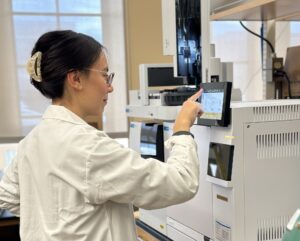
Sydney Brady uses analytical chemistry instruments to test bald eagle blood plasma to assess PFAS.
To figure out where PFAS are and what they’re doing, Sydney Brady researches the fate and transport of PFAS in birds collected in Michigan. Her first project focused on herring gulls and was just recently published. Of the several chemicals analyzed in that study, PFAS generally had the highest concentrations. Now, Brady’s research focuses on PFAS levels in bald eagles.
Measuring PFAS in bald eagles provides three major benefits:
- Bald eagles are at the top of the food chain, so the levels of PFAS in bald eagles represent the levels of PFAS in the organisms lower on the food pyramid. This means that we can use bald eagles as a sentinel species, or a species that can show us what the health of the entire ecosystem looks like.
- There are not many studies on chemicals in bald eagles, so this research lets us know what could be affecting bald eagle health.
- Bald eagles are really cool!
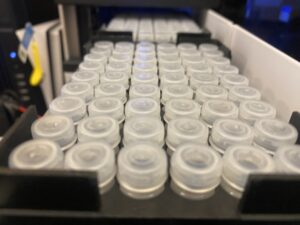
These samples of bald eagle blood plasma are used to measure PFAS contamination.
This exciting work is happening in the Venier Lab at the Indiana University Bloomington campus. Using a method that she developed herself and sophisticated analytical chemistry instruments, Brady can measure several different PFAS from just one milliliter of bald eagle blood plasma.
The first type of PFAS that Brady measures is called legacy PFAS. These include the oldest kinds of PFAS, some of which aren’t even manufactured anymore. However, because they last so long in the environment, these legacy PFAS are still found almost everywhere that researchers look for them. Many legacy PFAS have negative toxicological effects.
The second type of PFAS that Brady looks for is called precursor PFAS. These molecules are called precursors because they can turn into legacy PFAS in the environment. Precursor PFAS are still manufactured and used today. By studying both legacy and precursor PFAS, we can get a good idea of what and how much PFAS is actually in the environment.
The results of this study will be used for a variety of purposes. First, they will be used to determine where PFAS “hot spots” are in Michigan. They can also be analyzed to determine how concentrations of PFAS change over time, and whether these concentrations are having effects on the health of the bald eagles. Finally, these results can also be used to figure out whether remediation efforts are working. If an area is being remediated and concentrations of PFAS in the bald eagles are decreasing over time, then clean-up efforts are working!
So far, Brady’s work on the fate and transport of PFAS in Michigan has been presented at several conferences including the Society for Environmental Toxicology and Chemistry, Dioxin, Emerging Contaminants in the Environment Conference, and the Michigan State University Annual PFAS Symposium.
Of course, no work is completed in a vacuum (except for the parts of the experiment that are literally under vacuum pressure). Brady asserts that this work would not be possible without the hard work of Bill Bowerman, Peggy Shrum, Mandy Annis, and Amanda Curtis.
_________________________________________________________
Illinois-Indiana Sea Grant is one of 34 Sea Grant programs supported by the National Oceanic and Atmospheric Administration in coastal and Great Lakes states that encourage the wise stewardship of our marine resources through research, education, outreach and technology transfer. In partnership with the University of Illinois Extension, and Purdue University Forestry and Natural Resources, Illinois-Indiana Sea Grant brings science together with communities for solutions that work.
February 6th, 2024 by Angela Archer
Meet Our Grad Student Scholars is a series from Illinois-Indiana Sea Grant (IISG) celebrating the students and research funded by our scholars program. To learn more about our faculty and graduate student funding opportunities, visit Fellowships & Scholarships.
Junyi Duan is a second-year Ph.D. student in the School of Construction Management Technology at Purdue University. His research interest is employing computer-based technologies to investigate the responses of infrastructure that is vulnerable to natural hazards. He is currently working on an IISG-funded project to efficiently promote infrastructure resilience in the Lake Michigan region.
Due to global climate change, extreme weather events like floods are becoming more frequent. Climate change results in higher Lake Michigan water levels, along with stronger winds and heavier storms, which exacerbates coastal damage. In the last two years, more than 200 coastline communities have spent $878 million repairing damages caused by natural hazards. The spending on repair won’t stop there − it is estimated that shoreline municipalities in the Great Lakes region will spend approximately $2 billion in the near future to restore public infrastructure that has been damaged by recent floods and erosion.
Imagine an old bridge to your house facing relentless storms and floods. You would have some worries, right? Junyi Duan is aiming to understand how different infrastructures handle these disasters. He is tackling the challenge of how to make our coastal communities more resilient to these impacts in the Sustainable Infrastructure and ManUfacturing Lab, supervised by his advisor, Chengcheng Tao, a Purdue University civil engineer and director of the lab.
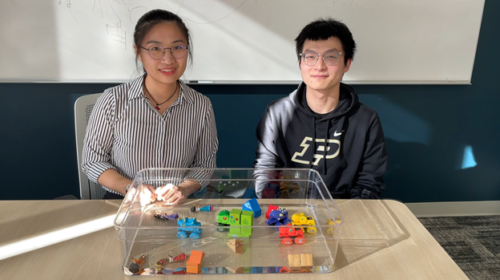
Duan and Tao are filmed as part of a flood hazard impact video for K-12 education.
Duan is integrating fluid-structure interaction modeling and artificial intelligence (AI) algorithms to decipher how floods affect infrastructures and communities. “It’s like predicting the future, not to predict doom, but to prepare and enhance the safety of our coastal areas,” said Duan.
The first step on his journey was learning from the past. Duan collected historical records to reveal how floods impacted various places around southern Lake Michigan. This information acted as a guide, steering him toward creating new models. This virtual testing helped him to understand the potential impact of floods and storms on coastlines.
The next step involved creating a powerful two-stage model. First, a physical model combining computational fluid dynamics analysis and finite element analysis was used to assess the flood impact on infrastructure as well as the structural response, respectively. This step helped Duan understand how natural hazards impact infrastructure. Preliminary work involved simulating the effects of floods on bridge infrastructure, which provided valuable insights into structural weakness.
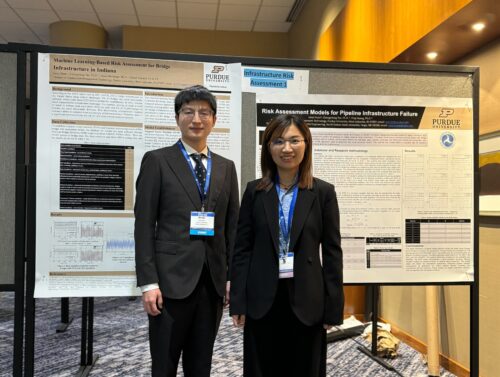
Duan presents his research at the ASCE INSPIRE conference with his advisor Tao.
In the second stage, Duan introduced artificial intelligence and machine learning algorithms. “These algorithms are the secret sauce, crunching big data from the physical model and historical records,” he said.
The result is a comprehensive data-driven model that not only simulates potential flooding damage but also predicts the risk tendencies of critical infrastructural components. The model goes beyond simulations, offering suggestions to reinforce infrastructure, resist floods, and mitigate impacts on southern Lake Michigan coastal communities.
“This stage is crucial for stakeholders looking to make informed decisions about infrastructure types and designs suitable for the coastal area,” said Duan.
You might be wondering, why should this research matter to you. “Imagine living in a coastal community knowing that your home, your school, and your favorite spots are better prepared to face whatever nature throws your way,” said Duan. “Understanding potential hazards and reinforcing infrastructure isn’t just about avoiding damage; it’s about creating a safer, more resilient environment for everyone.”
The outcomes of this study have been presented at three American Society of Civil Engineers (ASCE) conferences and published as five conference papers. In addition, Duan and Tao worked with Purdue Science K-12 Outreach and filmed an educational video about flood hazards that will be posted on YouTube as part of Purdue’s Superheroes of Science series.
“Over the past two years, I have collaborated on research focused on the Great Lakes area, an ecosystem that sustains over 100 million people and harbors approximately 3,500 species of plants and animals. I admit that I cannot stop global warming or alleviate extreme weather events,” Duan said. “However, my aspiration is that the findings from our research will benefit shoreline residents and municipalities, contributing to the mitigation of economic, physical and ecological losses.”
As Duan charts the course through this research journey, he is not just contributing to scientific knowledge. He aims to pave the way for a safer tomorrow.
Illinois-Indiana Sea Grant is a partnership between NOAA, University of Illinois Extension, and Purdue University Forestry and Natural Resources, bringing science together with communities for solutions that work. Sea Grant is a network of 34 science, education and outreach programs located in every coastal and Great Lakes state, Lake Champlain, Puerto Rico and Guam.
January 22nd, 2024 by Angela Archer
Meet Our Grad Student Scholars is a series from Illinois-Indiana Sea Grant (IISG) celebrating the students and research funded by our scholars program. To learn more about our faculty and graduate student funding opportunities, visit Fellowships & Scholarships.
Kathryn Mudica is a Ph.D. candidate at Indiana State University. Her dissertation focus has been biogeochemical research in trace metal pollutants in freshwater using biotic indicators. As a water-ecosystem scientist, she has spent much of her time in the field, understanding aquatic systems and river ecology. This work has taken her to more than 50 of Indiana’s creeks and streams collecting crayfish and other biotic indicators. She has also traversed the 500 miles of the Wabash River, researching water quality in this vital watershed. Her expected graduation date will be the summer of 2024, after which she hopes to continue to spend her days wading in Indiana’s rivers and creeks and researching water quality.
Streams and rivers are among the most valuable resources humans utilize, but a freshwater system is only as healthy as the organisms that rely on it. Freshwater systems are particularly vulnerable to the environmental persistence of biologically available mercury due to the methylation of elemental mercury. Anthropogenic activities such as coal combustion, mining, petrochemical production, and other industries have altered the pre-anthropogenic cycle of mercury, including mercury speciation. These activities have made mercury biologically available in unnatural concentrations. Once emitted, the biogeochemical cycle of mercury involves atmospheric transport, deposition to land and waterways, and revolatilization, continuing to accumulate despite reductions in emissions. Many coal-fired power plants in Indiana continue to release as much as 2,174 pounds per year, continuing to add mercury to the environment. While these power plants conform to federal regulations, Indiana as a state has not imposed state-specific regulations on the output of mercury to protect the state further. This is particularly troublesome as Indiana relies on coal for more than 50% of its energy production. It is home to 13 operational coal-fired power plants, ranking third in the nation.
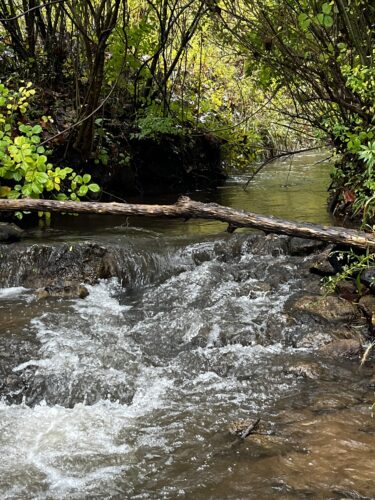
West Branch Trail Creek, Waterford, Indiana. With a cobbled substrate and active riffes, Trail Creek is a great crayfish habitat.
Healthy aquatic ecosystems play a significant role in creating and supporting communities. Monitoring, maintaining, and improving healthy waterways can be challenging where historic industries pollute these systems with long-lasting contaminants. Major rivers and resources like Lake Michigan are monitored, but smaller creeks contribute to water quality while also being temporary repositories for pollutants. These creeks and streams can be difficult to monitor and assess for water quality due to limited stream flow and difficult accessibility. Unfortunately, these same water systems can play a significant role in the input of metals and other pollutants into our major waterways. An economical and reliable approach to determining water quality in these areas would be to identify reliable sentinel species that are endemic, easily identified, and respond in a quantifiably significant way to metals in the environment. Similar approaches using macroinvertebrate assemblages have been used successfully in citizen scientist programs and bioblitzes. However, these indices can be complicated, seasonal, and difficult to assess without identification bias. As an alternative, this research proposes, a one-organism approach as a biotic indicator, by documenting mercury in crayfish species and their environment to determine a species-specific response to mercury.
Often interacting as suspension feeders, crayfish interact with the water column continuously through brachial respiration as well as external filtering using their antennae to glean particles from the water. More aggressive crayfish species likely act as predators, moving out of safety zones to actively hunt for more substantial protein sources. These strategies vary not only by the creek but also by species. Too often, generalized responses of organisms such as order or family are used as indicators to assess the impact of mercury. While these general assessments are convenient, they do not take into consideration the varied life strategies that take place on a species level.
Indiana has a diverse range of crayfish species. Historic survey data revealed 22 known species exist throughout the state, with 11 of these belonging to the genus Faxonius. This diversity makes Indiana an excellent study area to determine species’ response to mercury in Indiana creeks.
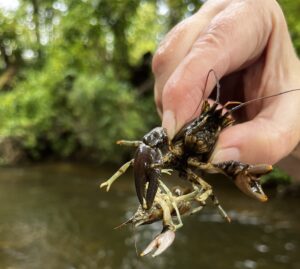
Faxonius rusticus (Rusty crayfish) are an aggressive invasive species in the Little Calumet-Galien Watershed, displacing native crayfish.
For Kathryn’s project, crayfish samples, water samples, and sediment samples were collected in several creeks in the Little Calumet-Galien Watershed representing a variety of environmental exposures. She hypothesized that crayfish’s environmental interactions as omnivores and biotic engineers place them in a unique environmental niche, making them a reliable sentinel species. By testing and comparing the bioaccumulation of metals in crayfish tissue, water, and sediments, to dominant species, average crayfish size, and population density, we can reliably predict creek health for metals based on the specific crayfish species found. Along with the determination of crayfish as a sentinel species, this study method could be used to create community outreach and citizen science projects in alignment with the IISG Mission of creating an environmentally literate population. This research project will attempt to broaden our understanding of metal transport in aquatic ecosystems.
Illinois-Indiana Sea Grant is a partnership between NOAA, University of Illinois Extension, and Purdue University Forestry and Natural Resources, bringing science together with communities for solutions that work. Sea Grant is a network of 34 science, education and outreach programs located in every coastal and Great Lakes state, Lake Champlain, Puerto Rico and Guam.
January 9th, 2024 by Angela Archer
Meet Our Grad Student Scholars is a series from Illinois-Indiana Sea Grant (IISG) celebrating the students and research funded by our scholars program. To learn more about our faculty and graduate student funding opportunities, visit Fellowships & Scholarships.
Yizhou Lin, a Ph.D. student in the Sustainable Infrastructure and ManUfacturing Lab at Purdue University School of Construction Management Technology, is exploring sustainable solutions for the construction material industry. Lin’s research is driven by a desire to explore innovative solutions that address this critical issue. Specifically, he is investigating the feasibility of using bottom sediments from Lake Michigan as a sustainable recycling material to enhance the efficiency of concrete use.
The cement industry is estimated to be responsible for approximately 7−8% of global CO2 emissions. The process of creating cement involves heating limestone and other raw materials to extremely high temperatures, resulting in the release of carbon dioxide.
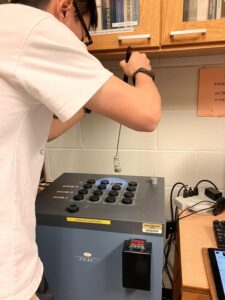
Lin is testing the amount of heat produced in concrete paste samples.
Concrete, as we know it, is composed of various key components, including cement, aggregates, water, supplementary materials, and additives. The additives play various essential roles in concrete mixtures, such as improving workability, reducing or accelerating setting time, and enhancing strength. Yizhou Lin’s goal is to recycle and reuse bottom sediments from Lake Michigan and evaluate the performance enhancement of the cement and concrete materials with bottom sediments added.
The increasing development of water transportation and port terminal infrastructures generates significant volumes of sediments, including dredged materials. Moreover, the Great Lakes basin faces a considerable contamination problem and harbors toxic substances that cause harm to the local ecological system. Using Great Lakes bottom sediment as an initial ingredient in concrete not only promotes the reuse of materials but also addresses the pressing contamination issue.
Lin’s research journey began with the direct collection of samples from the lake bottom. These materials need to be properly dried and sieved to select the right particle size for use as additives. At this stage, his work primarily focuses on the rheological principle (rheology is the study of flow behavior). For instance, the concept of yield stress and viscosity in fresh cement and concrete represents the point at which the paste transitions from a solid-like, immobile state to a flowable state when subjected to shear forces. He is exploring how additives can influence this yield stress and viscosity. Understanding the principles of rheology could be a game-changer in the context of introducing lake bottom sediments as potential additives. Yizhou’s mission is to decipher how various additives, such as the lake bottom sediment he’s investigating, can influence the crucial rheological behavior of fresh cement and concrete.
By understanding the rheology of fresh cement and concrete, scientists and builders can make concrete better. They can change how they mix the materials with different additives and decide how long to mix everything. This helps them handle the materials well, and make the concrete strong. Now, Lin’s research moves to the next step: how to make concrete more sustainable and durable? That’s the big question for the next phase of the study.
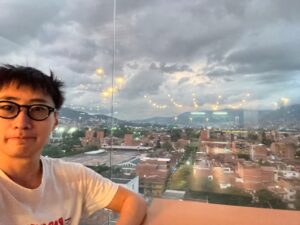
Lin is a world-traveling scholar. He finished his undergraduate degree in New Zealand and his Master’s in Singapore.
To find the best way to use sediment from the lake in concrete, Yizhou is creating a computer model. You might think of it like a video game that lets him see how different materials affect the concrete. He’s testing a wide variety of measurements, like how thick the concrete gets, how strong it is, and how it affects the environment and cost.
Lin isn’t doing this all by himself, but rather using advanced computer algorithms to help him.
“These algorithms are like super-smart helpers that can look at a lot of information and figure out the best ways to use the lake sediment in concrete,” he said. “It’s like a mix of science and computer magic that’s going to help us make construction more eco-friendly and better.
“I’m incredibly excited about the potential of incorporating bottom sediment into construction materials,” Lin added. “It’s like piecing together a complex puzzle where we gather information bit by bit, ultimately assembling the bigger picture to determine its viability.”
Lin finds deep inspiration in traveling around the world, a journey that consistently prompts reflections on the profound connections between humans and nature. This exploration leads to a greater understanding and appreciation of our planet’s diverse ecosystems and cultures.
Illinois-Indiana Sea Grant is a partnership between NOAA, University of Illinois Extension, and Purdue University Forestry and Natural Resources, bringing science together with communities for solutions that work. Sea Grant is a network of 34 science, education and outreach programs located in every coastal and Great Lakes state, Lake Champlain, Puerto Rico and Guam.
December 14th, 2023 by Angela Archer
Meet Our Grad Student Scholars is a series from Illinois-Indiana Sea Grant (IISG) celebrating the students and research funded by our scholars program. To learn more about our faculty and graduate student funding opportunities, visit Fellowships & Scholarships.
Sydney McAndrews is a second-year graduate student in the Center for Fisheries and Aquatic Sciences at Eastern Illinois University in Charleston. McAndrews is assessing urban and agricultural stream restorations by surveying fish and macroinvertebrate populations. She is also building food webs using stable isotope analysis to understand the effects of stream restorations on aquatic ecosystems.
Changes in landscapes have detrimental consequences for aquatic ecosystems. Historic forests and prairie lands have been converted to agriculture and urban areas throughout much of the Midwest. Agriculture is the cause of nearly half of the water-quality impairment issues in surface water across the United States. In addition, our expanding cities and increased paved surfaces lead to higher runoff, causing flash flood events and elevated levels of pollutants in streams. Urban and agricultural streams have sparse vegetation surrounding them, reducing pollution uptake by plants and increasing soil erosion into the water. These modified landscapes often force sensitive species out of streams, allowing pollution-tolerant species to invade.
To reduce the impacts of urbanization and agriculture, stream restorations are constructed to improve stream function and health. The goals of stream restoration are to emulate natural stream conditions, improve water quality, and create better habitat for species of interest. Monitoring stream restorations is crucial to determine their effectiveness, yet many projects do not assess the success of restoration after construction. Therefore, there is a gap in our understanding of stream restoration benefits to aquatic ecosystems.
Sydney McAndrews, a graduate student at Eastern Illinois University, is monitoring the success of restorations in two Illinois streams: Kickapoo Creek in Charleston, an agricultural stream, and the Saline Branch in Urbana, an urban stream. Both streams experienced large fish kills due to separate chemical spills in the early 2000s. In response, habitat restorations were completed in Kickapoo Creek in 2010, and in the Saline Branch in 2020. Both restorations included the construction of physical structures to increase habitat and reduce erosion.
To examine if these restorations improved the ecosystems, in the fall of 2022 and 2023, McAndrews and her team conducted fish and macroinvertebrate (animals without a backbone that can be seen without a microscope) sampling in the streams to measure biodiversity. In addition to collecting several species of stream fish and macroinvertebrates, the team also collected ants, spiders, leaves and algae to create a food web of each stream using stable isotope analysis.
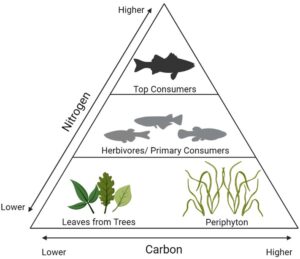
Nitrogen and carbon isotopic values change in a predictable way as you move along the food chain.
Food web interactions can be assessed to determine restoration benefits on stream health because they link populations to the functioning of the entire ecosystem. Streams and terrestrial land are connected, and energy and nutrients move between them. The incorporation of food web analysis allows for an in-depth evaluation of energy flow and nutrient cycling through an ecosystem. Monitoring the food web provides insights into the connection between water and land and establishes a foundation for ecosystem-based management. However, few studies have looked at the effects of stream restoration on aquatic ecosystems.
Stable isotopes are a tool to measure and compare the energy flow in ecosystems and are used as a proxy for stream health due to the predictable pattern between a consumer and its diet. As the saying goes, you are what you eat; the composition of a consumer’s tissues reflects their dietary intake over time. A comparison of the consumer’s isotopic ratios in its tissues relative to its potential food sources can be used to build a food web.
The most common isotopes collected in aquatic systems are carbon and nitrogen. Nitrogen isotope composition is used to determine the trophic position of a consumer, or how far up a consumer is in the food chain. Carbon isotope composition is used to analyze the resource base of energy sources supporting the food web and can be used to determine if herbivores are consuming terrestrial leaves, aquatic plants or algae. Healthy food webs have a diverse energy base, with more terrestrial and aquatic links and longer food chains. The food web complexity in aquatic systems can be compared to each other when coupling the results of both carbon and nitrogen isotopes. By monitoring changes in the food web, we can gain insights into diet shifts of individual species or changes in the structure of the entire food web.
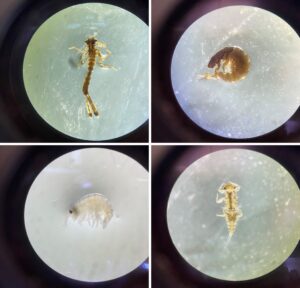
Macroinvertebrates collected in the Saline Branch in Urbana, Illinois. Family identification in a clockwise rotation beginning with top left; damselfly, caddisfly, mayfly, and scud
The goal of this research is to use the Saline Branch and Kickapoo Creek restorations as case studies for the effectiveness of stream restoration. The objectives of this study are to (1) measure changes in biodiversity of the streams as a function of the restorations, and (2) compare the food web structures of urban and agricultural aquatic communities as a proxy to stream health in restored and unrestored sections of the Saline Branch and Kickapoo Creek.
McAndrews expects to find more complex aquatic food webs in the restored areas compared to the unrestored areas. Information gleaned from this study will aid in the implementation of effective restoration techniques in urban and agricultural streams. It is critical to monitor the success of costly restorative stream treatments and to allocate funds to projects that increase the resiliency of aquatic habitats. McAndrews’ research is novel in its approach to use food webs to measure restoration success, and she hopes it will lead to enhanced stewardship of urban and agricultural streams in Illinois and Indiana.
Illinois-Indiana Sea Grant is a partnership between NOAA, University of Illinois Extension, and Purdue University Forestry and Natural Resources, bringing science together with communities for solutions that work. Sea Grant is a network of 34 science, education and outreach programs located in every coastal and Great Lakes state, Lake Champlain, Puerto Rico and Guam.
November 29th, 2023 by Angela Archer
Meet Our Grad Student Scholars is a series from Illinois-Indiana Sea Grant (IISG) celebrating the students and research funded by our scholars program. To learn more about our faculty and graduate student funding opportunities, visit Fellowships & Scholarships.
Amber Schmidt is a second-year graduate student in the Natural Resources and Environmental Science Program at the University of Illinois Urbana-Champaign. Her research is focused on observing the development of benthic invertebrate communities on a nearshore, dynamic reef system in Lake Michigan. She hopes to connect the impacts of geological changes at the reef site to the changes in the benthic community.
The Adeline J. Geo-Karis Illinois Beach State Park, home to over 650 species of plants and animals, contains the last natural shoreline of Lake Michigan and the only area of beach ridge complex in Illinois. In 2021, an artificial reef composed of three submerged breakwaters, nicknamed the “rubble ridges,” was built as a pilot project to repair the shoreline and help prevent further erosion damage in a more natural way. The design, construction, and monitoring of the structure was funded by the Great Lakes Restoration Initiative in partnership with Healthy Port Futures, the Army Corps of Engineers, and the University of Illinois Prairie Research Institute.
Amber Schmidt is a master’s student working in the Czesny Lab at Lake Michigan Biological Station, a field station in the Prairie Research Institute. She is studying the nearshore macroinvertebrate community at the rubble ridges and comparing the results to the community at a control site located south of the ridges. The goal of this project is to provide a full representation of nearshore, benthic community changes and the geological factors that influence them when an artificial reef is introduced into a system.
Benthic invertebrates are organisms without a backbone that live in vegetation or in substrate in a body of water. Benthic invertebrates can indicate the health of a water body and are a significant food source to many organisms throughout the Lake Michigan food web including yellow perch and lake trout, both popular native sportfish.
The rubble ridges are unique due to the design, location, and natural materials used to build the reef. They consist of three ridges comprised of 2−3-ton limestone boulders piled on top of each other. Due to the high energy in this system such as wave action, storm events and currents, the ridges are expected to accumulate sand and flatten over time. This system is located close to the shoreline (approximately 300 feet offshore and 8−12 feet deep) which provides a new, unique habitat in this part of Lake Michigan, providing an extraordinary opportunity to collect both geological and biological data and observe how these two disciplines intertwine at a natural reef system.
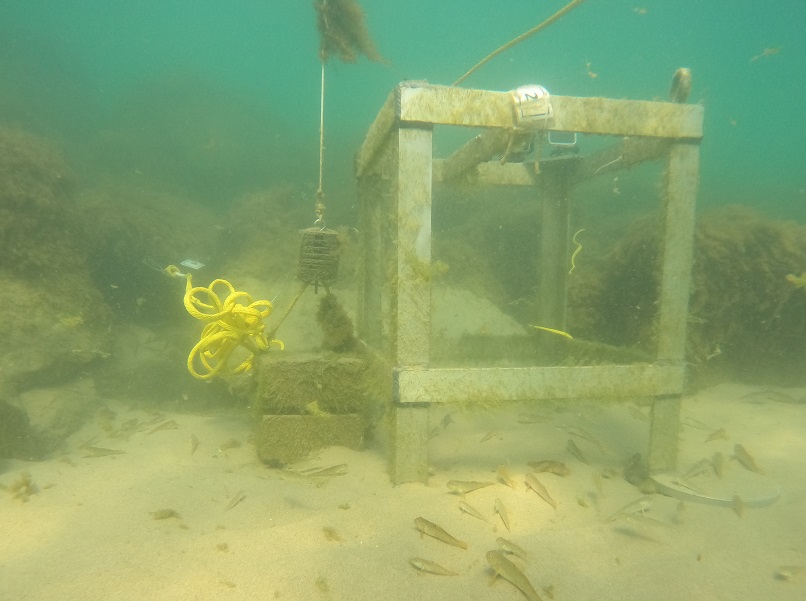
The underwater setup of the Hester-Dendy sampler (left), camera frame (right), and minnow trap baited to capture round goby (back left).
To gather samples for this project, benthic cores, sediment cores, round goby (Neogobius melanostomus) abundance estimates, and round goby stomach content were collected at the rubble ridges site and the control site via a combination of boat-based work and SCUBA surveys. Hester-Dendy samplers were only used at the rubble ridges site. These samplers provide surface areas similar to the boulders at the rubble ridges, which allows for the sampling of encrusting invertebrates. There is no such structure at the control site, so Hester-Dendy samplers were not implemented there.
Benthic cores are collected by a SCUBA diver plunging a 3-inch core into the sand and capping it to capture the sediment. Benthic cores are collected to sample the organisms living in the sediment, while sediment cores are collected to quantify the size distribution of the sediment itself. Round goby are known to consume benthic invertebrates and are highly abundant in the rubble ridges. Round goby were sampled using minnow traps set in the ridges, and micromesh gillnets were used outside of the ridges and at the control site. These round goby were sampled to observe the invertebrates in their stomachs because the invertebrates were likely in the sediment at the two sites or encrusted on the boulders at the rubble ridges site.
Pictures were captured every 5 minutes by GoPro’s mounted on camera frames that remained in the water for 2−3 hours per sampling day to estimate goby abundance at the rubble ridges and control sites.
Scuba diving is the only means of sampling in this high energy, shallow environment; thus, safety concerns, the possibility of ice, and low temperatures makes the sampling for this study difficult. The sampling window each year for this project is brief, it occurred monthly from June through September in 2022 and 2023. Schmidt’s project is part of a 5-year monitoring effort of these structures undertaken by the Lake Michigan Biological Station and Illinois State Geological Survey, and sample collection will continue after she is finished with her master’s project.
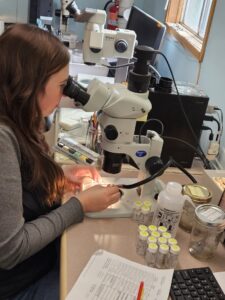
Amber Schmidt picking through a Hester-Dendy scrape sample under a microscope. Each vial represents a different taxon of benthic invertebrate.
“I worked as a technician at the Lake Michigan Biological Station when this project began in 2021. I fell in love with the project and asked if I could continue the work on the benthic invertebrate side of the study as a graduate student,” Schmidt said. “This research is helping us understand the impacts of structure introduction on Lake Michigan. Many organizations are thinking about placing similar structures in southern Lake Michigan. This project helps us to better understand the effect these structures on the benthic invertebrate communities and food webs as a whole.”
October 12th, 2023 by Angela Archer
Located in Washington, D.C., the Sea Grant Knauss Fellowship provides a unique educational and professional experience to graduate students who have an interest in ocean, coastal and Great Lakes resources, and in the national policy decisions affecting those resources. This is a one-year fellowship open to any student, regardless of citizenship, who is enrolled toward a degree in a graduate or professional program on the day of the deadline.
The application deadline for the Knauss Fellowship is February 15, 2024. Please contact Angela Archer, amcbride@purdue.edu, before submitting an application. This is to ensure that candidates understand the expectations of the fellowship and that every application has all required materials.
Students enrolled at an Illinois or Indiana university or college should submit their applications through Illinois-Indiana Sea Grant (IISG) by emailing Angela Archer at amcbride@purdue.edu. Students in surrounding states without a Sea Grant program should contact the National Sea Grant College Program at oar.sg.fellows@noaa.gov for a referral.
For more information about this fellowship, other opportunities and application requirements, visit the IISG fellowship page.
Illinois-Indiana Sea Grant is a partnership between NOAA, University of Illinois Extension, and Purdue University Forestry and Natural Resources, bringing science together with communities for solutions that work. Sea Grant is a network of 34 science, education and outreach programs located in every coastal and Great Lakes state, Lake Champlain, Puerto Rico and Guam.