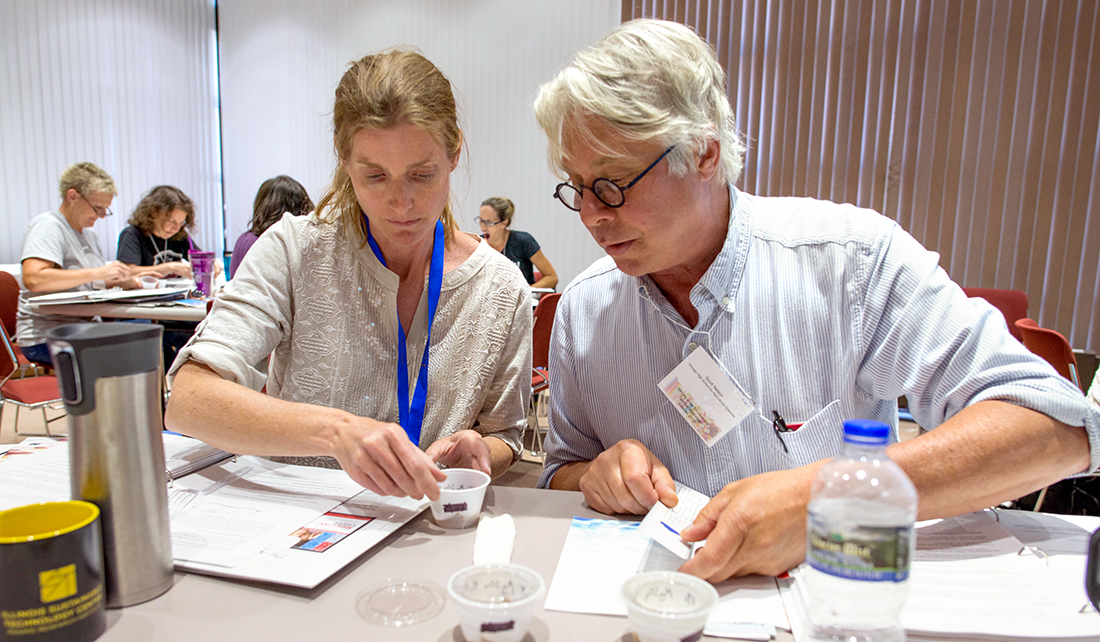
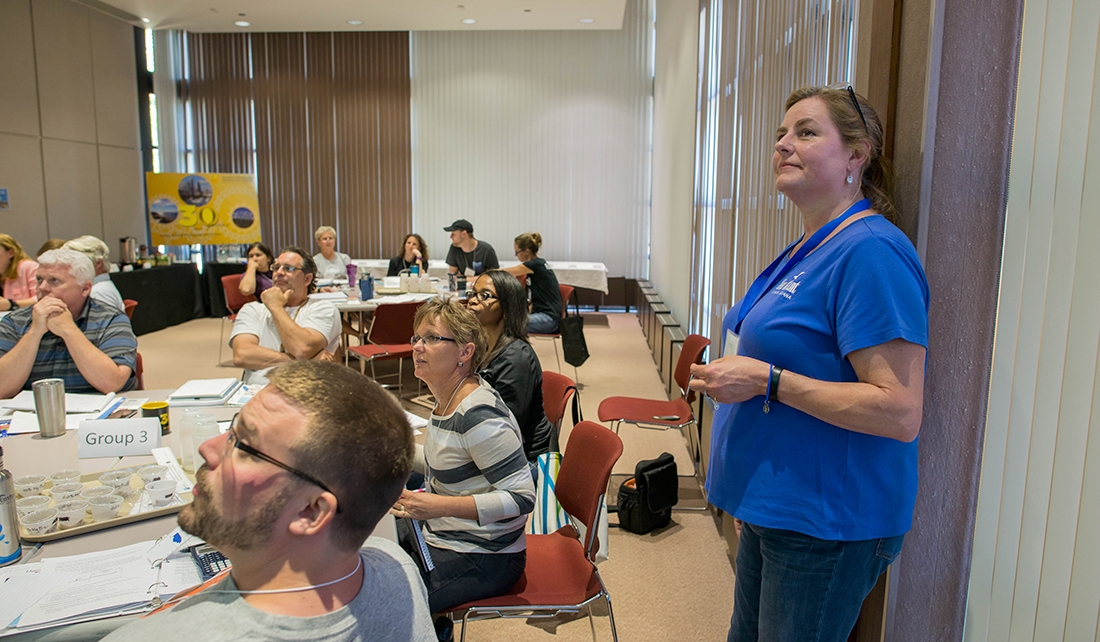
The forty participants gladly retreated from the hot sun and humid weather to a Bradley University laboratory to learn about green infrastructure, a water management approach the city of Peoria is relying on to help with its combined sewer overflow (CSO) issues.
“What do you think this area looked like 500 years ago?” asked IISG and Illinois Water Resources Center Stormwater Specialist Eliana Brown who led the workshop.
Hands shot up as the campers described the prairies and forests they imagined once covered the land compared with the homes and businesses that make up the city today.
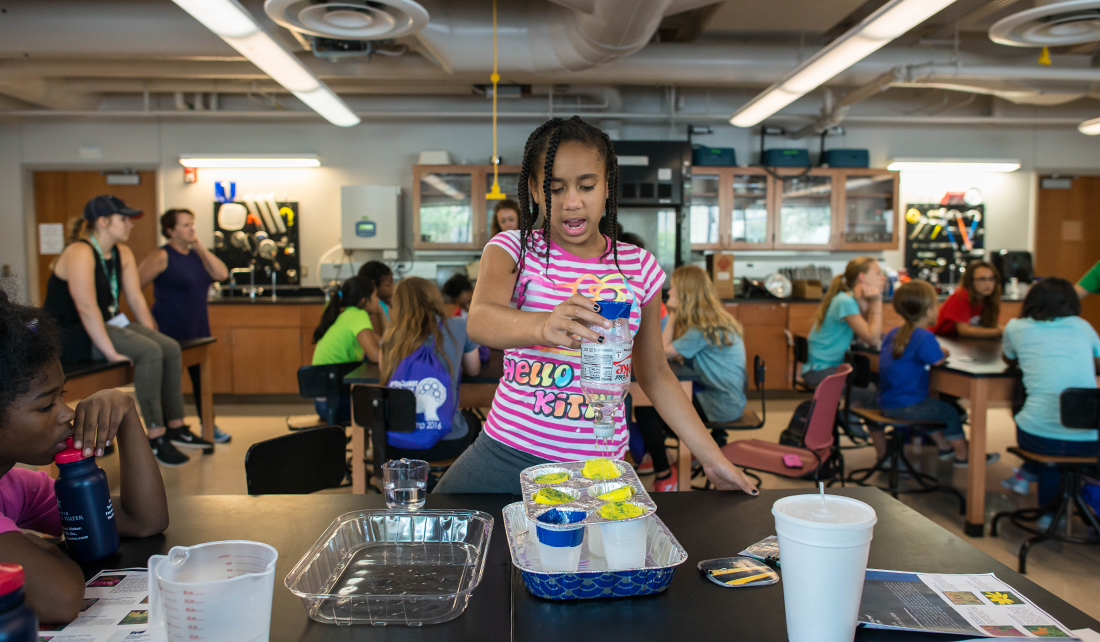
Tynasia McCalain, 12, acts a “rainmaker” as part of the workshop.
Brown’s point was driven home with the use of an activity that simulates the problems with developing land without providing a way to capture stormwater that otherwise washes into local waterways.
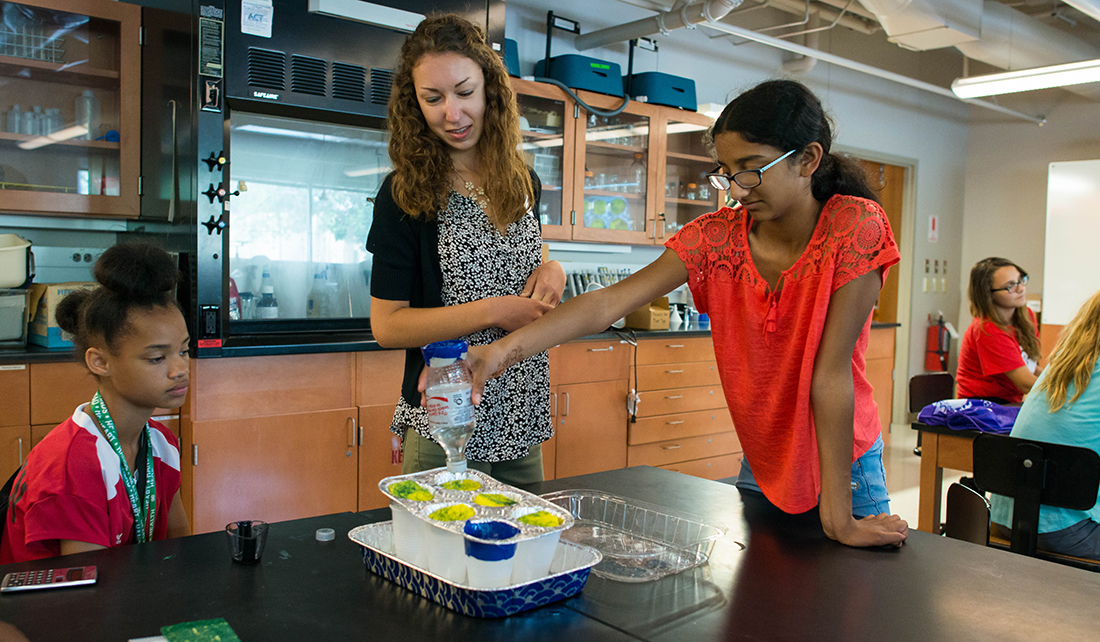
Using water, cups, and sponges as stand-ins for rainstorms, the Illinois River, and the Peoria landscape, the girls were able to draw parallels with the issues that Peoria is facing.
“There are many things happening in Peoria related to the river that engage city employees and landscape designers,” said Judy Schmidt, 4-H metro youth development educator at Illinois Extension and one of the camp’s organizers. “It seemed like a perfect time to engage the girls in discussions about how they are impacted by the quality of the water in the river and how they impact it as well.”
Illinois Water Resources Center intern Ashley Rice, center, helps out the campers with workshop.
Elizabeth Setti, who will be going into seventh grade at Washington Gifted School, came away from the session with a better understanding of the problems and the possible solutions.
“It was really interesting to see how we had new ideas to make the sewage not overflow,” Setti said. “I knew about the rain barrels, but I didn’t know about the rain gardens.”
It will take at least twenty years to come close to solving Peoria’s CSO concerns with green infrastructure, and with the right resources the girls can help with the effort.
“I want to empower them to transform their community and to be that generation that creates the change that has to happen. They have to be the ones to do it,” said Brown.
Illinois-Indiana Sea Grant is a part of University of Illinois Extension and Purdue University Extension.
When I started working at the Illinois Water Resources Center in May, I had no idea what kind of summer I had signed up for. Needless to say, I hit the ground running. On my third day, we traveled to Chicago for an overnight meeting with IISG, and other state agencies. We discussed current issues, future plans, plus introduced new employees, and interns, like myself. In an unfamiliar place with new people and environmental issues new to my knowledge, I was welcomed warmly, and always encouraged to express my thoughts and opinions.
Next, a rainy Memorial Day weekend came, and with a newfound perspective of water’s role, I traveled across the state to Quincy, Illinois to visit my grandmother. Without having to do much searching, water’s effects were all around me during the trip—the green grass, beautiful flowers, wildlife, woods, and bluffs near the Illinois, and Mississippi rivers. Feeling refreshed, I started diligently planning and working on the blog for the summer. I researched, and wrote my first post on the Fox River in northern Illinois, which seemed appropriate given my recent trip to Chicago. I also went to several video shoots for various outreach projects.
I later attended the Agriculture Water Quality Partnership Forum tech-subgroup meeting in Springfield, as well as the Nutrient Management Council meeting in Champaign. The Illinois Nutrient Loss Reduction Strategy—something I studied in my agriculture classes—was put into action as the different agencies, and organizations worked together. In contrast, I then had the privilege of interviewing my dad about what conservation practices he implements on our family farm. It was amazing to not only first-hand explore these issues, but to apply, and build upon concepts I previously studied.
As someone with a strong agricultural and farm background, I realize the importance of sustaining land, wildlife, and of course, the human population. As increasingly more people move to urban environments, and are further removed from agriculture, education will only continue to be more important. I cannot wait to start my senior year at Illinois State University, apply to graduate schools, and pursue a career in natural resources as well as environmental and agriculture education. I am extremely grateful for the opportunities the Illinois Water Resources Center has given me, and even more so, the wonderful people I am fortunate to have worked with.
Ashley, center, helps out the campers with a stormwater workshop earlier this summer in Peoria, Illinois.
Overall, the passion my co-workers have for water related issues is truly inspiring. The wealth of knowledge, and variety of personal and educational experiences creates a very interesting dynamic. I am leaving better versed on nutrient issues, stormwater, green infrastructure, and how all agencies must collaborate to solve problems.
Through teaching an educational STEM camp, interviewing farmers, attending meetings, video shoots, and tweeting I became a better agricultural communicator. Blogging regularly also made me a stronger writer, researcher, and critical thinker. In reality, there is no cut-and-dry answer or formula to solve all environmental issues. It is something we all must work together and compromise on in order to improve, and sustain water resources, and all life that depends on it. No matter where you live, water is something not to take for granted, but to embrace. After all, we would not be here without it.
Lurking in the rivers and streams of the eastern United States is an animal that is equal parts off-putting and adorable—the hellbender. The largest salamander in North America, (third largest in the world behind the Chinese giant salamander and Japanese giant salamander) this oozy oddity has an average length of two feet from snout to tail.
It occupies a range stemming from New York near Lake Ontario to northern Georgia, even reaching as far west as southern Illinois. The species and its ancestors have occupied this ecological niche since the late cretaceous period, around 65 million years ago—about the same time lake sturgeon have been around in the Great Lakes.
Also like the lake sturgeon (as well as opossum shrimp) hellbenders are sensitive to their surroundings. Temperature, dissolved oxygen, the swiftness of the water itself, and the presence of large rocks all contribute to whether or not hellbenders occupy an area. They’re most active during the night, (like another “ugly” aquatic creature, the burbot ), feeding once the water has cooled, about two hours after dark. They eat crayfish, other small fish, dead fish, even other hellbenders and their eggs. This cannibalism contributes to controlling the population density in an area.
Usually solitary animals, hellbenders will congregate from late August to mid-September for mating season. The males lure the females into their burrows and prevent them from leaving until they have deposited their eggs while the males simultaneously fertilize the eggs.
After the eggs are laid, the male hellbenders force the females out of the burrow and take over. The males rock back and forth to circulate the water and increase the oxygen available to the eggs and protect them from predators—which can include other hellbenders.
Newborn hellbenders have true gills, but as they grow older, respiration is achieved mainly by breathing through capillaries found along skin folds that run along their back and belly.
Little is known about the average lifespan of hellbenders. Some in captivity have lived to be as old as 29, but there is speculation that those in the wild can live for 50 years or longer.
Hellbenders have been in decline for a while and are considered Near Threatened by the International Union for the Conservation of Nature, with many populations already considered endangered or extinct. Habitat destruction and disease are thought to be the major contributors to their falling numbers. Now many states, agencies, and institutions have developed conservation programs to help bring awareness to the plight of the hellbender.
Descend 55 meters to the floor of Lake Michigan and you’ll find the bottom carpeted with tens of thousands of one of the most prolific invasive species in the Great Lakes: the quagga mussel.
Researchers have long known that these voracious filter feeders impact water quality in the lake, but their influence on water movement had remained largely a mystery.
From 2012 to 2013, Purdue University PhD candidate David Cannon, working under hydrodynamicist Cary Troy, used water velocity sensors to measure dynamics in the deep waters of Lake Michigan near Milwaukee, Wisconsin and determine the filtration effects of the invasive mussels. The project was supported by a grant from the Illinois-Indiana and Wisconsin Sea Grant programs.
Quagga mussels, which arrived in Lake Michigan in the 1990s via ballast water discharged from ships, have colonized vast expanses of the Lake Michigan bottom, reaching densities as high as roughly 35,000 quagga mussels per square meter. The invasive species that can have major economic impacts filters up to 4 liters of water per day, and so far seems unaffected by any means of population control. It is also a constant threat to other systems, as it is readily transported between water bodies.
“Quagga mussels filter by ‘sucking in’ the water around them and then ‘spitting out’ what (nutrients and particles) they don’t want,” said Cannon. “While they’re doing this, they’re able to directly move a very small amount of water around them—only about 10 cm above the lake bed.”
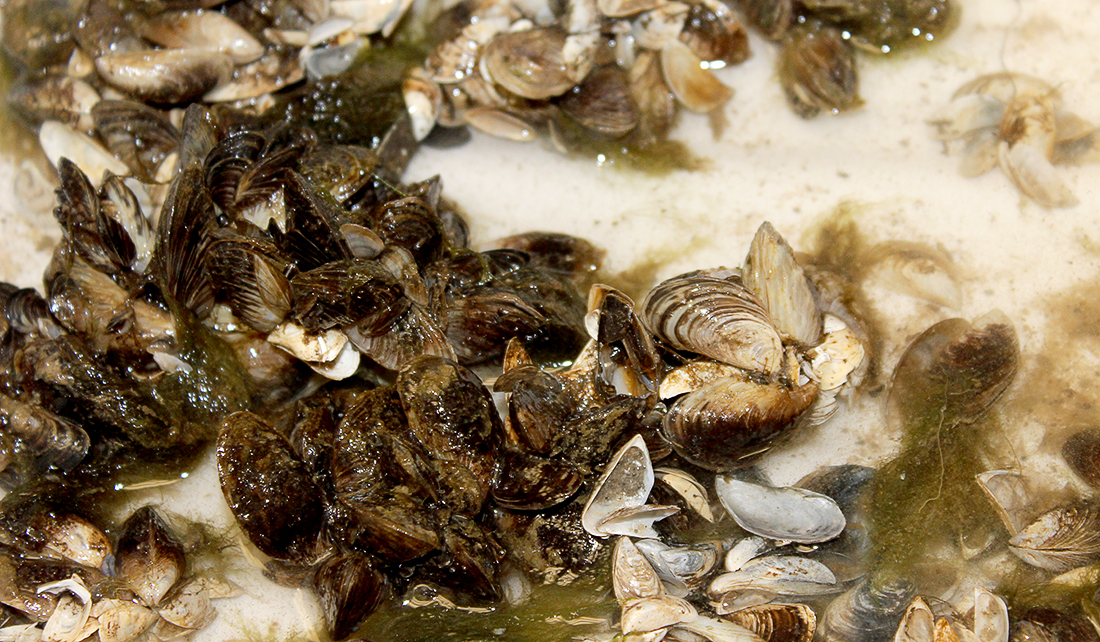
Quagga mussels harvested from Lake Michigan.
Although this filtering has a dramatic effect on water quality, the measurements taken near Milwaukee suggest that quaggas do not strongly influence movement throughout the entire water column.
But the movement they cause in the thin layer immediately above the lake bed—a phenomenon consistent throughout the year thanks to stable temperatures at the bottom of Lake Michigan—is an element missing from most mussel filtration models.
Cannon and Troy hope that will now change. Their results could lead to the development of better models to study the effects of these organisms on lakes and reservoirs around the world.
“Although Lake Michigan is already infested with these mussels, an accurate filtration model would be imperative for determining the fate of substances like nutrients and plankton in the water,” Cannon said. “In other quagga mussel-threatened systems, like Lake Mead, this could be used to determine the potential impact of mussels on the lake, which could in turn be used to develop policy and push for funding to keep mussels out of the lakes.”
“It’s generally accepted that the ecosystems of smaller, shallower lakes—Lake Erie, for example—are at the greatest risk of quagga mussel invasion,” he added. “Our results could help show other researchers that the effects of mussels on large, deep lakes cannot be ignored and, more importantly, how they can be accounted for.”
Illinois-Indiana Sea Grant is a part of University of Illinois Extension and Purdue University Extension.
U.S. EPA’s Research Vessel Lake Guardian graces our page once again for this year’s annual Shipboard Science Workshop. “This workshop allows educators to work on a research project with a Great Lakes scientist for the week they are on the ship,” said IISG Educator Allison Neubauer. “They use equipment to collect samples from the lake, analyze them in the labs onboard the ship, and come up with answers to the questions of their particular research project.”
Past workshops have included collecting data on plankton communities, plastic pollution, and overall water quality of the Great Lakes. This season, educators aboard the R/V Lake Guardian will have the opportunity to participate in what is known as The Incredible Shrinking Cup Lab, coordinated by Kristin TePas, IISG’s community outreach specialist.
The principle guiding The Incredible Shrinking Cup Lab is called Boyle’s law, which, when simplified, says that the volume of a gas is inversely proportional to the pressure being exerted upon it. We see this with weather balloons, which, when they’re launched, can range from 2.5 ft. to 8 ft. in diameter, but expand more than four times in diameter during flight, becoming as large as 32 ft. wide. As a balloon gains altitude, less pressure is being exerted on it from the outside, allowing the gas inside to expand until, ultimately, the balloon pops.
The Incredible Shrinking Cup Lab takes things in the opposite direction, observing the effects of increased pressure as Styrofoam cups are sunk hundreds of feet underneath the water. Gas pockets inside the Styrofoam cups shrink as the distance below sea level, and subsequent pressure, increases, compressing the cup’s structure, making it smaller.
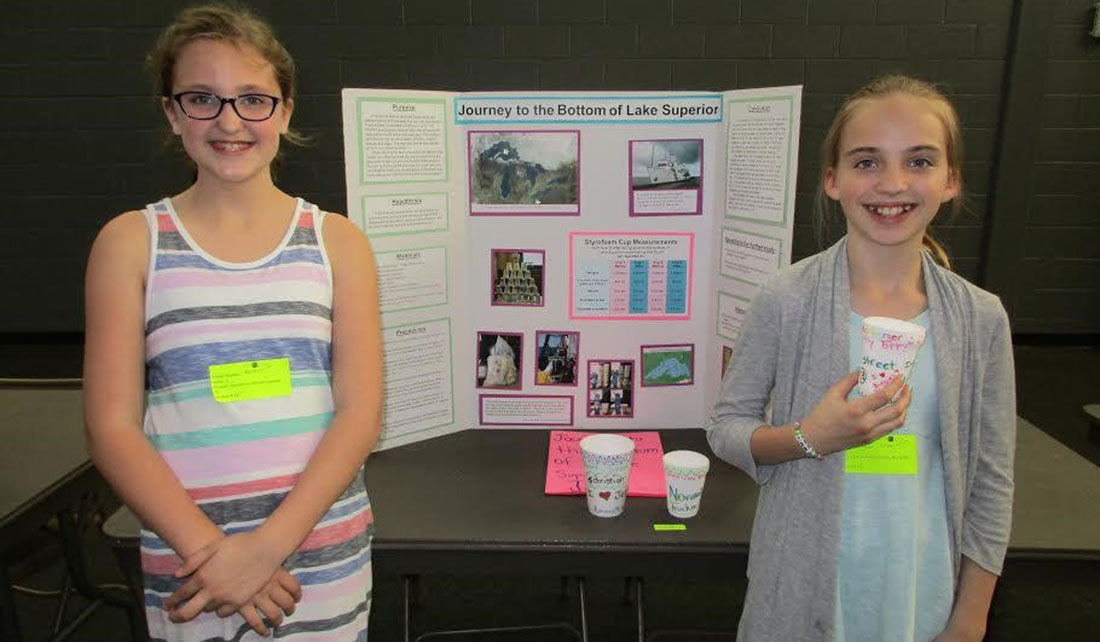
Two students of Marcy Burns, Main Street Intermediate School in Norwalk, Ohio, pose after winning third place in the OhioView SATELLITES Conference and research project fair at the University of Toledo.
This activity provides students the opportunity to see the effects of Boyle’s law first hand. Before the cups are submerged, students are taught how to measure their volume, density, and mass. They personalize their cups to know whose is whose, craft hypotheses on what will happen to the cups, and are put into direct contact with research scientists, who do the submerging themselves once at their stations in the ocean or in the Great Lakes. Allison Neubauer was able to document two rounds of sending down cups this past April while aboard the R/V Lake Guardian in Lake Superior.
Illinois-Indiana Sea Grant is a part of University of Illinois Extension and Purdue Extension.
Last week IISG and the Illinois Sustainable Technology Center (ISTC) at the University of Illinois hosted a workshop for Illinois and Indiana teachers on pharmaceutical and personal care products (PPCPs) in the environment to help these teachers introduce or expand the issue of PPCPs into their classrooms.
The start of the workshop was not for the squeamish.
Teachers toured the Urbana & Champaign Sanitary District and saw — and smelled — firsthand how wastewater is treated. They then went to see how an ISTC lab is working on developing effective removal methods for PPCPs from wastewater.
Environmental Educator Kirsten Hope Walker finished off the day with activities from the new IISG curriculum, The Medicine Chest, a series of lessons on the issues surrounding pharmaceuticals and personal care products.
“I get so sick of people just thinking science and biology is memorization,” said Donna Brayfield a high school biology teacher at Sacred Heart-Griffin in Springfield, Illinois with 35 years experience.
“Anything that’s real-world application, that’s the cool stuff!”
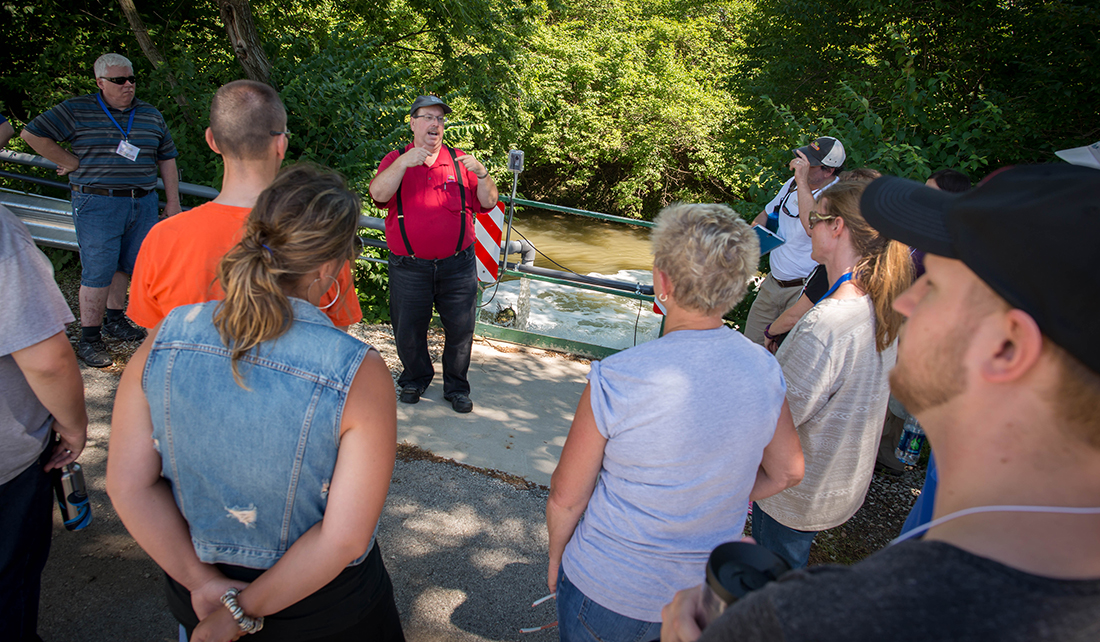
Bruce Rabe, who is the laboratory supervisor at the Urbana & Champaign Sanitary District, speaks to the teachers in front of clean water being discharged into the Saline Branch drainage ditch. It takes about 14 hours for wastewater to make it through the treatment process before it is returned to the stream.
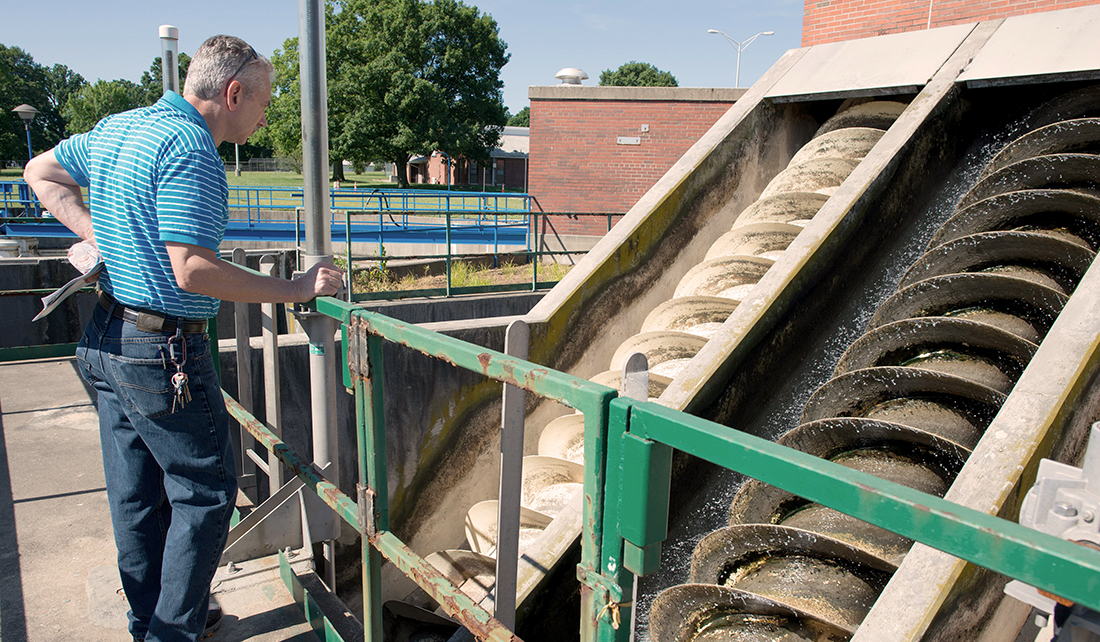
Daniel Martin, a physics teacher from Chicago High School for Agricultural Sciences, looks at the screw pumps used for moving large quantities of water.
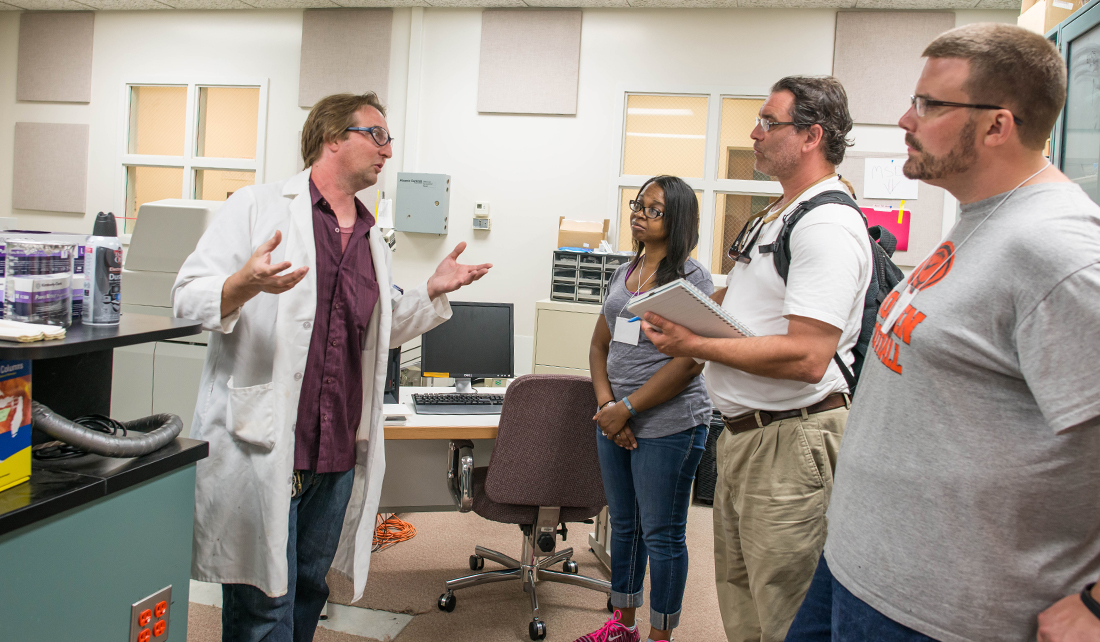
John Scott, senior analytical chemist at ISTC, gives teachers a tour of his lab.
Workshop teachers become students again as they participate in a lab activity from The Medicine Chest.
Kirsten Hope Walker, IISG environmental educator, leads a workshop on The Medicine Chest.
Illinois-Indiana Sea Grant is a part of University of Illinois Extension.
Despite all the good that natural resource biologists strive to do in monitoring the spread of Asian carp in Illinois waterways, their very presence could have unintended, perhaps even harmful consequences.
All waters are filled with environmental DNA, (eDNA) bits of cells and genetic material left behind like fingerprints at the scene of a crime. Biologists are concerned that while monitoring the movement of Asian carp they may be inadvertently spreading eDNA and clouding their monitoring efforts as well as introducing invasive species into other waterways.
“eDNA is not an invasive species, but we recognize it can be spread by boats or by our gear in the water. In our work we definitely see it can happen very quickly,” said Kevin Irons of Illinois Department of Natural Resources and coordinator of the monitoring and response plan.
“These best management practices work to prevent our day to day activities as natural resource professionals from moving this eDNA around and further exacerbating invasive species spread.”
It’s been noted that some of the most invaded waters are where not only lots of people go, but also where lots of biologists do their work. Irons looked to Pat Charlebois, IISG AIS outreach coordinator, to help with the guidelines aimed at biologists.
“Some of the personnel involved in the agencies doing fieldwork don’t have a protocol in place to deal with this kind of thing,” Charlebois said. “They might not be familiar with the steps they can take or if they’re not from Illinois, they might not be aware of laws that are in place.”
IDNR is promoting prevention and trying to be proactive by encouraging the same recommendations aimed at the average angler, remove, drain and dry, but with more detailed decontamination guidelines.
“In Illinois we have our Be A Hero—Transport Zero™ campaign, so as biologists we need to be a hero and not transport things around,” Irons said.
“Sometimes we get so caught up in looking for the fish that we forget another tenet of good science—prevention.”
Every day millions of barrels of crude oil are piped, trucked, freighted, and shipped throughout the Great Lakes basin from the Canadian Alberta oil sands and the Bakken oil fields to refineries across the nation. This much crude oil moving around the Great lakes region is not only a challenge for transportation systems but is bringing concerns over the safety of crude oil transport front and center.
Yet crude oil is important to the region, creating economic growth in the form of jobs, industry, agriculture, and government revenue.
Last fall, the Great Lakes Sea Grant Network invited people from academia, industry, and non-profit organizations to Chicago to discuss research that would address concerns inherent to transporting this vital commodity. The goal of the resulting research agenda is to support optimal movement of crude oil throughout the Great Lakes with regards to public safety, the economy, and environmental protection of coastal resources.
“We learned that decision makers have many questions that need to be answered related to the transportation of crude oil,” said Margaret Scheneemann, IISG water resource economist and one of the meeting facilitators.
The Chicago workshop followed an initial two-day spring gathering held at Wingspread in Racine, Wisconsin, which brought a diverse set of stakeholders together to get on the same page regarding this complex issue. They reached an agreement on the primary issues surrounding crude oil movement.
“The first workshop really set the stage for subsequent dialogue,” said Schneemann. “Given that we’re going to move oil in the basin, can we work together to look at our options and identify what we need to do to better understand those options?”
For example, oil pipelines have become a hot-button issue, especially for some environmental groups and activists.
Ever since the first black gold was commercially drilled in western Pennsylvania in 1859, getting the oil to market has been a challenge. Initially the cost to transport it to the railroad was more than the oil itself was worth. So in 1865 the first reliable pipeline was built and the U.S. hasn’t stopped expanding pipelines since.
Today there is more oil than ever before traveling existing routes. Thousands of pipelines snaking through the nation move the bulk of the oil on land. Where pipelines don’t exist or aren’t sufficient, oil is moved by water, truck, or rail. In the past five years, railroads have seen a 700 percent increase in transporting oil on a system that was never meant to carry that amount.
Regardless of the method of transporting oil, incidents are bound to happen.
Dale Bergeron, Minnesota Sea Grant marine extension educator, is using his background in strategic planning and conflict resolution to encourage stakeholders to slow down and address the situation with a sound science-based, management strategy.
In addition, Schneemann will encourage stakeholders to undertake a monetary accounting of the benefits and risks so that decision makers can make apples-to-apples comparisons.
Statistically speaking, the risk is low that pipelines will fail, but one major spill can be catastrophic as residents near the Kalamazoo River in Michigan saw in 2010 when an Enbridge pipeline ruptured and caused the largest inland oil leak in the United States.
“What is the reality today and what are the impacts of various choices?” Bergeron said. “If we shut down a pipeline, it would not stop the flow of oil. It would just seek another route and perhaps a less safe one. Because refineries need stock, industry needs it, agriculture depends on it, and citizens demand it.”
This story appears in the latest edition of The Helm.
Illinois-Indiana Sea Grant is a part of University of Illinois Extension.
Three Purdue University students working with IISG researchers took home awards at this year’s IAGLR conference in Guelph, Ontario.
JGLR/Elsevier Early Career Scientist Award went to Jonah Withers, Purdue University, for his article “Diets and growth potential of early stage larval yellow perch and alewife in a nearshore region of southeastern Lake Michigan,” in the Journal of Great Lakes Research. This $750 award recognizes a scientist at the early stages of his or her career and is first author on the top-ranked article in the Journal of Great Lakes Research. Co-authors include, IISG’s Carolyn Foley, associate research coordinator and Tomas Höök, associate director for research and Timothy Sesterhenn, and Cary Troy.
Margaret Hutton, a Master’s student with Paris Collingsworth, IISG Great Lakes ecosystems specialist, received one of two top oral presentations given by students at the Vermont IAGLR 2015 meeting for “Nearshore primary production in Lake Michigan: Analysis of trends using remote sensing techniques.”
The 2016 winner is Timothy Malinich, who works with Tomas Höök, for his project on the “Phenotypic plasticity of yellow perch and the role of phenotypic diversity in fish populations.” The $2,000 scholarship was established in memory of Paul W. Rodgers, who was vice president of LimnoTech, a Great Lakes researcher, and active supporter of IAGLR. It is given to a student to support the advancement of knowledge relating to Great Lakes aquatic ecosystem health and management. This is the final year this scholarship will be awarded.
What does a career in natural resources look like?
This month, a group of 4-H youth joined us at Martell Forest to find out! From tree climbing and birding to creating scent traps and dissecting owl pellets, participants spent three days exploring the many ways people work with and protect our natural resources.
Thanks to everyone who joined us! We can’t wait to see where your adventures take you next!