June 1st, 2015 by iisg_superadmin
During the summer of 2014 sixteen science teachers from all around the Great Lakes region spent a week on board the U.S. E.P.A ship R/V Lake Guardian on Lake Erie as part of the Shipboard and Shoreline Science Workshop. Sponsored by the Center for Great Lakes Literacy, Ohio Sea Grant, Pennsylvania Sea Grant, and the U. S. Environmental Protection Agency, teachers were connected with scientists in first hand explorations of the ecology, geology, and bio-geochemical processes of Lake Erie.
Fifth grade middle school science teacher David Murduck was introduced to many ideas for his classroom and field activities from his experience on the research ship:

Although I knew the experience on the
R/V Guardian was going to be amazing, I never dreamed that the workshop would have such an impact on my students. Towards the beginning of the school year my class spends a lot of time learning about the importance of qualitative and quantitative observation. This year my students were able to apply their understanding of metric measurement while learning about the Great Lakes. Students were engaged in an activity where they had to use yarn to outline, label, and organize the shorelines of the Great Lakes to scale. After graphing the shoreline metric distances, students compared the total shoreline distances of the Great Lakes to the U.S. shoreline along the Atlantic Ocean, Pacific Ocean, and the Gulf of Mexico. Students then compared and contrasted the size of the Great Lakes to the total volume of water each lake holds, the metric mass of commercial fish caught, and the human population surrounding each Great Lake. This activity enabled me to reinforce the importance of metric measurement as we used metric rulers, triple-beam balances, and graduated cylinders in class. This also set the stage for in-depth discussion of the Great Lakes and the problems they face.
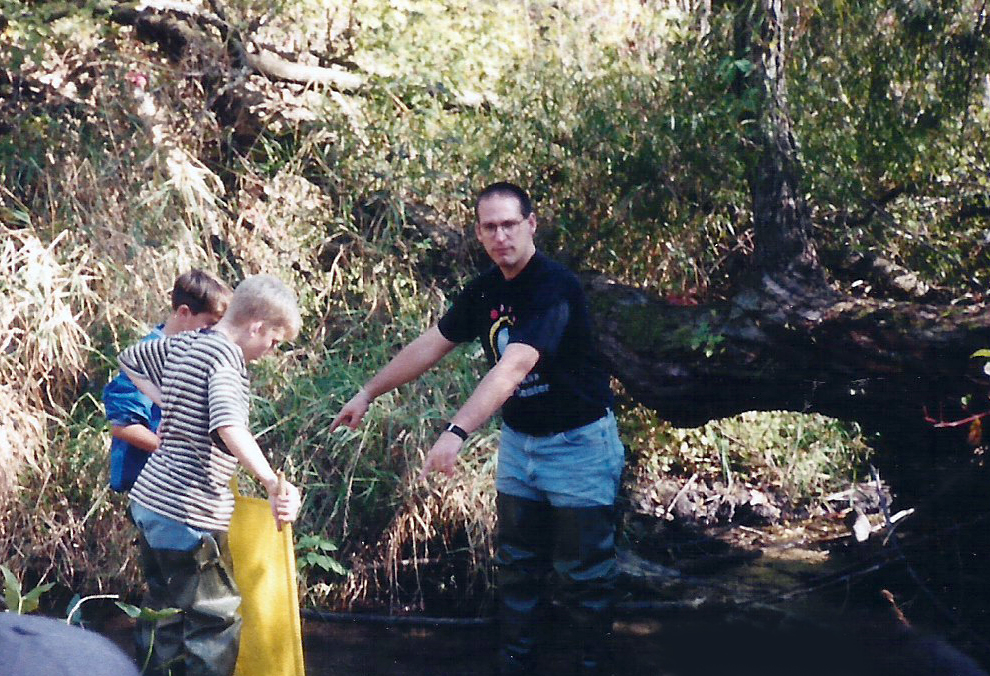
As the year progressed, students learned more about the Great Lakes, and specifically the Lake Erie watershed that they live in. Students learned about research that scientists aboard the R/V Guardian were completing. Research included a study of native and invasive species by Ruth Briland of The Ohio State University, a study of the presence of plastics by Sam Mason from State University of New York, and a study of chemicals and E. coli bacteria by Steve Mauro from Gannon University. This led to a better understanding of the importance of water quality. Macro-invertebrate studies and the use of water quality monitoring equipment lent for use by the U.S. Environmental Protection Agency allowed real-world application as students studied water in local tributaries of the Lake Erie watershed.
Follow-up allowed students to complete individual in-depth research related to invasive species of the Great Lakes. This information was presented with the use of visual projects such as PowerPoint, dioramas, or posters in class.
Students then applied what they had learned throughout the year by participating in an important stewardship project. With a unique partnership between our school and the Cuyahoga Valley National Park, students planted native oak trees for the park. Park ranger John DeMuth came to each 5thgrade science class and discussed how the invasive Privot plant forces out native plants along the Cuyahoga River. He explained that native plants have deeper root systems that hold the soil more securely and slow erosion of the river banks. He also explained that unlike the past when pollution was the main
problem in the Cuyahoga River watershed, invasive species are now the real concern.
In culmination, with the help of high school horticulture students from the Trumbull County Technical and Career Center and park rangers from the Cuyahoga Valley National Park, my students learned teamwork as they used gloves, eye protection, and loppers supplied by the national park to cut and stack the invasive plants along the river bank. National park employees later use controlled use of herbicides on the stumps to kill the plants. What an amazing year!
May 28th, 2015 by iisg_superadmin
INVASIVE SPECIES EDITION—Where we take a moment to explore the species that threaten the Great Lakes region.

The most widely introduced crayfish in the world, this crustacean is a jack of all trades, a species used by humans more than any we’ve covered so far. The red swamp crayfish is present on every continent but Australia and Antarctica, and it has a role in everything from research and education to fishing bait–even acting as a biological control in Africa to eliminate snails that are key to the life cycle of schistomiasis, a disease that can cause liver damage, infertility, and bladder cancer. However it is probably most well known as a dish, served on plates the world over, with almost 50,000 tons harvested each year in the U.S. alone.
But for all their use, red swamp crayfish still represent a threat to many ecosystems. Native to the warm still waters of the southeastern United States, they have been found as far northwest as Washington, and have established populations up and down the east and west coasts, as well as Illinois, Indiana, and Ohio. Commonly sold in pet stores, some of the spread can be contributed to careless release from private aquariums. But to the red swamp crayfishs’ credit, they are perfectly capable of spreading themselves, crossing miles of dry land from waterbody to waterbody, especially during wet seasons. And once they’ve established themselves, they’re almost impossible to eradicate.
A true survivor, the red swamp crayfish will dig chimney-like burrows into stream beds to cope with changing water levels, and be able to live in them for up to four months. Unlike most crayfish which are herbivores, it has been known to eat the eggs of fish and other crustaceans as well as snails, tadpoles, and small fish and amphibians in addition to plants. It can tolerate slightly brackish water,(another trait not shared with many other crayfish) and can grow quickly in small amounts of water – up to about five inches long and weighing up to 50 grams. All these attributes combine to make an animal that out-competes native crayfish, and causes stream-bank erosion by loosening up sediment with its burrows, resulting in higher turbidity and destroyed crustacean and insect nesting beds.
Currently there are no prescribed methods to remove red swamp crayfish from invaded waterbodies. In many states they are illegal to transport, and people are encouraged to report any sightings.
May 27th, 2015 by iisg_superadmin
When municipalities consider how to set water rates, they often look to neighboring communities as reference points. This can involve a lot of digging for data, which takes lots of time, and in the end, may be comparing apples with oranges.
In the Chicago area, communities can now benchmark their water rates much more easily and can set comparisons to other communities that make sense. Northeast Illinois is now one of eleven locations that has a free water rates dashboard providing utilities with the ability to compare their residential water and wastewater rates against multiple characteristics, including utility finances, system size, customer demographics, and geography.
The Northeast Illinois Water and Wastewater Rates Dashboard was created by the University of North Carolina Environmental Science Center with support from the EPA Smart Management for Small Water Systems—a nationwide project of the Environmental Finance Center Network (EFCN).
The water rates data that brings this tool to life was compiled by Margaret Schneemann, IISG water resource economist and Jennifer Egert, IISG summer intern, in a survey of 224 municipalities in the greater Chicago region’s seven counties—Cook, DuPage, Kane, Kendall, Lake, McHenry, and Will.
Managing water supplies sustainably starts with getting the price right.
One of the larger goals of the water rate dashboard is for municipal utilities to make informed choices when setting water rates so that critical rate-setting factors get their proper due. “Rate comparisons taken out of context can lead to peer pressure to keep rates low while neglecting other objectives such as cost recovery and conservation,” explained Schneemann.
Complementing the dashboard is the
Full-Cost Water Pricing Guidebook,
which offers local decision makers basic “how tos” on implementing rates that encourage efficient water use and support investment in aging infrastructure.
The water rate dashboards include dials showing comparative measures of average monthly bills, affordability, how well rates cover operation and maintenance costs, and the level of conservation that is encouraged.
“The dashboard promotes resource sustainability while also supporting financial security for the utility and economic development for the community,” added David Tucker, EFCN project director.
For utilities that make the decision to raise water rates to more sustainable levels, the dashboard provides data to back up these proposals. In designing this resource, it was made user-friendly for a variety of possible audiences, including city officials, reporters, and customers.
May 26th, 2015 by iisg_superadmin
We’re continuing our celebration of Illinois Invasive Species Awareness Month with a few words from Cathy McGlynn, coordinator of the Northeast Illinois Invasive Plant Partnership, on how invasive species have changed our aquatic ecosystems.
I am your local co-coordinator of the Clean Boats Crew, an aquatic invasive species education and outreach campaign that is a collaboration of Illinois-Indiana Sea Grant and the Northeast Illinois Invasive Plant Partnership. My colleagues and I care very much about protecting aquatic ecosystems, and we know the value of prevention when it comes to invasion.
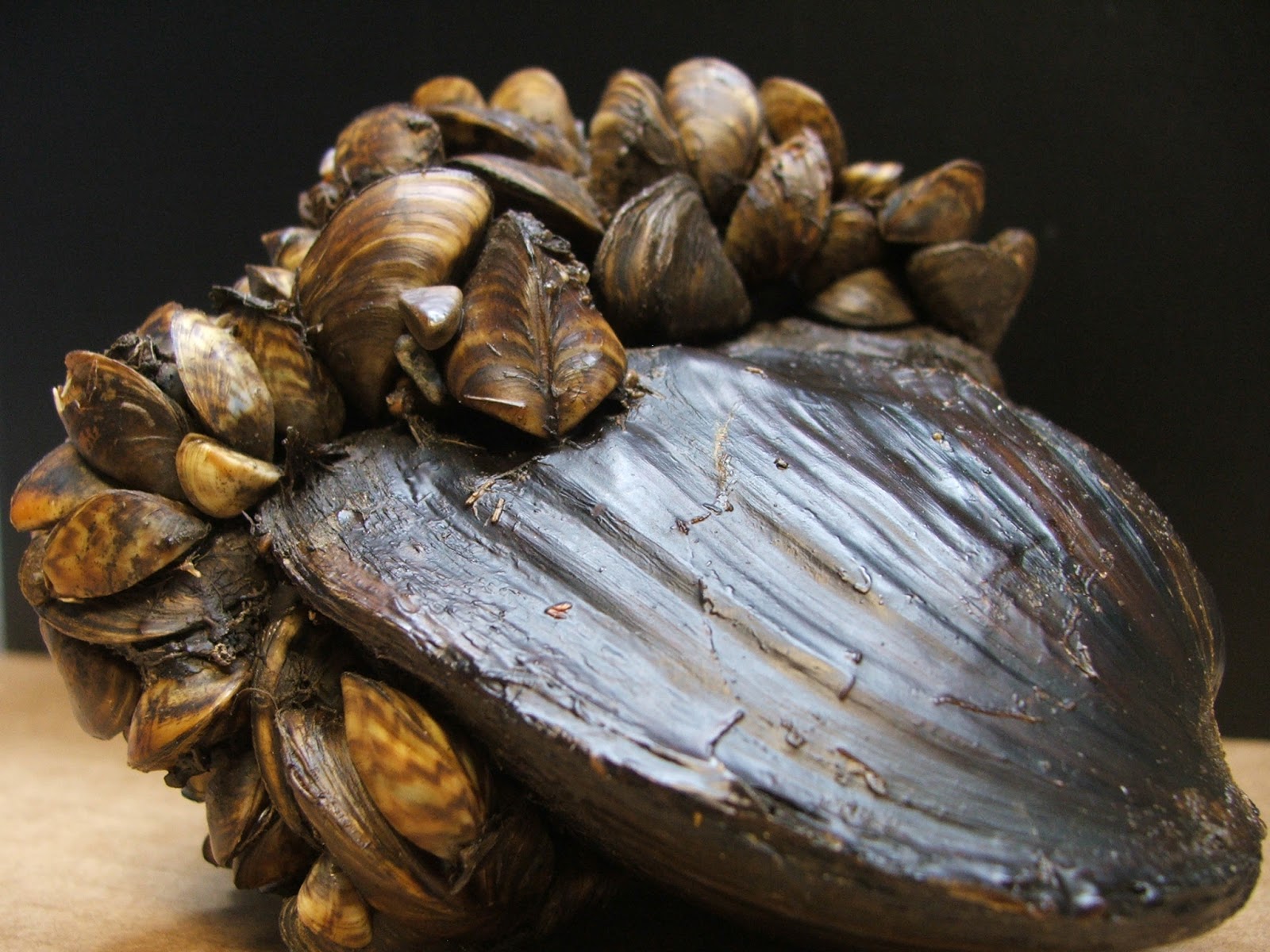
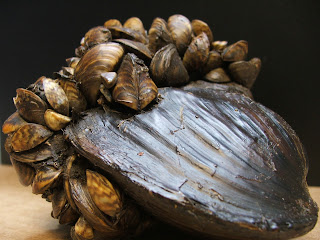 I haven’t always lived in the Chicago region. Once upon a time, I was a field biologist who lived in the Hudson River Valley and spent countless summer days canoeing to my research sites in the morning mist on the majestic Hudson River while being very careful to avoid tugboats and their wakes. I surveyed marsh birds and small mammals to see how invasive plants were impacting them. It turned out that native birds with special requirements, such as the marsh wren, were losing their nesting habitat to the invasive common reed. In between sites, I battled my way through beds of water chestnut, an aquatic invasive plant that has not yet been found in the Chicago area. I helped to survey and monitor native aquatic plants on the river with a team of volunteer kayakers because these plants provide important habitat for young fish, crabs, and insects and needed to be tracked. I was always careful not to walk around barefoot on the river’s beaches to avoid cutting my feet on zebra mussel shells or stepping on the barbed fruits of the water chestnut. During the time before I moved to this region, rock snot and Chinese mitten crab were starting to threaten the Hudson River and its wetlands.
After writing all of this, I realize that I don’t know a time, in my life anyway, that invasive plants and animals weren’t arriving and changing the Hudson River ecosystem.
Based on what I have learned in the five years I have been living near Lake Michigan, it seems that a similar history has unfolded for this amazing water body. I often wonder what it would be like if all invasions were prevented or ended upon arrival. I imagine a completely successful aquatic invasive species education and outreach program. The perfectly-executed Clean Boats Crew with 100 percent support from everyone with whom we’ve ever interacted and all the people with whom those anglers, boaters, and recreational water users communicated.
I imagine what Lake Michigan would look like and what creatures would be found there. I imagine a lake that does not have waters which have been filtered clean by zebra and quagga mussels and are clear and blue like the Caribbean. Rather I picture darker, murkier waters that contain all the tiny plants and animals that make up the phytoplankton and zooplankton that feed native fish and mussels.
.jpg) In this imaginary world, no one in the entire Great Lakes region is worried about the arrival of Asian carp and the lamprey eel has stayed in the Atlantic Ocean. Viral hemorrhagic septicemia is not found in any fish throughout the lake. And round goby has never out-competed sculpin and logperch. Anglers happily fish native and non-invasive stocked fish and boaters readily remove plants and animals from their boats, drain their bilges and bait buckets, and dry their vehicles for five days because that is what needs to be done to protect our precious aquatic resources.
In this imaginary world, no one in the entire Great Lakes region is worried about the arrival of Asian carp and the lamprey eel has stayed in the Atlantic Ocean. Viral hemorrhagic septicemia is not found in any fish throughout the lake. And round goby has never out-competed sculpin and logperch. Anglers happily fish native and non-invasive stocked fish and boaters readily remove plants and animals from their boats, drain their bilges and bait buckets, and dry their vehicles for five days because that is what needs to be done to protect our precious aquatic resources.
I imagine people stopping by our Clean Boats Crew booths at marinas and fishing tournaments in northeastern Illinois and northwestern Indiana. Fortunately, that at least can become reality later this month.
May 18th, 2015 by iisg_superadmin
It was a chilly May 12th, cloudy and windy as well. But 29 sixth graders from West Side Middle School in East Chicago, Indiana came to nearby Roxana Marsh to experience what the outdoors has to offer, learn new things, help with the cleanup and restoration of the natural area, and enjoy the afternoon.
Roxana Marsh is part of the larger Grand Calumet River Area of Concern, which has been undergoing dredging through the Great Lakes Legacy Act over the past six years. The marsh section of the project was completed three years ago with the removal of 600,000 cubic yards of sediment.
This accomplishment was celebrated with a press event attended by government officials and local school children. Those middle schoolers left their legacy in perennial plants that are now thriving along the marsh. This year’s class is the third group of gardeners in what may well become an annual tradition.
In addition to planting natives, the students learned the basics of birding, explored the small community of life in sediment, and manned trash bags for garbage detail. There were water beetles, egrets, killdeer, toads, dragonfly nymphs, and more to experience.
Throughout their afternoon tour, the 6th graders were guided by experts from Audubon Chicago Region, U.S. EPA, The Nature Conservancy, Shirley Heinz Land Trust, Indiana’s departments of Natural Resources and Environmental Management, Northwest Indiana Regional Planning Commission, Dunes Learning Center, and Illinois-Indiana Sea Grant.
The first surprise for the students was just how close the natural area is to their school and their world. “They had no idea that this was here or about the dredging and restoration, said teacher Linda Padilla. “They were sure we would be going someplace farther away.”
Last June, she took part in a one-day workshop at Purdue University Calumet, which introduced the Helping Hands curriculum to 25 local educators. Helping Hands activities are ideally suited to schools in Areas of Concern that are going through the cleanup process—they provide opportunities to directly engage students in the larger project. The workshop also included a visit to several sites on the Grand Cal to see the dredging work in progress as well to walk around a finished site—Roxana Marsh.
Caitie McCoy, IISG environmental social scientist, has been helping keep residents informed during the dredging. She saw the Grand Cal project as an opportunity to connect students with their environment.
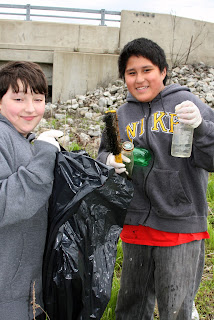 “The cleanup and restoration of the Grand Calumet River is brightening the northwest Indiana landscape,” she explained. “This work transforms space into places that students can visit, perform stewardship work, and develop pride in their local environment. Environmental educators teach students that nature is in their backyard, but for these students, high quality nature is in their backyard, right here in East Chicago, Indiana.”
At one point, the Grand Cal was referred to as the most polluted river in the country. Through the remediation process, more than 2,000,000 cubic yards of sediment have been removed from this waterway, which runs through a highly-populated region. If funding from the Great Lakes Restoration Initiative continues and non-federal cost share partners are secured, the river work could finish as early as 2019.
May 14th, 2015 by iisg_superadmin
INVASIVE SPECIES EDITION—Where we take a moment to explore the species that threaten the Great Lakes region.
They may not be what comes to mind when you think of invasive carp, but grass carp can have drastic and lasting impacts on aquatic ecosystems and water quality. Originally from eastern Asia, they have been introduced the world over as a biocontrol for aquatic weeds and can now be found in over 70 countries.
This wide range is made possible by their versatility—not unlike the hydrilla they are sometimes employed to eliminate. Grass carp can live in water temperatures from below freezing to over 100ºF, can survive in brackish waters, and are able to tolerate low-oxygen environments.
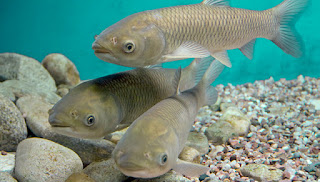 While they live mostly in slow moving and still waters, eggs are spawned in fast rivers, and must remain suspended for two to four days before they hatch. From there, grass carp grow quickly—as much as 10 inches in the first three months. An adult can grow to be upwards of 4 feet in length and more than 50 pounds on a diet of mostly aquatic weeds. But they have also been known to consume detritus, insects, and other invertebrates as well.
Grass carp were first brought to the U.S. in 1963 when they were imported from Malaysia and Thailand to aquaculture facilities in Alabama and Arkansas. Their first release into the wild is believed to have happened three years later when some escaped from the U.S. Fish and Wildlife Service Fish Farming Experimental Station in Stuttgart, Arkansas. Planned introductions began in 1969 in an effort to control nuisance plants. By the end of the 1970s, grass carp had been introduced in 40 states. Today it can be found in 45 states, with well-established populations throughout the Mississippi River Basin.
Grass carp are a highly regulated species, and for good reason. Because they are so adept at consuming plants, there is a risk that these veritable aquatic lawnmowers might leave a waterbody completely devoid of plant life and wipe out the food supply for other fish, insects, and waterfowl. A lack of plant life can also spur on algal blooms, which in turn lower oxygen levels. And without roots to keep sediment secure, the water is likely to become muddied, and spawning beds for other fish can be destroyed.
Because of these and other risks, grass carp used for weed control are sterilized by shocking the eggs with drastic changes in either temperature or pressure. But this process is not 100 percent effective, and fish sometimes escape into the wild. In some states, including Illinois, the use of grass carp is restricted to private ponds or pools. Those thinking about using the fish for personal use are encouraged to explore other weed-control options.
May 11th, 2015 by iisg_superadmin
Steve Park was one of 15 Great Lakes educators to set sail on Lake Erie last year for the annual Shipboard Science Workshop. Today, we hear a little of what he and his 7th grade students have been up to since.
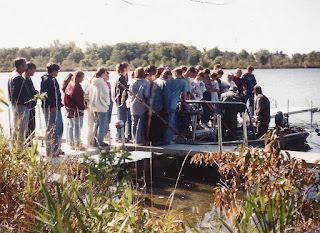 As a veteran teacher of enthusiastic middle school students, I adhere to Albert Einstein’s quote, “I never teach my pupils. I only attempt to provide the conditions in which they can learn.”
This school year started just like the first 20 years of my teaching career, with our study of environment science. However, it didn’t take long for my students to realize that the learning experiences this year were going to be extra special. Armed with a weeks worth of intense professional development while living on the R/V Lake Guardian motoring around Lake Erie, I had the resources, experiences, knowledge, and support to provide my students with the incredible conditions necessary for them to learn.
When teaching about the environment and stewardship, I have two goals. First, I want students to know specifically how they impact their local and global environments. Second, I want students to know how they can have a positive influence on their local and global environments. With that in mind, my students began their study on water ecology by conducting a video conference with individuals aboard the Lake Guardian collecting water samples in Lake St. Clair. Students learned about life on the Lake Guardian, research that is being done on the lake, and the responsibilities of the scientists.
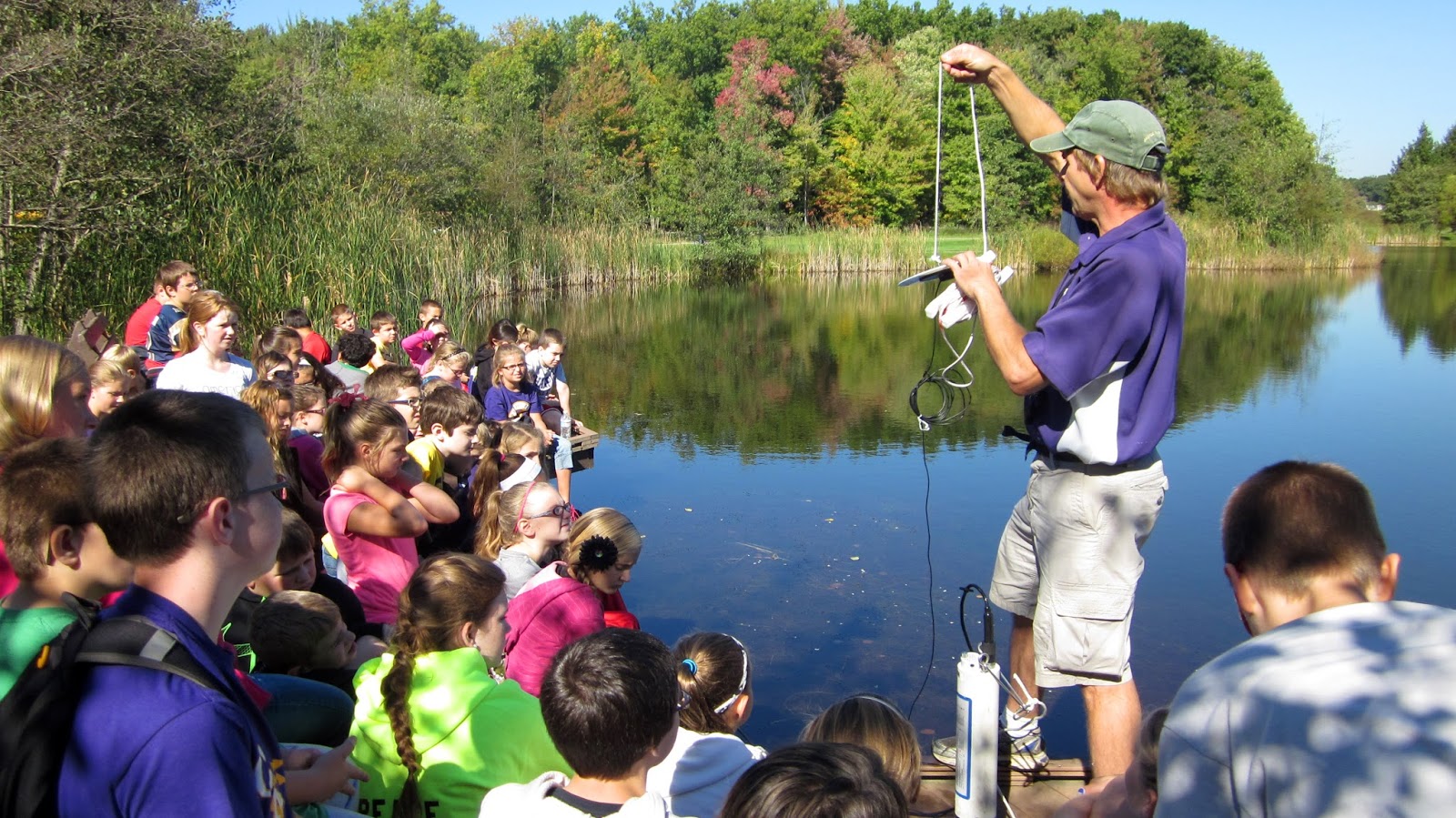
Our focus then turned to our own outdoor classroom, where we have 36 acres of land, a large river, and a couple of smaller creeks. I intentionally set up conditions where my students had numerous opportunities to learn about the physical, chemical, and biological characteristics of the environment. In addition to traditional sampling techniques, my students conducted independent research projects. For instance, one group wanted to know if the diversity of macro invertebrates changed the farther you got from shore. To test their hypothesis, they created Hester-Dendy samplers and deployed them at various locations and distances from shore. Another group wanted to see if they could use all-natural materials to create a filter capable of reducing the turbidity of our river water to the World Health Organization standard of 5 ppm.
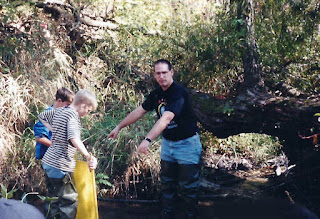
Currently, because of my interactions with Dr. Sam Mason on board the Lake Guardian last summer, my students have received a grant to study the plastic microbeads in our river water. Students will design, construct, and deploy collection seines to help determine the prevalence of these plastics in our water ecosystem.
As a society, we have a long, uphill climb when it comes to improving the quality of our wonderful Great Lakes. However, I am confident that the experiences I had during the Lake Erie Shipboard Science Workshop, the connections I made with incredibly supportive people, and the high quality curricular materials and equipment I received will provide my students with the conditions in which they can learn. This, in turn, will make that climb a little bit easier.
***Photo A: Students hear from a fishery biologist about the importance of fish stocking and how the technique is being used to study invasive species like Asian carp.
***Photo B: Students get their hands dirty learning about macro invertebrates.
May 7th, 2015 by iisg_superadmin
INVASIVE SPECIES EDITION—Where we take a moment to explore the species that threaten the Great Lakes region.
What was originally seen as a decorative and easy-to-maintain aquarium plant is now one of the most noxious weeds in the U.S. Sold under the name “Indian star-vine” in the late 1950s, Hydrilla verticillata was first introduced after live samples were shipped from Sri Lanka to a Florida aquarium dealer. More than half a century after careless disposal into Florida’s waterways, hydrilla can now be found throughout the south and along the east coast, with populations extending inland to the Great Lakes region. Isolated communities have also been found in Idaho and Washington.
This spread is not surprising since hydrilla is unusually hardy and versatile. It can grow in as little as a few inches of water or as much as 20 feet. It requires very little light to thrive and is just as happy in a nutrient-rich environment as one deprived of nutrients almost all together. It can even grow in slightly salty conditions or in water as hot as 81°F. And while it can spread through seeds, hydrilla is also able to grow from stem fragments as well as tubers that can lie dormant for up to four years. Taken together, it’s little wonder that this perennial is found on every continent except Antarctica.
Hydrilla’s unique biological characteristics give it a leg up over many native plants in the Great Lakes region. For example, its early sprouting season and ability to grow rapidly leaves less light for natives later in the spring, making it harder for them to grow once they begin to sprout.
These same characteristics also make it a nuisance to other aquatic wildlife and humans. Growing as long as 30 feet, hydrilla vines form dense mats that alter the water’s pH and oxygen levels, which in turn makes it difficult for some fish species to reproduce and grow. These mats can also impede irrigation, hinder recreation, and clog water intakes to power plants.
Efforts to contain hydrilla have been historically cautious out of fear that the robust plant may mutate or develop a resistance to chemical herbicides—a fear that was realized when fluridine-resistant hydrilla was found in Florida. Today the Asian hydrilla leaf mining fly, weevils, and even the invasive grass carp are used to manage hydrilla invasions. These and other methods cost states millions of dollars a year.
In recent years, Illinois and Indiana have banned the sale, barter, and transport of hydrilla. Water gardeners, aquarium hobbyists, and others can learn how to recognize the plant—and distinguish it from the invasive Brazilian elodea—with our species WATCH card.
We’ll have more species spotlights on aquatic invaders throughout May in honor of Illinois Invasive Species Awareness Week.
May 5th, 2015 by iisg_superadmin
Last month, the U.S. EPA awarded University of Illinois at Chicago and University of Illinois at Urbana-Champaign first and second prizes in their Campus RainWorks Challenge. The national competition recognizes student-led green infrastructure plans and projects to manage stormwater on campus. Eliana Brown, has been following the UIUC plan from the beginning.
The first time I heard that landscapes could be designed to improve water quality, it was a revelation. I knew about the highly-effective bioremediation treatment cells at industrial facilities. But, the fact that the landscapes we walk through in our daily lives could have that power was exciting. What came to be known as “green infrastructure” is an elegant blend of landscape architecture and civil engineering that places of higher learning should embrace.
The EPA Office of Water seems to agree. Since 2012, it has invited students to design innovative green infrastructure projects to show how managing rainfall in a more natural way can benefit their community and the environment.
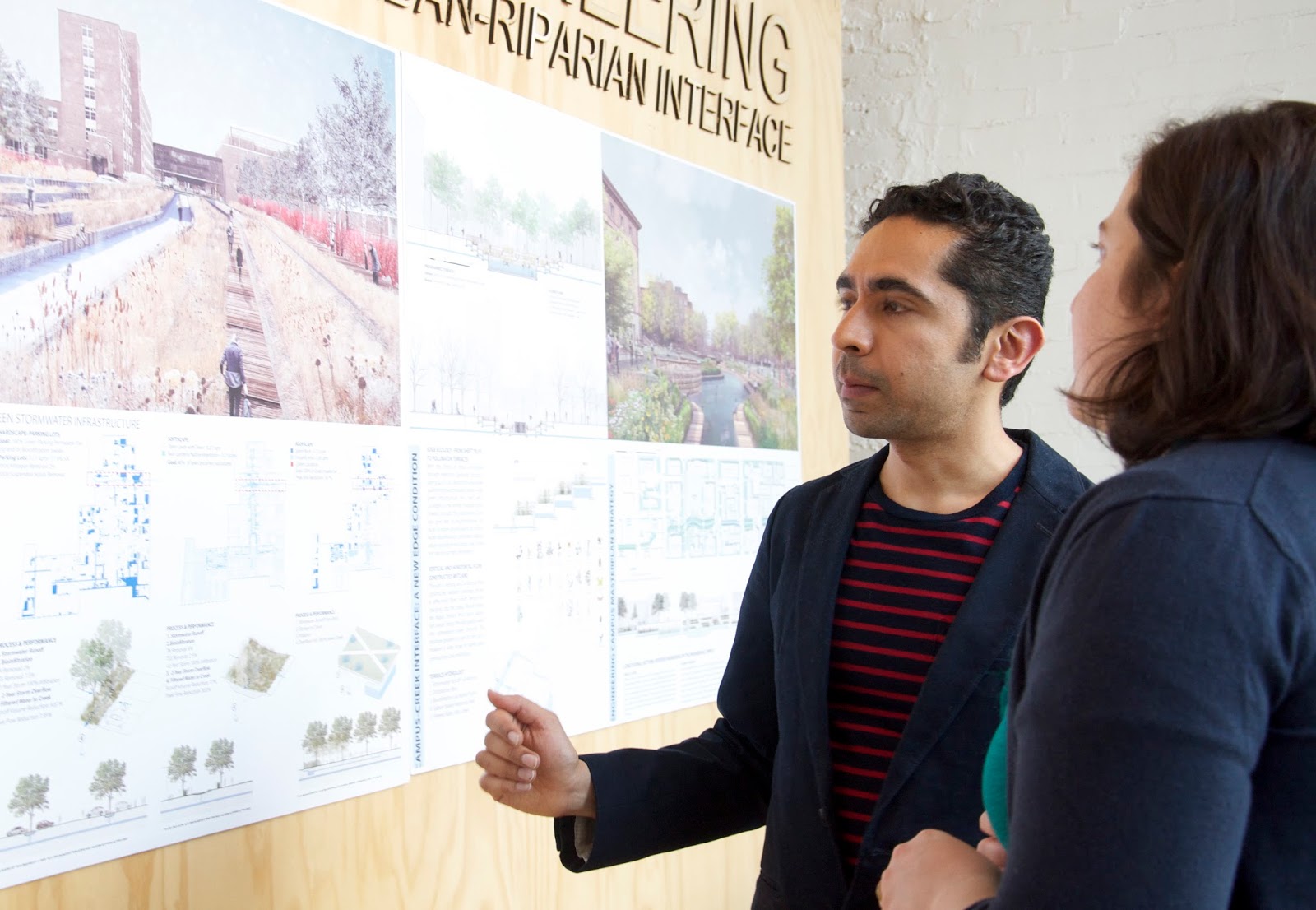
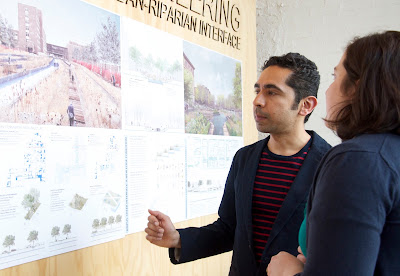 Because I’m fond of the small creek running through the University of Illinois’ engineering college—known as Boneyard Creek—I have always wanted to see an entry from my campus. This year, I got my wish and then some. U.S. EPA announced on Earth Day that “Reverse Engineering: The Engineering Campus as Catalyst,” a master plan designed by a multi-disciplinary team of UIUC students under the direction of landscape architecture instructor Tawab Hlimi earned 2nd place. According to the EPA, 64 teams from 23 states submitted entries.
The plan focuses on improving water quality in Boneyard Creek by installing green streets, roof catchments, bioswales, and rain gardens in the surrounding area. Native plants and pollinator habitats are also proposed to boost the creeks’ ecological role and create more recreational opportunities.
Building off this success, Hlimi and teaching assistant Faezeh Ashtiani showed the plan along with the work of their spring semester students in an exhibit called “Reverse Engineering: Reconfiguring the Urban-Riparian Interface” at [CO] [LAB] in downtown Urbana. Students expanded on the Campus RainWorks plan upstream and in other parts of campus, including three visions of Dorner Driver Retention Pond that add water quality filtration to the existing water storage function.
Looking to the future, Hlimi has applied for a Student Sustainability Committee grant to build a multi-purpose demonstration rain garden.
.

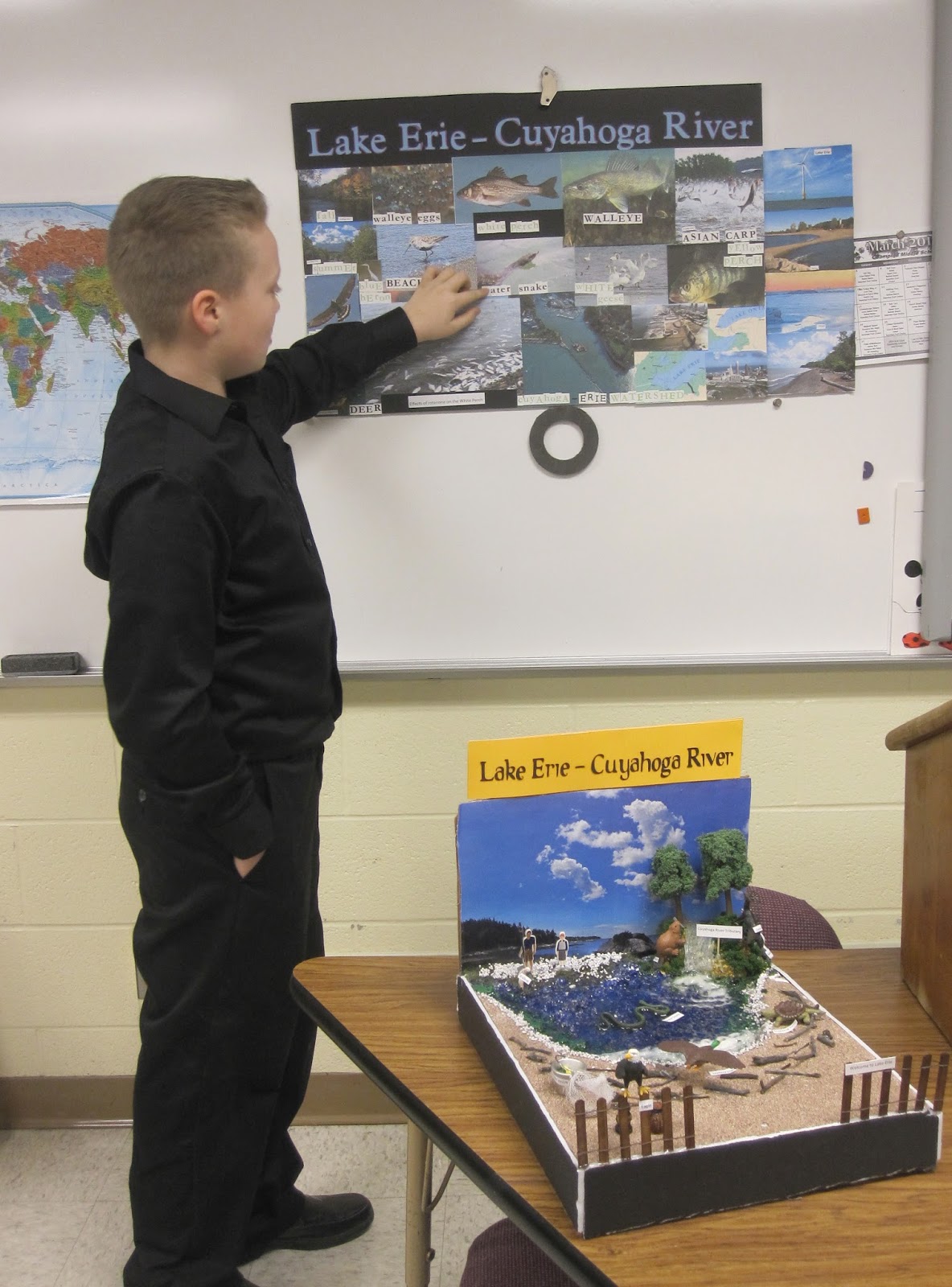 Although I knew the experience on the R/V Guardian was going to be amazing, I never dreamed that the workshop would have such an impact on my students. Towards the beginning of the school year my class spends a lot of time learning about the importance of qualitative and quantitative observation. This year my students were able to apply their understanding of metric measurement while learning about the Great Lakes. Students were engaged in an activity where they had to use yarn to outline, label, and organize the shorelines of the Great Lakes to scale. After graphing the shoreline metric distances, students compared the total shoreline distances of the Great Lakes to the U.S. shoreline along the Atlantic Ocean, Pacific Ocean, and the Gulf of Mexico. Students then compared and contrasted the size of the Great Lakes to the total volume of water each lake holds, the metric mass of commercial fish caught, and the human population surrounding each Great Lake. This activity enabled me to reinforce the importance of metric measurement as we used metric rulers, triple-beam balances, and graduated cylinders in class. This also set the stage for in-depth discussion of the Great Lakes and the problems they face.