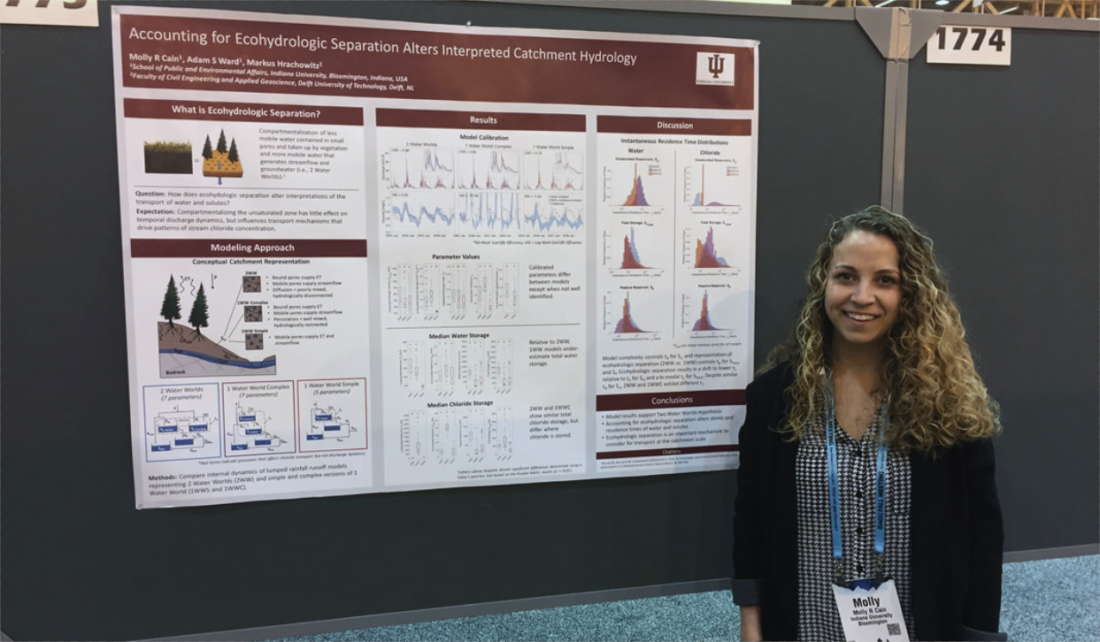
Illinois-Indiana Sea Grant (IISG) is pleased to announce Molly Cain as a Knauss fellow for the Class of 2021. Molly is a PhD student at Indiana University and studies how agricultural modifications to landscapes affect the delivery of water and nutrients to waterways, and, in turn, the role of natural features like floodplain wetlands in improving water quality. Molly recently finished the Knauss placement process, where fellows typically travel to Washington, DC to interview with government agencies and learn where they will spend the next year. Below, Molly shares her experience from the first virtual placement week.
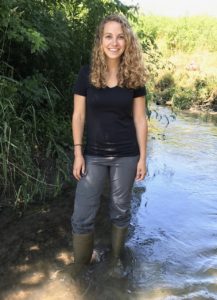 After over 40 video calls with 20 host offices, I was excited to receive my fellowship placement with NOAA Research’s Congressional Analysis and Research Division (CARD). While placement week usually requires finalists to run around DC meeting with potential hosts, this year was a bit different. Instead of navigating a bustling city, I sat at my kitchen table with my laptop and a mug of coffee completing up to 8 virtual interviews a day, often back-to-back. While easier on the feet, it was still a grueling week. However, it was also an inspiring one. I had fun getting to know so many incredible people working within the federal government on water resources and environmental issues. I only wish I could work in all the offices I interviewed with!
Ultimately, I was drawn to the CARD team and was ecstatic to be placed there. My main goal during the fellowship year is to learn how scientific knowledge feeds into the policy-making cycle. As a member of the CARD team, I will participate in this process directly. CARD’s mission is to ensure that Congress is aware of NOAA’s research activities and understands how that research benefits the country. They translate scientific information for a congressional audience and interpret congressional action for a scientific audience. Effectively communicating science to policymakers is increasingly valued within the scientific community and important for enhancing the impact of scientific research. I am excited to spend a year honing these skills. I also look forward to representing the Illinois-Indiana Sea Grant and working at NOAA again. My undergraduate internship through NOAA’s Hollings Scholarship program was a formative experience that led me to pursue a career as a researcher working on water resources issues. Returning to a NOAA office nearly 7 years later feels like I’ve come full circle, in the best way possible.
Illinois-Indiana Sea Grant is a part of University of Illinois Extension and Purdue Extension.