If you tuned in to “Off the Hook: Extreme Catches” this past Sunday on Animal Planet you got a chance to see Asian carp, a major aquatic invasive concern, as well as some people who are fighting the flying fish.
“The Animal Planet show that spent four days filming on and around the Illinois River last summer for a feature on the acrobatic insanity of everyone’s least favorite invasive fish, the Asian carp, will be shown Sunday.
“Off the Hook: Extreme Catches,” with host/professional wrestler Eric Young presents “Carpocalypse Now” at 7 p.m. Sunday. Greg Gephards, who owns Schooners on War Memorial Drive and had a role in the production of the program, is hosting a party for the occasion.”
A lot of people might know that Illinois-Indiana Sea Grant’s primary mission is to help protect and preserve the Southern Lake Michigan waters. But most people might not know about the many ways our program goes about doing just that.
With the help of staff members, researchers, educators, and more, we’ve produced a video that offers a glimpse at the program and the ways we work for and with the public to ensure safe waters and healthy ecosystems in both states.
Watch the video below to learn more about Illinois-Indiana Sea Grant, and share it with anyone who cares about keeping Lake Michigan healthy, beautiful, and safe.
Much of the press and media attention on the growing Asian carp threat has been focused on the Chicago canal and Lake Michigan. But that is not the only potential entryway for the invasive fish to enter the Great Lakes.
“At the top of that list of secondary pathways is an area in northern Indiana called Eagle Marsh, which separates the Mississippi basin’s Wabash River from the Maumee River basin that feeds Lake Erie. The two watersheds have a history of merging in extreme rains, so to reduce the threat of carp making the jump into Lake Erie, the federal government has erected a fence between them.”
Read the complete article linked above for more information about other potential pathways that Asian carp might take.

Last week, Illinois-Indiana Sea Grant had a two-day meeting and retreat at the
Indiana Dunes State Park in Chesterton, Indiana. In addition to devoting some time to planning and discussing current and future projects, we were treated to a couple of informative and scenic tours in the area, learning more about the extensive restoration work to protect the dunes, the state park and national lakeshore, and the water quality of Lake Michigan.

Staff members were able to join National Park Service workers on-site to learn about and get their hands dirty at the
Great Marsh Restoration Site not far from the dunes. Once very large, the remaining Great Marsh area is approximately 12 miles long and harbors a wide range of plants, animals, insects, and other beneficial organisms. Those native species are threatened by invasive species, however, and work is ongoing to plant and establish native species to bolster the wetlands’ resistance to invasive species and restore the natural balance of the area.
Informative, fun, and muddy, the chance to do on-the-ground work in restoring this watershed was a valuable experience for everyone involved, and offered a practical reminder of the importance of restoring and protecting these areas.
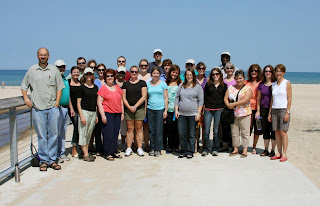
There are more terrific photographs of the restoration project and the lake shore on
Illinois-Indiana Sea Grant’s Facebook page. Head over and check them out, and be sure to plan a visit to the park for yourself.
With the State of Michigan taking control of a dam on the Manistique River comes an opportunity to prevent an invasive species from breeding in the river and increasing in numbers.
“That will allow the federal government to build a new barrier there to keep sea lampreys from breeding in the river. Managers of the fishery expect that will bring the lamprey problem under control in Lake Michigan.”
Read more about the plan at the article linked above.
Many educators incorporate plants and animals into their classrooms for educational purposes, but those plants and animals have the potential to become or transport invasive species to new areas.
“The study, led by Oregon Sea Grant Extension’s invasive species expert Sam Chan, was presented at this week’s national meeting of the Ecological Society of America in Portland.
‘Live organisms are a critical element for learning and we don’t want to imply that they should not be used in the classroom,’ said Chan. ‘But some of our schools – and the biological supply houses that provide their organisms – are creating a potential new pathway for non-native species to become invasive.’”
There is more information available at the link above, and at our page about safely disposing of classroom specimens.
As an amendment to the Boater Registration and Safety Act signed into law by Illinois Governor Pat Quinn, aquatic plants and animals would need to be removed from seaplanes and watercraft before moving between bodies of water. The requirement is an important step in preventing the spread of aquatic invasive species throughout the state of Illinois, as well as between states and bodies of water where these vehicles might travel.
You can read a short synopsis of the legislation from our friends at Illinois Invasive Species Awareness Month
here, and read the full text of the legislation
here.
Illinois-Indiana Sea Grant researchers and specialists have been able to extend internship opportunities to four students this summer. Working directly with our staff and researchers, the students will get hands-on experience in their field while helping us pursue ongoing projects. Read more about this year’s group of interns and the issues they’ll be helping us address and investigate below.
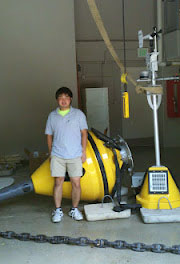
Naoki Wada is a fourth-year Mechanical Engineering student studying at Purdue University, and is interested in how ocean waves can be harnessed as a sustainable energy resource.
As a native of Japan, Naoki was particularly struck by the results of the 2011 earthquake and tsunami: “My home country, Japan, where the supply of natural resources is very scarce, experienced one of the largest earthquake and tsunami last year, putting most of their nuclear power plants out of operation due to the safety concerns and…forcing the nation to rethink their future energy security. As an island nation surrounded by the ocean, utilizing oceanic energy by means of wave/tidal/current/power generation can be a remedy.” Naoki feels that the United States can also benefit from technology related to ocean-generated power; in addition to providing sustainable energy, it doesn’t require as much land as solar or wind farms and may be more palatable to planners and developers. After his graduation at the end of this year, Naoki intends to pursue graduate work in this field.
During his 2012 summer internship, Naoki is working with IISG-funded researcher Cary Troy of Purdue University and IISG staffers Carolyn Foley and Angela Archer to deploy a real-time monitoring buoy off of Michigan City, IN. The buoy will beam information about wave height, water temperature, wind direction, and other variables to the web every 10 minutes. Naoki is responsible for getting the buoy up and running so that IISG and Purdue University can continue to deploy it every year in the same location.
Sahana will be a senior at the University of Pennsylvania next year, and is majoring in Environmental Science with minors in Psychology and Economics. Sahana grew up in the Chicago area and considers Chicago her home, making this internship a terrific opportunity to work on issues close to her heart.
Sahana is working at the Chicago Metropolitan Agency for Planning (CMAP) this summer with IISG/CMAP Water Resource Economist Margaret Schneemann to create an outdoor water use manual for the 80 member-communities of the Northwest Water Planning Alliance (NWPA) in Illinois. The NWPA Outdoor Water Use manual is meant to educate homeowners about the consequences of outdoor water use and provide information on various approaches that homeowners or their communities can take to conserve water by reducing their outdoor use. The manual also contains information on a lawn-watering ordinance that the NWPA is recommending its member communities to adopt.
Meredith Brackett
Meredith is a recent graduate of the University of Illinois Urbana-Champaign, with a bachelor’s degree in Earth Systems Environment and Society. While planning to attend graduate school in the future, her internship with IISG will allow her to gain hands-on experience in the field as well as helping her find areas and issues for future study.
Meredith explains more: “I am working with Dr. Paris Collingsworth this summer and we are conducting a study to compare zooplankton community data collected by the Great Lakes National Program Office (GLNPO) with data collected by the Interagency Lower Trophic Level Monitoring Program of the Lake Erie Committee Forage Task Group (LEC-FTG). We are using statistical models to calculate zooplankton community similarity metrics at specific sample sites through time and space. This study will determine whether the LEC-FTG survey is capturing zooplankton community characteristics that are unique to those captured by the GLNPO data set.”
Lainey Pasternak
Lainey will be entering her junior year at the University of Illinois this fall, majoring in Natural Resources and Environmental Sciences, with a concentration in Resource Conservation and Restoration Ecology.
As an intern with IISG, Lainey will be working to help increase recreational water user knowledge of and education about steps to prevent aquatic invasive species from spreading in the Southern Lake Michigan area. She will also be designing and conducting a survey to evaluate Illinois-Indiana Sea Grant’s current outreach efforts, and use those results to formulate a formal research report and academic poster presentation by the end of the summer. Lainey will then be presenting the findings and the entire scope of her internship work at the 2012 Illinois Water Conference at the University of Illinois.
“Becoming an intern with IISG’s Aquatic Invasive Species Outreach team has allowed me to acquire a stronger knowledge base about the general AIS issues and management in the Great Lakes area, the role of recreational water users in their spread, and the importance of evaluating outreach campaigns,” Lainey says. “By surveying and speaking directly with the public, I will gain further insight into how to communicate current complex environmental issues with and to others. Overall, I am very excited to be a part of the Illinois-Indiana Aquatic Invasive Species Outreach Team this summer and expect to make a difference in this area for our future clean waters.”
We look forward to the results of the hard work from our interns, and sharing their efforts in another post later this year. Check back to see how these projects are progressing.
According to some of the latest research, a population of Asian carp as small as 20 in number could be enough to establish a damaging population of the invasive species in the Great Lakes.
From The Atlantic Cities:
“The report notes that this small population would have a greater than 50 percent chance of successfully spawning if they were to find a viable river access point to the lakes. Lake Michigan is the most likely target, and the Chicago Area Waterway System of rivers, sanitary canals and locks would be the most likely entry point. Already, the environmental DNA of carp has been detected as close as six miles from Lake Michigan. Some worry that the carp’s entrance into the Great Lakes is inevitable.”
Read more, including links to the full report and additional information, at the link above.