The National Oceanic and Atmospheric Administration’s National Sea Grant College Program is pleased to announce finalists for the 2024 class of the John A. Knauss Marine Policy Fellowship program. The 84 early-career professionals selected will be placed in federal government offices throughout Washington, D.C., and join the over 1,600 people who have participated in the program since its inception in 1979.
The fellowship is a one-year paid opportunity for current and recent graduates from advanced degree programs to apply their scientific knowledge and experiences to lasting careers in the sciences, policy, and public administration.
“Knauss fellows over the years have consistently and thoughtfully applied their unique knowledge and skillsets to developing solutions to issues that affect people across the nation,” said Jonathan Pennock, Ph.D., National Sea Grant Office director. “We look forward to welcoming the incoming class of fellows and have no doubt that they will continue the tradition of serving through science.”
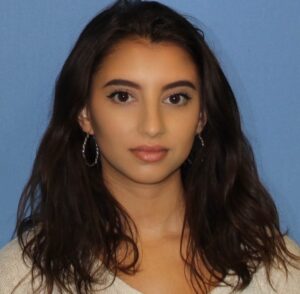
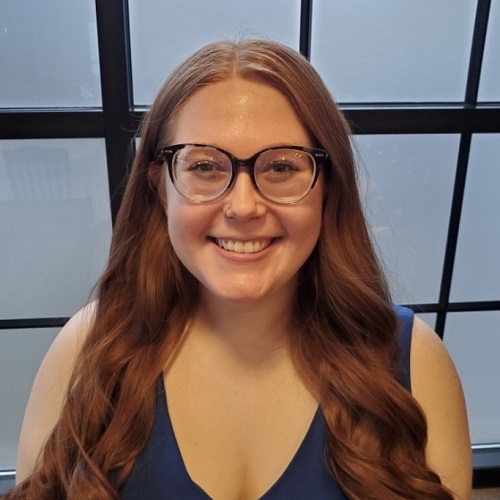
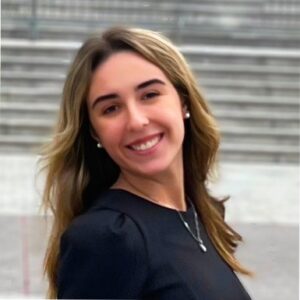
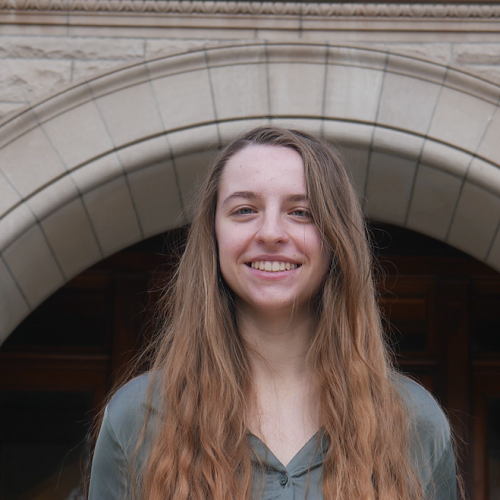
Illinois-Indiana Sea Grant (IISG) is pleased to announce Samantha Garcia, a Masters candidate in the University of Illinois Department of Natural Resources and Environmental Science as a 2024 Knauss finalist. Garcia will bringing her background in detecting environmental DNA for the invasive cattail species Typha domingensis, her previous fellowship experience in applied statistics, and her work bringing science and communications to marginalized communities to this fellowship.
“I am filled with excitement, pride, and gratitude upon receiving the opportunity to participate in the Knauss Fellowship because it represents the start of my career in environmental policy, but also represents the culmination of years of hard work and dedication to environmental science, stewardship, and sustainability,” said Garcia. “Although I have a passion for science and have enjoyed conducting research in the field of aquatic ecology, I look forward to applying my scientific background to environmental policy and management through this fellowship.”
IISG Director Tomas Hook commented, “We are super excited to have Samantha Garcia join us as a Knauss fellow this upcoming year. The Knauss Marine Policy Fellowship continues to be a great program; providing real-world policy and management training while having top-notch graduate students support federal agency and legislative office initiatives.”
This year’s class features students and recent graduates from 66 universities, including 12 minority-serving institutions. The 84 finalists represent 30 of the 34 Sea Grant programs across the country and have completed years of coursework in fields ranging from zoology, oceanography, and marine science to environmental management, public policy, and engineering. Among the 2024 Knauss Finalist class, 43 finalists are completing Ph.D. programs, 37 are completing master’s programs, and four are completing J.D. programs.
Curious about the Knauss fellowship? The Knauss blog features stories from former Knauss cohorts, sharing insights on fellowship experiences and their journeys to D.C. Information about the Knauss fellowship and other graduate student opportunities can be found on IISG’s fellowships page and also by contacting Angela Archer, campus engagement coordinator, at amcbride@purdue.edu.
The Sea Grant Knauss Fellowship provides a unique educational and professional experience to graduate students who have an interest in ocean, coastal and Great Lakes resources and in the national policy decisions affecting those resources. The fellowship, named after one of Sea Grant’s founders and former NOAA Administrator John A. Knauss, matches highly qualified graduate students with hosts in the legislative and executive branch of government located in the Washington, DC area, for a one year paid fellowship.
Curious about the Knauss fellowship? The Knauss blog features stories from former Knauss cohorts, sharing insights on fellowship experiences and their journeys to DC. Students enrolled in educational institutions in Illinois and Indiana should apply for the fellowship through Illinois-Indiana Sea Grant (IISG). Information about the fellowship and other graduate student opportunities can be found on IISG’s Fellowships & Scholarships page or by contacting Angela Archer, campus engagement coordinator, at amcbride@purdue.edu.
Hannah Lohman, 2023 Knauss Fellow
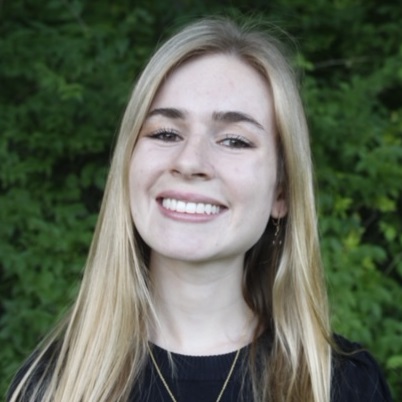
Hannah Lohman
Hannah’s placement in the NOAA Climate Program Office Climate Adaptation Partnerships (CAP) program has provided opportunities to foster her growth as a climate and sustainability professional. The CAP program is an applied research and engagement program that supports sustained, collaborative relationships that help communities build lasting and equitable climate resilience in the U.S. Through this placement, she has had the opportunity to learn about the federal research grants process, the importance of research and engagement developed with community partners, environmental justice and equity, and interdisciplinary approaches necessary to tackle the complex societal issues surrounding adaptation planning.
During these six months, Hannah has participated in writing and funding research opportunities (including projects funded by the Bipartisan Infrastructure Law), attended conferences and events related to climate change and adaptation, and contributed to the planning of cross-network activities including a justice, equity, diversity, and inclusion workshop series and a 3-day network meeting in Seattle. Her team has also provided the opportunity to pursue independent projects of interest. Hannah is leading strategic partnership development with federal agencies, international organizations, and private sector organizations to understand their programmatic approaches to climate adaptation efforts. Hannah is also organizing and serving as the primary convener of a Town Hall session at the American Geophysical Union Fall Meeting focused on equitable engagement with frontline communities.
Looking ahead, Hannah will be traveling to Johannesburg, South Africa for the 1st Annual International Water Association Non-Sewered Sanitation Conference to present her PhD research, to Seattle for her team’s annual network meeting, and to San Francisco for the American Geophysical Union Fall Meeting. She is looking forward to sharing her fellowship experiences with a broader audience at these events. “Overall, my team has been so inspiring to work with,” said Hannah, “and I know they are making a significant impact on communities through their regional research and engagement activities.”
Within just six months of working with the NOAA Office of Marine and Aviation Operations (OMAO), Hannah has gained a vast understanding of NOAA’s ship and aircraft fleet, the federal budgeting as well as the rulemaking process, the agency’s various missions, and the interconnectedness between the executive and legislative branches. As part of OMAO’s Legislative Affairs team, she has reviewed and analyzed new bills, attended various briefings, provided insight on marine and aircraft operations to Congressional members and staff, assisted in internal reports, and staffed OMAO leadership for meetings with NOAA leadership and hearings on the hill.
In May 2023, Hannah spent two weeks on the NOAA Ship Nancy Foster supporting NOAA’s Caribbean Coral Reef Mapping project. While onboard, Hannah learned everything she could about ship operations by engaging with NOAA Corps officers, the science team, and engineers. She quickly became a member of the ROV deployment team, assisted the lead scientist in identifying fish and coral species during ROV operations, and had the opportunity to drive the ship between survey locations as well as operate the ROV along the seafloor at 55 meters deep.
“The best part of the fellowship so far is the team that I work with every day,” said Hannah. “This experience is only the beginning, and the OMAO team has already made my Knauss Fellowship year a phenomenal first year of my career working in Washington, DC.”
Hannah Staley received a bachelor’s degree in marine science with minors in environmental science and political science from Coastal Carolina University. This year, Hannah received a dual master’s degree in Environmental Science and Public Affairs at the Indiana University (IU) O’Neill School of Public and Environmental Affairs, enhancing her public policy skills and broadening her scientific understanding of the environment.
Audrey Taylor, 2023 Knauss Fellow
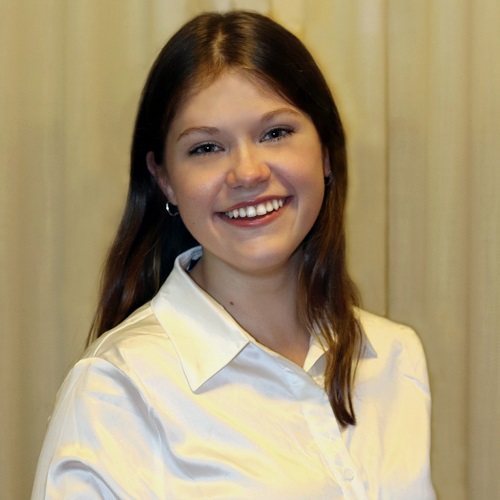
Audrey Taylor
As the International Relations and Policy Fellow with the Bureau of Ocean Energy Management (BOEM), Audrey has been working on a variety of climate and energy issues. Her portfolio includes helping develop and implement new climate policies at the Department of Interior, supporting international and interagency outreach related to carbon capture and storage, preparing leadership for multilateral and bilateral meetings on offshore energy, and more. In particular, Audrey recently had the opportunity to travel to France to learn more about offshore wind energy, interact with industry, and get to know international counterparts.
Her trip included meetings in Paris with the International Energy Agency and the French Energy Regulatory Commission (Commission de Régulation de l’Énergie) and a visit to Nantes for the Floating Offshore Wind Turbines (FOWT) conference. At FOWT, she learned about the challenges and opportunities for floating offshore wind and took a boat tour of Saint-Nazaire, France’s first commercial-scale offshore wind farm, and Floatgen, France’s first offshore floating wind turbine.
With the remainder of her Knauss fellowship, Audrey hopes to continue engaging in policy and science related to climate, offshore wind, carbon storage, and other emerging energy issues. She is helping plan a technical trip to Norway for BOEM staff members to explore carbon storage sites and technology and hopes to support the U.S. delegation at the London Convention/London Protocol meeting in October.
Illinois-Indiana Sea Grant is a partnership between NOAA, University of Illinois Extension, and Purdue University Forestry and Natural Resources, bringing science together with communities for solutions that work. Sea Grant is a network of 34 science, education and outreach programs located in every coastal and Great Lakes state, Lake Champlain, Puerto Rico and Guam.
When searching for a job, recent graduates who gained experience in their field through internships, fellowships or part-time work as a student have an advantage over their peers. Illinois-Indiana Sea Grant (IISG) strives to provide these meaningful experiences so that the young professionals who will one day be responsible for working with communities on Great Lakes issues will be prepared, knowledgeable and confident in their abilities. IISG’s most recent cohort of interns—12 in total—have started a summer of meaningful work and will also be completing professional development trainings as part of the internship program. Read about their backgrounds and internship projects below.
Are you an undergraduate student interested in an internship? We post opportunities on our Summer Internship Program page each year in January, so be sure to check back next year! You can also contact Angela Archer for more information.
Meghanne Burns
Community Engagement Intern with Shedd Aquarium
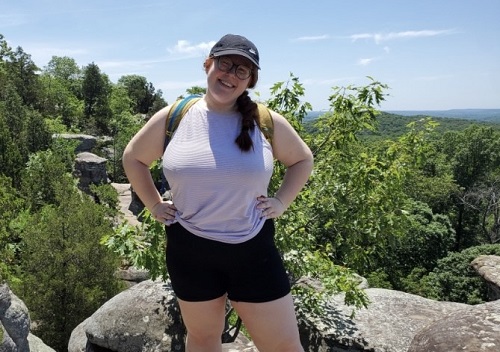
Meghanne Burns (she/her) is a senior at Purdue University Northwest pursuing a degree in biology with minors in chemistry and environmental science. This summer, Meghanne is interning with the conservation action team at Shedd Aquarium in Chicago under Maggie Cooper as part of Sea Grant’s Community Engagement Internship program. She is managing and expanding on the program Let’s Shedd Plastic by creating educational materials about plastic pollution for the public, as well as working directly with local restaurants to reduce their plastic waste.
Fun Fact: Meghanne has played saxophone for over 8 years!
Intern Meghanne Burns hiking in a national park
Madelyn Craft
Stormwater Infrastructure Intern
Madelyn Craft (she/her) is an incoming senior at the University of Illinois at Urbana Champaign, majoring in sustainable design with minors in landscape studies and natural resource conservation. This summer, she will be a stormwater infrastructure intern in a program supervised by Eliana Brown. Projects this summer consist of mining Illinois MS4 (municipal separate storm sewer systems) reports for information to include in the Illinois Nutrient Loss Reduction Strategy Report, and working with the volunteers and leaders of the Red Oak Rain Garden in Urbana, Illinois to help the amazing garden thrive. She is most interested in native plants, green infrastructure, and environmental restoration. She is pursuing a career where she can implement aspects of both green infrastructure and landscape restoration into creating urban spaces that are both aesthetically pleasing and environmentally beneficial, in the hopes of building healthier communities.
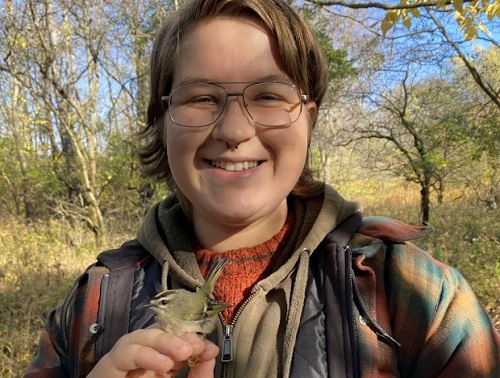
Fun Fact: Madelyn enjoys birdwatching and reading.
Intern Madlyn Craft at a bird banding station
Gianna Galante
Community Engagement Intern with National Park Service
Gianna Galante (she/her) attends Indiana University, studying law and public policy with a minor in environmental science. This summer, she is working with the Indiana Dunes National Park pollinator crew as part of our Community Engage ment Internship program. She is working on butterfly and flower surveys for the park, and she is working on science communication and literacy independently.
Fun Fact: Gianna loves paddle boarding and kayaking at Lake Michigan, and painting!
Intern Gianna Gallante working with paint crafts at the Indiana Dunes Visitor Center
Oceana Hamilton
Community Engagement Intern with Chicago Wilderness Alliance
Oceana Hamilton (she/her) is a junior at School of the Art Institute of Chicago studying fine arts through an art and the environment program. This summer, she is working with Laura Reilly and Maria Sadowski at the Chicago Wilderness Alliance, through our Community Engagement Internship program, focusing on event planning and social media.
Fun fact: During her free time, she works as a multidisciplinary artist on environmental concept art in game design, drag fashion design, sculpture, illustration and more, focused on the intersection between art and environmental science.
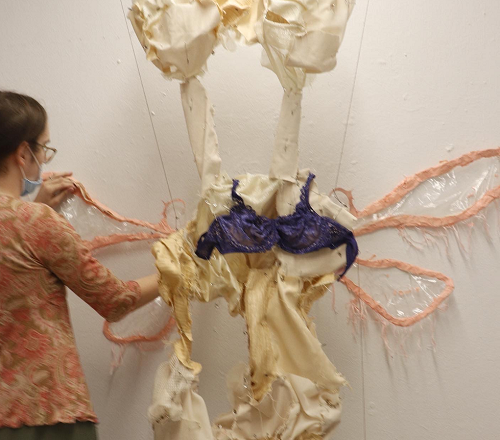
Intern Oceana Hamilton’s art work in progress
Chantal Korde
Stormwater Infrastructure Intern
Chantal Korde (she/her) is an upcoming junior majoring in chemical engineering at the University of Illinois at Urbana Champaign. This summer, she is a stormwater infrastructure intern working on MS4 (municipal separate storm sewer systems) reports with Eliana Brown and Layne Knoche. She is very interested in sustainable living, and hopes to work in that field after college. She enjoys reading with her tuxedo cat back home.
Fun fact: Chantal loves yoga!
Intern Chantal Korde traveling
Xuanshu Lin
Virtual Reality (VR) Intern
Xuanshu Lin (he/him) just obtained his Bachelor of Arts degree in urban studies and planning and Bachelor of Science degree in sustainable design from the University of Illinois at Urbana-Champaign with highest honors in May. This summer, he is working with Ashley Belle and Megan Gunn, primarily focusing on recording and creating VR materials based on the Grand Calumet River Area of Concern near southern Lake Michigan. Lin is excited about being part of communicating the site’s remediation process.
Fun fact: Lin is a semi-professional magician. If you see him around the Purdue campus, where he’s working this summer, performing magic tricks on random people, please come forward and ask for a special treat!
Intern Xuanshu Lin displaying his magical talents
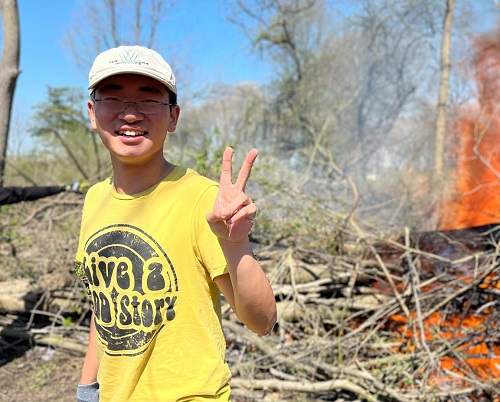
Chengxu “Gary” Liu
Stormwater Infrastructure Intern
Chengxu “Gary” Liu (he/him) is a rising super-senior (5th year senior) at University of Illinois at Urbana-Champaign, double majoring in natural resources and environmental science and crop sciences. This summer, Gary is working in the stormwater management program supervised by Eliana Brown and Layne Knoche. He will be working with MS4 (municipal separate storm sewer systems) reports from EPA to classify and reorganize the information related to green infrastructure development. He will also work on a project focused on soil infiltration and soil-water quality analysis at Illinois-Indiana Sea Grant’s Red Oak Rain Garden on campus.
Fun Fact: Gary loves solo-traveling to different places and would love to capture many natural landscapes and unforgettable moments on the way.
Intern Chengxu “Gary” Liu helping with a site cleanup
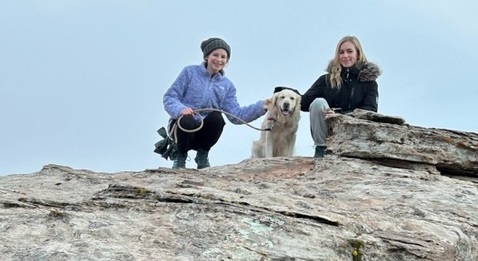
Naomi Michael
Great Lakes Education Intern
Naomi Michael (she/her) is going into her junior year at Purdue University majoring in natural resources and environmental science. This summer, she is working with Janice Milanovich and Kristin TePas as part of IISG’s education team. Naomi is working on several projects, including creating introductory videos explaining water quality parameters and how they connect to form overall water health. She is also working on a project creating a collection of water quality phenomena.
Fun fact: Naomi enjoys hiking!
Intern Naomi Michael (right) hiking with a friend and her dog
Mereya Riopedre
Sustainable Communities Intern
Mereya Riopedre (she/her) is a rising senior at Loyola University Chicago studying environmental studies and global studies with a minor in urban studies. She is working as the sustainable communities intern with Kara Salazar, assistant program leader for community development and sustainable communities Extension specialist. This summer, she will be contributing to a variety of community education projects through research and website development. Topics include green planning and hazard mitigation, Illinois-Indiana Master Watershed Steward Program curriculum, septic system ordinance development in northwest Indiana counties, rainscaping education, renewable energy and land use megatrends, and rural housing resource scoping. Mereya is passionate about sustainable development, environmental justice, and food waste reduction.
Fun fact: Mereya played the harp for 10 years!
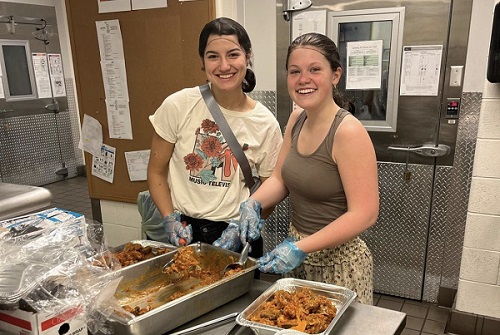
Intern Mereya Riopedre (right) volunteering at a food kitchen
Matthew Siciliano
Aquatic Invasive Species Intern
Matthew Siciliano (he/him) attends the University of Illinois Urbana-Champaign and will be a junior in natural resources and environmental sciences this fall. This summer, Matthew is working with Greg Hitzroth, Katie O’Reilly, and fellow intern Colin Tang as part of the aquatic invasive species (AIS) team. He will be traveling to various boat launches in northeastern Illinois to observe boating behavior and interview water recreationists. His internship goals include providing outreach to better inform boater and angler behavior to prevent the spread of aquatic invasive species, taking inventory of boat launch signage and informing future locations, mapping high traffic areas and other qualities of boat launches, and assessing the effectiveness of designated AIS removal zones. Matthew’s hobbies include playing sports, photography, and gardening.
Fun fact: Matthew coaches a 12u baseball team.
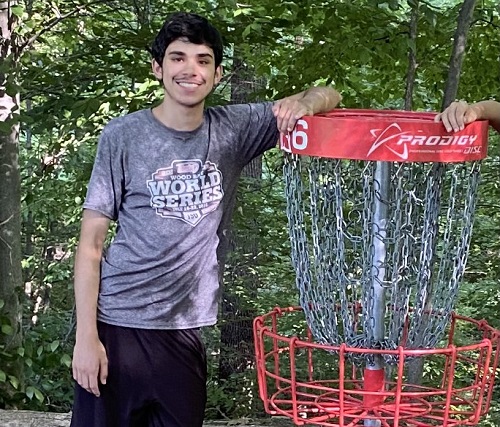
Intern Matthew Siciliano enjoying a round of disc golf
Colin Tang
Aquatic Invasive Species Intern
Colin Tang (he/him) is a rising junior at the University of Delaware studying marine science with a concentration in biology and a double minor in coastal and marine geosciences and applied music. This summer, he is part of the aquatic invasive species (AIS) team with Greg Hitzroth, Katie O’Reilly, and fellow intern Matthew Siciliano. The team is working on education, outreach, and data collection surrounding boater behaviors and actions, and figuring out suggestions to promote behaviors that prevent the spread of AIS. Colin and Matthew will be traveling to different boat launch sites around Lake Michigan to observe behavior and survey recreational water users.
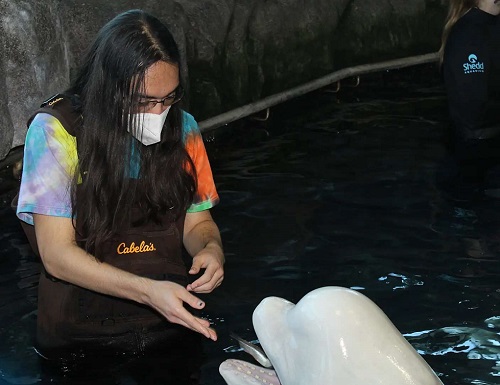
Fun fact: Colin plays the oboe! Music has been a really big part of his life, and he still really enjoy it to this day. Colin traveled to Prague last summer with his university’s wind ensemble.
Intern Colin Tang feeding a whale
Zoey Young
Pollution Prevention Intern
Zoey (she/her) is a rising junior at Lake Forest College double majoring in biology and environmental studies along with minoring in english. She is working with the pollution prevention team with Sarah Zack. Zoey’s role this summer is to create and distribute a survey to Indiana homeowners that focuses on their lawn care practices. From there, that research data will act as a needs assessment for the team to decide what educational material to provide Indiana residents. She is also aiding with the progress of the Marine Debris Action Plan.
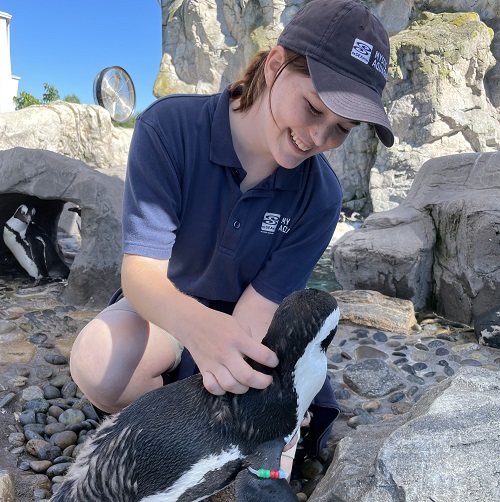
Fun fact: Zoey has been a bird keeper for a colony of African Penguins and over nine different raptor species!
Intern Zoey Young working with penguins
Illinois-Indiana Sea Grant is a partnership between NOAA, University of Illinois Extension, and Purdue University Forestry and Natural Resources, bringing science together with communities for solutions that work. Sea Grant is a network of 34 science, education and outreach programs located in every coastal and Great Lakes state, Lake Champlain, Puerto Rico and Guam.
The National Oceanic and Atmospheric Administration (NOAA), National Sea Grant Office, and Illinois-Indiana Sea Grant are pleased to announce the fellows for the 2023 class of the John A. Knauss Marine Policy Fellowship program. Since 1979, the National Sea Grant College Program has provided one-year fellowships working in federal government offices in Washington, D.C. to over 1,300 early-career professionals. The 86 finalists, including two sponsored by Illinois-Indiana Sea Grant, in the 2022 class represent 29 of the 34 Sea Grant programs and 62 universities.
“The Knauss Fellowship offers graduate students the invaluable opportunity to put their academic knowledge to practice in tackling marine, coastal, and Great Lakes management and policy challenges at the federal level,” said Jonathan Pennock, Ph.D., National Sea Grant College Program director. “We look forward to welcoming the 2023 class of Knauss fellows and seeing how they will apply their unique insights to developing solutions to some of the most important challenges facing the country.”
Illinois-Indiana Sea Grant’s sponsored fellows for 2023 are Hannah Lohman, Hannah Staley and Audrey Taylor.
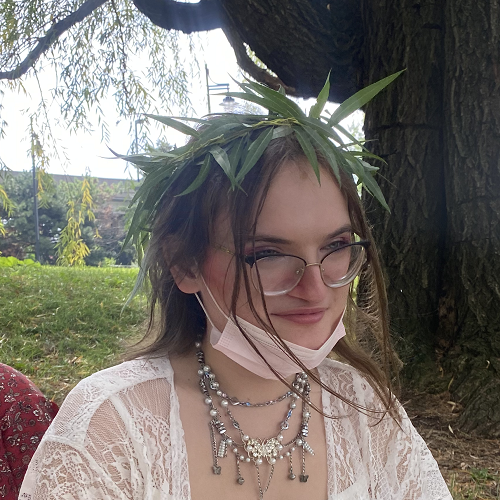
Hannah Lohman received a bachelor’s degree in civil engineering and a master’s degree in environmental engineering from the University of Illinois Urbana-Champaign (UIUC). She is now working toward a doctorate in environmental engineering with a focus on energy, water, environment and sustainability at UIUC and has completed a Certificate of Excellence in Sustainable Management and Technology from the UIUC Gies College of Business. Currently, she works as a research assistant in the Department of Civil and Environmental Engineering and has served numerous leadership roles in the Graduate Society of Women Engineers (SWE). Earlier this year, she was awarded the Outstanding Collegiate Member Award for her dedication and commitment to SWE.
Lohman studies the sustainability decision-making for engineered water and wastewater projects in resource-limited and low-income communities. Her research interests include quantifying decision-making metrics including economics and environmental/health impacts, evaluating stakeholder and community needs, meeting global sustainability goals with circular economics and innovative solutions, and collaborating across disciplines. She has a strong passion for working in marginalized communities and has worked on projects internationally in Honduras, Rwanda, Uganda and India. As a Knauss fellow, Hannah will be working in the NOAA OAR Climate Program Office with the Climate Adaptation Partnerships team. She looks forward to being a key part of the program’s efforts to expand society’s regional capacity to adapt to climate impacts in the U.S., and to learn more about climate adaptation decision-making in marginalized communities.
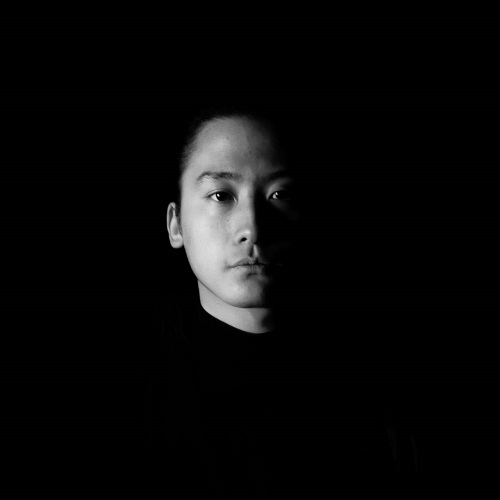
Hannah Staley received a bachelor’s degree in marine science with minors in environmental science and political science from Coastal Carolina University. She is currently a third-year master’s candidate enhancing her public policy skills and broadening her scientific understanding of the environment by pursuing a dual master’s degree in Environmental Science and Public Affairs at the Indiana University (IU) O’Neill School of Public and Environmental Affairs. With a concentration in Environmental Policy and Natural Resource Management, Hannah has shaped her curriculum to focus on climate change mitigation, environmental policy and environmental justice. Outside of the classroom, she worked for the City of Huntington, Ind., where she successfully wrote a grant to fund an arboretum and initiate their climate action plan by conducting local government and community-wide greenhouse gas inventories. She then continued to lead climate initiatives in Indiana as the Project and Outreach Coordinator for the McKinney Climate Fellows Program at IU’s Environmental Resilience Institute.
Hannah is excited to take this next step in her career after she graduates in December. A career goal of hers has always been to work on marine and environmental issues, as well as climate change at the federal level. She is thrilled to be able to achieve this goal by working in NOAA’s Office of Marine and Aviation Operations as a Knauss Marine Policy Fellow this next year. This position will provide Hannah with the opportunity to utilize her scientific and policy skills by working in the intersection between the executive and legislative branch, while also learning about NOAA’s ships and planes.
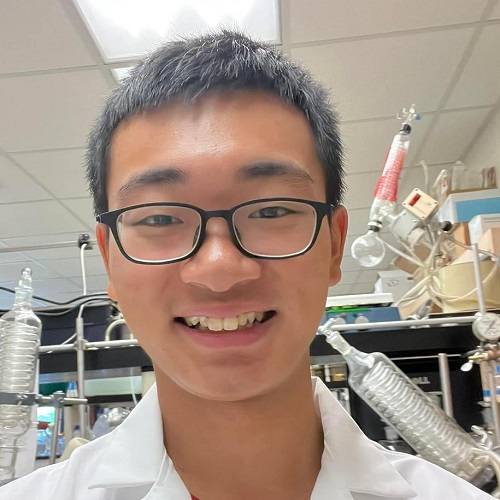
Audrey Taylor recently finished her Ph.D. in Earth Sciences at the University of Notre Dame’s Department of Civil and Environmental Engineering and Earth Sciences. Her doctoral research and her undergraduate degree at University of North Carolina Wilmington focused on understanding climates and environments through both space and time. Audrey’s work ranged from reconstructing changes in rainfall and temperature in southeastern Africa millions of years ago, to documenting the aquatic communities in a Greek lagoon during the early 20th century. Moving forward, she hopes to use the Knauss fellowship as an opportunity to communicate climate change science and advocate for sustainable policies that benefit the climate, environment and people alike.
As the International Relations and Policy Fellow with the Bureau of Ocean Energy Management (BOEM), Audrey will be learning and engaging in domestic and foreign policy discussions. Her work in the office will likely focus on climate, carbon sequestration and offshore wind energy. Audrey says this portfolio presents a great opportunity to apply her climate expertise and diversify her knowledge.
Curious about the Knauss fellowship? The Knauss blog features stories from former Knauss cohorts, sharing insights on fellowship experiences and their journeys to D.C. Students enrolled in education institutions in Illinois and Indiana should apply for the fellowship through Illinois-Indiana Sea Grant (IISG). Information about the Knauss fellowship and other graduate student opportunities can be found on IISG’s fellowships page and also by contacting Angela Archer, campus engagement coordinator, at amcbride@purdue.edu or 765-496-3722.
Illinois-Indiana Sea Grant is a partnership between NOAA, University of Illinois Extension, and Purdue University Forestry and Natural Resources, bringing science together with communities for solutions that work. Sea Grant is a network of 34 science, education and outreach programs located in every coastal and Great Lakes state, Lake Champlain, Puerto Rico and Guam.
The Illinois-Indiana Sea Grant (IISG) program, in cooperation with Shedd Aquarium in Chicago, is offering an internship opportunity to support conservation policy efforts. Sea Grant’s national Community Engaged Internship (CEI) program aims to broaden participation in coastal, ocean, Great Lakes and marine sciences by offering paid internships to students from under-resourced, underrepresented and/or indigenous and tribal populations. Through this program, IISG’s goal is to engage diverse students in place-based research, extension, education and/or communication that respects and integrates local ways of knowing.
The IISG intern will be part of a national cohort of students. Each intern is expected to participate in all aspects of the CEI program:
On-the-ground learning experience, including completion of a project that extends the knowledge of community stakeholders to address a coastal, marine or Great Lakes issue of environmental, economic and/or social importance.
Mentoring by Sea Grant and Shedd professionals, Sea Grant funded researchers and Knauss Fellows.
Virtual professional development sessions and training opportunities.
Peer discussions with other interns in the cohort using Slack or other virtual platforms.
Graduation ceremony to celebrate accomplishments, network with peers and other professionals (in-person meeting included, dependent on status of COVD-19 restrictions).
Participation in pre/post evaluation.
This paid, full-time summer internship will be 10-12 weeks long, depending on the intern’s availability, starting no later than June 1, 2022. The intern will have the choice to work remotely, in-person at the Shedd Aquarium, or a hybrid schedule. If the status of COVID worsens, the intern can work completely remotely. Occasional travel may be possible for the internship, depending on travel status policies.
The Illinois-Indiana Sea Grant (IISG) Summer Student Internship Program supports and expands a diverse, well-trained workforce that is literate in the ecological and economic issues that impact coastal communities. With this training, interns will understand and be skilled in teaching best management and science practices that can lead to more informed decisions.
These paid internships may include research, communications, and/or outreach activities. Applicants may have the opportunity to participate in activities outside of their specific internship duties.For detailed information on position descriptions and application requirements, read the 2022 Summer Internship Program document. For questions related to the program, please contact Angela Archer at amcbride@purdue.edu.
Application packets are due on January 31, 2022.
Internships are available in the following areas:
Aquatic Invasive Species
Great Lakes Education
Great Lakes Revitalization
Sustainable Communities
Video and Digital Media
Water Conservation and Policy
Illinois-Indiana Sea Grant (IISG) is a part of University of Illinois Extension and Purdue Extension.
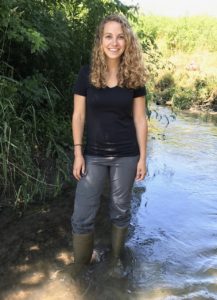
Illinois-Indiana Sea Grant (IISG) is pleased to announce Molly Cain as a Knauss fellow for the Class of 2021. Molly is a PhD student at Indiana University and studies how agricultural modifications to landscapes affect the delivery of water and nutrients to waterways, and, in turn, the role of natural features like floodplain wetlands in improving water quality. Molly recently finished the Knauss placement process, where fellows typically travel to Washington, DC to interview with government agencies and learn where they will spend the next year. Below, Molly shares her experience from the first virtual placement week.
After over 40 video calls with 20 host offices, I was excited to receive my fellowship placement with NOAA Research’s Congressional Analysis and Research Division (CARD). While placement week usually requires finalists to run around DC meeting with potential hosts, this year was a bit different. Instead of navigating a bustling city, I sat at my kitchen table with my laptop and a mug of coffee completing up to 8 virtual interviews a day, often back-to-back. While easier on the feet, it was still a grueling week. However, it was also an inspiring one. I had fun getting to know so many incredible people working within the federal government on water resources and environmental issues. I only wish I could work in all the offices I interviewed with!
Ultimately, I was drawn to the CARD team and was ecstatic to be placed there. My main goal during the fellowship year is to learn how scientific knowledge feeds into the policy-making cycle. As a member of the CARD team, I will participate in this process directly. CARD’s mission is to ensure that Congress is aware of NOAA’s research activities and understands how that research benefits the country. They translate scientific information for a congressional audience and interpret congressional action for a scientific audience. Effectively communicating science to policymakers is increasingly valued within the scientific community and important for enhancing the impact of scientific research. I am excited to spend a year honing these skills. I also look forward to representing the Illinois-Indiana Sea Grant and working at NOAA again. My undergraduate internship through NOAA’s Hollings Scholarship program was a formative experience that led me to pursue a career as a researcher working on water resources issues. Returning to a NOAA office nearly 7 years later feels like I’ve come full circle, in the best way possible.
Illinois-Indiana Sea Grant is a part of University of Illinois Extension and Purdue Extension.
If you are a graduate student interested in combining your education and experience with policy, marine sciences or coastal community resiliency, consider applying for one of these fellowships. The opportunities below are open to graduate students enrolled in a master’s or doctorate program. For more information, please visit our Fellowships page or contact Angela Archer at amcbride@purdue.edu or (765)496-3722.
John A. Knauss Marine Policy Fellowship
The Knauss Fellowship provides a unique educational experience to students who have an interest in ocean, coastal and Great Lakes resources and in the national policy decisions affecting those resources. The program matches highly qualified graduate students with “hosts” in the legislative and executive branches of government located in the Washington, D.C. area for a one year paid fellowship.
These fellowships are aimed at Ph.D. candidates, who are United States citizens, interested in the population dynamics of living marine resources and the development and implementation of quantitative methods for assessing their status. The marine resource economics fellowship concentrates on the conservation and management of marine resources.
Application deadline: January 26, 2021
Start Date: dependent upon fellowship choice
Length: up to two years for Marine Economics, up to three years for Population Dynamics
Illinois-Indiana Sea Grant’s (IISG) leading-edge initiative to support local medicine collection programs is marking its 10-year anniversary. Over this time, IISG-supported community programs in four Great Lakes states have collected and properly disposed of over 200,000 pounds, or 100 tons, of medicine.
When pharmaceuticals expire or prescriptions change, this can present a challenge—how to properly dispose of these unwanted medicines. Drugs that are flushed or thrown in the trash can end up in nearby waterways. And keeping them around the house can be unsafe for children or pets who might accidentally ingest them.
IISG’s work in addressing medicine disposal issues actually began through the inspiration of Lara Buluç, a 2006 NOAA Ernest F. Hollings Scholar working closely with IISG specialists Beth Hinchey-Malloy and Susan Boehme. “I was interested in the policy and practical solutions that could improve pharmaceutical disposal methods to reduce the risk of these chemicals entering our wastewater stream,” said Buluç.
A U.S Geological Survey study at the time found traces of painkillers, estrogen, antidepressants, and blood-pressure medicines in water samples from 30 states. Later, in 2010, an IISG-funded study found a similar cocktail of pharmaceuticals in nearshore waters of Lake Michigan.
Buluç spent her summer internship gathering information about the impact of pharmaceuticals and personal care products on the environment as well as public education models to develop a toolkit for communities to set up their own collection programs. Hinchey-Malloy and Boehme worked closely with communities to refine this resource. “Communities came to us with a definite need and we worked collaboratively to fulfill that,” said Boehme.
In 2008, Hinchey-Malloy and Boehme, who were located in the EPA Great Lakes National Program Office, began working with communities to set up collection events for safe disposal of medicines. Over time, as IISG’s Laura Kammin took over this initiative, the focus turned to establishing ongoing, sustainable collection programs, which proved to be more convenient for people’s schedules. Today, 51 IISG-supported programs in Illinois, Indiana, Wisconsin and Michigan offer their communities a permanent location to dispose of unwanted medicines.
More communities are on the waiting list, looking to establish collection programs with help from Sarah Zack, IISG pollution prevention specialist, who leads the effort today.
“We provide support and guidance for communities who are interested in setting up a collection program,” said Zack. “We help decipher federal regulations, which can be complicated, and make sure that the community is signed up for a free disposal program. We often buy the collection box and label it, and we can help inform residents about this free service.”
In Pendleton, Indiana, where a collection program will soon get off the ground, resident Tiffany Warfel, who is organizing this through the Intersect Program with help from Zack, sees the need as both a drug safety issue and an environmental one. “The White River flows right through this county,” she explained. “As a nurse, I’m aware of drug abuse problems and I’ve also had people ask me what to do with their unwanted medications. In fact, through national collection events this year we collected over 700 pounds of medicine so there is a need here for this program.”
In addition to community medicine collection programs, IISG has addressed the medicine disposal issue through educating and inspiring teachers and students to raise awareness in their communities. Program educators Robin Goettel and Terri Hallesy, working with Paul Ritter, a high school teacher in Pontiac, Illinois, and the founder and leader of the Prescription Pill and Drug Disposal Program, compiled the Medicine Chest, a compendium of lessons on the impacts of medicines in the environment as well as how to engage in stewardship. Kirsten Hope Walker later updated the publication.
IISG’s education team has brought this resource to teacher workshops and directly to students, working with the University of Illinois, Great Lakes Sea Grant programs, museums and non-profit organizations.
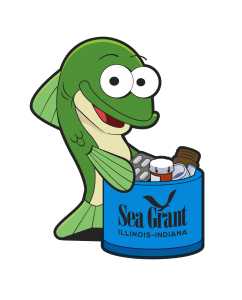
IISG debuts its new medicine collection mascot. Join in the Twitter conversation to name this fish.
Eight years ago, IISG also joined forces with the American Veterinary Medical Association (AVMA) to help inform veterinarians and their clients about proper disposal of pharmaceuticals prescribed for pets. Kammin worked closely with AVMA to establish a formal partnership that also included the National Sea Grant Office, to share medicine disposal information through a variety of resources and by interacting one-on-one with veterinarians at conventions and other events.
“The partnership with AVMA gave us an inroad to engage the veterinary community,” said Zack. “I’m still talking to veterinarians who were unaware of this issue, so there is still work to be done in this community. Through this partnership, we are giving vet professionals the tools they need to educate their clients as well as themselves.”
One high-profile outreach effort from the collaboration was a billboard on the CBS JumboTron “Super Screen” in Times Square in New York City that ran through the 2011 busy holiday season and well into 2012. Sea Grant and AVMA raised awareness in tourists and other Times Square visitors about concerns related to flushing medicine. This 15-second spot ran about 18 times every day.
Since IISG began its work in this area 10 years ago, awareness regarding the need for easy and sensible ways to dispose of pharmaceuticals has increased, whether the concern is safety or for the health of the environment. IISG’s website, unwantedmeds.org, has had over a million page views since it went online in 2012. And, IISG initiated a national Sea Grant working group that helped foster medicine disposal programs in coastal states around the country. Focused on this issue and other emerging contaminants, as many as 17 Sea Grant programs participated.
During this time, larger campaigns have also taken hold. The U.S. Drug Enforcement Administration, or DEA, with guidance from IISG and its toolkit, began their own nationwide National Prescription Drug Take Back days in 2010. Thus far, nearly 11 million pounds of unused medications have been collected over the course of 16 events.
Pharmacies are stepping up, most notably Walgreens. Working with DEA to safely dispose of pharmaceuticals, the retailer has installed more than 1,000 disposal kiosks in their pharmacies across the country. In the spring of 2019, all Walgreens pharmacies will offer free safe disposal options.
Some county and state governments are also initiating action. Most notably, both California and Massachusetts enacted new laws to establish a comprehensive state-wide take-back system for medications funded by pharmaceutical companies.
“I’m proud to lead our efforts on medicine disposal because this program provides a valuable service to both communities and the environment,” said Zack. “It also provides the opportunity to collaborate with committed partners, and I especially appreciate that it was an effort designed and advanced by strong women scientists. I hope this successful Sea Grant initiative is around for at least another 10 years.”
To download the community toolkit and other resources, visit unwantedmeds.org
What does a career in natural resources look like?
This month, a group of 4-H youth joined us at Martell Forest to find out! From tree climbing and birding to creating scent traps and dissecting owl pellets, participants spent three days exploring the many ways people work with and protect our natural resources.
Thanks to everyone who joined us! We can’t wait to see where your adventures take you next!

 Illinois-Indiana Sea Grant (IISG) is pleased to announce Samantha Garcia, a Masters candidate in the University of Illinois Department of Natural Resources and Environmental Science as a 2024 Knauss finalist. Garcia will bringing her background in detecting environmental DNA for the invasive cattail species Typha domingensis, her previous fellowship experience in applied statistics, and her work bringing science and communications to marginalized communities to this fellowship.
 Gianna Galante (she/her) attends Indiana University, studying law and public policy with a minor in environmental science. This summer, she is working with the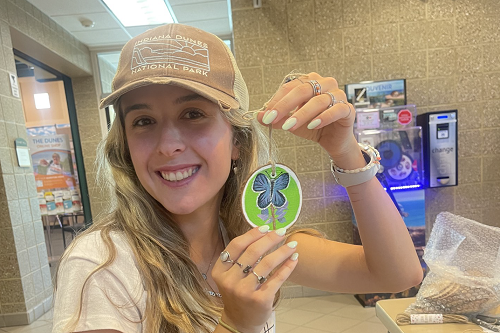
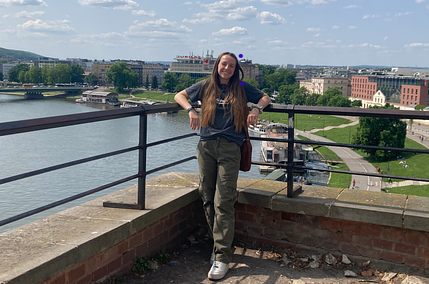


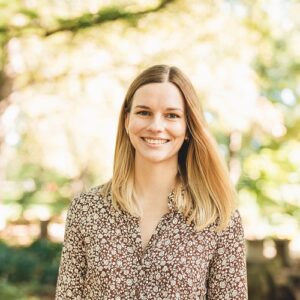 Hannah Lohman received a bachelor’s degree in civil engineering and a master’s degree in environmental engineering from the University of Illinois Urbana-Champaign (UIUC). She is now working toward a doctorate in environmental engineering with a focus on energy, water, environment and sustainability at UIUC and has completed a Certificate of Excellence in Sustainable Management and Technology from the
 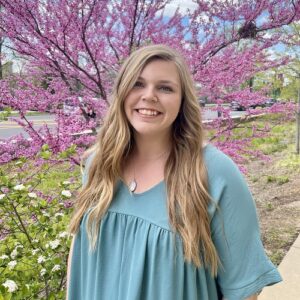 Hannah Staley received a bachelor’s degree in marine science with minors in environmental science and political science from Coastal Carolina University. She is currently a third-year master’s candidate enhancing her public policy skills and broadening her scientific understanding of the environment by pursuing a dual master’s degree in Environmental Science and Public Affairs at the
  Audrey Taylor recently finished her Ph.D. in Earth Sciences at the
  After over 40 video calls with 20 host offices, I was excited to receive my fellowship placement with NOAA Research’s Congressional Analysis and Research Division (CARD). While placement week usually requires finalists to run around DC meeting with potential hosts, this year was a bit different. Instead of navigating a bustling city, I sat at my kitchen table with my laptop and a mug of coffee completing up to 8 virtual interviews a day, often back-to-back. While easier on the feet, it was still a grueling week. However, it was also an inspiring one. I had fun getting to know so many incredible people working within the federal government on water resources and environmental issues. I only wish I could work in all the offices I interviewed with!
 I
I



